There is no favorite listings!

How Luxury Home Buying Changed from 10 Years Ago

Appearing in UH Summer 2018, “Ten Years Later: Our year-long look at what’s changed in U.S. luxury real estate since the 2008 recession.”

Consumer sentiments toward owning and buying real estate continue to evolve, along with the definition of luxury.


By Camilla McLaughlin

Ten years ago, there were few signposts for the journey out of the recession. Real estate’s perfect storm got a lot worse in the summer and fall of 2008 as a combination of job losses, high energy costs, an ongoing tide of foreclosures, a pending presidential election and the near collapse of the credit markets rocked the economy. Many, but not all, upscale consumers put real estate plans on hold and shifted into a watch-and-wait mode. “Consumers’ confidence gets shaken, and the rich are not immune,” observes John Brian Losh, publisher of Luxuryrealestate.com and owner of Seattle brokerage Ewing & Clark.


Following that low point, luxury real estate embarked on a remarkable journey of recovery with luxury properties selling and prices escalating in many locations, boosted in part by the exponential growth of wealth worldwide. Just in the last year, the combined net worth of the world’s billionaires increased by 18 percent. Residential real estate remains a favored investment with prime property sales worldwide up by 11 percent in 2017.


Attitudes toward buying, selling and luxury overall have followed an equally transformative path. “The lesson from the recession is to buy smart. Impulse buying, overextending to get the home of your dreams, and buying without doing your homework have all gone the way of the fax machine,” says Jason Haber, a broker at Warburg Realty in Manhattan.


Value is most important. Greenwich saw two record sales in 2017, but only after list prices were reduced. In their luxury white paper, Christie’s International Real Estate reported strong sales “where buyers and sellers showed a willingness to adjust pricing expectation to new market realities.”


“Price was the name of the game,” said Michael Saunders of Michael Saunders & Company, noting that luxury homes in Sarasota sold in record numbers after homeowners adjusted prices.


Affluent individuals also have a new perspective on the investment potential of properties, locations for both primary and second homes, expectations regarding the agent’s role in the transaction and what constitutes luxury.


What Is Luxury?

Few other terms have been hyped more than the word “luxury” in recent years. Most industry experts would agree with Mike Leipart, managing partner of The Agency Development Group in Beverly Hills, who says, “It’s used so often that it’s become virtually meaningless.”


Even wealthy consumers struggle to find a suitable alternative phrase, yet they have a clear understanding of what luxury means today. “I think people can’t describe it, but when you walk into it, when you are standing in it, you respond to it,” says Craig Hogan, vice president of luxury, Coldwell Banker Real Estate. “People can tell quality; they can tell beautiful design. Service is critical.”


“Ten years ago, the luxury industry was able to dictate to consumers what luxury was and almost define it for them. We are not able to do that today,” explains Kevin Thompson, CMO of Sotheby’s International Realty Affiliates LLC. “Luxury is being viewed from an experiential perspective. People are choosing to live different ways and somehow have what they value. It is a very individual approach.”


“The meaning of luxury has changed a lot. I think luxury has become personal. It’s become a feeling. It’s become an emotional part of a real estate experience,” says Christina Huffstickler, owner of Engel & Völkers in Atlanta.


“You can’t pin it to price level or finish levels. It’s very complex. It’s very much what people are willing to pay extra for,” says Leipart using the example of how a desirable view — prized by today’s buyers — amps up a per square foot price. “I think the basic thing of luxury is that it is everything that has not been commodity priced,” he explains.


Value & Inventories

“By and large, people value home ownership,” shares Hogan. “I just keep watching this trend toward smaller and more wonderful. Just beautiful in every way. Great finishes, smart home technology, all the things you’d expect except beyond those expectations.”


“I think that people, wealthy people, have always found real estate to be an attractive investment. It’s an asset that usually appreciates that they can enjoy,” says Losh.


Coming out of recession, the Bay Area led the recovery, and the region continues to rack up amazing stats with May’s median sold price exceeding $3 million in both San Francisco and Silicon Valley, according to The Institute for Luxury Home Marketing. Inventories remain barebones with homes selling in weeks. In fact, the median time it takes for both attached and single-family homes to sell in Silicon Valley is about nine days. Here, as in many other upscale locations, the biggest issue is too few listings to satisfy demand.


“Even with interest rates rising because of the moves the Feds have been making the last 18 months, there is no slowdown in the appetite for wealthy consumers purchasing homes,” says Jim Walberg with Pacific Union, noting, he has never seen more all cash purchases in 35 years. “Buyers and sellers still view Bay Area real estate as a great place to put their resources. And, remember, these are wealthy people, so it’s not as if they are not diversified in many other investment categories.“ Many of these purchasers are looking at long-term ownership. The homes have a dual purpose: a fun community and place to raise their kids, and a home they plan to live in after their children are grown.


“The primary residence purchase remains largely emotionally driven based on finding the right property to suit the purchaser’s desire for location, space, finishes, et cetera,” rather than a cold calculation of investment dollars,” says Leslie Hirsch, an advisor with Engel & Völkers in New York City.


Second Homes & Investments

Second homes and resort properties are in demand. More than half of the world’s high- and ultra-high-net-worth individuals own two or more residences, and many sought out at least one luxury property acquisition in 2017 and 2018, say experts at Christie’s International Real Estate in their annual industry report.


Among the U.S. population with a net worth of $500 million and up, 2,700 own on average 10 or more homes each, shares Hogan.


“An interesting trend we have noticed is that more wealthy clientele are electing to purchase properties as investment pieces instead of purchasing a third or fourth home to use as a personal residence. Or in some cases they are using a single property as both a vacation home and income property,” shares Anthony Hitt, CEO of Engel & Völkers Americas.
 

“Second, third and fourth homes are now being scrutinized more carefully to make sure there is an upside in the investment should the purchase decide to sell in the future,” says Hirsch. Investors are diversifying portfolios, she says, “choosing to buy property in several countries as a hedge against a drastic change in one country’s economy.”


Affluent consumers continue to be bullish on real estate, an attitude enhanced by recent volatility in equity markets. Losh believes security and safety are more important to consumers. “People are also looking for a safe harbor. They want to feel safe, and they want their investment to be secure,” he says.


What Buyers Want

Ten years ago, the luxury echeleon was defined as homes priced in the top 10 percent of any market, and that benchmark still stands. But for consumers, dollar signs do not necessarily determine luxury. “Money sometimes doesn’t even become part of the search parameters. They just want to find the right property,” and these buyers today are willing to take their time, says Katie Hauser, a broker associate with Baird & Warner in Winnetka, Illinois.


Like many agents today, Hauser sees several different buyer profiles in the market. Some, particularly empty nesters, “want to ditch their suburban house for something unique. They want value, but they want to find the right place,” she says.


“There is a search for the unique. The emerging luxury consumer isn’t interested in cookie-cutter anything. They want personal and outside the norm and are willing to pay more for that,” adds Thompson.


On the other hand, other upscale buyers want a platinum location and are extremely discerning regarding every facet of the property.


“Luxury buyers in Omaha want what they want, and if they cannot find it they build,” says Judy Smith with RE/MAX Real Estate Group in Omaha. High on wish lists are rooms large enough for grand pianos, buffets and sideboards. “They still love walk-out basements for entertaining and as a separate living area for family members extended visits. The view from the deck is always important.”


Millennials

Millennials are beginning to make their play in real estate. Because they delayed buying a home, many of their first purchases fall into the luxury niche, giving new meaning to “starter home.”


According to research from Luxury Portfolio International, most buyers seeking $1 million-plus homes are 25 to 49 years old and have inherited or plan to inherit significant wealth. This consumer has begun powering the $1 million-plus real estate market, more so than their older counterparts.


Millennials overall, says Lindsay Bacigalupo, an Engel & Völkers licensed partner in Minneapolis, “waited to buy and are now in their late 20s and early 30s. They are buying starter homes that are $400,000 to $1 million.


Millennials expected to be as transformative for real estate as the baby boomer cohort was. “Millennials are the next generation who are redefining luxury. Their attitudes toward homes are shaping what is publically seen as ‘good real estate,’ influencing what others look for in a home,” says John Dean, license partner with Engel & Völkers Vancouver. “Millennials are rejigging real estate wish lists, which differ from past generations. They place a big focus on the shared economies. They prioritize modern design. They see real estate differently than predecessors as big traditional homes are too expensive for them to afford, at least right now.”


“Bigger is a little yesterday,” says Hogan, who characterizes current preferences among all consumers as “smaller and finer.”


The drive for a safe harbor along with quality of life, changing demographics, government tax policies and technology are all reshaping the geography of luxury. Denver, Nashville and Atlanta are new luxury players. Victoria, British Columbia topped Christie’s annual report as the primary luxury market. Santa Fe was the hottest second home market; Sun Valley and the Bahamas were in the top five.


More consumers are also opting to make places such as Charleston, South Carolina; Austin or Orlando home. A number are also trading their primary home for a resort home in locations such as Jackson Hole or Bluffton, South Carolina, and many are doing so with kids in tow.


“The definition of luxury means something different to millennials than previous generations. As we know, they value the experience of material wealth. They may choose to settle in traditionally second-home markets to be close to the beach or mountains. They are not as tied to a specific geographic area as many have the option to work remotely,” explains Hitt.

Technology & the Agent’s Role

Probably nothing has changed more, as well as stayed the same, as the way homes are sold and how real estate agents work with buyers and sellers. “Technology has played a huge role in changing everything we do now as agents,” says Dean.


Buyers are more knowledgable; the mechanics of the transaction are more streamlined. Artificial intelligence and virtual reality are starting to kick off the next tech evolution.


The agent’s role continues to shift from provider of information to trusted advisor. “Today’s buyer comes armed with data, comps, neighborhood analysis, and newspaper articles. In some cases they know more about pricing than the listing agent,” says Haber.


What agents need to understand, Leipart says, is, “you don’t sell anything” to the wealthy. “If your approach is to get them to buy, you are going to strike out every time. The best you can hope for is to be a trusted advisor, and you can’t have that role if you are trying to sell.”

Leave a comment

On Linda Isle

By Camilla McLaughlin


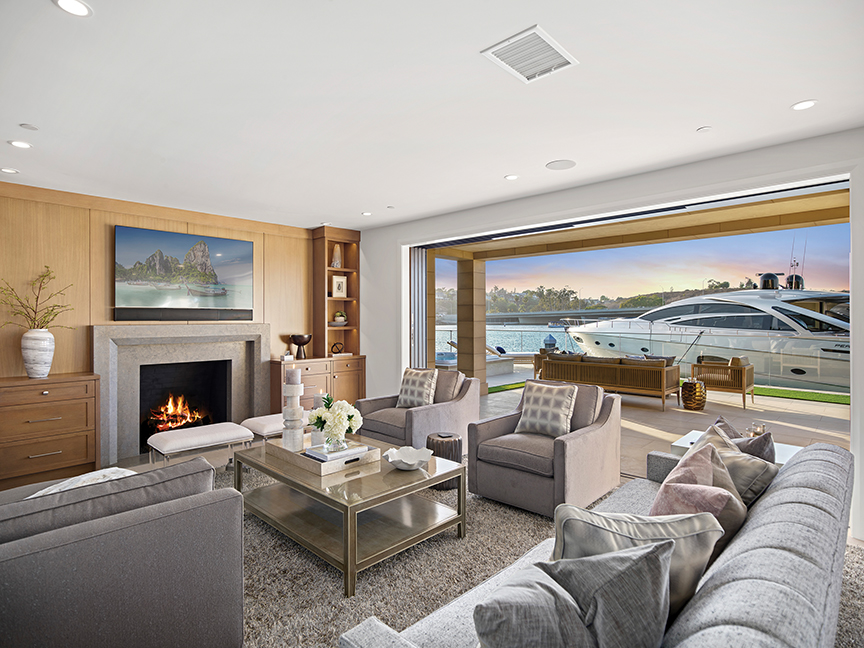
Seldom is a residence as spectacular as the setting, which makes the architectural showpiece featured on our cover a rarity. An address on Linda Isle is prized in Newport Beach, where only a select few homes sit directly on the bayfront and an even smaller number on an island. “Only a handful of these islands are guard gated, which makes Linda Isle especially desirable,” explains developer Zachary Eglit, president of BDR, Inc.


Expectations regarding architecture and design have never been higher than today. This custom residence is an ideal interpretation of Contemporary’s new aesthetic, which is warm, approachable and eminently comfortable. There is an integral sense of elegance and function that only derives from excellent design.


On the main floor, distinct spaces, including a designer kitchen augmented by a fully equipped butler’s pantry, and a great room, merge into an impressive open floor plan punctuated by a dramatic suspended glass staircase. The upper level incorporates a second great room. One of the four en suite bedrooms is also oriented to be a potential private office with fabulous views. White oak flooring enhances the sense of continuity between the two levels.


Expanses of glass bring in daylight and starlight. Blues of the water and dynamic panoramas are part of the experience. Disappearing doors make a seamless transition to outdoor amenities, including an outdoor kitchen, al fresco dining and a dockside patio. Aligned with current preferences toward slightly smaller but exquisite homes, this residence is spacious enough for a growing family but also manageable for a couple.


The Linda Isle community offers amenities including a private beach, but for this home the ultimate is onsite — dockside. With several slips, it can sit a vessel of up to 90 feet, ensuring ample room for a yachtsman’s toys. The experience is priceless.

Leave a comment

On Location: On The Riviera in Santa Barbara, California

By Roger Grody


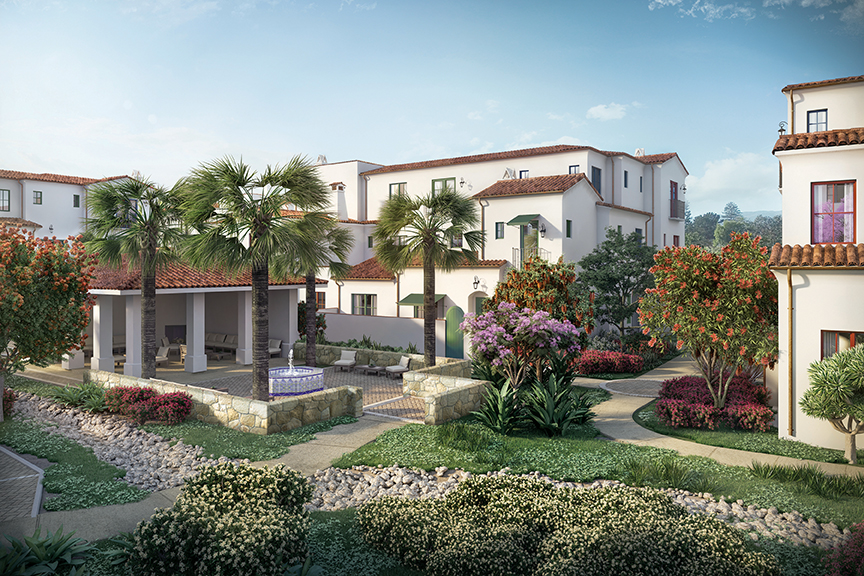
In Santa Barbara, the idyllic community that anchors the portion of the California coast known as the “American Riviera,” is Estancia, a development of 72 distinctive residences  that celebrated its grand opening in July. Prominent local builder Franciscan Developments collaborated with Cearnal Collective, a premier Santa Barbara-based architectural and interior design firm, on the project, to present a modern interpretation of the coastal community’s quintessential Spanish Colonial architecture.


John Schuck, president of Franciscan Developments, reports, “The vision for Estancia was born out of a desire to take what is most loved and cherished about Santa Barbara and create a residential experience that takes full advantage of the city’s healthful and active lifestyle.” Emphasizing Estancia’s Old World charm, communal outdoor spaces and semi-custom interiors that showcase views of the Santa Ynez Mountains, the developer adds, “I’m very proud of this project.”
 

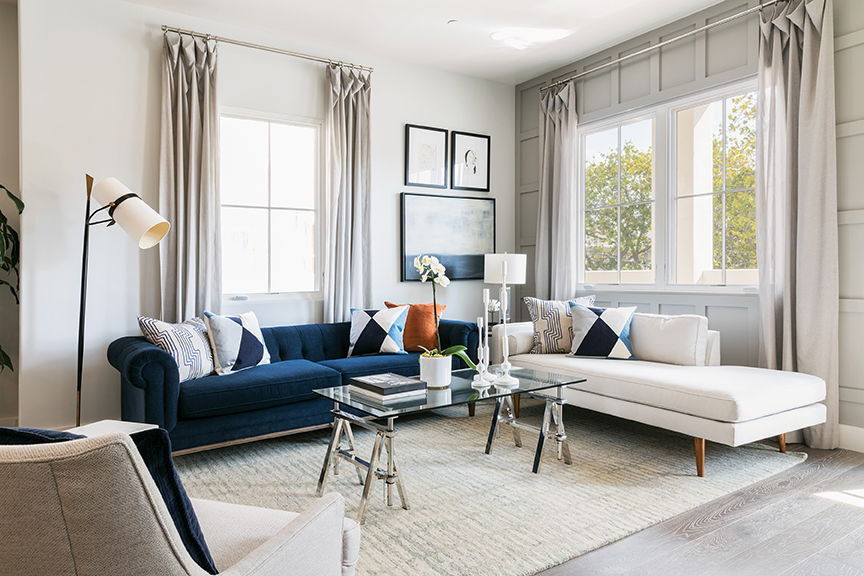
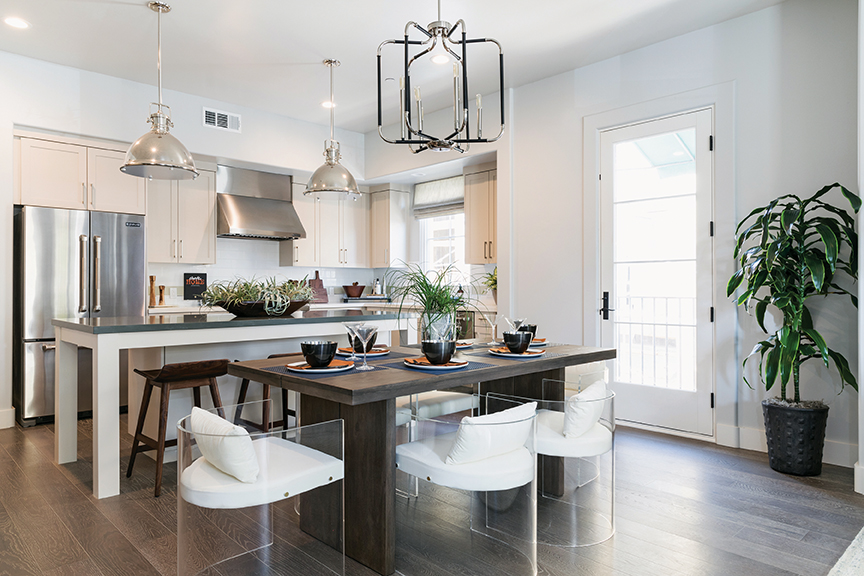
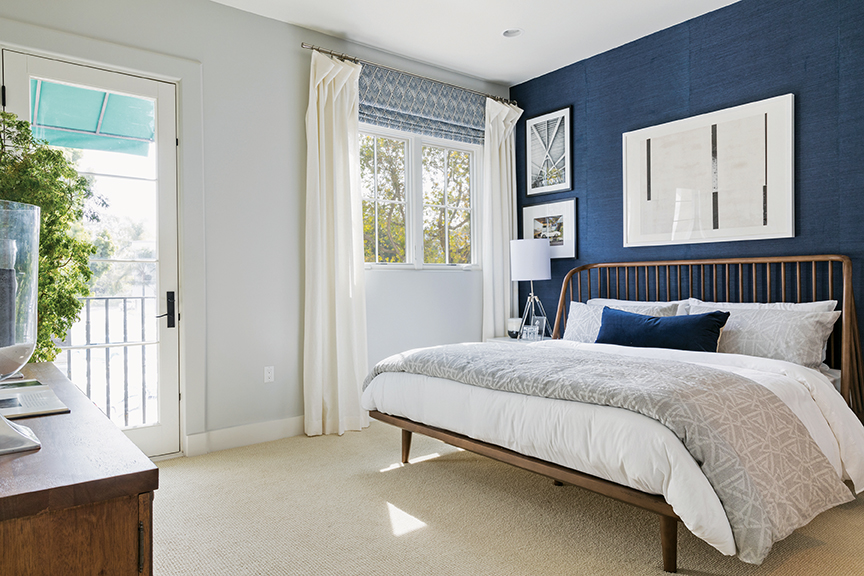
Inside Estancia’s residences, traditional aesthetics fade into clean-lined modern living environments. Ten-foot ceilings, solid 8-foot doors and open floor plans are designed for contemporary lifestyles, and expansive terraces create a true indoor-outdoor experience that capitalizes on Santa Barbara’s Mediterranean climate. High-end finishes are standard, and a Carrara marble option transforms bathrooms into luxury spas. Generous breezeways with mountain views give common areas a resort feel and private garages are provided. Two story townhomes feature two bedrooms and two full baths in floor plans of 1,495 to 1,539 square feet, with gourmet kitchens, fireplace-warmed living rooms, and an additional powder room in select residences.

Three-story townhomes (1,923 to 2,063 square feet) provide those exceptional amenities with a second floor primarily dedicated to family life or entertaining. Representing a third option are convenient single-story residences, the first luxury flats to be constructed in Santa Barbara in 30 years. Ranging from 1,459 to 1,696 square feet — their high ceilings, abundant natural light and generous patio space make them live much larger — these units are popular with downsizing couples.


A lush landscaping concept provides a park-like setting for Estancia, with palm-lined European-inspired inlaid stone drives, flowering vines and open spaces that preserve views of the Santa Ynez Mountains. The excitement of Los Angeles is just 90 miles away yet a world apart.


Approximately 28 units of the two-phase project were completed at the end of June and complete buildout will occur in spring 2019. Prices start at $1.125 million for the single-story residences, $965,000 for the two-story townhomes and $1.125 million for the three-story townhomes. Estancia is represented by The Agency Development Group, headquartered in Beverly Hills

Leave a comment

Distinct Dinnerware From a Unique Couple

After choosing the perfect dining table, preparing an unforgettable meal, and gathering your guests, don’t forget to select a set of dinnerware that will showcase your style.

The way we display our food has become a delicate form of art, from intricately drizzled sauces to the dishes on which they are served. Cristina Vezzini and Stan Chen are making elegance easy with their stunning dinnerware collection. Vezzini & Chen is a combination of hand-carved ceramics and hand-blown glass, which gives each piece a unique touch.


Vezzini, originally from Italy, and Chen, who is from Taiwan, met while attending The Royal College of Art and continued working together after graduation in their London studio. Although the two specialize in different materials and techniques, Chen being the skilled glassblower and Vezzini focusing on handcrafted ceramics, the team is a cohesive unit, which shines through in their work.

It is unlikely that you’ll find another set like Vezzini & Chen’s because each and every piece is handmade and carefully constructed by the duo. Their broad range of inspiration also adds an exclusive aspect to each set. Inspiration from nature, such as fire and water elements, comes through in their designs and pairs nicely with the natural materials that they mold.

Vezzini & Chen’s Hexa Plates and Hexa Bowls are inspired by the idea of looking through water, and the layered, multi-faceted image that appears on the other side. The bowls and plates are available in four signature textures.


Just a glimpse of Vezzin & Chen’s work include these other remarkable collections. The Hexa Wine Glasses are also available in four textures, but each individual glass is as unique as a snowflake.The Horizon Wine Glasses are delicate, hand engraved, and unforgettable. Buyers will certainly want a set of their own, but the hand-carved ceramic plates are part of a limited edition for the Spring Restaurant in London.

Light, geometry, texture, and repetition are also a large part of Vezzini’s designs, which contrasts Chen’s smooth, flawless glass creations nicely. The two designers use these inspirations to work together and bring their pieces to life. Vezzini & Chen’s dinnerware collections will stand out on any table!

Photos courtesy of  Vezzini & Chen

Comments Off on Distinct Dinnerware From a Unique Couple

What is Biophilic Design and Why is Growing in Popularity?

There is growing interest in “green” or sustainable design, a concept derived from “biophilia” which is Greek for “the love of living things.” This idea and its application in architecture provides many questions: what exactly is biophilic design? What are the benefits? Perhaps most importantly, are there practical steps a designer can take to apply the principles of biophilic design in actual projects?


Forward thinking leaders at SageGlass, makers of the world’s most intelligent, reliable electrochromic glass, offer their thoughts on this design concept and possible roots designers and architects can take to implement more sustainable measures.

Eloïse Sok, Concept Creator in the SageGlass Europe & Middle-East Team, says the concept of biophilia was first written in 1984 by biologist Edward O. Wilson, in which he described the concept as to how humans have an innate connection with nature and with other living systems. This connection continues to thrive in assorted cultures, including Japanese culture where people have been been aware of the restorative effects of nature on health for a long time. An example of this takes the form of the Shinrin-Yoku, which translates to “forest bathing” and means a walk in the woods, Sok explains. This type of “bath” has been explored in several scientific studies that show how this practice can improve mood and sleep, reduce stress, decrease heart rate and blood pressure, boost the immune system and accelerate recovery from certain illnesses.


Sok explains that though this term has been known for many years, it has recently resurfaced with a revival of interest in prioritizing health and overall comfort in buildings, particularly in the architectural field. In order to bridge a better connection to nature from the indoors, the idea of biophilic design has further developed, “integrating elements into buildings that can directly or indirectly reconnect us with nature.”

Above Photo and Featured Image by Michael Christo.

Photo by Marianne Cousineau.

Though there are several principles central to biophilic design, a key part to keep in mind is the supply of natural light in buildings.


“[Light’s] dynamic nature through the day and during the year induces variability in terms of intensity, contrast, distribution and colors in a given space, which stimulates and enhances the wellbeing of the building’s occupants,” Sok explains. With this in mind, it’s important to control direct light penetration, which can interfere with certain activities, as well as temperature variations that affect comfort.


Another priority is to give access to outdoor views through windows, which allows for a visual connection with nature, which Sok notes is vital to an office environment in order to “relax the eye muscles and limit visual and cognitive fatigue.”


For more explanations of biophilic designs and how we can best prioritize through architecture and design, visit SageGlass’ full report here.

Leave a comment

What’s on Tap for Kitchens?

Contemporary versus Farmhouse. Warm woods versus stark whites. The latest kitchens incorporate new ways of thinking.


By Camilla McLaughlin


The kitchen story continues to be painted in white and grey, but for luxury the narrative is changing. “When it comes to high-end luxury, it’s about quality. It’s about finishes, color and the wow factor,” says National Kitchen & Bath Association Industry Relations Manager Elle H-Millard, who is also a certified kitchen designer, noting that luxury continues to be more about the user experience.


There is no better place to scope out what’s ahead for kitchens than the industry’s annual trade event, the Kitchen & Bath Industry Show. Although the focus might be the overall kitchen market, many of the trends and innovations are ideally suited for the largest budgets and savviest design aspirations.


Still, Christopher Grubb, president of Arch-Interiors Design Group in Los Angeles, points out that luxury today speaks to multiple tiers in the market. “Luxury doesn’t have to be about cost. Luxury is an experience, and at every price level people want luxury finishes.”


White and grey remain the preferred color schemes according to the vast majority of design experts and industry professionals responding to NKBA’s annual trends survey. Still, anyone walking the KBIS show floor this January couldn’t help but notice that wood in medium to light tones was very much in evidence, either for cabinets — especially in contemporary designs — or as an accent. “I am seeing a lot of movement because grey and white have been so popular. I am seeing wood tones come back, which is kind of nice. We haven’t seen that in a while,” observes Grubb. The emergence of wood, either as a primary finish or as an element in a design scheme, reflects a subtle shift and growing desire to integrate an organic feeling.


Typically, styles gain or lose momentum over an interval of several years. This year, Farmhouse suddenly jumped to the top in the NKBA survey with 79 percent of design professionals characterizing it as “trendy” or “very trendy.” This eclectic style mixes white with warm metals and mellow weathered wood. Reclaimed wood beams and hardwood flooring along with barn doors and apron sinks enhance the Farmhouse sensibility.


Transitional, which combines clean lines and streamlined traditional details, was the second most preferred style. Main elements of this style include quartz countertops and wood floors.


Overall, for countertops in every style, H-Millard says, “quartz is where it’s at today;” 94 percent of professionals surveyed agree. Hardwood was the preferred flooring, according to 78 percent of respondents.


Contemporary, defined by linear forms with flat-front doors and frameless cabinets, followed as the third-most-preferred style. Hallmarks include open shelving, clean lines and appliances that meld into cabinets. It’s important to note the narrow spread in the survey between Farmhouse at 79 percent and Contemporary at 73 percent.


Dark tones continue to find their way into kitchens in faucets, hardware and cabinets, sometimes as a contrast with white. For cabinets, blue is emerging, and black is gaining traction for both faucets and cabinets. Glossy finishes are out; matte is trending. A matte surface, combined with processes that highlight grain and create a textural finish, imparts softness and depth that creates almost a tactile sense. It’s not an overstatement to call this “the new black.”


The desire for customized storage shifts more attention to what’s inside cabinets and drawers, especially in the high end. Every year manufacturers expand the number of inserts and products designed to enhance organization, meet everyday cooking requirements and adapt kitchens for a range of cuisines, special interests and abilities.


“One of the things that came out of the luxury custom movement is really creating an experience for the user,” says H-Millard, who sees more and more companies tapping into the human touch, offering ways to customize products.


This year, Elkay introduced an option offering various front panels for their farmhouse sinks, which allows consumers to change the look of the sink. Pops of color are another hallmark of high-end kitchens, and H-Millard says a growing trend is the use of bold colors to make large gas ranges the focal point of a kitchen. Often too, manufacturers give consumers ways to change the look with panels in multiple colors that can be switched out. “They are making new colors every year. There are so many options to choose from in bold pops of colors, everything from knobs, materials and finishes. That alone is really kicking the personalizer for the user experience to a whole new level,” explains H-Millard.


For refrigerators, Tami Catalano, sales consultant with Monark Tucson Showroom, says it’s about “columns, columns and more columns. We have just about every brand offering columns now. It’s about who can dress them up more, be more flexible or offer the most competitive price point.” Having the option to create whatever configuration a homeowner desires and seamlessly integrate it into a custom design completely personalizes this appliance. Manufacturers continue to offer new takes on stainless, but Grubb says for high-end kitchens typically the choice is a paneled finish that matches the cabinets, so the appliances blend in and make the kitchen appear larger.


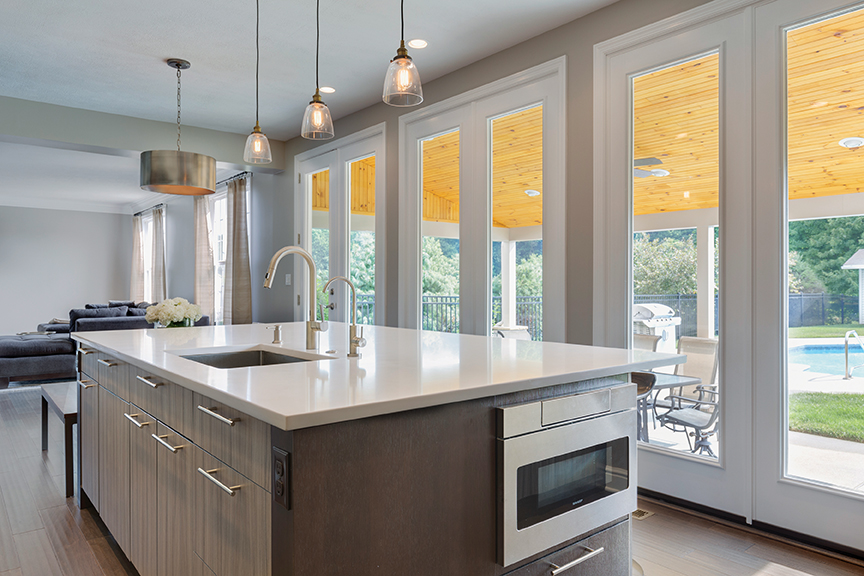
Sinks are on the cusp of morphing into the most versatile product in the kitchen. Not only are large format styles in demand, but manufacturers offer many ways to configure a sink along with accessories that maximize function. Often a sink can be combined with under-cabinet refrigeration. An induction burner adds an option to cook pasta or lobster next to the sink. Multiple bowls also make the sink a spot to ice drinks or seafood. H-Millard says, “This is a whole new way of thinking, which will drive new traffic patterns in the kitchen.” Even the traditional work triangle is being tweaked by large islands. A standard U- or L-shaped plan is now focused on the island, and H-Millard expects this to change the configuration of cabinetry. “It is also going to change how people look at functionality in their kitchens,” she says. Mid-height cabinets should gain traction.


For next-generation kitchens, look for a growing interest in wellness and freshness to spark a new wave of innovations.  


Photos courtesy of Laurent Levant Interior / Dave Bryce Photography, istockphoto.com / Hikesterson, Taryn Emerson Interiors / Jared Bumgarner, Haffle America Co., Mike Tuell, Arch Interiors / Greg Weiner Photography

Leave a comment

A New Dawn in Lighting Design

Making an iconic design statement in a minimal aesthetic, the Dawn to Dusk lighting fixture is the newest product released by the award-winning London-based design studio haberdashery that invites you to experience the magic of sunrises and sunsets from right inside your home.


The intricate design was inspired by the “the memory of the sun” and creating a strong connection with this memory, according to Ben Rigby, creative director and co-founder of haberdashery.


“We want to reach beyond the industry’s current expectations for a lighting product and push for a more ambitious blend of quality, creativity and narrative-driven design all wrapped up in an iconic, useful and aesthetically beautiful design statement,” says Rigby.


To do this, Rigby and other designers chose to work with an uncomplicated design to demonstrate the clarity of a rising sun, as well as identified the perfect color range that would create a strong, emotional resonance.


Available as a table and floor-standing lamp, the diffused circular light source explores a palette of warm colour hues during its transit of the vertical stand, delivering these as direct light, or as a flood of light on a wall.

When at the base the sliding light head sits in an off position, and then as it is moved upwards it activates a low intensity red hue, which transitions into orange, then 2700k white light as slid upwards. This custom LED light array, developed by Rigby and his team, replicates the transition of light from the deep, rich red of the late evening to the white light of midday. The light is also capable of rotating 360 degrees around, providing a range of uses from outward facing task light through to a backward-facing ambient light, creating a subtle wash.


Dawn to Dusk is meant to not only showcase a naturally beautiful occurrence but to also utilize this power to support our natural rhythm throughout the day. The high-quality white light helps users to wake up more naturally, while the richer, relaxing red colors help regulate the circadian cycle and prepare for sleep.


“haberdashery believes light is a transformative power in the world; we challenge what is possible with light, and through our products are defining a new category of contemporary lighting,” says Rigby.

All photos & video courtesy haberdashery.

Leave a comment

Through the Years: Generational Differences and Societal Change

Generational differences drive so many societal changes, yet overgeneralizations about the wants and needs of large portions of the population can lead to costly misconceptions. One well-respected researcher is trying to unravel myth from reality.

By: Camilla McLaughlin

The new year is prime time for real estate forecasts and most experts look to the economy, stock market performance, job growth, the cost of labor and materials for insights into the future. Population trends figure into these recipes, but some experts contend the key to understanding what’s ahead for real estate lies in an in-depth analysis of changes in generations decade by decade.

“Sweeping demographic and generation shifts are quickly transforming America,” says John Burns in the introduction to Big Shifts Ahead, which takes a deep dive into generations and how they influence real estate. “Every individual and business feels the impact of government policies, the sharing economy, new technologies and rapidly changing societal norms. Many of the shifts make life better for some and worse for others. Those who understand and plan for the big shifts ahead better than others will win,” says Burns, whose research also contributed to a report from the Urban Land Institute (ULI), Demographic Strategies for Real Estate. From the growth of suburban communities that combine the most-desired features of urban settings with a small-town vibe, to the rise in demand for rentals, many of the trends Burns foresees are already at play, while others are just beginning to gain momentum.

For the last 12 months or more, Burns, CEO of an eponymous real estate consulting firm, and Chris Porter, his co-author and the firm’s chief demographer, have been on the road speaking at dozens of events including ULI conferences, spreading what could be considered the new gospel of generational understanding. The duo initially laid out their findings in Big Shifts Ahead, which was published a year ago.

Traditional demographic categories span an entire generation, a period that can be as long as 20 years or more.

However, such groupings do not always accurately reflect the behavior and attitudes across the entire spectrum of ages in a generation, as happened with a number of projections of Millennial behavior regarding homeownership and real estate. Burns points out that a 17-year-old high school senior has little in common with a 33-year-old father, even though by traditional classifications both are considered Millennials. Instead of continuing their early pattern of gravitating only to urban centers, as Millennials age, marry and have children, they are moving to more suburban settings.

Consider Gen X born from 1965 to 1983. In 2015, this group was 32 to 50 years old. Burns says the early members of Gen X purchased homes in the 1990s, while later members purchased in the mid-2000s and suffered more foreclosures than any other group through the Great Recession.

Instead of broad categories spanning an entire generation, Burns groups the U.S. population by decade born and profiles how the behavior of each cohort changes over time in response to outside forces. There is a surprising consistency to this method since the number of people born during each decade ranges from 40 million to 44 million. Even though population growth slowed by 8 million in the late 1960s and early 1970s, immigration compensated for the shortfall.

Burns points to four disruptors that impact behavior of those in every decade. In a presentation to planners and developers at ULI’s fall conference in Los Angeles, he characterized them as government policy, economic cycles, new technologies and societal shifts. For example, evolving societal attitudes have influenced each decade in different ways. Attitudes regarding women working and toward parenting changed and then changed again. The number of stay-at-home moms plummeted from 44 percent in 1974 to 23 percent in 2000. Those born in the 1970s, a group Burns calls Balancers, then reversed this trend. They also led a number of other societal shifts after 2001. Among this group, 23 percent were born in another country. Also changing are attitudes toward men’s involvement with child rearing with more fathers staying home today.

The economy affects jobs and the ability to buy a home, but a good or bad economy also leaves a deeper imprint. Burns says the growth of the economy during childhood and early adulthood determines lifetime spending habits. Net worth varies by decade. The group born in the 1950s is heading into retirement with $18 trillion, the most of any generation, according to Burns, who dubs this group the Innovators, because they led a technology revolution and started new companies at a pace that is still not matched, boosting productivity and longevity.

From mass production of cars to medical innovation to smartphones, technology also shapes generations, playing into where they live, the size of families, and the ways in which they connect with others. He calls those born in the 1990s the Connectors since they led 24/7 wireless connectivity.

At every level — federal, state, local — government has and continues to influence trends related to development and housing. After World War II, the GI Bill encouraged homeownership, and the federal push to develop interstate highways spurred suburban development. State tax and development policies to some extent determine where people live. In recent years, low state taxes have been one of several catalysts shifting the population toward the south. “Approximately 42 percent of America lives in Southern states, but 60 percent of the growth is going on there,” observes Burns.

This year, changes in federal tax law are eliciting greater scrutiny on ways in which policy changes might affect why and where people relocate, decisions on where to retire as well second and primary home purchases.

Since the recession, the level of homeownership has fallen, and Burns forecasts the rate of homeownership will fall to 60.8 percent by 2025, noting that anecdotal feedback suggests the homeownership decline could go even lower. He cites several patterns that will continue to put a damper on home buying. One he likens to a return to a version of boarding houses at the turn of the 20th century. 

“Inspired by Airbnb, a number of homeowners have told me they are bringing unrelated housemates as a source of income and not just for short-term stays. Homeowners and renters are meeting online. Mature homeowners need the income, and young adults need lower rent. While this is a great market-based solution to an affordable housing pattern, it has slowed household formations.”

More people —  not just potential first-time buyers —  are renting. Approximately 12 percent of Americans now rent a home, which Burns says is a “game changer.” Another shift, “renting from older Americans has surged in the last 12 years.”

Some want to try out a new location or environment; others need the cash. Some don’t use the mortgage interest deduction.

Also making renting an appealing option is the change in what’s available for rent. Many new multifamily buildings are more upscale with high-end finishes and a range of amenities. A cadre of new companies focus on creating newly constructed single-family homes specifically for the rental market, and it’s turning into a profitable business. Burns says, “several companies have shared that the yields in some markets are excellent. These builders and operators tend to have a long-term view toward building a steady, asset-based cash flow stream.”

Most experts anticipate that autonomous driving (driverless cars) will change where people live, and planners are already taking this into account. Some speculate that suburbs located farther from urban centers and jobs, which are typically more affordable, may be in demand again as commute time can be better utilized. Burns also suggests driverless cars will change attitudes regarding aging in place. He expects demand for assisted living centers will grow less than people think. Already, builders report an uptick in the number of individuals investing in renovations, so they can stay in their homes as they age.

The amenities that create status are being revised. Says Burns, “Experiences are the new brag,” which means a home’s walkability score or locations near activities might create value. “The best house is more likely to be near great things to do rather than a large home with a large yard,” he adds.

In terms of the long-term impact of some changes, Burns still has a lot of questions. For example, women now earn 58 percent of college degrees, compared to only 42 percent of degrees in 1972 when Title IX was passed. “Both men and women have a difficult time making sense of how this will change society,” he says.

If you are not familiar with the term surban™, it might be time to add it to your real estate vocabulary. Burns trademarked the term, and it is popping up in a number of conversations in the industry. Surban refers new areas that mix urban and suburban, often offering smaller homes with little or no yards in high population areas. Entertainment, restaurants, shopping are all nearby and walkable.

Expect to see more development shift toward the suburbs, including surban areas. Burns projects the suburbs will capture 79 percent of household growth over the next 10 years and urban growth to capture 15 percent.

The impact of the Connectors and Globals is yet to be realized, and it will be interesting to see the changes they bring to the way we live.

Photos courtesy of iStockPhoto.com

Leave a comment

Killing the Cubicle: Q&A with ‘White Space’ CEO

White Space, an innovative service customizing interiors for commercial and office spaces worldwide, is redefining the office experience one space at a time. We spoke to Aytan Litwin, the founder and CEO of White Space, on his favorite projects and vision for the company’s future.
What was the inspiration for you to start White Space?
Over a decade in the furniture business led me to a simple conclusion: The furniture industry needed to be reinvented.  It was dominated by legacy players who were doing the same things for generations, while the hospitality industry was changing dramatically. Hotels and other public spaces were turning into immersive experiences where design and style statements mattered more than ever.  But when it came to furniture, the big players were unable to deliver the quality, speed, and responsiveness that this new world demanded within hospitality players’ budgets.

So, I created White Space to fill this void.

At the heart of our model is a new infrastructure that delivers a custom-built supply chain for every project. We work with — and manage — the factory best suited for the task, no matter where in the world it’s located. This is the big change the industry needed — the ability to manufacture the highest quality furniture, casework, lighting fixtures and flooring with scale, efficiency, and attention to detail.

To put it another way, my inspiration for starting White Space was identifying that there was a white space in my industry — a gap that we could successfully fill.


What is the big change you’re bringing to office spaces?
We’re eliminating the false choice that existed in the market: that you have to choose between quality and affordability, or creativity and efficiency. Buyers and purchasers of all kinds were resigned to picking out generic furniture from a catalogue, because that’s the way it had always been. Now no one has to make that choice.

Can you share a brief history of White Space?
It really started with the epiphany described above, and the realization that I had the experience to start a company like this. I knew the strengths and weaknesses of so many factories around the world — and I had cultivated the professional connections and knew the projects I brought them would get the focus and effort they deserved.

Those connections also mean that we can bring our own quality-control teams on site: they’re there at every stage of the production process to make sure we’re delivering exactly on our clients’ specs. Because of our ability to deliver the highest quality on time, within budget and at scale, we’ve been able to mature very quickly and work with some of the biggest names in the hospitality industry — from Disney to the Ritz-Carlton.


What are some of your favorite projects?
One of my favorite projects is the work we did for the Nakoma Lodge. I feel particularly proud of this — not only because it came out so well, but because it is an honor to be associated with a Frank Lloyd Wright design. That we were able to successfully and seamlessly extend his aesthetic speaks to the power of the system we’ve built, to fully realize even the most complicated and nuanced of visions.

Also, I feel very proud of the work we did with WeWork to open their Tel Aviv flagship. They are clearly changing the workplace and it’s a thrill to be part of that change. They also have high standards and a sophisticated vision for their brand, that’s always extended to the spaces they design, so it was extremely gratifying that they chose us. It’s also always fun to work on such a cool, trend-setting project.


How is White Space innovating office spaces today?
We’re helping to kill the cubicle — and more broadly, the fluorescent-lit, colorless, isolated environments that employees were almost universally forced to work in a few years ago. A lot of modern corporate offices are taking cues from the hospitality industry, surprisingly enough: the shared spaces that encourage socialization and collaboration are increasingly a focal point in corporate office design, as we come to realize that happy, healthy employees who actually like each other end up more productive. People do more when work when it doesn’t feel like work — and creating that vibe and work ethic starts with the physical environment. It’s the main reason people come to us to make their offices feel less like offices.


What are your future aspirations for White Space?
I aspire to continue to expand globally, both within the hospitality industry and within adjacent industries, including co-working spaces. We want to continue to work with creative brands who have expansive visions, and with designers that share these qualities. We’re here to support anyone who has an envelope they want to push.

The system we’ve created is agnostic to the project, and we want to work with people who’ve been boxed in by their previous vendors, that couldn’t deliver as fast and as fully as we can. We help those companies compete through innovative design. Design is a true competitive advantage today.


Photos courtesy of White Space

Leave a comment

Park Slope’s Newest Rental, No.223, Launches Leasing

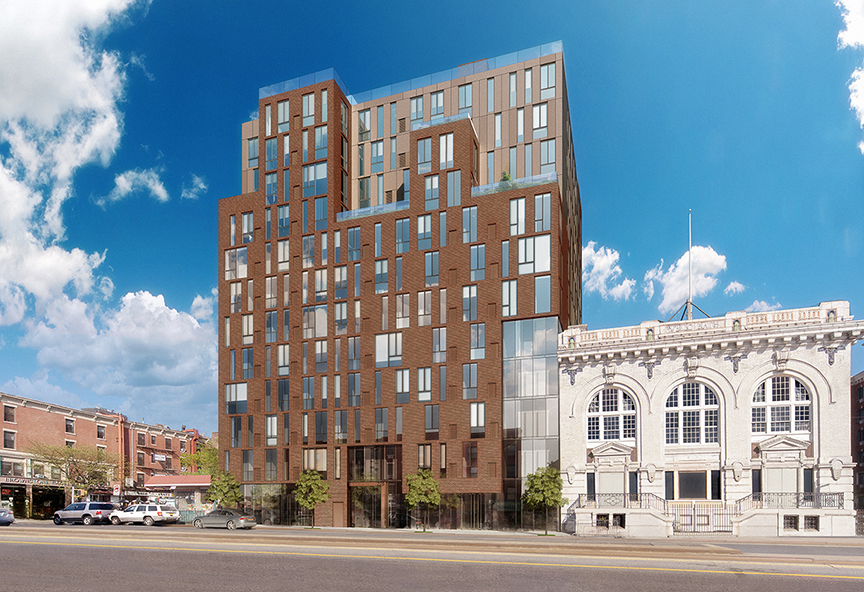
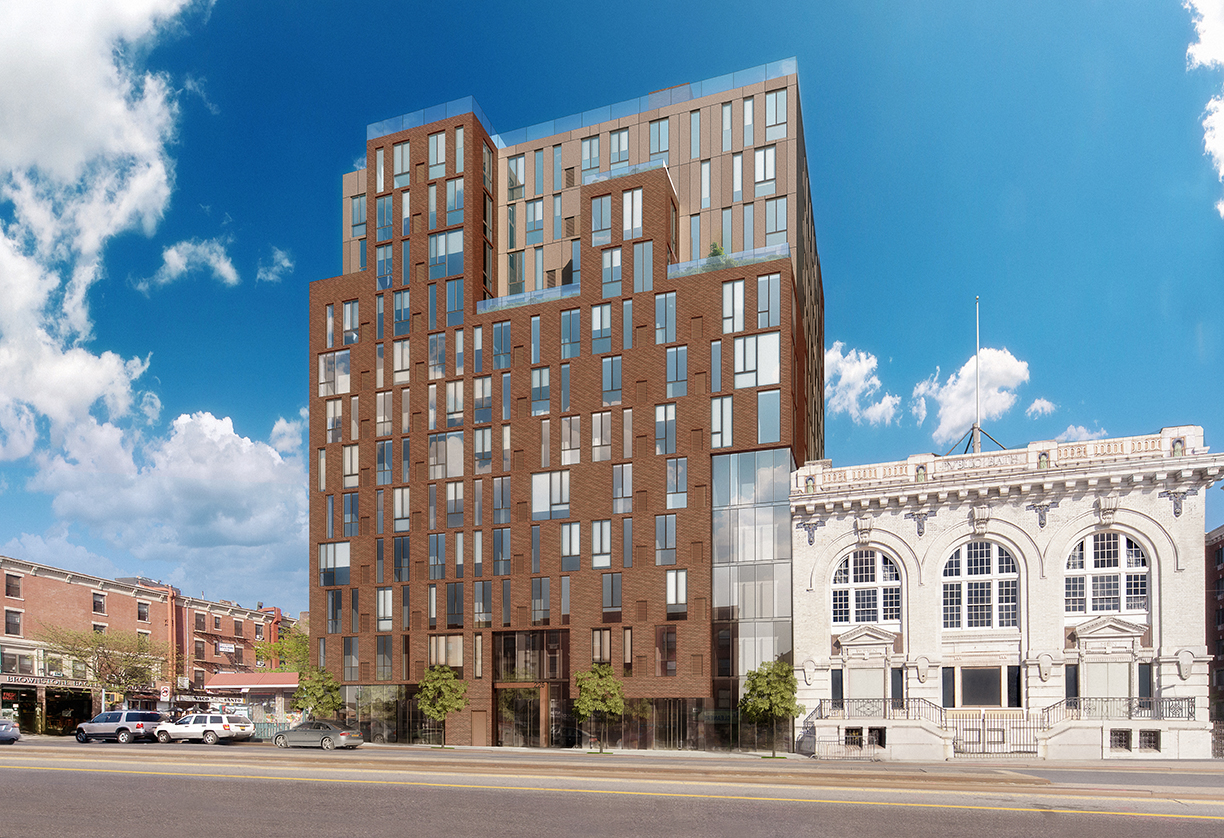
Greystone Development, a New York-based real estate development company, has commenced leasing at No. 223, located in Park Slope, Brooklyn, with leasing and marketing handled by MNS. 

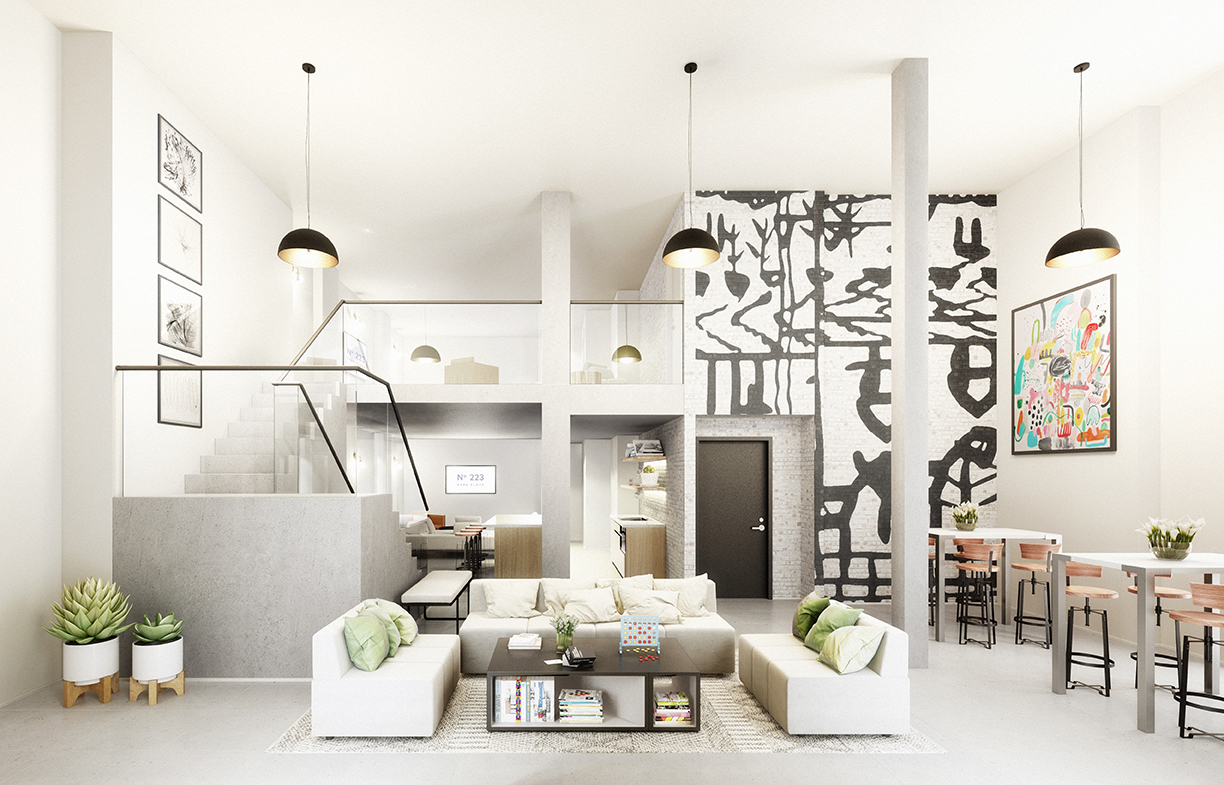
Situated near the Union Street MTA station, above Starbucks and next door to Blink fitness, this modern, 13-story building adds 63 meticulously designed rental units, from studios to two bedrooms, to this vibrant neighborhood.

Daniel Goldner Architects, an award-winning firm based in Chelsea, New York, envisioned this truly unique property, one that celebrates the existing red brick architecture in the neighborhood by incorporating the material into a contemporary context. This same consideration to detail is further demonstrated within the property.

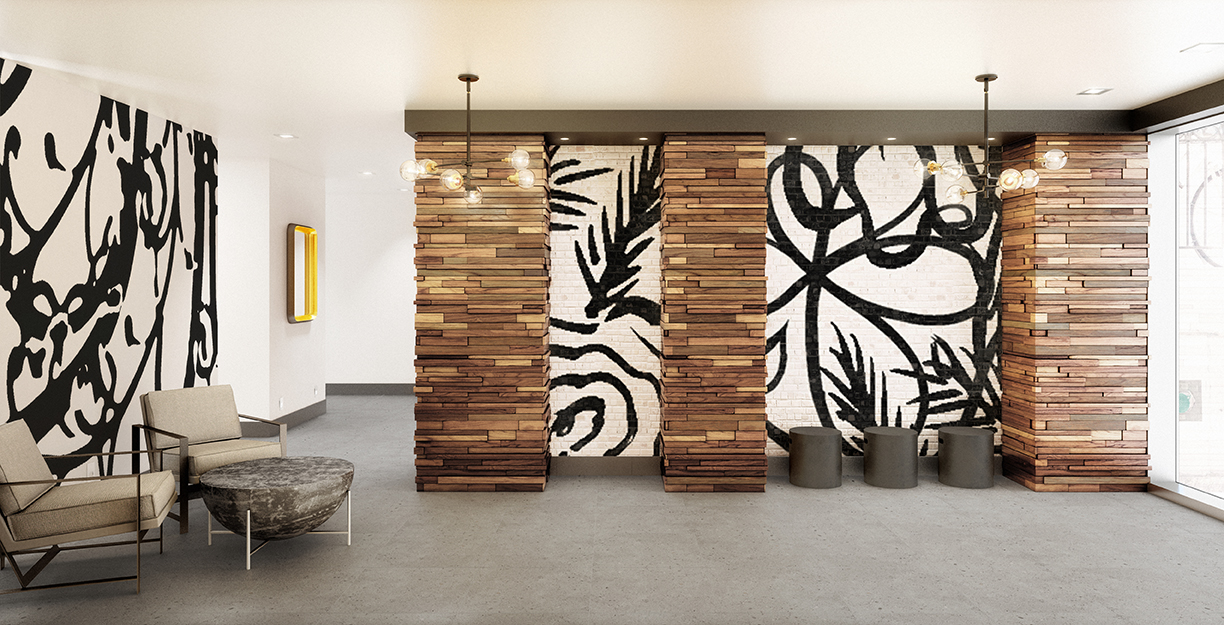
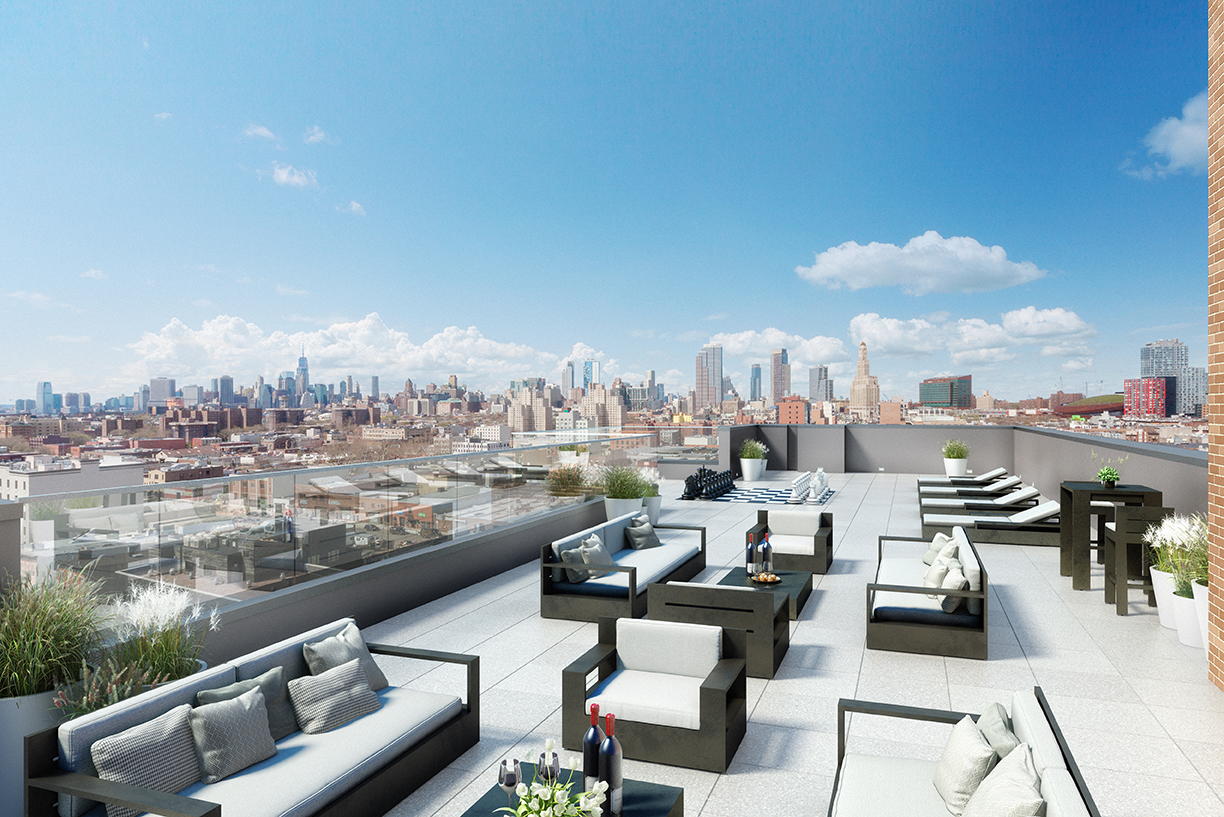
The layouts are carefully crafted to optimize light and air. The upper levels of the building are partially set back to create terraces and dual exposures in the living rooms and master bedrooms and introduce a seamless transition between the interior and exterior. The well-planned layouts also maximize usable square footage, allowing for the inclusion of in-home washers and dryers and ample storage including walk-in closets in most units. With an abundance of building amenities, residents may find themselves not wanting to leave home. Building features include: virtual doorman, part-time attended lobby, a double-height resident’s lounge with a designated chef’s kitchen, landscaped roof deck, and bicycle storage.

“This project has been an incredibly fulfilling process from the start,” said Thomas Ryan, Head of Greystone Development. “Our goal was to give this community a residential development that complements the adjacent landmark and contributes to this area’s vibrancy and activity. We are thrilled to see our vision come to fruition.”

Residents of No. 223 will enjoy, on average, 900 square feet in each unit, and approximate rents starting at net effective $2,315. No.223 is centrally located by many popular restaurants and businesses including Whole Foods, Royal Palms Shuffleboard Club, Brooklyn Boulders, Pig Beach, Blink Fitness, Dinosaur BBQ, and 5th Avenue boutiques.


Photos courtesy of Paperfarm

Leave a comment


America’s Most Expensive Homes
Alabama Real Estate | Alaska Real Estate | Arizona Real Estate | Arkansas Real Estate | California Real Estate | Colorado Real Estate
 
Connecticut Real Estate | Delaware Real Estate | Florida Real Estate | Georgia Real Estate | Hawaii Real Estate | Idaho Real Estate
 
Illinois Real Estate | Indiana Real Estate | Iowa Real Estate | Kansas Real Estate | Kentucky Real Estate | Louisiana Real Estate
 
Maine Real Estate | Maryland Real Estate | Massachusetts Real Estate | Michigan Real Estate | Minnesota Real Estate | Mississippi Real Estate
 
Missouri Real Estate | Montana Real Estate | Nebraska Real Estate | Nevada Real Estate | New Hampshire Real Estate | New Jersey Real Estate
 
New Mexico Real Estate | New York Real Estate | North Carolina Real Estate | North Dakota Real Estate | Ohio Real Estate | Oklahoma Real Estate
 
Oregon Real Estate | Pennsylvania Real Estate | Rhode Island Real Estate | South Carolina Real Estate | South Dakota Real Estate | Tennessee Real Estate
 
Texas Real Estate | Utah Real Estate | Vermont Real Estate | Virginia Real Estate | Washington Real Estate | West Virginia Real Estate
 
Wisconsin Real Estate | Wyoming Real Estate

Style Selector
Select the layout
Choose the theme
Preset colors
No Preset
Select the pattern