There is no favorite listings!
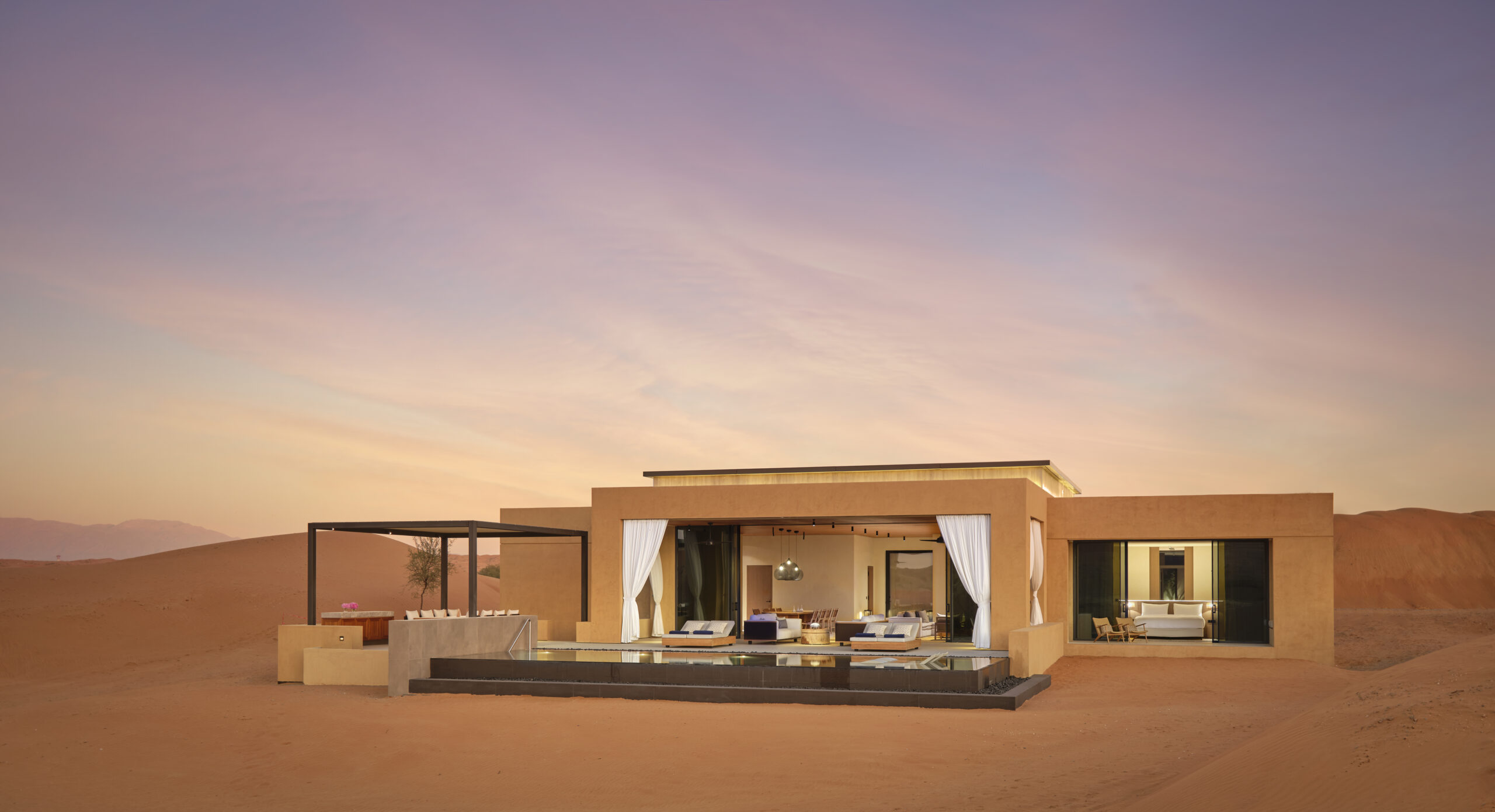
Villa Exterior, on a sandy dessert. Sunset in back.

Modern Elements of Immersive Desert Home Design

COURTESY RITZ-CARLTON RESIDENCES, RAS AL KHAIMAH, AL WADI DESERT

The mystique of the desert, equally reflective and immersive, inspires bold architectural statements without compromising the natural environment

In desert environments across the globe, indigenous cultures, worked hard to create nurturing living spaces in harsh desert climates, and their innovations continue to inspire architects today. Since Frank Lloyd Wright first encountered the Sonoran Desert in Arizona — the establishment of his Taliesin West studio in 1937 was driven by a fascination with the landscape — architects have viewed these rugged environments as especially inviting canvases for reflection and meditation.

“We want the architecture to be a backdrop for engaging with the experience of the landscape,” explains DUST Architects Founding Principal Cade Hayes, whose Tucson-based firm specializes in modern desert residences offering reflective, soulful qualities. Natural materials are essential to the firm’s projects, and the use of rammed earth — an ancient building material consisting of compacted soil, clay or stone whose striations result in a pleasing organic aesthetic — is a DUST signature. “We’re always conscious of how the design is shaped by the senses,” says Hayes, who focuses on olfactory influences as well as the more obvious senses of sight and touch. “We like to bring the landscape as close to the home as possible, because when breezes blow through desert flora, or when it rains, aromatic oils are released that have a calming effect.” For all its desert projects, DUST Architects provides generous terraces or patios, encouraging residents to fully engage with the environment.
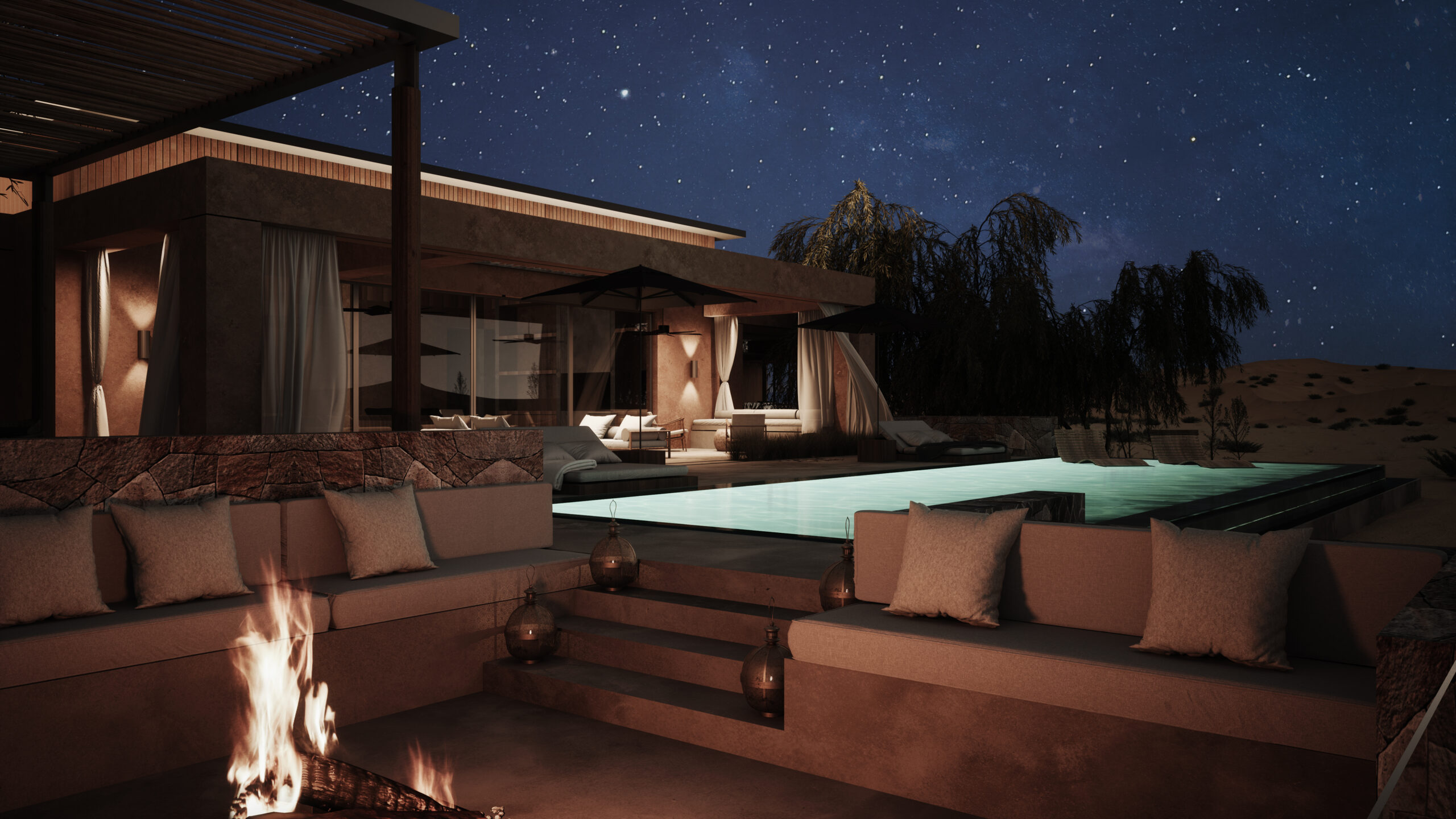
Home at night with pool and fire pit.
COURTESY RITZ-CARLTON RESIDENCES, RAS AL KHAIMAH, AL WADI DESERT
Under the quiet shimmer of the night sky, the pool becomes a mirror of the stars, a seamless blend of design, serenity, and understated luxury.

Desert Design: A Palm Springs Specialty

Wright’s disciples, mid-century modernists like Richard Neutra and Rudolph Schindler, began designing sleek residences whose clean lines and expansive windows seem well suited for the desert landscape. Today, PalmSprings, California, is a thriving testament tothe marriage of modern residential design and the arid environment, celebrated annually with the city’s enormously popular Modernist Week. Contemporary architects are following in the mid-century masters’ footsteps, with deserts around the world attracting exceptional talent.

The Los Angeles-based architectural firm of Marmol Radziner honors Southern California’s rich mid-century modern heritage and has built an impressive desert portfolio, including the masterful restoration of the Richard Neutra- designed Kaufmann House in Palm Springs. “For us, the desert is an incredibly beautiful and powerful tapestry of color and texture, and we want to connect with that landscape while recognizing that it’s a harsh environment,” says Managing Partner Leo Marmol. He suggests a sense of human vulnerability naturally leads to meditation, and emphasizes the importance of maintaining a visual connection to the landscape in all the firm’s desert projects. “Our relationship with the world beyond us brings a sense of awe, tranquility and peace,” says Marmol.

Olson Kundig, an acclaimed Seattle firm known for introducing modern residential designs into remote natural environments, designed a home outside of Palm Springs that pays homage to the original desert settlement before the area exploded into a mecca for tourists. The firm applied natural materials to achieve a harmonious coexistence with the surrounding desert landscape and created broad overhangs to provide shade in the summer — but allow the winter sun to warm the house. A central spine topped by a clerestory enhances circulation and diffuses natural light. The spine extends from the entryway to a plaza with reflecting pool. Commenting on this juxtaposition of mass and water, Olson Kundig Principal Jim Olson notes “the movement of wind across the water brings architecture to life and reflects the changing environment.”

Arizona, Idaho, and Beyond

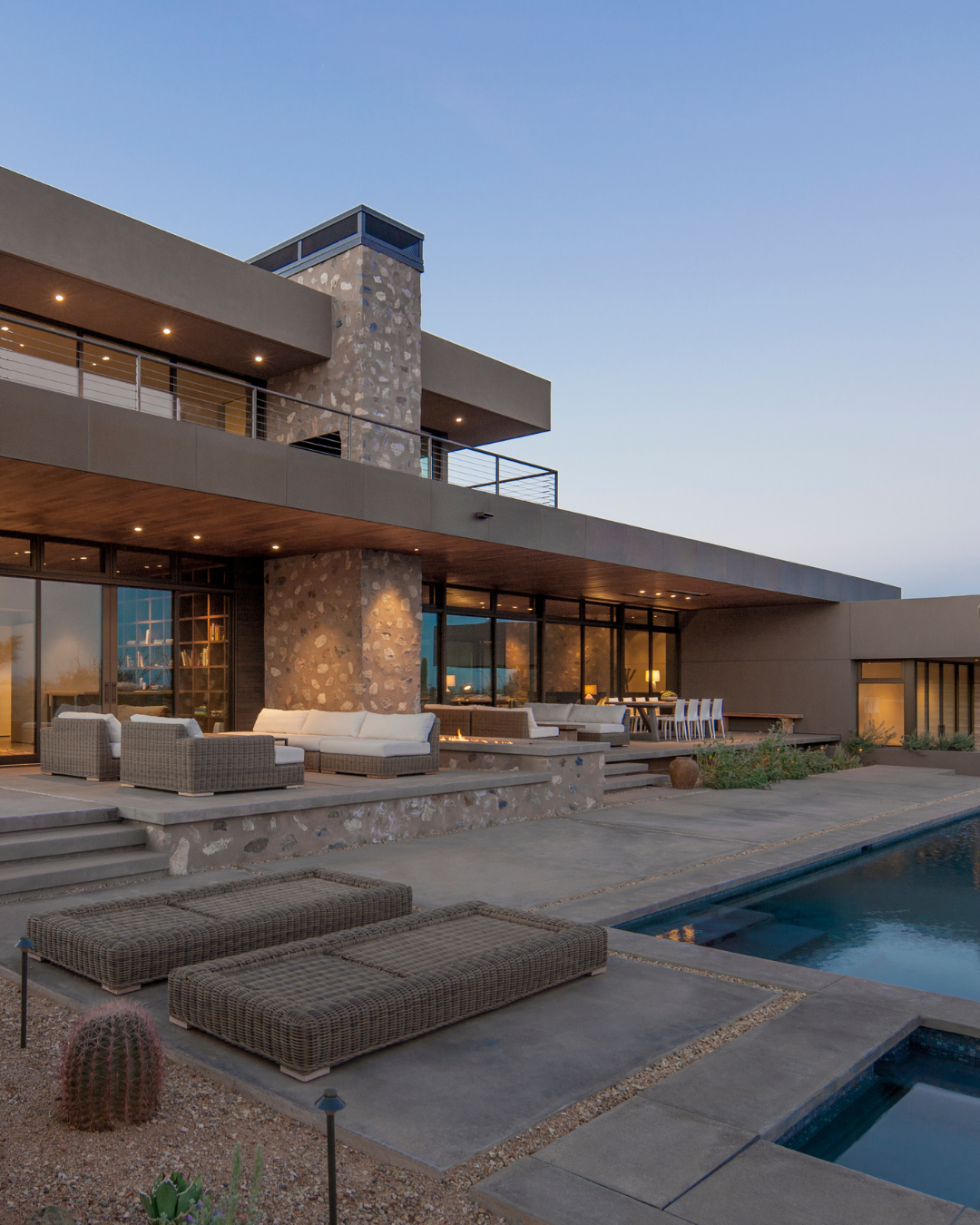
In Scottsdale, Arizona, where the Sonoran Desert is confronted by a metropolis of 5 million people, Marmol Radziner designed a desert home with a bold, modern theme while still respecting the fragile environment. The intent was to weave this elaborate winter retreat seamlessly into the fabric of the desert, heightening awareness of the rugged, saguaro cacti-studded landscape while integrating indoor and outdoor spaces. “We like to incorporate local building materials and techniques, which help connect the residence to nature, even in a contemporary design,” says Marmol. In the Scottsdale project, he cites surfaces inlaid with local stone — it is a recurring feature in both exterior and interior spaces — that reflect this approach.

Similarly, in the harsh high desert of Idaho, an Olson Kundig residence nicknamed “Outpost” makes a statement amid the austere landscape, yet somehow hardly interrupts the region’s endless expanse. The elevated main living level offers 360-degree views of the desert and mountains, with nary a neighbor in sight. “When you grow up in the Palouse [the high desert prairies of the Northwest], you learn quickly how insignificant your place in that larger landscape is,” muses principal Tom Kundig. Architect Daniel Joseph Chenin also designed Fort 137, a luxury residence with panoramic views of Red Rock Canyon outside of Las Vegas, with the intent to encourage an emotional connection to both the desert landscape and the rich history of Nevada. The house features a soaring 28-foot entry rotunda — a modern interpretation of an old frontier fort in the Silver State — that reflects the experiential approach of Chenin’s firm. That element serves as a transition between the external desert heat and the cooler
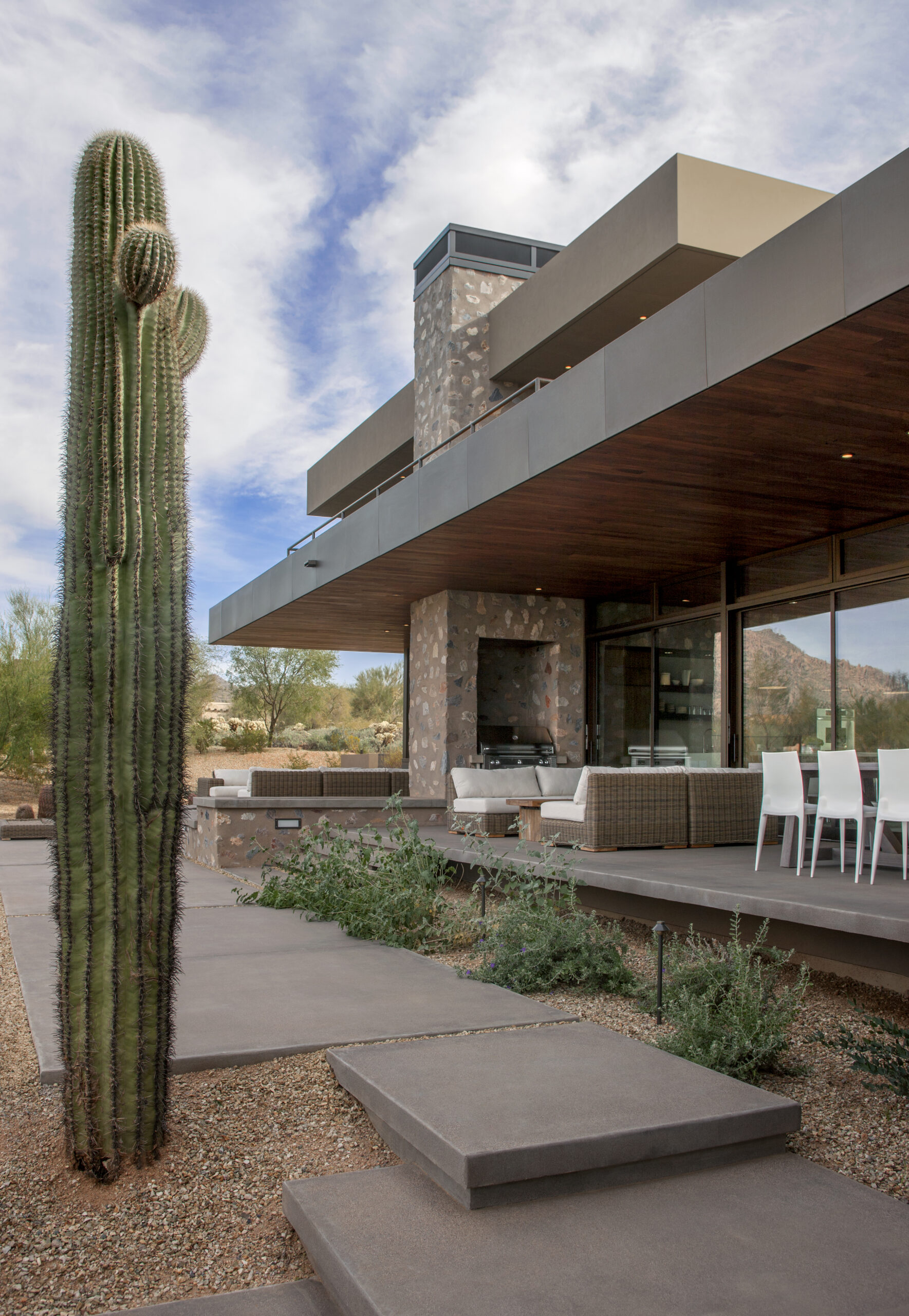
PHOTOS BY BILL TIMMERMAN
Above/Below: Perched on Lake Constance, this 3,700-square-foot home pivots with the landscape to frame sweeping alpine views and embrace its lakeside setting.
interior, further enhanced by soothing sounds of a stone fountain. “In researching architecture that addresses the hot, arid climate of the Southwest, it took us back to some of the settlement structures of the pioneers of the 1800s,” explains Chenin. “The idea of a stacked rock structure, similar to forts designed by the settlers of the time, really resonated.” Further embracing an indoor-outdoor desert lifestyle is a shaded courtyard set against a rugged backdrop that includes a 75-ton boulder excavated from the site.
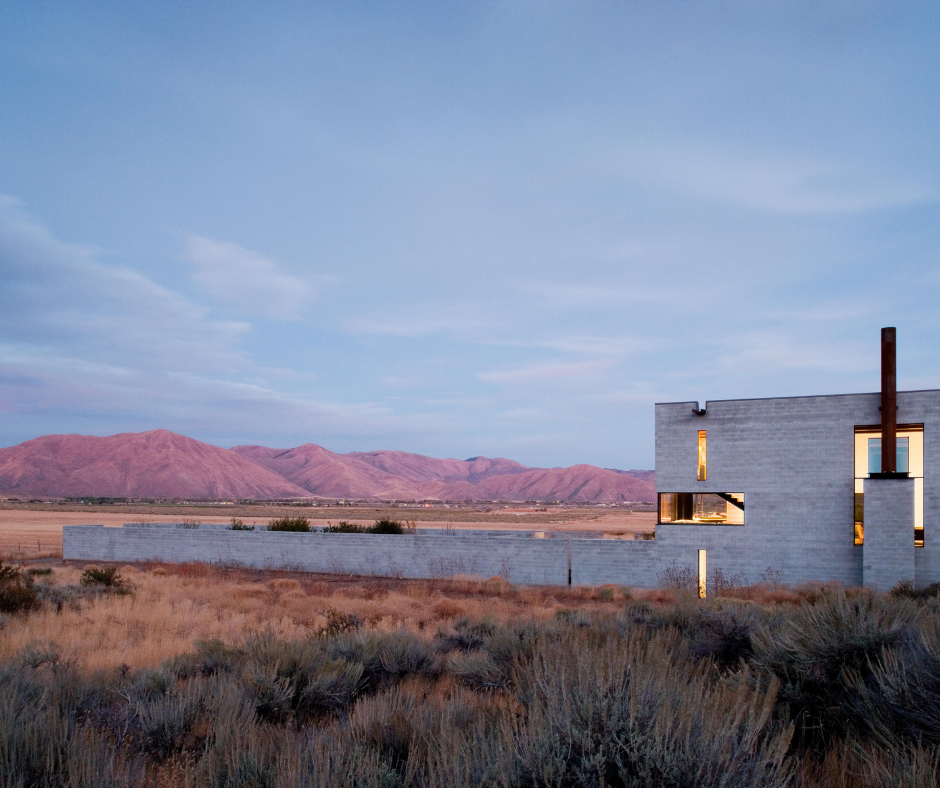
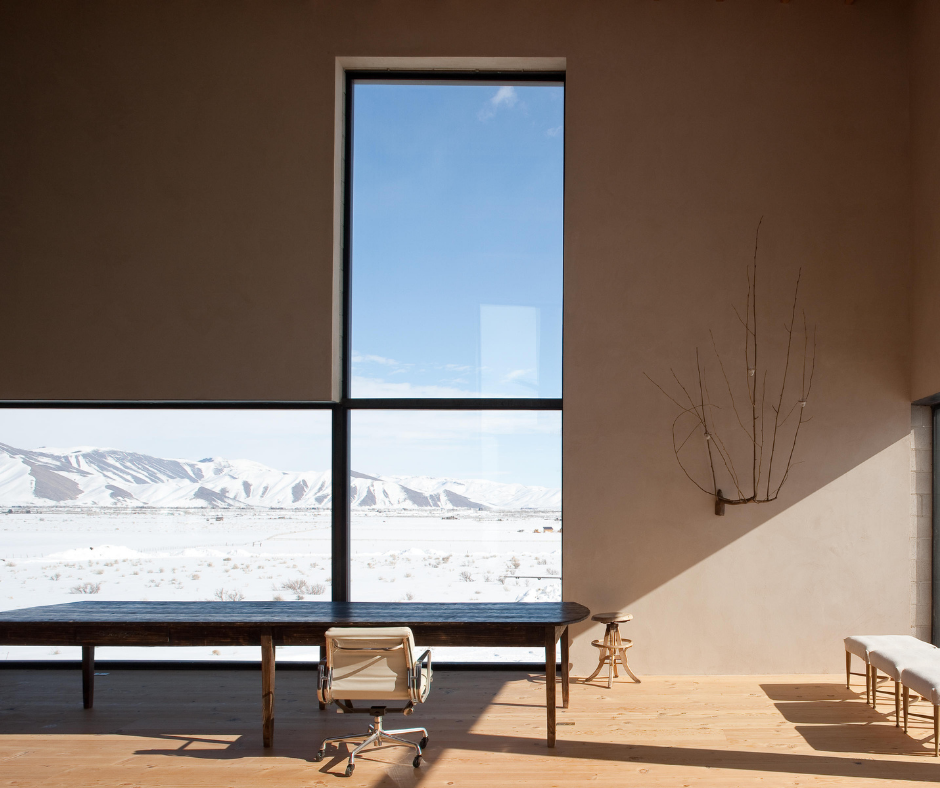
PHOTOS BY OLSON KUNDIG

Outside of Dubai, where the Al Wadi Desert meets the Persian Gulf at Ras Al Khaimah, Ritz-Carlton Residences is developing 35 private luxury villas, applying contemporary
architectural elements to traditional Bedouin desert structures. The villas, slated for completion in early 2027, will feature clean lines and sustainable local materials while emphasizing a strong connection to the beautiful, forbidding desert environment. “With homes designed in harmony with the desert and amenities inspired by the local heritage, these Ritz-Carlton Residences are immersed in a lifestyle of quiet luxury,” says Jaidev Menezes, who oversees residential development for Marriott International in the region. With views of sweeping dunes and sunsets, these multimillion-dollar villas will ensconce residents in a desert landscape that has mesmerized explorers for millennia.

Leave a comment
Elegant living room with exposed wooden beams, large black-framed windows, a modern chandelier, and neutral-toned furniture that creates a warm, sophisticated atmosphere.

Luxury Casita Design: It’s Not an Afterthought

Written by: Ellen Paris

Casita design has evolved to include expansive luxury spaces that cater to living, working and wellness.

Architects and interior designers remain focused on the expanding definition of home. Increasingly, for a certain type of homeowner, this definition includes the casita. The term, which translates to “little house” in Spanish, refers to a small, self-contained living space built on the same property as a primary home — and their popularity appears to be surging.

“In the ultra-luxury market, casitas are no longer viewed as ‘secondary spaces.” They are designed to mirror the sophistication of five-star hotels or private villas,” notes Josie Fratantoni of Fratantoni Luxury Estates, LLC. Today, luxury casitas boast bespoke architecture, custom millwork and curated interiors.

“Many of our clients want their casitas to feel like a private sanctuary. They want to seamlessly blend indoor and outdoor living with features like Luxury Casita Design: It’s Not an Afterthought glass walls that open to courtyards, private plunge pools or landscape gardens,” adds Fratantoni. The demand for casitas as personal wellness retreats, outfitted with spa-like bathrooms, meditation rooms, boutique fitness spaces, and yoga and Pilates studios, also continues to grow.

DESIGN EVOLUTION

The historic concept of a casita dates to the early 1800s in California. Casitas began as “little houses” or cottages associated with Spanish Colonial architecture. Now most popular throughout California and Arizona, casitas can be seen in residential architecture ranging from Mediterranean to midcentury styles.

“Luxury casitas are no longer simple guesthouses; they’ve become extensions of a homeowner’s lifestyle,” says Katherine Mueller, principadesigner and owner of Scottsdale, Arizona-based Katherine Mueller Design. Privacy is key, with separate entrances, kitchenettes and luxurious bathrooms. “Functionality is also a priority. Casitas often include workspaces, fitness areas or even winebars,” Mueller adds. When used for guests, homeowners want a luxury casita to balance hospitality and flexibility, while giving guests independence and enhancing the property’s lifestyle value.

The Casita design demand today includes executive-style retreats, complete with state-of- the-art technology. “Above all, the casita must reflect the same architectural integrity and attention to detail as the main estate, ensuring a cohesive and elevated design throughout the property,” Mueller notes.

CASITAS VS. ADUs

Over the last several years, casitas and accessory dwelling units (ADUs) have endured a bit of an identity crisis. Not all casitas are ADUs from a design perspective, and not all ADUs are called casitas. An accessory dwelling unit is a broader zoning classification used by cities, and structures in this category must meet building code and city approvals. For example, the City of Phoenix permits homeowners with lots up to 10,000 square feet to build one ADU capped at 1,000 square feet in size. In other words, casitas can be a type of ADU, but it can depend on both design and geography.

In most areas, state and municipal regulations remain the same for new construction of casitas and ADUs. “There are so many names people use for ADUs, and casita is just one of many, including guest house, granny flat, backyard cottage and carriage house,” explains Keely Montgomery, marketing and selections coordinator, CAPS, ADU specialist for Stone Creek Building |Shelter Solutions of Oregon City, Oregon. According to Pasadena, California-based Pacific Research Institute, citing a recent report from ADU West Coast, California has issued more than 60,000 ADU permits since 2018. “Casitas are more than a garage conversion, which is what we see with some ADUs,” says Los Angeles-based Julia Wong, interior designer for the much-awaited Hudson House, “A casita designed by an architect is multi-functional and complete on its own.” Depending on the architecture, a casita could be standalone or attached to the main house with a courtyard separating the two structures.

Modern living room featuring neutral tones, minimalist décor, and floor-to-ceiling windows that fill the space with natural light and balance.
Top Photo by: FRATANTONI LUXURY ESTATES, LLC\, Bottom Photo by: Scott Sandler, Courtesy of Katherine Mueller Design

UNMATCHED FLEXIBILITY

The broad scope of creative design options for casitas appeals to homeowners, whether adding a casita to an existing property or including one in a new custom build. Montgomery of Stone Creek Building | Shelter Solutions shares her own family’s experience. “We originally built our casita-slash-ADU with universal design in mind so my parents could live comfortably and safely as they aged.” Now Montgomery and her husband plan to live there when their children are older. “The beauty of a casita is flexibility. What starts as a space for aging parents can later become a rental, guesthouse or even your own retirement living space,” Montgomery adds.

Erik Evens, partner at KAA Design, a Los Angeles high-end residential design firm, underscores the fundamentals of luxury casita design. “Flexibility and connection to the landscape are always important,” he says. Evens points to recent projects where the casita functions as part-time guest quarters and is used as a pool house or garden pavilion when entertaining. “The design of an indoor-outdoor pavilion with expansive pivot, pocket or foldaway doors that engage with the surrounding landscape with different day and night functions is increasingly in demand.” The average casita build size for KAA Design ranges from around 600 to 900 square feet, according to Evens.

Featured in Unique Homes Global 2025. Read Here! 

Leave a comment
Colorado Castle

Mountainside Magic: Colorado Castle

Majestic Mountain Vistas Abound at Chateau V: A True Colorado Castle

Welcome to Chateau V! This is a truly magnificent castle marrying French opulence with the rugged beauty of the mountains set across 35.01 acres in Eagles Nest Preserve, a private gated community in Colorado. This prestigious residence offers 21,692 total square feet. The six generous primary suites and 10 baths spanning four levels, all with elevator access. 

Inside this Colorado Castle

“As you enter the home from the grand porte-cochère, you are immediately taken by the views. It is truly spectacular,” says listing agent Jean Merkelbach. A grand entrance hall introduces the glistening marble flooring that travels throughout the home, while the great room boasts an immense glass wall showcasing indescribable mountain vistas spotted with whispering pines, visiting elk, wild turkeys and other wildlife. “From Chateau V, you get a majestic view of Mount Evans cradled by the beautiful views of the vistas and valleys of the Rocky Mountains,” says Merkelbach. 

“Once the shock and awe of this incredible residence subsides, one realizes it lives very cozy and inviting,” says listing agent Melissa Temple. “The ground floor was designed for parties and entertaining.” Six custom-designed limestone fireplaces can be found throughout the estate, adding a sense of warmth and grandeur, along with a total of 120 sparkling chandeliers. The chef’s kitchen is a sight to behold, featuring top-of-the-line appliances and a magnificent self-supporting ceramic tile vault and arch system patented by Spanish architect Rafael Guastavino in 1892.

Colorado Castle


Furthermore, this spacious family room is ideal for hosting. It’s complete with an antique bar, full sound system, and more captivating views. The estate also boasts a safe room, a billiards room with an exquisite 1885 antique wooden bar, a wine room suited for 1,500 bottles, and a stunning two-story library with walnut flooring and a surrounding balcony. Finally, completing the main level is the primary suite, an absolute haven boasting Juliette decks, a living room, limestone fireplace, and a luxurious bath. 

High-End Amenities

In addition, upstairs, there are four more bedroom suites and a 1,000-square-foot guest apartment with a full kitchen. “The guest rooms all live like primary suites,” says Temple. Other amenities include a state-of-the-art gym and a theater room with a 110-foot screen and custom sound system, promising the ultimate movie nights with a massive 110-foot screen and custom sound system. 

The grace continues outside, where 6,410 square feet of outdoor spaces beckon, including multiple spacious balconies and decks. “You can wander through the custom greenhouse or enjoy the outdoor pool and spa as you’re surrounded by the mountains. It’s breathtaking,” says Merkelbach. “The outdoor adventure doesn’t end with this secluded sanctuary; skiing and golfing are just miles away.” 

Finally, countless refined features contribute to the ultimate outdoor retreat. Overall, this makes the home impeccable for hosting guests and spending warm days in the sun. “The outdoor space has been created for entertaining large groups or for a couple to relax on their chaise lounges and lie by the magnificent pool, soaking up the incredible views of the Rockies. Hidden speakers abound, and the outdoor kitchen invites guests to enjoy intimate dining experiences. The landscaping itself is simply beautiful,” adds Temple. Other outdoor highlights include twin two-car attached garages with custom-built-in floating storage units. There is also a well water system and a 25,000-gallon cistern located underneath the south garage, an 8,500-square-foot motor court, antique Lady & Eagle Fountain from France, and two marble lion statues imported from Italy. “Chateau V has the WOW factor to the power of 10.” 

Agent Info: Jean Merkelbach

Leave a comment
Unique Architecture

Striking Desert Architecture in Saudi Arabia

By Kassandra Burr

Nestled in the historic Hejaz Mountains, this awe-inspiring resort fosters connectivity with nature through unique design elements.

Unique Desert Architecture

Developed by Oppenheim Architecture in partnership with Red Sea Global, Desert Rock is situated 50 miles from the Red Sea coast amid the breathtaking Saudi Arabian desertscape. Inspired by the Nabatean civilization, renowned for its remarkable rock-carved city in Jordan, Desert Rock features luxury suites carved out of the Massif itself.

It’s an unparalleled experience, gazing up at an ethereal desert sky from a cliffside pool, seemingly suspended in midair, or sleeping within the walls of ancient desert rock. These experiences epitomize the resort’s purpose: encouraging guests to feel grounded in the landscape, one with the desert. Their vision centered on cultivating “immersive and transformative moments,” explains Chad Oppenheim, principal of Oppenheim Architecture. “We designed spaces that invite exploration, tranquility, and a deep connection with nature.”

Unique Architecture

Cliffside Living in Unique Architecture

Palatial suites, complete with outdoor terraces and private pools, marry luxury comforts with the enduring beauty of nature, inviting guests to appreciate and explore the natural wonders of the surrounding environment. Blending seamlessly into the rockface, the Mountain Cave Suites feature sand and crushed stone repurposed from the excavation process. “High-quality finishes and locally sourced materials not only enhance aesthetics but also create a sense of place that resonates with the surrounding environment,” notes Oppenheim. Embedding habitable living spaces into the cliffside presents a unique challenge, one that Oppenheim says was overcome by incorporating natural ventilation and insulation techniques via geothermal cooling.

Holding true to its design philosophy—which emphasizes building with the land, not on the land—Oppenheim Architecture designed Desert Rock as a sustainable destination where guests could celebrate the land and its historical significance. The newly completed resort took several years to design and build, reflecting the firm’s commitment to sustainable luxury.

With eco-friendly considerations, such as the use of solar energy, water collection practices, and the recycling of construction materials, Desert Rock was designed to reduce energy consumption as well as regenerate native flora. “The landscape,” Oppenheim says, “with its unique geological characteristics, allowed us to create a dialogue between architecture and nature, honoring the region’s heritage while promoting sustainable tourism.”


Photo courtesy of Red Sea Global and Oppenheim Architecture.

Unique Homes Magazine, Luxury Real Estate Magazine


Unique Location: Desert Rock

originally appeared in

Unique Homes Spring 2025.


Click here to read more!

Leave a comment
Looking Ahead in Luxury

Market Outlook: Looking Ahead in Luxury

Looking back, 2024 was a year of small improvements followed by equally incremental reversals. Looking ahead in luxury, it will remain the most vibrant part of real estate while the overall market gradually improves.

Not quite the long-awaited recovery that everyone has been longing for, 2024 was a year of ups and downs for real estate. “Some of the ‘wild cards’ are behind us,” says Michael Altneu, vice president of Coldwell Banker Global Luxury. “Rates have started to decline incrementally, some industry rule changes have been implemented, and we are no longer in the midst of a high-profile election cycle.” While the industry saw modest increases in inventory, that did not necessarily translate into transactions, making for a year of triumphs and challenges that continue to play out.

Homes Sales

Sales for 2024 will clock in at 4.02 million, approximately 2% below 2023 and well under the historical average of 5.28 million. “2024 has been a very difficult year on many fronts,” says Lawrence Yun, chief economist at the National Association of Realtors (NAR). “We did not get the home sales recovery this year after an awful 2023.”

Yet, by year-end, positive indicators emerged, potentially laying the groundwork for a turnaround in 2025. “While there is still some uncertainty surrounding the macro economy and housing at large, luxury real estate continues to be incredibly attractive for affluent buyers seeking advantages from both a lifestyle and investment standpoint,” adds Altneu. Existing home sales grew 3.4% in October, the first year-over-year gain since July 2021, followed by a 4.8% increase in November, the strongest year-over-year increase since June 2021.

Momentum is building when it comes to home sales, according to Yun. “More buyers have entered the market as the economy continues to add jobs, housing inventory grows compared to a year ago, and consumers get used to a new normal of mortgage rates between 6% and 7%.”

While growth encompasses the entire real estate market, Altneu says, “it is also indicative of transaction trends we’re seeing in the luxury space, which we hope to continue in the first half of 2025.” The number of single-family luxury homes sold in November 2024, according to the Institute for Luxury Home Marketing (ILHM), increased by 22.5%, while attached homes saw a 7.7% rise. The inventory of homes for sale is expected to increase by an additional 11% in 2025.

ILHM data shows that overall sales at $900,000 and above increased by 22.5% year over year in November. Compared to November 2023, new listings were up by 8.3% for single-family and 7% for attached properties, reflecting an increased confidence among sellers.

Expectations

Anticipation and hope that the second half of 2024 would bring lower rates was much delayed, indicating that the lower end of the market may continue to struggle in the coming months. “The lock-in effect that’s hampered inventory for three years just keeps rolling right into 2025, particularly at the lower tiers of the housing market,” Marci Rossell, chief economist for Leading RE and Luxury Portfolio, explains.

Have It All

Over 44% of Coldwell Banker Global Luxury agents report increased demand among the most affluent buyers for “have-it-all” properties — impeccably presented, move-in ready, or new-construction homes with attractive pricing. Another option for buyers who want it all is branded residences. Top choices that continue to dominate the resort landscape are residences that are tied to major hospitality, fashion, or automobile icons.

“Our expectation at the beginning of 2024 that affluent buyers would eventually adapt to higher interest rates and prices is becoming a reality,” says Altneu. There is still a large homeowner population with little incentive to sell, those with low rates, and those wishing to avoid paying capital gains taxes.

Just under half of luxury buyers this year paid with cash. Still, experts such as Ron Shuffield, president and CEO of Berkshire Hathaway HomeServices EWM Realty in Miami, say even for the affluent, rates play into buying plans since buying power can be reduced (or increased) significantly.

©ISTOCKPHOTO.COM/SZEPY

Consumers in the luxury market are increasingly turning to AI technology to find their dream homes, transforming the home-buying process. By streamlining searches and personalizing options, AI is ushering in a new era of innovation in real estate.

Rates and Growing Markets

“We are predicting steady growth in 2025 in markets throughout the world, with continuing high demand in the most prestigious luxury markets,” observes Meghan Barry, president of LuxuryRealEstate.com. In the U.S., interest rates are expected to remain relatively stable, with a possible slight decrease, while limited inventory will keep driving competitive prices. “Many real estate consumers will have adjusted their expectations by 2025, and the ‘why now’ conversations with buyers and sellers will be less of a challenge for those in the industry,” says Barry.

Expectations are that mortgage rates will hover in the 6% range in 2025, which Yun believes will be the new normal. Yun also forecasts a 9% increase in home sales for 2025 and 13% in 2026.

Curves Ahead

Significant changes are on the horizon, not because of commission rulings but as a result of artificial intelligence (AI). Few areas of real estate and homes will be immune to the influence of AI. “It will be like going from kindergarten to fifth grade,” says Kevin Hawkins, editor of Real AI. From security to renovation to interiors and design, AI will enhance and also streamline. By unlocking data from photos, AI will empower home searches, allowing buyers to continually fine-tune their vision and then find homes to match that vision. And rather than taking over an agent’s function, Hawkins says AI will elevate what they bring to the buying process.

“It’s encouraging to see contract signings increasing in all major regions of the country,” Yun says. “More notable gains from a year ago occurred in the expensive regions of the Northeast and West. The recordhigh stock market is providing a boost for upper-end home buyers.” Miami-Fort Lauderdale is projected to be a 2025 hot market only eclipsed nationally by Colorado Springs. “I am very encouraged by 2025,” says Shuffield, noting slow sales over the last three years, with 2024 charting the fewest residential transactions in Miami-Dade in the last 15 years. “That’s getting ready to change,” he says. “We are anticipating that 2025 will be a much stronger year in number of sales. But we don’t forsee a spike in prices. Prices will probably be steady and stable.”

ISTOCKPHOTO.COM/GEORGECOTAYO

Demographic Plays

“The profile of the luxury home buyer has evolved in recent years, with several new generational groups emerging as key drivers,” says Anton. “Millennial and younger Generation X consumers are becoming more prominent within the market, particularly as they inherit wealth and capitalize on successful investments across artificial intelligence and cryptocurrency ventures.”

Post Election

Political activity typically translates to movement in the real estate market, particularly the high-end, and this year has been no exception. Stephanie Anton, president of Corcoran Affiliates, says, “Just this past month following the presidential election, we’ve observed a significant increase in luxury buyer activity within Corcoran markets where inventory is stable.”

Currently, financial markets are anticipating economic growth under the Trump administration, which Realtor.com economists believe will boost incomes. The surprise factor will be how other policies affect the price of goods and services and whether anticipated tax cuts occur.

Other potential policy changes under the new administration could have mixed results, according to Realtor.com economists. Initiatives to make Federal land available for home building and potential streamlining of regulations could boost the supply of homes. At the same time, tariffs and new policies could constrain home construction and renovation efforts.

The luxury market has been real estate’s bright spot, according to Rossell, who sees the market as bifurcated with wealthy individuals benefiting from stock market gains and corporate tax cuts. “I think luxury does really well in this environment because for the high-net-worth buyer, their stocks are exploding, and the wealth effect is powerful.”

On the Horizon for Design

Few rituals provide a better snapshot of the consumer mindset than color forecasts. Following Pantone’s precedent, manufacturers of all stripes, from paint to exterior cladding to wallpaper, now offer similar insights on color and designs. Tapping into a growing desire for comfort and subtle elegance, Pantone looks to Mocha Mousse as the Color of the Year. This rich, warming mid-tone evokes the comfort derived from coffee and chocolate and expresses a global mood and attitude. In luxury, browns are taking center stage, a penchant designers see extending into furnishings, particularly a preference for wood. Optimal design today combines vintage pieces with comfortable textures and modern accents. Wood sideboards and credenzas are expected to make a comeback. “The same is happening in architecture, where even the more austere practitioners have embraced organic materials and ‘warm minimalism.’”

Expected Additions

2025’s hot button? Cold plunge pools and cold treatments for wellness. Adoption of these features surged in 2024, and it seems cold therapies have become integral to wellness. Also cropping up on wishlists are wet rooms favored by architects, designers, and consumers. Built around a curbless shower and a tub, these glass enclosures conserve square footage while also creating an indulgent master bath. Where money is no object, 1st Dibbs says closets with extra space and storage are the top additional rooms that designers will recommend to clients. Recommendations for guest suites follow close behind. Also on the rise is an interest in scullery and outdoor kitchens, which are part of the continued appeal of athome entertaining. Kitchens are predicted to be the most requested renovation per 1st Dibbs annual designer survey, with 61% of homeowners seeking updates. Living rooms follow at 51%.

Leave a comment
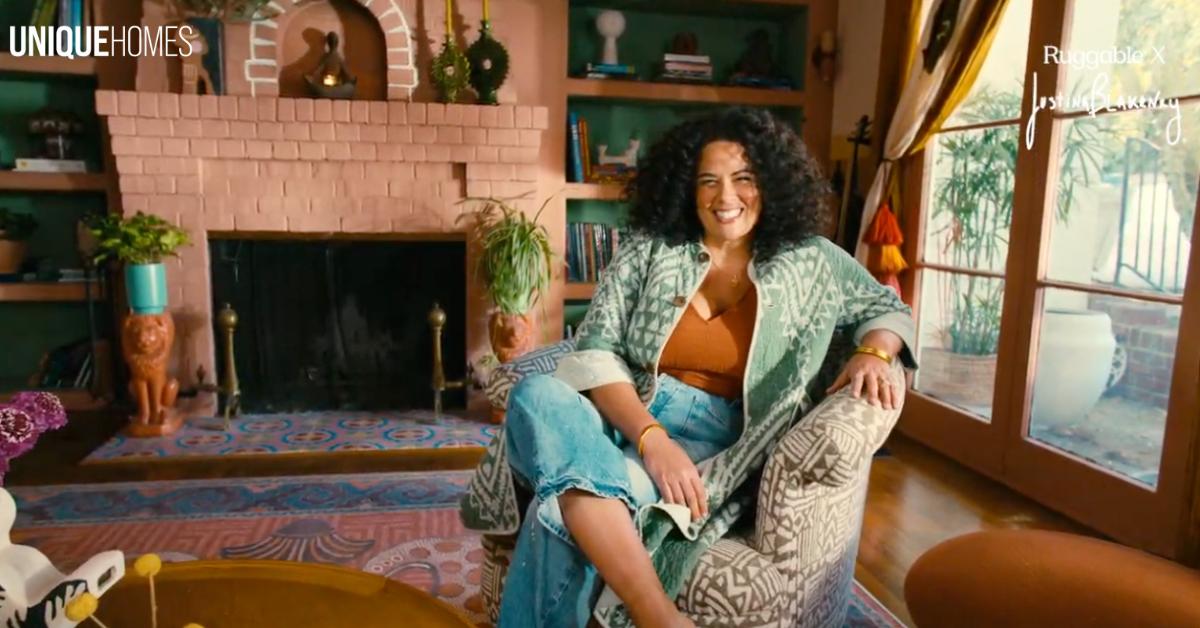
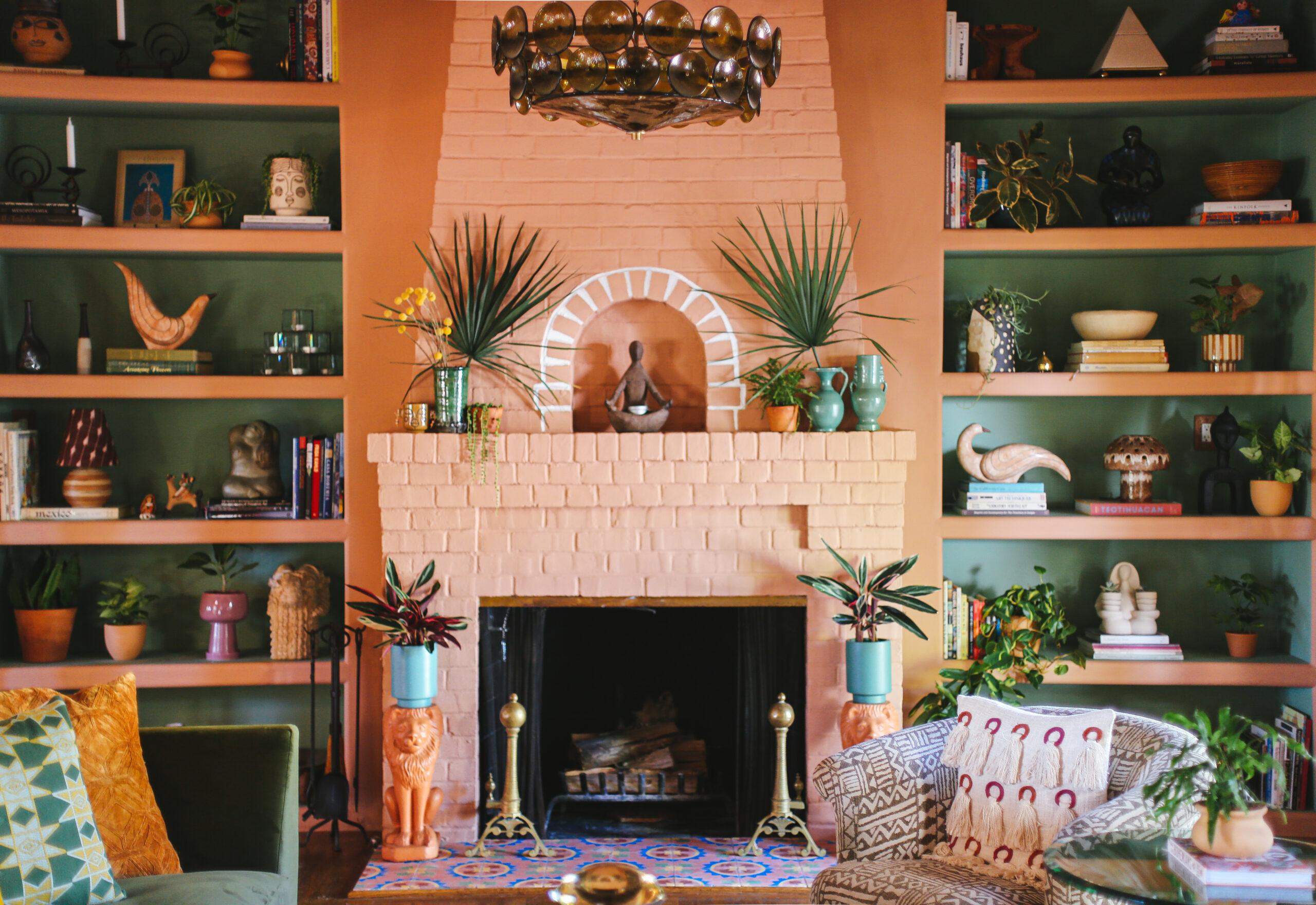
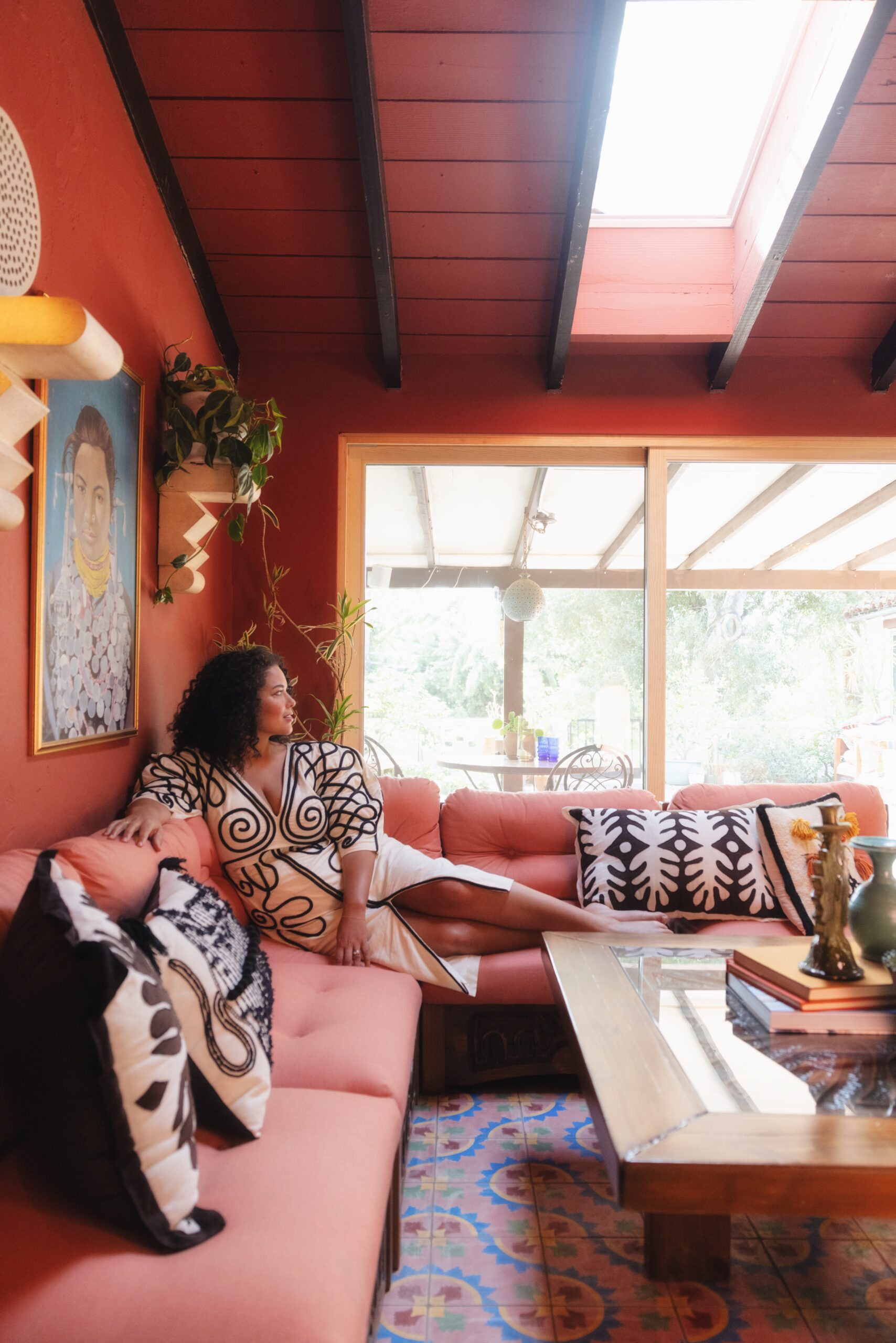
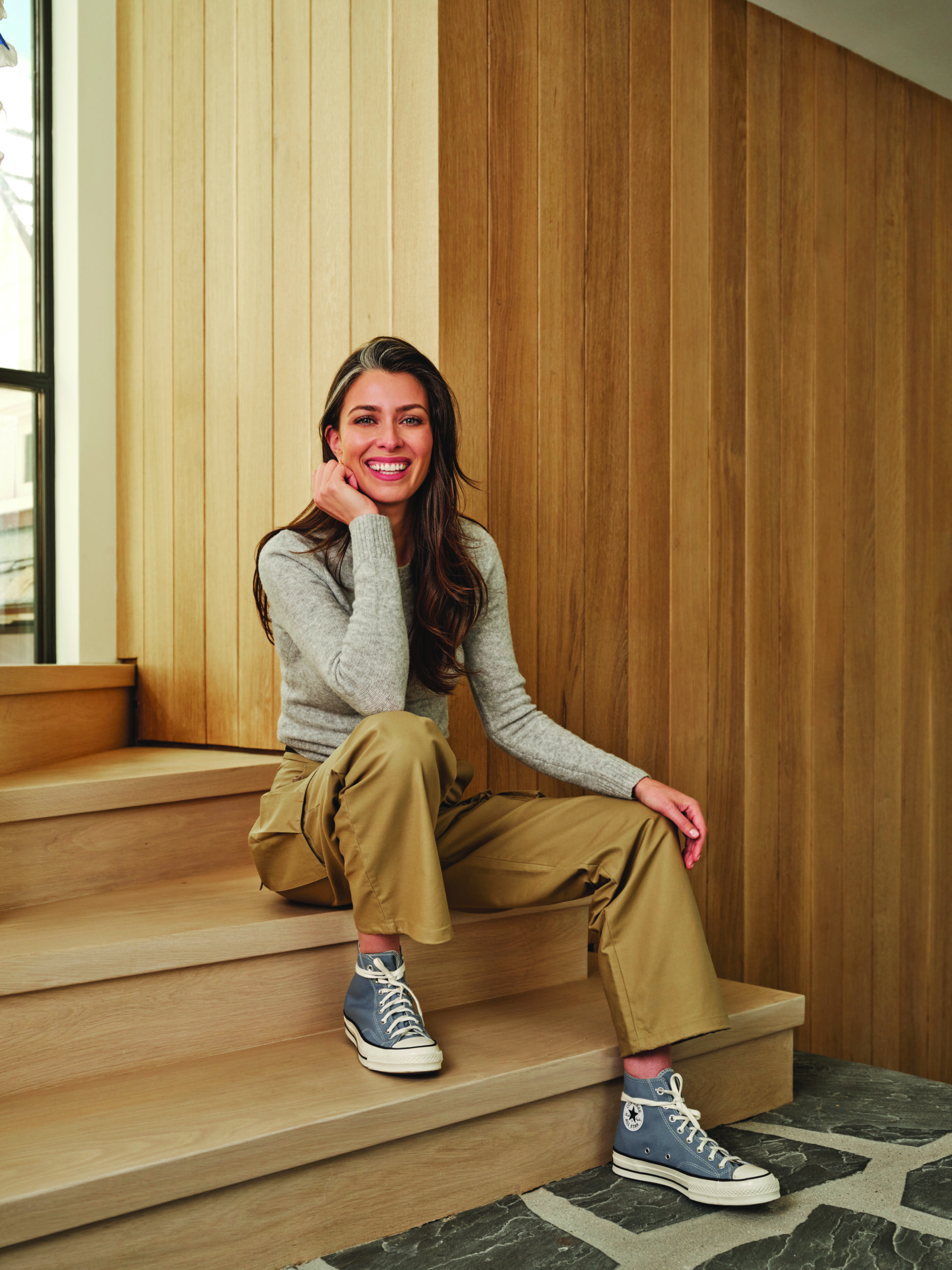
Justina Blakeney

Joyful Design with Justina Blakeney: Designer Spotlight

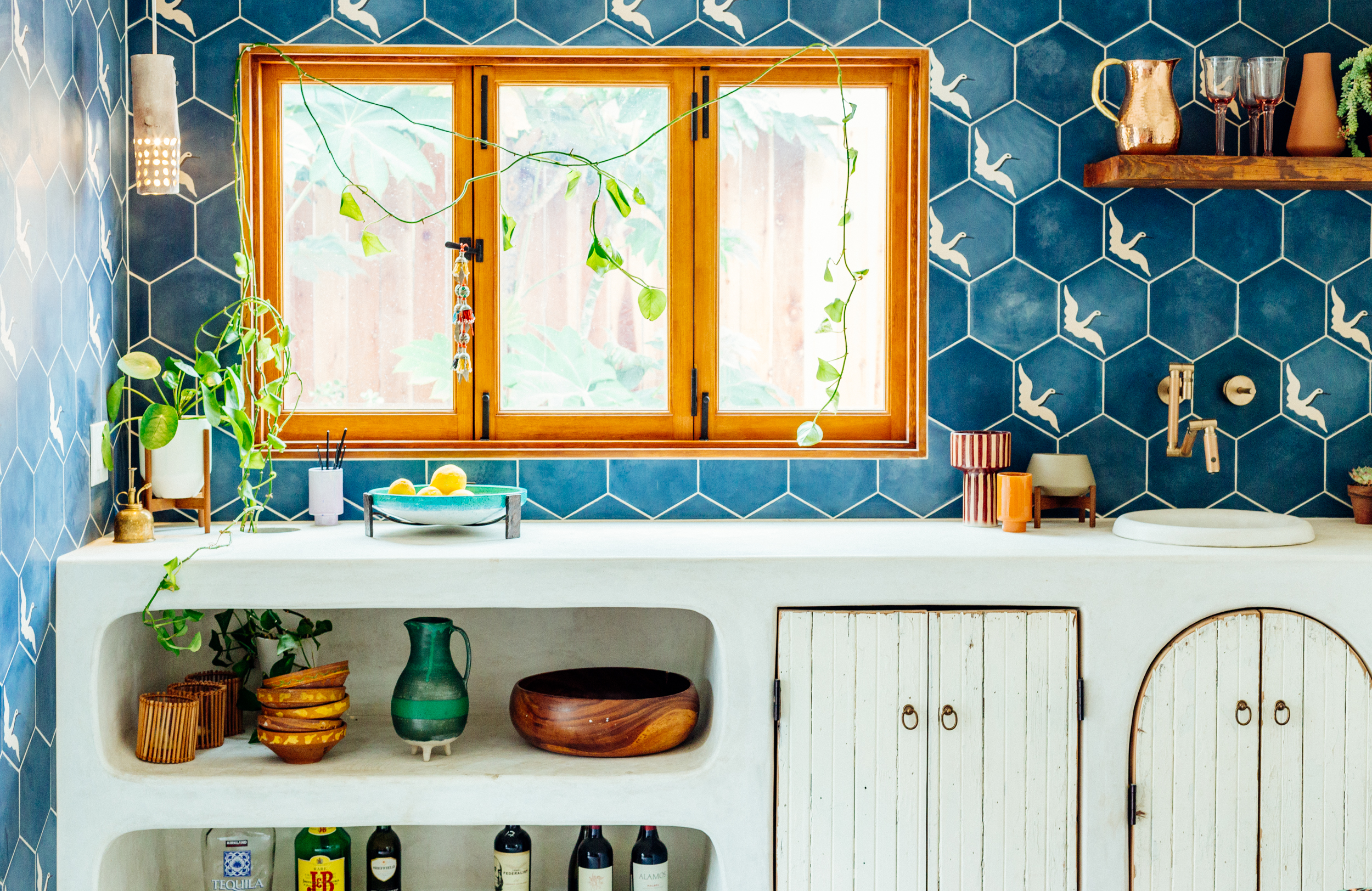
Vibrant colors, eclectic patterns, and a deep connection to nature — these are just a few elements that define Jungalow, the bold and inspiring lifestyle brand founded by Justina Blakeney. More than just a design studio, Jungalow has become a movement, bringing warmth, creativity, and soul into homes around the world. And we were lucky enough to speak with her about the story behind her brand, her approach to design, and how she seamlessly blends creativity with business. At its core, the brand is about more than just looks — it’s about how a space makes people feel.

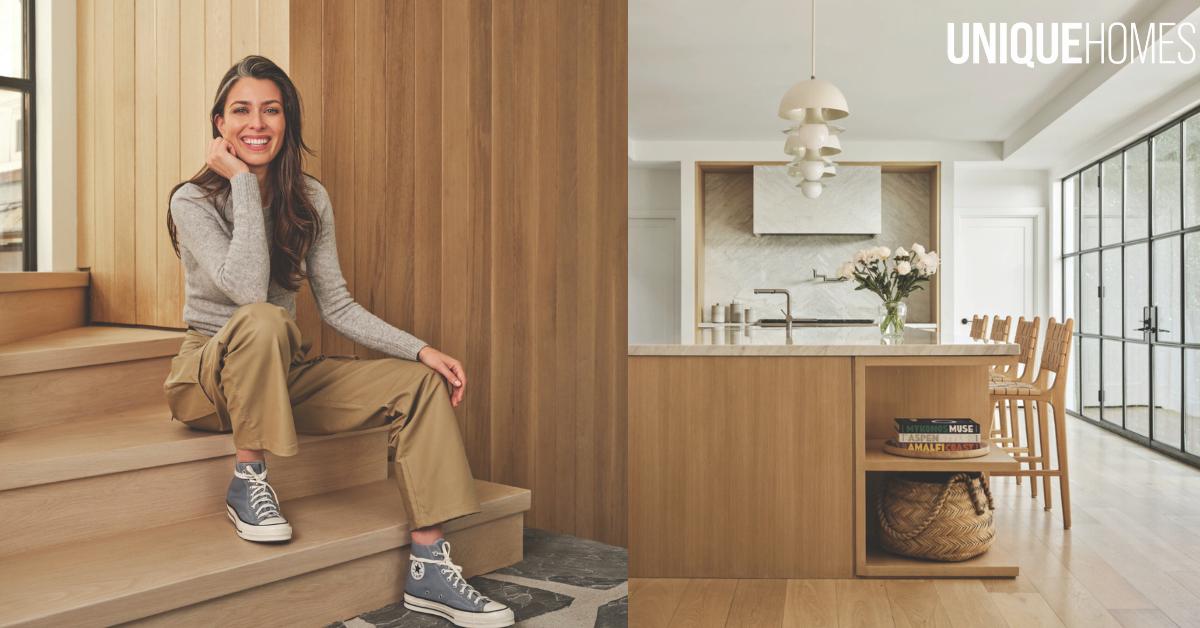
Justina Blakeney

A Passion for Design

Blakeney’s journey into design started as a personal exploration, a digital space where she could share creative inspiration. What began as a small corner of the internet soon blossomed into a thriving design studio and, ultimately, a lifestyle brand. Through Jungalow, she has built a platform that celebrates self-expression, sustainability, and the power of joyful spaces.

Her design philosophy is rooted in creating homes that nourish the soul and support the dreams of those who live in them. As Blakeney puts it, “I believe that good design has the power to heal and uplift — it’s a way to foster well-being and encourage growth.” Rather than following fleeting trends, Blakeney approaches each space with curiosity and intuition. She believes good design is more than just aesthetics — it’s about how a space functions, how it feels, and how it serves its inhabitants.

The Soul of a Space: A Unique Design Approach

Every home tells a story, and Blakeney believes that the environment speaks to those who take the time to listen. “The first thing I do is spend time in the space to really get to know it,” she explains. “I’ll observe it at different times of day to see how the light shifts and how it changes the vibe of the room. Light is an underrated player in the world of color — it can completely transform a space and all the hues in it.”

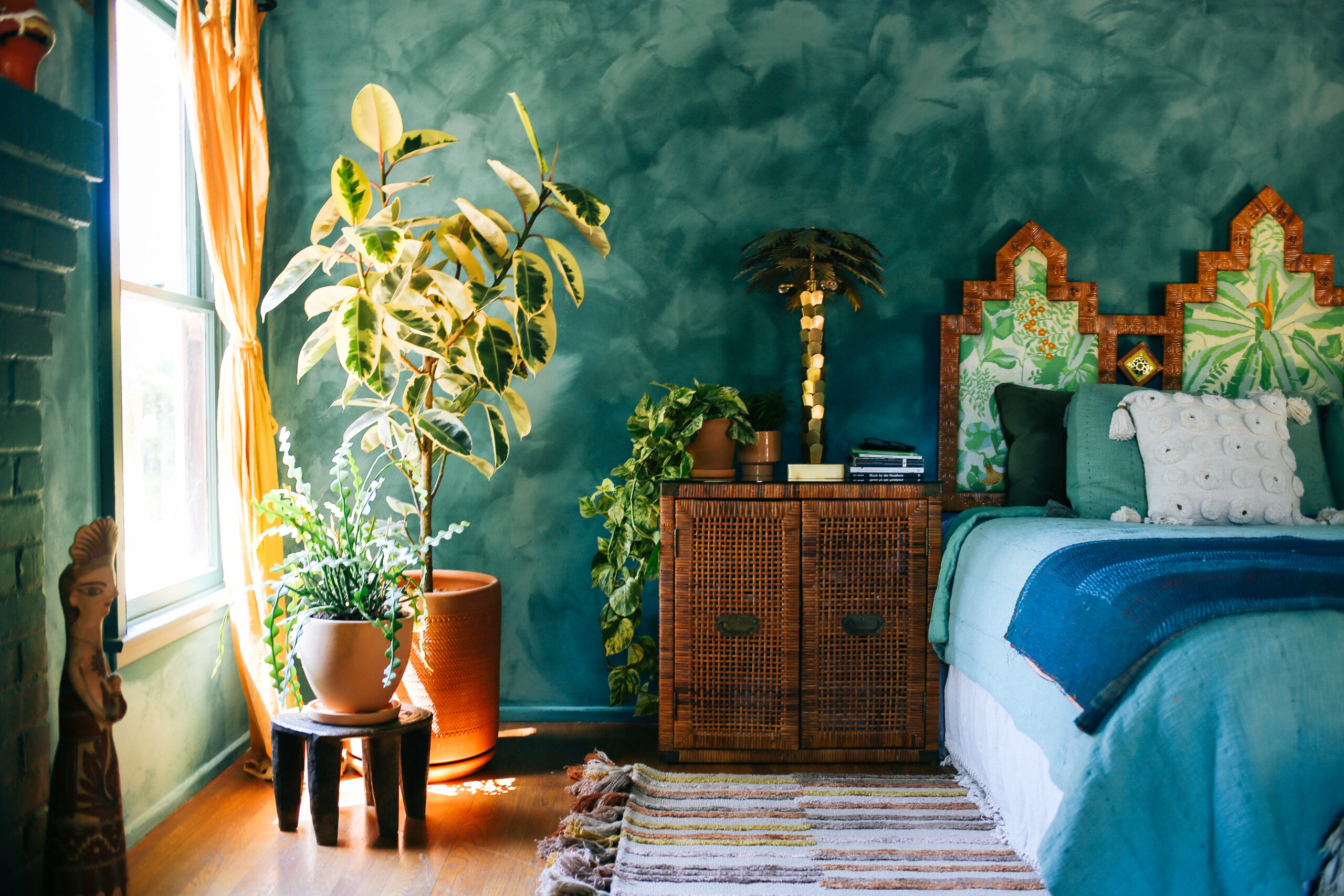
A key element of her work is color. While many interiors over the past decade have been dominated by neutrals, Justina Blakeney sees a shift toward bolder, more expressive hues. She notes that more homeowners are embracing vibrant palettes. “I have noticed that the masses in the United States are starting to embrace color more, which feels like a new, emerging trend,” she says. “Color has a real power to bring so much joy, soul, and feeling into our lives and spaces. It’s lovely to see that taking root here in the U.S.” By incorporating rich colors and layered textures, she believes spaces can spark joy, inspire creativity, and uplift the people who live in them.

Balancing Creativity and Business

As the founder of a fast-growing brand, Blakeney seamlessly merges business and creativity. For her, these two elements are deeply intertwined. “For me, business is creativity and creativity is business. The two are more intertwined than intersectional,” she explains. “There are so many ways to exercise my creativity within my business — from designing products and spaces to creating marketing campaigns or discovering how different partnerships are going to unfold. It’s all a big creative process.”

This philosophy is also evident in her collaborations. Unlike traditional design houses that often cater to exclusivity, Jungalow’s mission is to make beautiful, personality-driven spaces more accessible and inviting. Blakeney believes that a home should feel cozy, playful, and full of life, rather than intimidating or overly curated. As she shares, “We want to make spaces that feel warm, inviting, and alive — homes should be fun and cozy, not intimidating! At the end of the day, a home is a reflection of the humans (and other living creatures, like pets and plants) living in it, and humans are naturally drawn to good vibes.”

Sustainability & Future-Focused Design

Looking ahead, Jungalow is taking a major step toward sustainability and social responsibility. The company is in the process of becoming a B Corporation, a designation that reflects its commitment to ethical business practices, environmentally responsible design, and mindful material sourcing.

Blakeney is deeply invested in making sure that every aspect of Jungalow — from the products it sells to the partnerships it fosters — aligns with values of eco-consciousness and community engagement. “I’m committed to being more mindful in everything we do at Jungalow—from the materials we use to the way we engage with our community and partners. It’s about doing things with intention and care.” Whether it’s using sustainable materials, supporting artisan communities, or reducing waste in production, she sees intentionality as a crucial part of modern design.

How Justina Blakeney Brings Joy into Every Space

At its heart, Jungalow is about more than just design — it’s about cultivating joy, embracing imperfection, and creating homes that feel like a true reflection of their owners. Whether through a carefully placed houseplant, a bold accent wall, or a mix of globally inspired textures, Blakeney encourages people to design spaces that energize and inspire.

As Justina Blakeney continues to expand her brand and explore new creative directions, one thing remains constant: her belief that good design has the power to heal, uplift, and bring people closer to the natural world. With Jungalow leading the charge, the future of interior design looks brighter, bolder, and more joyful than ever.

Leave a comment

Interior Design Trends 2025 with Jaqui Seerman

Designing with Distinction

Interested in Interior Design Trends 2025? We spoke with luxury designer Jaqui Seerman to hear her insights.

From an early age, designer Jaqui Seerman had an eye for beauty and an innate sense of how to shape a space and start designing with distinction. Encouraged by parents who recognized her raw talent, she turned her childhood fascination into a flourishing interior design career spanning nearly two decades. Now, with years of experience crafting spaces that are as personal as they are visually captivating, Seerman shares her top tips for creating a home that is elevated and uniquely yours.

How did you begin studying design?

As an apprentice! I began as a design assistant to some of Southern California’s industry elites, first with Waldo Fernandez and later with Martyn Lawrence Bullard. During this time, I absorbed the intricate process of crafting a creative vision, building strong client-designer relationships, and managing the behind-the-scenes coordination essential to creating one-of-a-kind spaces.

How did you discover your unique style as a designer?

After nearly a decade in the industry, I decided to take the leap and start my own company. Though I was initially anxious about defining my own design identity, I was confident in my unique, client-first approach. Eight years later, we’re busier than ever, continuing to provide top-tier client service and crafting beautifully designed legacy spaces.

How do you keep the design of each project fresh and new while staying loyal to your personal design style?

The design process is deeply personal. It’s essential to me that the spaces we create not only reflect the client’s lifestyle but also embody an elevated, well-curated aesthetic. This process varies for each client — some prefer to be deeply involved, while others prefer a more hands-off approach.

How do you approach learning about your clients to deliver spaces that truly reflect their taste and personality?

We use a “first thought, best thought” approach. We quickly present images and ask clients to share their likes and dislikes without hesitation or judgment. This method removes the fear of saying the “wrong” thing and encourages instinctive responses. It allows us to bypass formalities and get straight to understanding their preferences.

Interior Design Trends 2025

How do you incorporate trends into your designs?

More often than not, the clients we work with are open to taking risks. Many come from creative industries and have a strong sense of self, making them willing to move beyond popular interior aesthetics and explore new, uncharted design territory.

What is the key to incorporating different colors, patterns, and textures in your projects without them becoming chaotic or too busy?

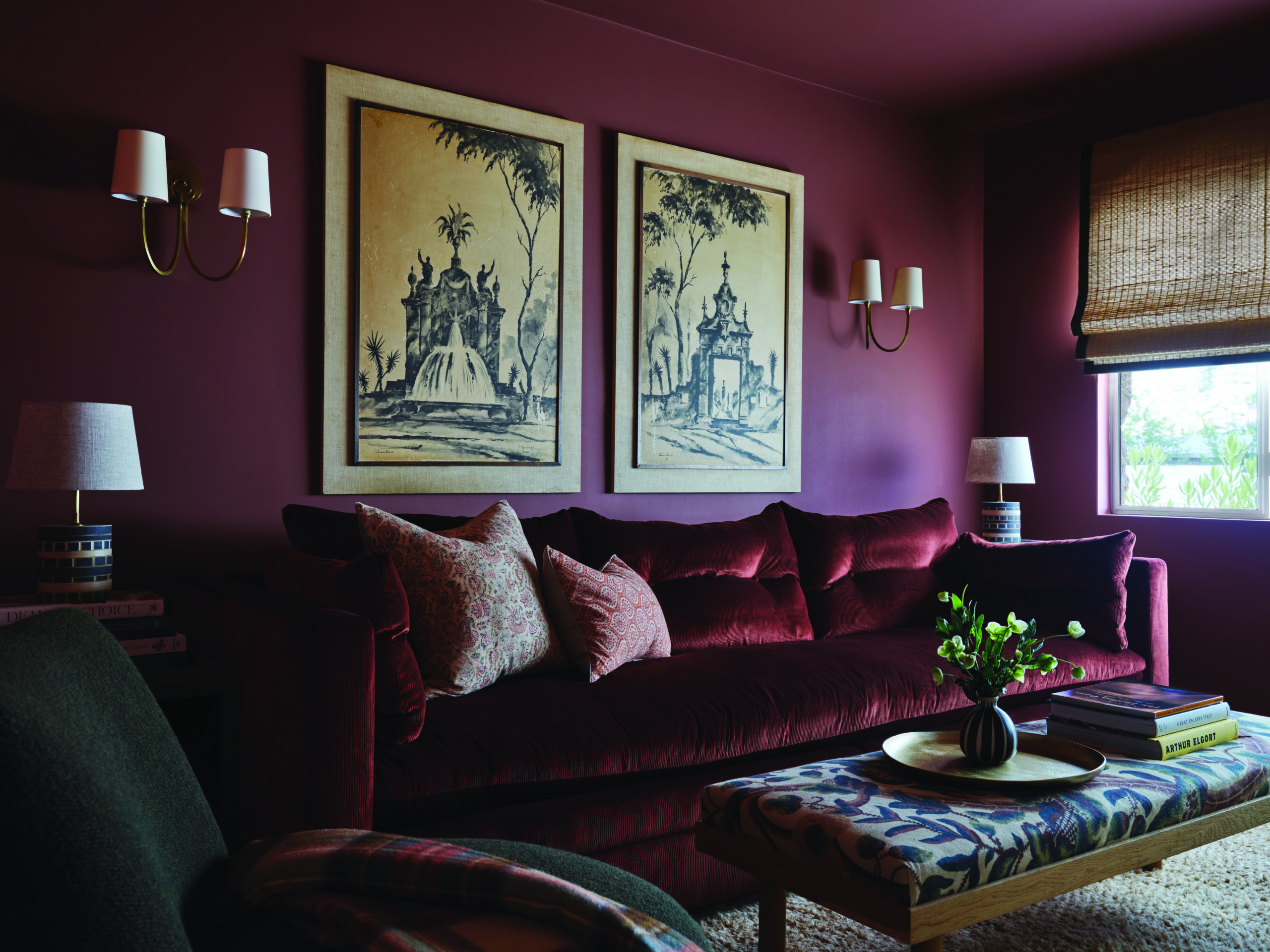
Enveloping a room in a single color from top to bottom is an effortless way to create maximum impact. Painting the space — baseboards, walls, trim, and ceiling — in one hue creates a cocooning effect that feels both inviting and playfully sophisticated, all while remaining approachable and livable. I love blending design styles, finishes, patterns, and materials. The more layered and curated a space feels, the more authentic and lived-in it becomes.

What role does lighting play in your designs, and how do you select the right lighting for a space?

I’m a big fan of ambient and natural lighting, and I love creating spaces with a darker, moodier atmosphere. To achieve this, I often use decorative fixtures as statement pieces. I also appreciate the need for integrated lighting and love working with systems like Lutron, which allow for seamless transitions from day to night.

What role do you think art plays in completing a space, and how do you help clients choose the right pieces?

I love how art can enhance a space, but I also appreciate environments that are entirely void of it. Both aesthetics can be equally powerful. When advising clients on art selection, my main goal is to ensure they choose pieces that are personal and resonate with them. Art should be seen as a meaningful investment, not simply as an accessory to fill the wall.

What do you think is the most important element of a home’s design that people often overlook?

We always encourage our clients to think about where everyday essentials will be stored in their homes. A well-designed home isn’t just about aesthetics; it’s also about functionality. Thoughtful storage solutions play a key role in how a space performs.

How do you approach designing for families with children or pets, balancing style with practicality?

When designing for families, pet owners, or avid entertainers, durability is always a top priority. I love using natural materials like real wood, stone, wool, and cotton, as they perform exceptionally well in high-use spaces and can be restored over time. Along with beauty, I value stability and craftsmanship, paying close attention to how, where, and by whom each piece is made. An active household doesn’t require compromise — just thoughtful selections.

What is one design tip you live by?

Touch it once — if you can, invest in doing it right the first time. You’ll look back and appreciate that decision for years to come.

How do you approach designing for families with children or pets, balancing style with practicality?

When designing for families, pet owners, or avid entertainers, durability is always a top priority. I love using natural materials like real wood, stone, wool, and cotton, as they perform exceptionally well in high-use spaces and can be restored over time. Along with beauty, I value stability and craftsmanship, paying close attention to how, where, and by whom each piece is made. An active household doesn’t require compromise — just thoughtful selections.

What is one design tip you live by?

Touch it once — if you can, invest in doing it right the first time. You’ll look back and appreciate that decision for years to come.

Leave a comment

We Spoke to Celebrity Landscape Designer, Stephen Block

Learn from an industry pro exactly how to elevate your home with luxury landscape designs and high-end patio furniture. 

Elevate Your Outdoor Spaces

With warmer seasons on the horizon, homeowners are revitalizing exterior spaces and sprucing up landscapes to maximize their enjoyment of the great outdoors. Thoughtful exterior design becomes a cornerstone of a luxury home, especially in spring and summer, when patios, gardens, and outdoor living areas take center stage. To help you elevate your outdoor spaces with sophistication and style, we spoke with renowned celebrity landscape designer Stephen Block, who shares his landscaping tips for transforming your outdoors into a true oasis. 

Inner Gardens, led by celebrity landscape designer and antiques dealer Stephen Block, proudly positions itself as a one-stop destination for artful pieces that elevate both the home and the garden. Block prioritizes the wabi-sabi principle, the beauty of things imperfect, impermanent, and incomplete, at the center of all his work. “Wabi Sabi is where my heart lives,” says Block. “Nothing is perfect except the imperfect. It informs all of my decisions. It’s what makes us human.”

I love elements, objects, trees, and plants that have a past, a soul. These elements have to speak to me. If they don’t, then my heart doesn’t move. Clearly, all parts of the garden won’t have that depth of connection but the major elements will speak to me. If not, I may not feel satisfied.” Block constantly works to transform garden spaces “from ordinary to extraordinary,” and has created designs for notable figures such as Elton John, Ellen Pompeo, Soho House, and more.

Celebrity Landscape Designer

Stephen Block’s Approach to Personalized Outdoor Spaces

Block’s personal philosophy for designing luxury landscapes begins with determining the true essence of the home. “What is the home all about? What are the homeowners all about? Then, [I] attempt to channel their desires into an even better reality,” he explains. According to Block, every home and homeowner he works with has unique desires and needs, and identifying them is essential to creating a space they will love. “I think a client who chooses to work with me has a good idea [of] what they can expect from my taste and style. I am clearly not suited to every client or to every home. We all have to click.”

Celebrity Landscape Designer

Block emphasizes that achieving a true garden oasis hinges on creating a sense of comfort and tranquility tailored to the client. “A richness, a calm, a fullness should be evident. If the details of the garden live within these parameters, it will feel [like] a place they want to inhabit.” For this sense of tranquility and balance to be present, Block recommends utilizing mature, aged pieces and plantings in a garden. “Trees should be as old as can be found; not perfect, but a little worn.

Objects such as fire pits or fountains should show their age; a few cracks and bruises are required. Some old layers of paint create interest. The danger of having everything new and perfect on the interior and the exterior just feels like something is missing, that would be a soul,” he says, also noting that the scale of the landscaping is crucial right off the bat. A luxury home requires a luxurious garden, which entails lush, large-scale trees and bountiful shrubs, without excess dirt or mulch. “The worst thing you can say to a luxury client is ‘it will grow in’ They are usually impatient, like us all.”

Tips for a Cohesive Design from a Celebrity Landscape Designer

Creating a seamless transition between indoor and outdoor spaces is often a top priority in outdoor design. While matching the overall aesthetic of a home can be challenging, Block has reliable techniques to simplify the process. One of his go-to strategies is incorporating the same materials in the exterior design as those used inside, ensuring a cohesive and harmonious flow. “Carry the same stone from the interior through the exterior. Open the exterior space to the interior with sliding steel doors that make the exterior and interior as one,” he suggests. “I always like to use interior plants that are linked to the exterior to further connect the two spaces. Exterior planters and objects can be used in the interior as well to keep it all connected.”

When designing a home, it can be easy to become tunnel-visioned in perfecting the interior design elements. However, in Block’s opinion, beautiful landscaping is just as important as a beautiful home. “They are inextricably tied to each other. It’s a feeling you are looking for when building a garden. Clients today really get it when a garden is beautifully done. Even if they don’t know the language of the garden, they get beauty on a visceral level. So will their guests and potentially a buyer down the road,” he explains. “Remember also, the landscape is the first thing you see when approaching a home. It should be beautiful. Spend the money. It’s worth it.”

Leave a comment

Beyond Traditional Luxury Granny Flats

These expanded living spaces could revolutionize the concept of home living for many luxury granny flats

Accessory dwelling units (ADUs) might sound like a new-fangled option for housing, but the concept dates back centuries. Luxury granny flats, guest cottages, and casitas were customary accessories to the main house. It was rare for an estate not to have a carriage house or outbuildings for staff. All these options fall under the mantle of an ADU. Architects such as Jeff Kruth and Murali Paranandi, professors of architecture at Miami University, call them “the original compact housing.” Still, research, including a recent Freddie Mac survey, finds that 71% of consumers are unfamiliar with the concept or the term.

Today, ADUs are being touted as potential solutions to diverse housing challenges, from affordability to changing demographics. And rather than just a place to stash granny, they are increasingly perceived as an option that benefits all age groups.

Photo Courtesy of Superior ADU’s

What is an ADU?

An ADU is a second house or dwelling constructed on a single-family lot that typically is subordinate to the main house. As defined by Freddie Mac, an ADU is an independent living unit. A private entrance, heating and cooling system, bathroom(s), and kitchen are required. Typically, according to John Burns Research and Consulting, the primary home and the ADU are considered one property for tax and appraisal purposes.

ADUs can be built from the ground up or created from existing spaces such as a basement, garage, or attic. Whether attached or detached from the main house, they are required to have a separate entrance. 

Photo Courtesy of Bunch Design / By YerinMok

Luxury Granny Flats More Than Simply a Tiny House

Mention these accessory dwellings, and most people envision something akin to a tiny house. Which the International Building Code classifies as 400 square feet or less. What surprises most about ADUs is “how large they feel and how functional they can be.” Says Sheila Hedden, owner of Superior ADUs, a design-build firm in Orange County, California. While some might have square footage comparable to a tiny house, many are substantially larger. Often measuring 1,000 square feet, even 1,200 square feet in some locations, with multiple bedrooms and baths.

Photo By Parrish Ruiz De Velasco

Luxury Granny Flats Not Just for Houseguests

A recent survey commissioned by AARP asked adults 18 years and up why they would consider creating an ADU. A vast majority, 86%, said it would be to provide a home for a loved one in need or to create housing for relatives or friends. Three-quarters said their motivation was to create a place for a caregiver or a nanny. Approximately 69% said it would increase the value of their home. Other incentives measuring over 60% included: “67% would feel safer by having someone nearby.” 

Projected uses include multiple scenarios in which having a smaller structure extends options for families. “We are seeing people from all demographics. We see the most interest from homeowners who want to build for family members. Many are built for aging parents, or their young adult children who can’t afford to buy a home. Some are building for themselves and allowing their adult children and grandchildren to move into their primary homes. They downsize, while their adult children upsize. It’s a great way to increase affordability for all involved,” says Hedden. “Even those homeowners who build them for family members are thinking about future rental income, as well as increasing the value of their properties.”

Why ADUs

Recognizing the lack of opportunities to develop new housing, the California legislature passed a suite of new legislation beginning in 2016. It aimed at facilitating ADU construction by easing zoning and land use regulations. According to the California Department of Housing and Community Development, the total number of ADUs permitted in the state rose. It rose from just under 9,000 in 2018 to nearly 24,000 in 2021.

“The demand continues to grow,” adds Hedden. “In 2020, we received many calls from people who were interested but not yet ready to pull the trigger. Some were skeptical about whether the state laws facilitating ADU builds would continue. Since then, it’s gotten easier to build ADUs, and the calls have increased.”

Photo By Parrish Ruiz De Velasco

California might be perceived as the leader of the current ADU vanguard, but states and municipalities nationwide have been proactively relaxing zoning restrictions. New Hampshire and Vermont allow ADUs nearly everywhere single-family housing is permitted. New Hampshire’s 2017 legislation stemmed from builders’ frustration. At not being permitted to construct the backyard cottages and garage apartments clients requested. In 2022, Maine legislators began requiring municipalities to allow ADUs and duplexes to be built on land zoned for single-family housing. In Oregon, cities and counties of specific sizes are obliged to allow ADUs in all single-family areas within urban growth boundaries. In 2021, the state extended ADU rights to rural residential areas. Other states allowing ADUs, according to AARP, include Connecticut, Rhode Island, and Utah. 

It’s Still Local

Local zoning is equally instrumental to ADU creation, with local regulations determining location, size, parking and other characteristics even in pro-ADU states. “Some communities allow almost any home to be set up with an ADU. So long as size limits, property line setbacks and placement caveats in relation to the primary dwelling are met. Others start with those basic standards and then layer on extra requirements that can make it challenging to create an ADU,” observes AARP in their deep dive into the topic, “The ABCs of ADUs”. Many cities now allow ADUs, including Anchorage, Atlanta, Annapolis, Asheville (N.C.), Austin, Denver, Honolulu, Houston, Louisville, Philadelphia, Phoenix, Tucson, Seattle, and Washington, D.C. 

Photo Courtesy of Bunch Design / By YerinMok

Making it Easier

The approval process can be lengthy. To facilitate this, some cities are creating pre-approved plans for the dwellings. In January 2023, Sacramento released permit-ready, one- and two-bedroom ADU plans that meet all local residential building code requirements and are all electric. In 2021, Los Angeles created a program offering more than 20 different designs that incorporate elements of diverse architectural styles in the city. There are one and two-story plans, some with roof decks. 

Photo Courtesy of Bunch Design

“Creating pre-approved plans streamlines the development process for these housing types; residents can immediately begin seeking a permit after submitting a site plan. Additionally, at 750 square feet, the plans are not subject to impact fees,” says Nicholas Julian, program manager of land use for the National Association of Home Builders. 

For anyone looking to create a new structure, options range from prefab homes, often produced by notable designers and architects, to custom plans. 

“All of our ADUs are built from the ground up and are referred to as stick-builds,” says Hedden, who compares them to small custom homes. “With the help of our designers, our clients select their own flooring, cabinets, countertops, etc. Clients can choose to include a tile backsplash in the kitchen and tiled showers with niches. We recommend cathedral ceilings, which give the ADUs an open, airy feel. Many clients love the exterior farmhouse look, which we provide if it is acceptable in that city. Clients can choose high-end finishes with engineered hardwood floors, black matte hardware and fixtures, and high-end quartz countertops.”

Costs vary depending on size, number of bathrooms, location of utility connections, the type of finishes and locations. Permits and fees tack on additional dollars. 

Photo By Parrish Ruiz De Velasco
Photo Courtesy of Bunch Design

Costs and Locations

Not only do these secondary dwellings offer the potential for rental income, but recent changes in FHA policy allow a substantial percentage, as much as 75%, of rental income to qualify for a mortgage. Loans for new home construction can also include an ADU, which, according to the National Association of Home Builders, allows new homes to be built with ADUs from the ground up.  

Leave a comment
montreal biosphere

Architectural Wonders in Montreal

Montreal is a treasure trove of architectural brilliance, where historic charm meets contemporary innovation. From iconic landmarks to modern masterpieces, the city offers an unparalleled showcase of design excellence. Discover our curated list of must-see architectural destinations, perfect for those with an eye for luxury and refinement.

1. Notre-Dame Basilica of Montreal

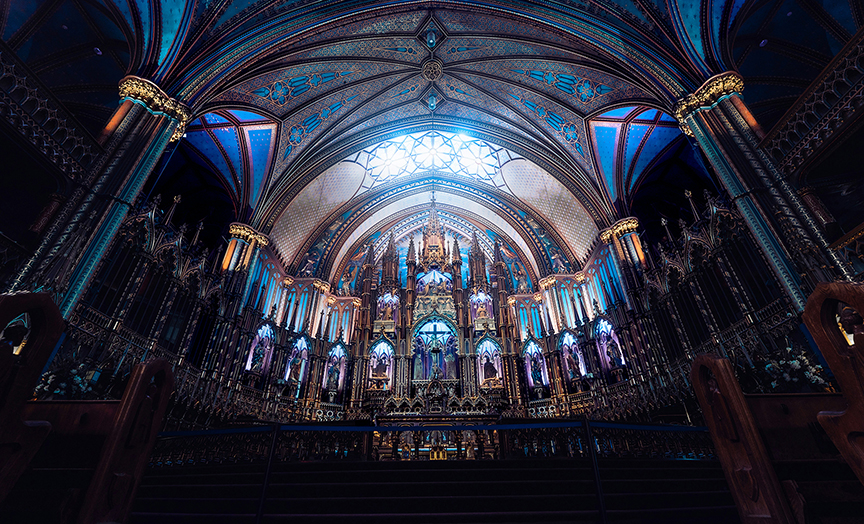
Stone cast and placed over 200 years ago. Stained glass panels depicting Montreal’s history since the late 1800s. A 20-ton bronze altarpiece and an organ with over 1,600 pipes built into the chapel. These features only begin to convey the awe-inspiring majesty of the Notre-Dame Basilica, located in Old Montreal and a cornerstone of the city’s cultural heritage. As Montreal’s mother church and the first Gothic Revival-style church in Canada, this historic landmark traces its origins back to the 1600s. The basilica showcases neo-Gothic architecture alongside centuries of historic art and craftsmanship. Extending even to the intricate details of the Perseverance and Temperance bell towers.

Today, Notre-Dame is known as a designated national historic site since 1989. At the same time, the site has been in the midst of repairs and restorations. With over two centuries of wear from harsh Canadian winters, there are still plenty of reasons to take the time to explore the site. Tours take you in and around Notre-Dame Basilica for an in-depth look at the detailed craftsmanship. Artistic installations are also highly recommended, as the AURA Experience at the Basilica offers an immersive light and sound show. “With state-of-the-art projectors and lasers, the interior of the Notre-Dame Basilica is illuminated from floor to ceiling.”

2. Biosphere in Parc Jean-Drapeau

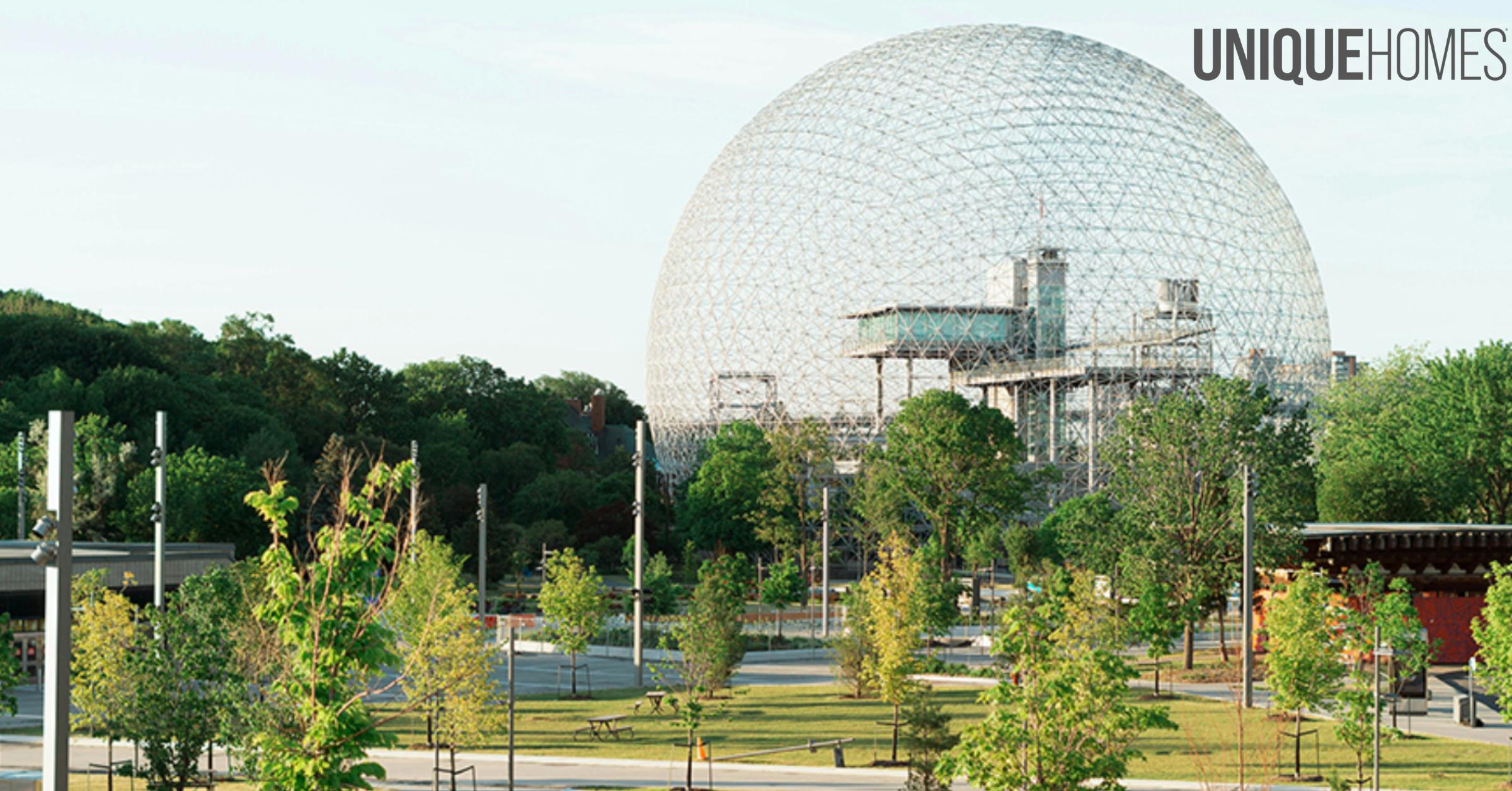
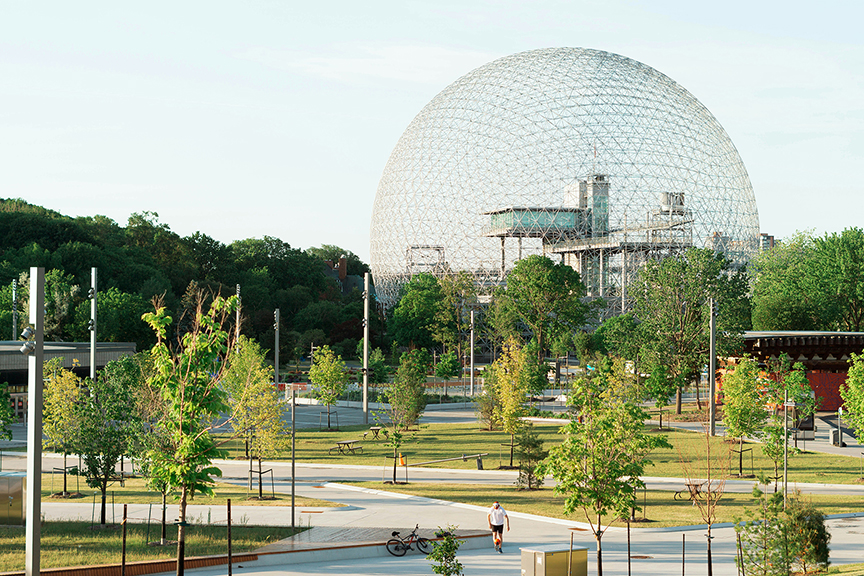
The 1967 World’s Fair, also known as Expo 67, was held in Montreal to celebrate Canada’s centennial and was a 6-month event that attracted thousands of patrons. Today, the site of Expo 67’s pavilion is now home to the Biosphere. An environmental museum signified by a unique 83-meter geodesic dome that alone is worth venturing out to Montreal’s Parc Jean-Drapeau on St. Helen’s Island.

Built by visionary architect Buckminster Fuller, the geodesic dome of the Biosphere is composed entirely of triangles in its 8.5-ton structure. According to ArchEyes, Fuller’s use of triangles “achieved what he termed ‘synergetic geometry,’ where the sum of the structure is greater than its individual parts.” And while the result was ultimately the innovative marvel we see today as the Biosphere. The structure further embodies Fuller’s vision of “architecture as a tool for global betterment.” As if to honor that sentiment, today the museum celebrates environmental consciousness and sustainability. Featuring a biodome, insectarium, greenhouses and much more. 

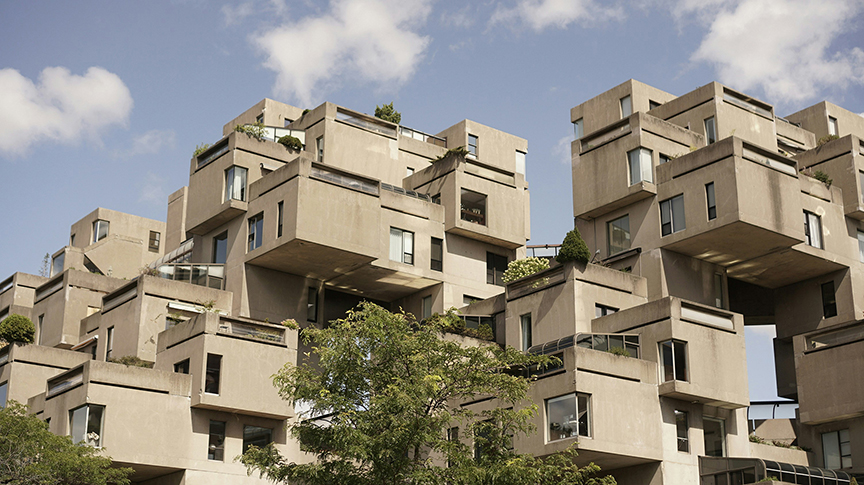
3. Habitat 67


One of the central themes at Expo 67 was housing which heavily inspired creative minds like Moshe Safdie, the architect behind Habitat 67. As part of Expo 67, Safdie crafted the design Habitat 67, located just outside Old Montreal across the Saint Lawrence River.

The structure was designed to discuss and reflect on the role of architecture in high-density urban environments. Habitat 67 itself is a modular unit at the base, with 354 magnificent modules stacked one on top of another to form 148 residences. Together the formation gives a Modernist take on design both inside and out, from futuristic interiors and suspended terraces, to angular skylights, large esplanades and elevator pillars. While the structure itself currently exists as residential housing for Montreal residents, its status as a National Heritage Building of Canada makes it worth taking a stroll through the Old Montreal neighborhood to see it in person, either via a self or guided tour.

4. Maison Alcan Complex

Fully refurbished since 2023, the Maison Alcan Complex is one of the most important historical sites in Montreal, representing the city’s dedication to preserving its heritage while embracing contemporary design. Each of the five history buildings within the complex were built in the 19th century and contributed to the business prowess and resilience of Quebec. Today, the building represents so much more both in design and business affairs.

Photo courtesy of Wikimedia Commons

The complex has been known to host “world leaders, politicians, businesspeople, media moguls and cultural stalwarts from around the world,” even in its early years before the technology boom of the 21st century. To represent its historic heritage while also looking toward the future, architect Ray Affleck originated the idea of combining historic buildings into one new complex and preserving their historic features. You can see this represented in the beautiful detailing of the exterior traditional architecture, which seamlessly mixes together with modern interiors. This ingenuity rewarded Affleck with the Prix d’excellence in 1984, and the city of Montreal with another historic landmark that not only attracts tourists but businesses and Canadian citizens to its doors.

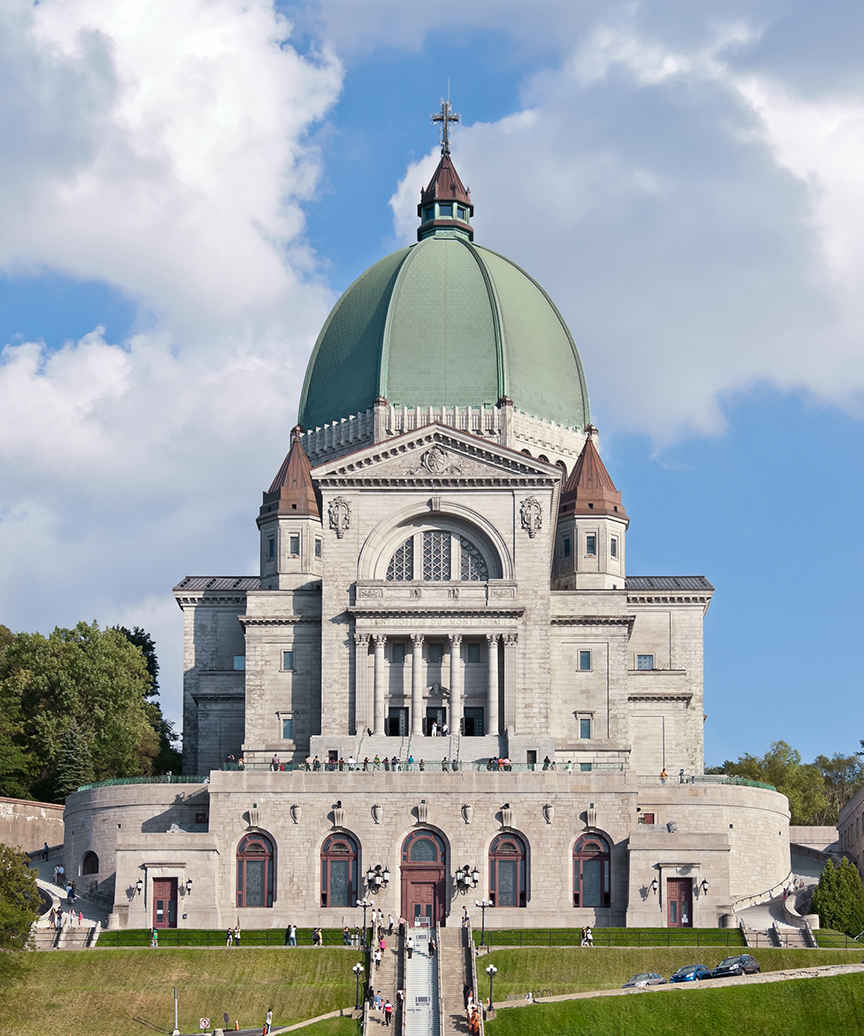
5. Saint Joseph’s Oratory of Mount Royal

With historic roots that date back to the late 19th century, this imposing basilica atop Mount Royal offers spectacular panoramic views of the city, beautiful at any time of year. The interior and the massive copper dome, one of the largest in the world, are equally breathtaking and continue to improve in today’s modern day.

Photo courtesy of Wikimedia Commons

Starting in 2023 alone the Saint Joseph’s Oratory has begun projects such as the creation of a unique exhibition and presentation space accessed by a spiral walkway inside the dome  a complete renovation of the museum to highlight its archive of over 30,000 historic artifacts, and even an observation tower at the dome’s summit to provide a 360-degree view of the city and its surroundings. Everything from the shrine, crypt church to the organs are steeped in Renaissance Revival architectural features. It is undoubtedly one of the most iconic structures to take in during a visit to Montreal.

Photo courtesy of Wikimedia Commons

Let’s Explore Our Honorable Mentions

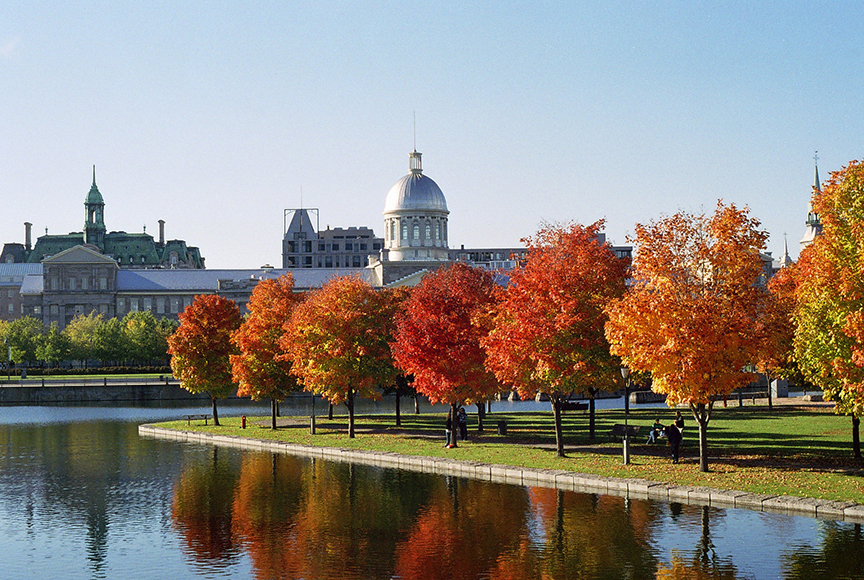
~ Old Montreal and the Bonsecours Market

The cobblestone streets, historic buildings, and the majestic Neoclassical dome of Bonsecours Market make Old Montreal a must-visit.

~ The Montreal Museum of Fine Arts

With a mix of historic and modern pavilions, this museum is a feast for the eyes. 

~ La Grande Bibliothèque

This modern library in the Latin Quarter is both a cultural hub and an architectural statement. Its light-filled spaces and contemporary design are worth exploring.

~ Place Ville Marie

One of Montreal’s most recognizable Modernist skyscrapers, its cross-shaped design is iconic. Head to the observatory for a bird’s-eye view of the city wrapped in fall colors.

Leave a comment


America’s Most Expensive Homes
Alabama Real Estate | Alaska Real Estate | Arizona Real Estate | Arkansas Real Estate | California Real Estate | Colorado Real Estate
 
Connecticut Real Estate | Delaware Real Estate | Florida Real Estate | Georgia Real Estate | Hawaii Real Estate | Idaho Real Estate
 
Illinois Real Estate | Indiana Real Estate | Iowa Real Estate | Kansas Real Estate | Kentucky Real Estate | Louisiana Real Estate
 
Maine Real Estate | Maryland Real Estate | Massachusetts Real Estate | Michigan Real Estate | Minnesota Real Estate | Mississippi Real Estate
 
Missouri Real Estate | Montana Real Estate | Nebraska Real Estate | Nevada Real Estate | New Hampshire Real Estate | New Jersey Real Estate
 
New Mexico Real Estate | New York Real Estate | North Carolina Real Estate | North Dakota Real Estate | Ohio Real Estate | Oklahoma Real Estate
 
Oregon Real Estate | Pennsylvania Real Estate | Rhode Island Real Estate | South Carolina Real Estate | South Dakota Real Estate | Tennessee Real Estate
 
Texas Real Estate | Utah Real Estate | Vermont Real Estate | Virginia Real Estate | Washington Real Estate | West Virginia Real Estate
 
Wisconsin Real Estate | Wyoming Real Estate

Style Selector
Select the layout
Choose the theme
Preset colors
No Preset
Select the pattern