There is no favorite listings!

Spiritual Transformations

By Roger Grody

Places of worship are designed for a very specific function, so when they are abandoned — parishioners migrate elsewhere or structures become physically compromised — it is challenging to repurpose the buildings. But designers who appreciate the heritage of sacred sites achieve extraordinary transformations, retaining a sense of spirit even when the buildings are readapted for less virtuous activities.

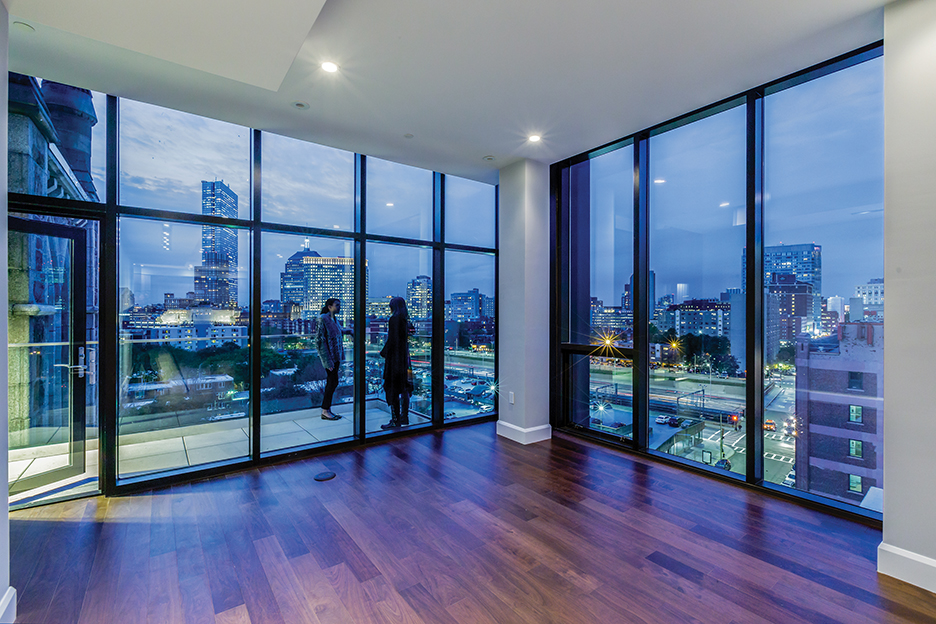
As congregations have declined, some neighborhood churches in Boston have been decommissioned, leading to creative conversions into luxury condominium projects. Representing one of the most dramatic of those adaptive reuses is The Lucas, a sleek high-end condominium building rising from the Gothic form of Holy Trinity German Catholic Church, originally constructed in 1874.

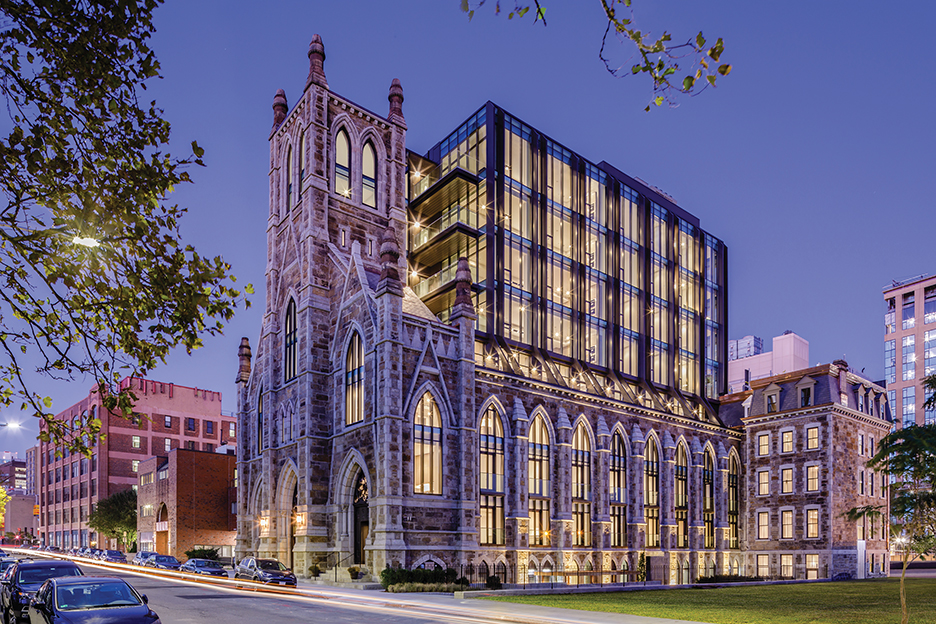
Holy Trinity had been vacant for a decade, so the city allowed an ambitious developer to erect a bold, eight story steel-and-glass tower within the granite and puddingstone masonry shell of the historic structure, with five floors rising above the original roofline of the sanctuary. While the new construction may sound incompatible with the Gothic structure, Finegold Alexander Architects designed the new addition to be discretely tucked behind the original façade.
A landmark church in Boston has<br />
been boldly repurposed as The Lucas,<br />
a luxury condominium project.<br />
Preservation of the original Gothic<br />
façade honors the historic site while<br />
retaining a human scale.

Tony Hsiao, principal and director of design at Finegold Alexander, suggests that churches, with their unique detailing and large windows, make transformations into luxury condominiums a natural progression, and reports The Lucas was sold-out prior to completion. Ellen Anselone, principal and vice president at the Boston-based firm, submits that despite the project’s bold infusion of modernism, it was sensitive to the neighborhood. “By preserving the façade, this project maintains a neighborhood scale and is consistent with the fabric of the neighborhood,” she says, noting that residents were pleased the abandoned building was redeveloped and appreciated that the new use was residential.

The visible stories of the modern addition are stepped back, reducing its visual impact, and creative design elements further harmonize the tower with the 19th century structure. “The inspiration was to integrate the new with the old, tying the new structure to the historic framework,” explains Hsiao. “The steel buttresses on the new tower were derived from the buttresses in the original Gothic architecture,” he adds.

Severe earthquake damage threatened demolition of Los Angeles’ Cathedral of Saint Vibiana, but preservationists ultimately saved the 1876 landmark. A new, modern cathedral was erected a few blocks away, and beloved Saint Vibiana was masterfully repurposed for less pious entertainment. The restored architecture Italianate structure now houses Redbird, the restaurant of acclaimed L.A. chef Neal Fraser, and Vibiana, an adjoining event space.
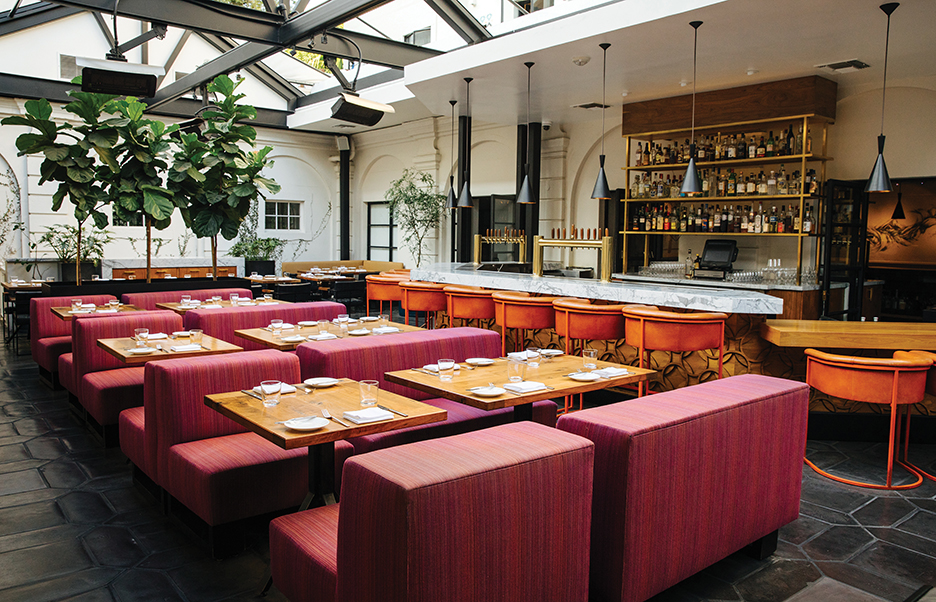
Redbird, one of the<br />
LA's top restaurants.

Amy Knoll Fraser, the chef’s wife and owner/operator of Redbird and Vibiana, recalls her first tour of the building in 2008, when she learned the owners of the property were looking for a restaurant to fill the historic space. “I froze, got chills and thought, ‘We have to do this’…I knew we were the ones to transform it.” The couple felt obligated to pay reverence to one of L.A.’s most historic buildings by offering a dining experience that balances tradition, innovation and cultural L.A.’s Saint Vibiana, a historic Italianate cathedral, has been reimagined as Vibiana, an event venue, and Redbird, one of the city’s top restaurants.
L.A.’s Saint Vibiana, a<br />
historic Italianate cathedral,<br />
has been reimagined as<br />
Vibiana, an event venue,<br />
and Redbird, one of the<br />
city’s top restaurants.

Working with designer Robert Weimer, who collaborated with the couple on previous restaurants, a design was conceived that introduces contemporary components while still paying homage to the existing architecture. “We viewed the original as a backdrop for the adapted use, lovingly placing the new elements within,” explains Weimer.

Emphasizing the intention was to complement the original architecture, not transform it, the designer states, “The added pieces are modern and crisp, and together with the slightly worn edges of the original historic building, the space has a dynamism and dialogue it wouldn’t have had otherwise.”
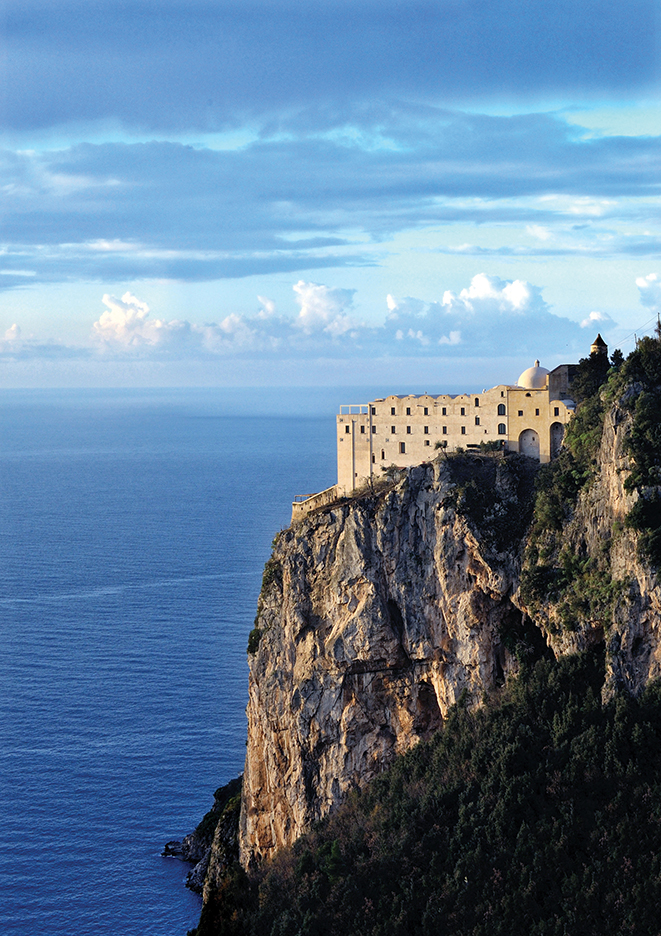
A cliffside monastery on Italy’s Amalfi Coast was splendidly transformed into<br />
Monastero Santa Rosa Hotel & Spa, a world-class boutique hotel.

Redbird’s dining room, a soaring space capped by a galleria-like glass ceiling, occupies what was originally Saint Vibiana’s rectory. It hosts a trendy clientele enjoying dishes like beef tartare with kimchi aioli and egg jam, or California sea bass with fregola and mussels in saffron-scented tomato broth. Knoll Fraser reports, “Neal’s cooking has always been a celebration of the multiculturalism of our city and we feel the property deserves to remain a place of community.” Chef/owner Neal Fraser suggests, “The architecture told us how to design the space and the menu,” and observes, “People love the fact the building is historic, but doesn’t feel like a museum.”

Occupying a landmark 1859 church in Portland, Maine, is Trine Events at Grace, hosting weddings, nonprofit banquets and corporate events. Noting the history of the building is what distinguishes the venue, owner Anne Rutherford states, “It’s impossible to be in the space without feeling the hum of almost 200 years of gathering, celebration, reverence and community.”
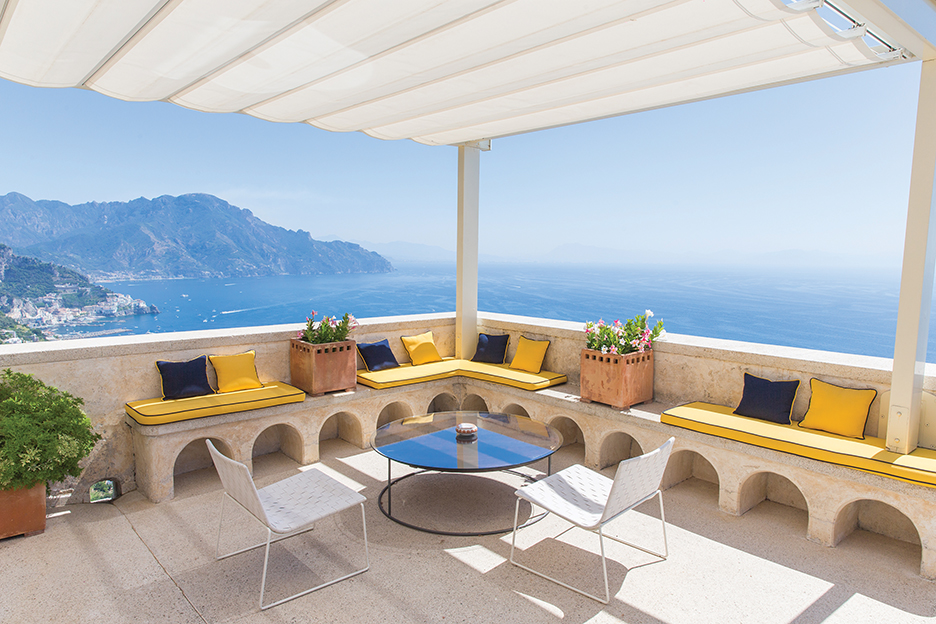
The Monastero Santa Rosa Hotel & Spa offers breathtaking views<br />
of the Tyrrhenian Sea.

It is not uncommon for churches, convents or monasteries to be reimagined as boutique hotels and Monastero Santa Rosa Hotel & Spa on Italy’s idyllic Amalfi Coast is a particularly stunning example. A restored 17th-century monastery, the hotel hugs a rugged cliff above the Tyrrhenian Sea, offering breathtaking views from its Michelin-starred restaurant and infinity pool. The property’s 20 rooms and suites, housed in what were originally the nuns’ quarters, provide the kind of sanctuary that is impossible to find in a large cosmopolitan hotel.

Although historic churches and monasteries may not be intrinsically well-suited to be repurposed as luxury hotels, Monastero Santa Rosa’s front office manager Pompeo Amendola believes this site demonstrates the enormous potential of such conversions. “These properties offer the unique opportunity to create specialized spaces and curated experiences that provide a genuine sense of place otherwise unavailable to guests,” he maintains.

Amendola reports a team of architects and historians collaborated on the restoration of Monastero Santa Rosa Hotel & Spa. “The main focus was to revive the spirit of Santa Rosa, creating modern-day experiences for the most discerning traveler while maintaining elements of its storied past,” he explains. One small but poetic example of connecting guests to the site’s history is a celebration of the monastic order’s legendary baking heritage. A sweet cream-filled pastry known as sfogliatella Santa Rosa originated at the monastery and is still baked on-site, placed in breadbaskets for guests to enjoy at breakfast.
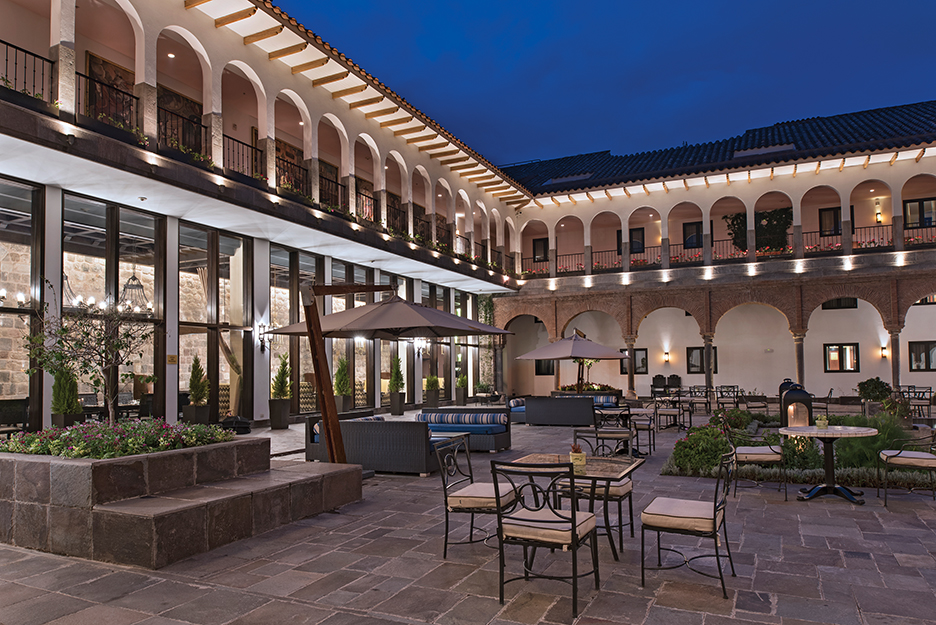
In the Peruvian Andes, the JW Marriott El Convento Cusco is built on the site of a 16th century convent.

In the Peruvian Andes, the JW Marriott El Convento Cusco is built on the site of a 16th century convent. At the hotel’s reception desk is a massive, sculptural lighting fixture (handcrafted from 76,500 Swarovski crystals) that represents the God of the Sun in Incan iconography, a further reminder that this hotel was really 500 years in the making.

Another historic South American convent housing a luxury hotel is the Sofitel Legend Santa Clara, located in the historic district of Cartagena, Colombia, a short walk to the ocean. The property successfully blends modern amenities with the spirit of the original 17th century convent. Its 1621 restaurant, for instance, occupies the Clarist nuns’ former dining room, but now features refined French technique applied to local ingredients.

“Our experiences are truly unique,” states Carmen Otero, sales and marketing director of the Sofitel Legend Santa Clara. She notes that colonial Cartagena has been designated a UNESCO World Heritage Site and that the guest experience at the hotel is fully integrated into the ancient city’s rich history. “In all of our spaces we’ve involved local culture, which allowed us to retain the magic that can only be expressed in this place with 400 years of history,” explains Otero. Elaborate ocean-view suites tastefully blend the site’s religious history with the decadence of pure luxury.
Comments Off on Spiritual Transformations

A Link to the Stars

The world has never been more connected than it is now. Human beings have found ways to stay in touch with each other when separated across oceans, despite language barriers, and even through the reaches of space. One expedition cruise company, Hurtigruten Expeditions, has partnered with SpaceX to make use of Starlink technology, which has helped to make its fleet of cruise ships more connected to the rest of the world than ever before.

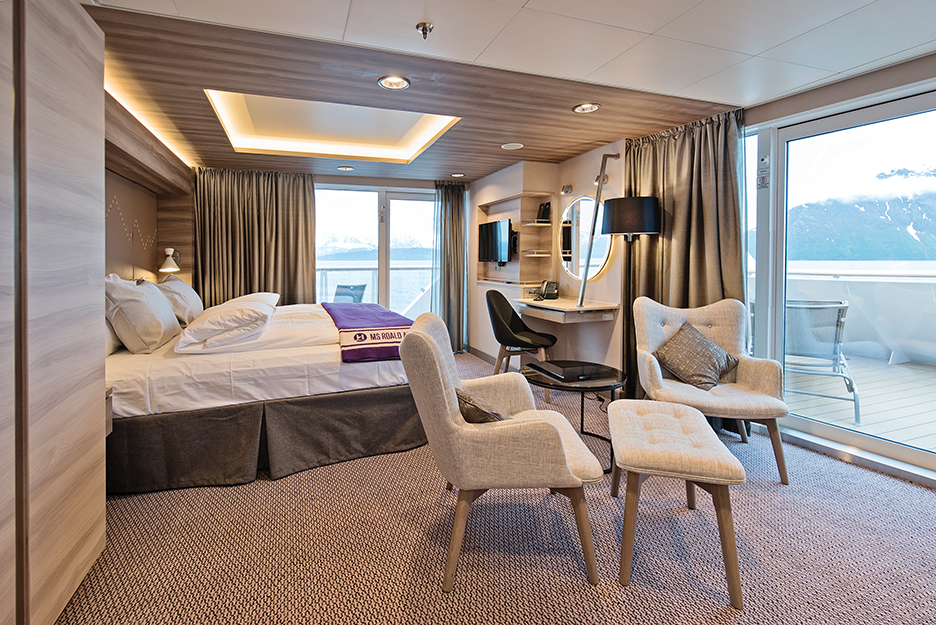
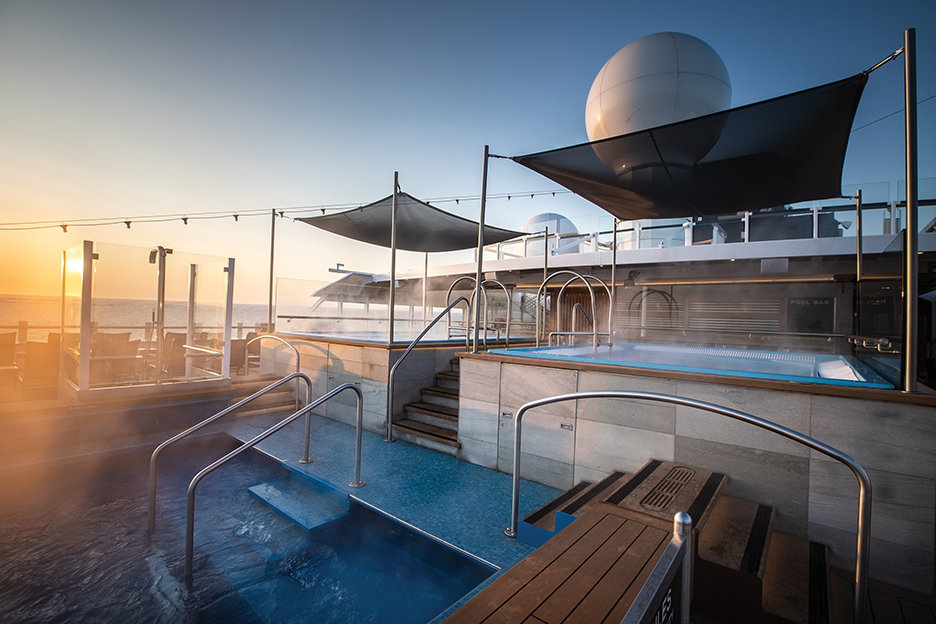
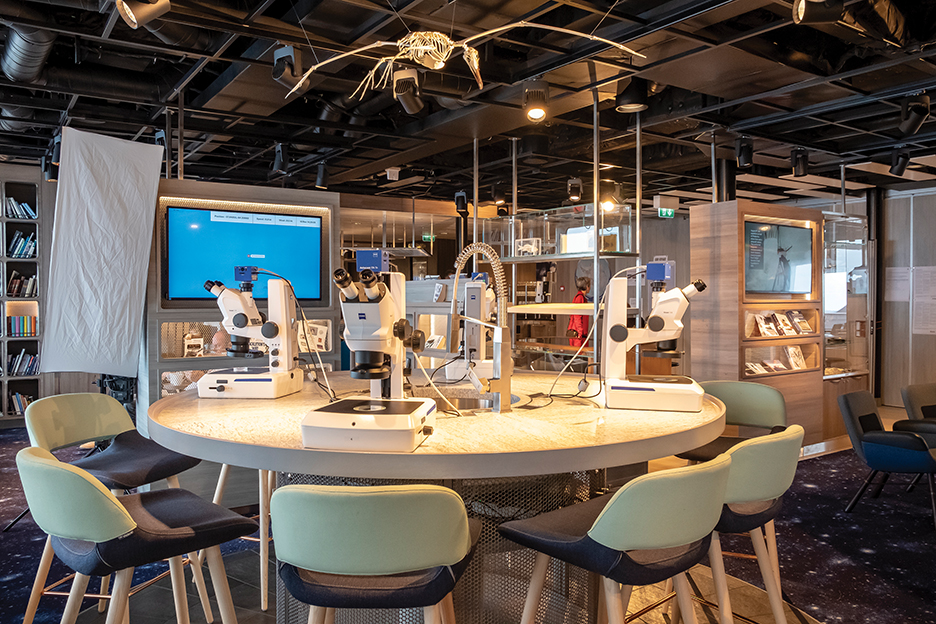
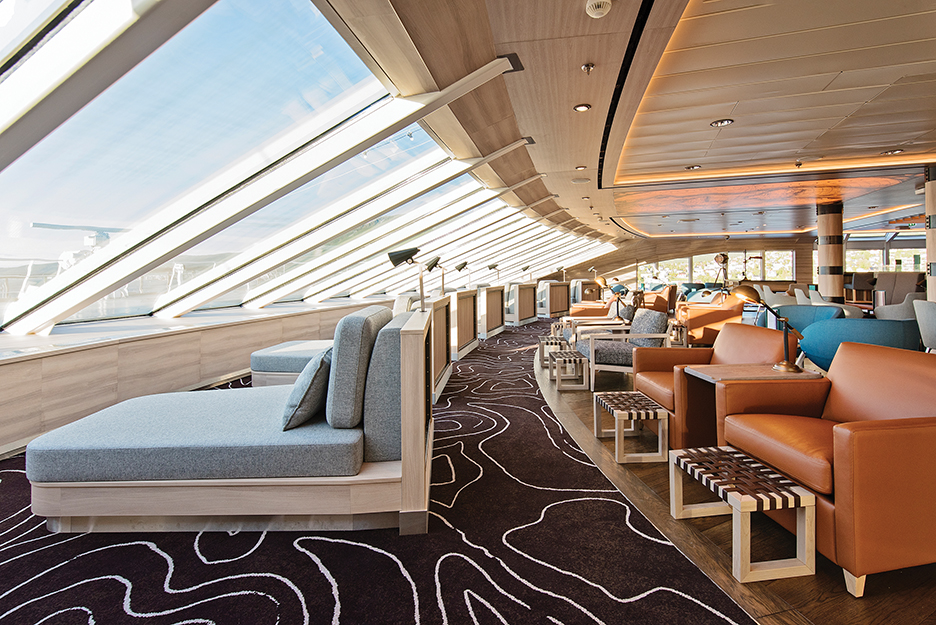
Hurtigruten Expeditions remains dedicated to studying emerging technology in on-board science centers such as this one. Broadband connectivity is strong from the front deck to the stately suites. And, designed for the comfort of both guests and crew, the fleet has world-class amenities, including the stunning infinity pool.

Hurtigruten Expeditions was built “with sustainability and exploration at the core,” according to Kristoffer Halvarp, Hurtigruten’s product manager for network and maritime operational technology systems. “Hurtigruten

Expeditions operates a fleet of small, custom- built expedition cruise ships,” says Halvarp, “including the world’s first battery-hybrid-powered cruise ships” as well as being “the first and only cruise liner to have a chief scientist.” The fleet has evolved quite a bit since their inception in 1896, now committed to sailing to the most adventurous locations on the planet with a commitment to sustainability and advancing technology.

It is partially thanks to that commitment that Hurtigruten sought out a partnership with SpaceX, a company on the forefront of breakthroughs in technology and space travel. One of SpaceX’s major innovations in recent years is Starlink, a broadband service that utilizes a series of low-earth orbit (LEO) satellites that provide high-speed internet access. “LEO connectivity has been on our radar for a long time,” says Halvarp, “and it just released as we started Hurtigruten Expeditions’ first sailings out of Hamburg.”

The partnership between SpaceX and Hurtigruten entails the integration of Starlink broadband connectivity across its entire fleet of expedition cruise ships. Halvarp was candid about Starlink’s benefits, saying “We are always trying to push the limits with technology, providing our guests with the most up-to-date digital solutions.” He continued to explain that Starlink’s LEO connectivity is “fast, stable and reliable, providing a low latency, high-bandwidth solution almost everywhere on the planet,” even allowing guests to “share their moments live from Antarctica.” Providing comfort and easy internet access to both the guests and crew of their ships is a top priority for Hurtigruten with this collaboration with Starlink. Halvarp states that “guests can stream and browse just like at home now.”

While Hurtigruten will continue to use its previously implemented Geostationary-Earth Orbit (GEO) broadband solutions as a backup, Halvarp believes in the longevity of LEO solutions like Starlink going forward. “LEO has come to stay,” he says, adding, “Starlink provides a solid service, but many new competitors are coming fast with different models for connectivity.” Halvarp and Hurtigruten believe that the changing needs of travelers requires a strong broadband connection at all times, even in the most rugged and adventurous parts of the world. SpaceX and Starlink are the first to bring this level of interconnectivity to the seas, but don’t be surprised if you start to see faster download speeds and lower latency on all cruise ships around the world in the years to come.

Comments Off on A Link to the Stars

Ritual Rooms

By Ritika Jain

When you think of luxury, you don’t often think of rituals and routines. However, in the aftermath of years of isolation and uncertainty, people are striving for a sense of routine and community in their day-to-day lives. In response, luxury residences are starting to create shared spaces bathed in lavish details for residents to connect and spend quality time. These spaces are called “Ritual Rooms,” which promote regular gatherings among residents within the building itself, often complete with lavish features and striking views. Rooms of this kind are popping up in upscale condominiums in Florida, including The Ritz-Carlton Residences, Estero Bay and Nexo Residences, North Miami Beach.

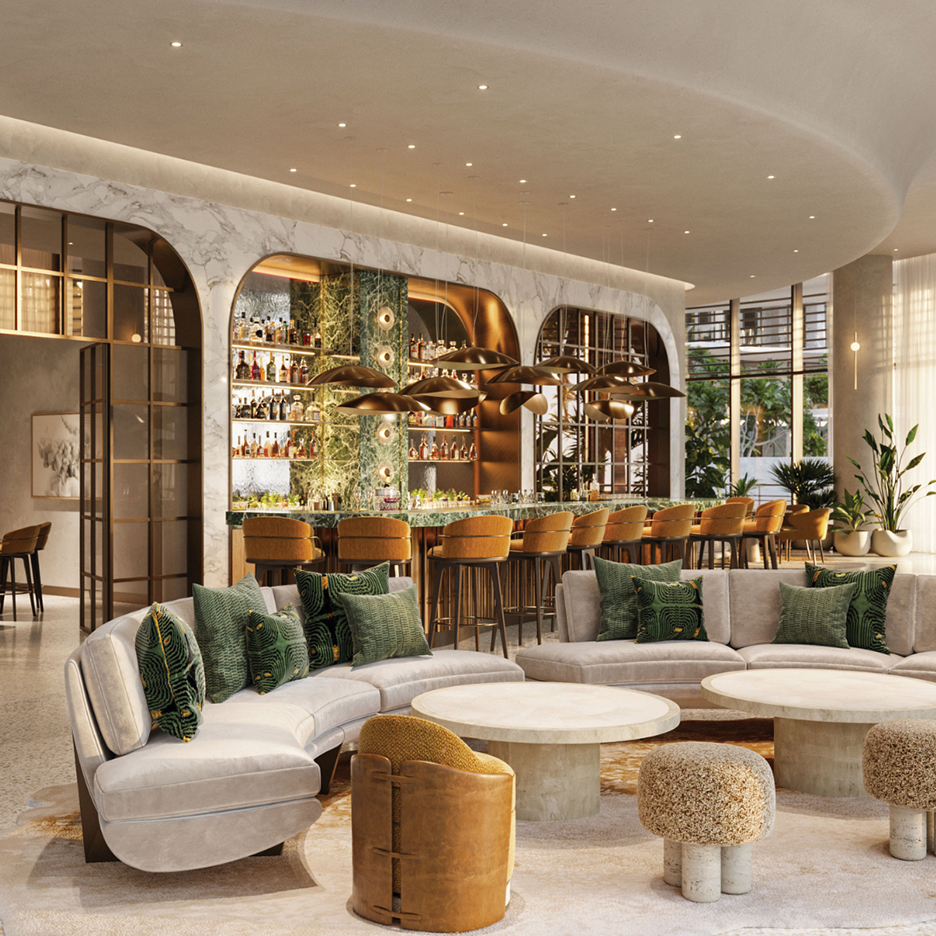
The Ritz-Carlton Residences, Estero Bay is a towering structure in Southwest Florida with two-, three- and four-bedroom residences and overlooks Florida’s first aquatic preserve, Estero Bay. In order to make use of South Florida’s gorgeous sunset views, it now boasts a Sunset Lounge designed by New York-based interior design studio Meyer Davis, complete with a bar and double-height glass surroundings. Craig Klingensmith, vice president of London Bay Development Group, shared with The High End the inspiration behind the Sunset Lounge and what they hope it will accomplish.

The Sunset Lounge at The Ritz-Carlton Residences, Estero Bay was<br />
designed to promote a sense of community among residents with a<br />
casual yet luxurious elegance that echoes the existing landscape.

“The concept for the Sunset Lounge came about from the desire to incorporate a large, centrally located area that would unite the two residential towers and would also present an opportunity for residents from both buildings to come together to enjoy the amenity spaces,” explains Klingensmith. The room itself boasts an understated yet luxurious design with the use of natural materials, which were inspired by the natural surroundings of Estero Bay.

With floor-to-ceiling windows, the Sunset Lounge invites expansive views of an outdoor deck overlooking three pools, a lagoon with floating-like pavilions, the Saltleaf Marina, and stunning vistas of Estero Bay. Along with a dreamy visual backdrop, the room presents opportunities for gathering with the ornate bar and a Demonstration Kitchen, “where residents can gather for a cooking class, or where some of Florida’s very best chefs can come in to prepare award-worthy meals.”

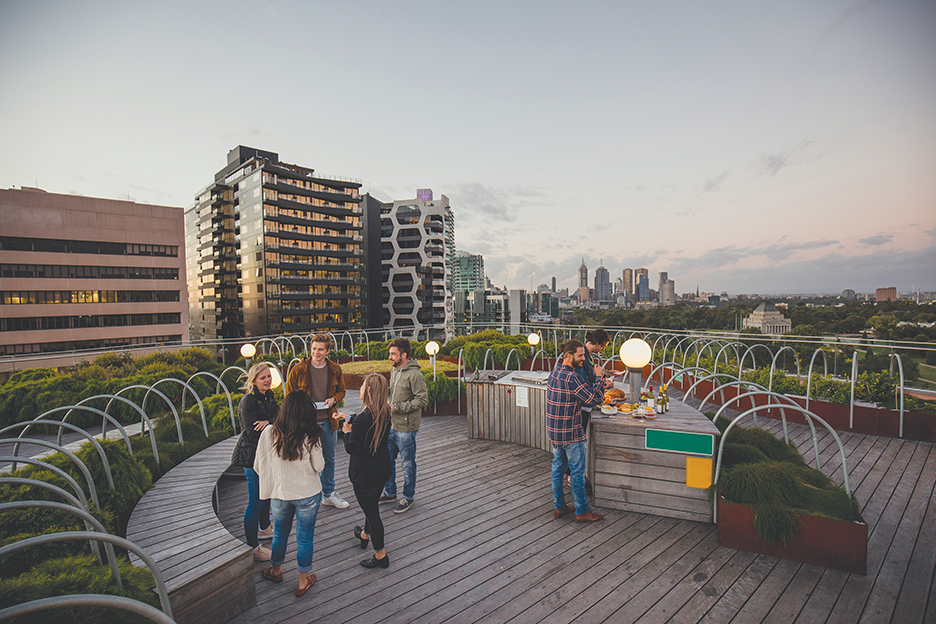
Luxury residences are starting to implement gathering<br />
spaces in their buildings to promote routine gatherings<br />
among residents.

Klingensmith expects the Sunset Lounge to be a hit among residents, as it will act as the central gathering space between both towers. The brand’s commitment to providing the epitome of luxury living alongside a sense of community is reflected not only in this room, but in all 36,000 square feet of interior amenities. “Each of these unique spaces is elevated with the brand’s hallmark of providing personalized and high-touch service that makes all the difference to enhancing everyday life.”

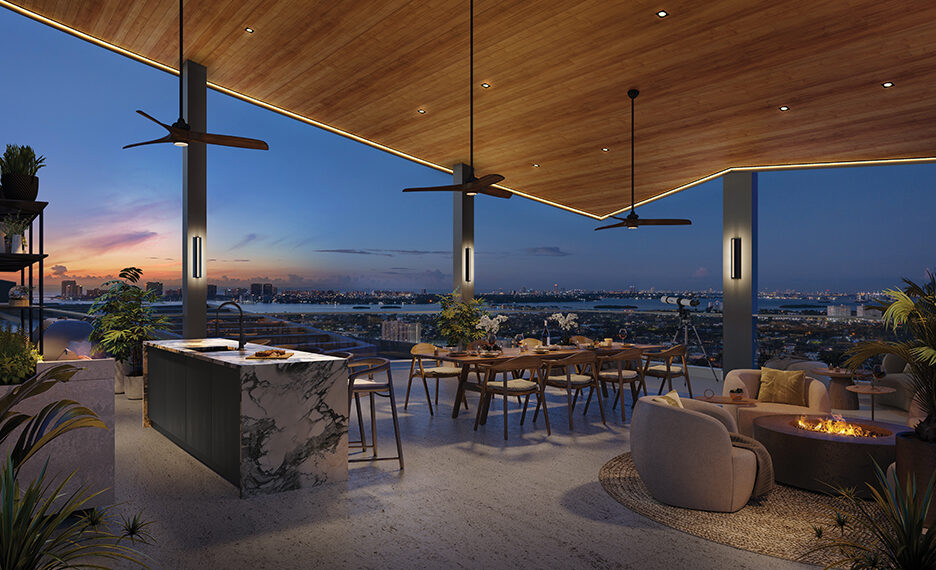
The Nexo Residences over in Miami Beach, which is slated to break ground in 2023 with a two-year construction period, is jumping on this trend with a Rooftop Observatory Deck to utilize in the nighttime. It will feature a telescope for stargazing; a summer kitchen with a large grill, mini fridge, and wine cooler; a long dining table for residents to socialize; and cozy seating arrangements around fire pits.

Rooftop in Miami

According to the team, the concept behind the Rooftop Observatory Deck is “to offer residents an intimate gathering space that would seamlessly merge indoor and outdoor living, as well as showcase the beautiful Miami skyline.” The location of the building allows access to 360-degree, panoramic views of Miami’s most scenic skylines, including those of Aventura, Sunny Isles, and North Miami. It will provide residents with an opulent yet tranquil space to host gatherings and connect with one another while also promoting an appreciation for the natural landscape.

The integration of outdoor amenities within residences not only offers a sense of community, but also a variety of benefits to your health and well-being. “Humans have an innate desire to want to be close to and surrounded by nature. Studies show that outdoor spaces are essential to everyday life and promote health and happiness. Offering residents outdoor amenities allows people to feel connected to nature while promoting a sense of well-being,” says the team.

Comments Off on Ritual Rooms

Not Your Grandparents’ Cruise

By Roger Grody

The traditional cruise experience — sharing a megaship with 5,000 fellow passengers, binging at midnight buffets and disembarking at tourist-clogged ports-of-call for superficial guided tours — may no longer be inviting, especially for active travelers. But with exciting new destinations, more intimate (albeit luxurious) ships and hands-on activities, cruising has newfound appeal.

Since the pandemic, many seabound tourists have turned their attention to smaller vessels and once-in-a lifetime destinations such as Iceland, the Galápagos Islands or, the holy grail of bucket list adventures, Antarctica. Many compelling itineraries cannot accommodate megaships and require more active participation by passengers to fully appreciate them.

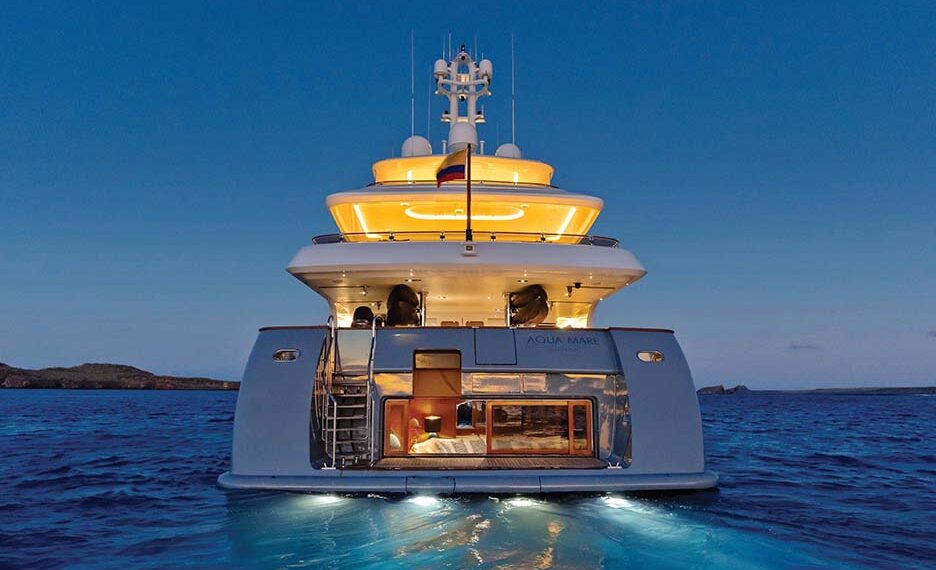
Aqua Mare Exterior

Gary Bembridge is a London-based journalist who has authored “The Cruise Traveler’s Handbook,” “Essential Cruise Tips” and “The Cruise Travel Guide,” among other books, and chronicles his frequent voyages on the writer’s own Tips for Travellers website. He reports that while interest in smaller vessels is increasing, even the large carriers are introducing more unique ports-of-call and activity options to address evolving consumer preferences. Because of the price differential — Bembridge advises it can cost up to seven times more to cruise on a high-end small vessel than a mainstream line’s megaship — small ship cruising remains primarily a luxury indulgence.

Bembridge cites Oceania, Windstar and Star Clippers as lines providing luxury experiences in a smaller format, including yachts and sail ships. “In addition to the obvious ‘expedition’ locations like the Galápagos, Arctic, Antarctica and Greenland, there’s emerging interest in going to more well-trodden destinations, but with a greater focus on exploration and wildlife,” states Bembridge of developing trends.

Aqua Expeditions was founded by Francesco Galli Zugaro in 2007 to introduce exciting new destinations — think Indonesia’s Komodo Island, the Galápagos Islands and Mekong River — to travelers seeking adventure on a more intimate scale. The company’s Aria Amazon, a vessel that traverses the legendary river at the Pacaya-Samiria National Reserve in Peru, offers just 16 river-facing suites with floor-to-ceiling windows and serves the cuisine of renowned Peruvian chef Pedro Miguel Schiaffino.

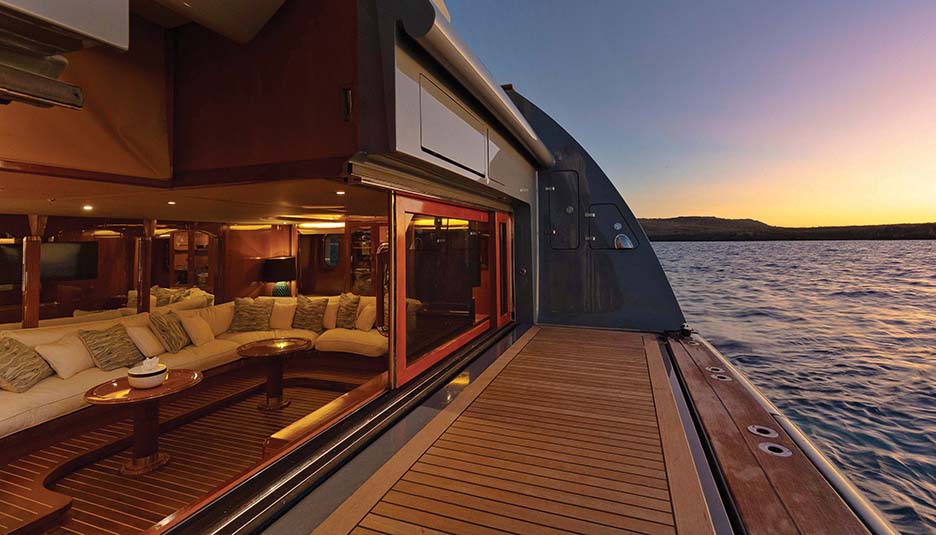
Aqua Mare Cabin

Aqua Expedition’s Aqua Mare, an exclusive superyacht deployed to the Galápagos Islands, accommodates just seven exquisite suites (including a lavish owner’s suite) designed by the firm of François Zuretti, acclaimed for sophisticated yacht interiors. The Aqua Mare presents a luxurious yet environmentally conscious means of exploring one of the most unique natural habitats on the planet.

Explaining that Aqua Expeditions represents the “experiential travel” niche — operating in the same sphere as African safaris — CEO Galli Zugaro states, “Most of our guests have never been, nor plan to go on a big ship.” He adds, “This audience wants to see remote parts of the world, go on adventures in the day, then return to a floating base camp that’s on par with any world-class hotel.”

“What we’ve noticed since the reopening of travel is that guests no longer want to wait until later in life to tick off bucket list destinations, but want to experience them now,” says Zugaro. He reports, “With mainstream cruising we see a median demographic of 60 years and above, but with Aqua Expeditions our demographic begins at around 40.” Explaining that his line’s river cruise itineraries are just as active as open sea voyages, he states, “Where a younger client may think that river cruising is something for older travelers, Aqua stands apart.”

Camp Frieda Greenland

“Luxury travelers will continue to seek world-class experiences to remote and exotic destinations that give them a sense of place without sacrificing the comforts they’ve come to expect from five-star hotels,” says Zugaro, who insists luxury and sustainability are not mutually exclusive. “From the very beginning, Aqua Expeditions has been committed to making sure we do our part in contributing to local communities and protecting the pristine areas in which we sail,” says the cruise line’s chief executive.

Ponant is a French line known for luxuriously appointed small ships, five-star service and commitment to sustainability. The vessels that make their way to exotic destinations such as Antarctica, the Maldives and Madagascar typically accommodate no more than 250 passengers, sans the garish casinos, water parks and zip lining associated with the megaships.

On Ponant cruise liners, guests enjoy refined design, a culinary staff affiliated with renowned chef Alain Ducasse, world-class wellness programs, and the presence of experts to engage passengers as they explore unique natural environments or historic sites.

Galapagos Equador

One of Ponant’s most expensive tours is a 28-day excursion to Antarctica — beginning in Ushuaia, Argentina and concluding in Lyttleton, New Zealand — aboard the 245-passenger Le Commandant Charcot that boasts nearly a one-to-one passenger-crew ratio. Prices begin at more than $50,000, but ascend well above $100,000 for those booking larger staterooms, including an extravagant 1,237-square-foot suite de l’armateur (owner’s suite).

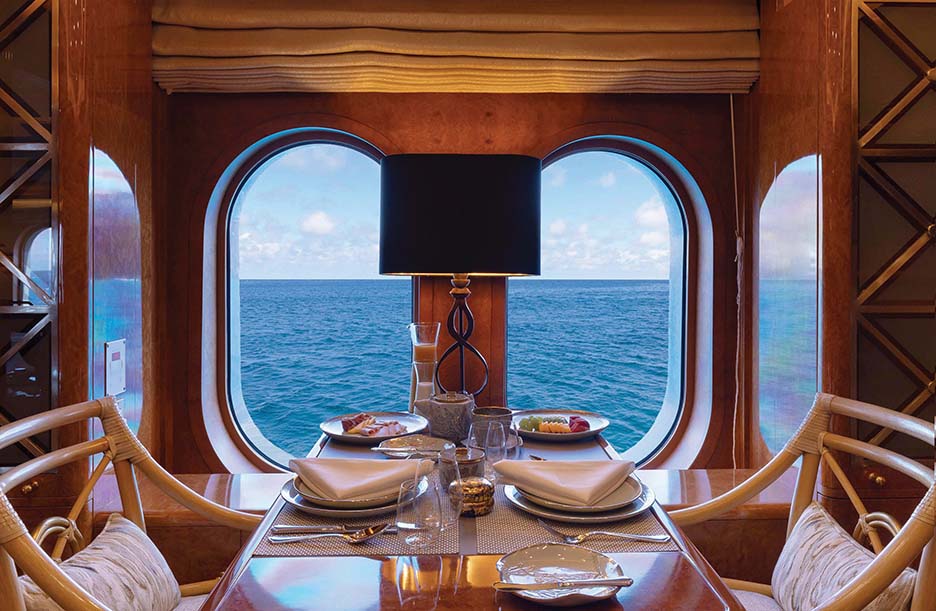
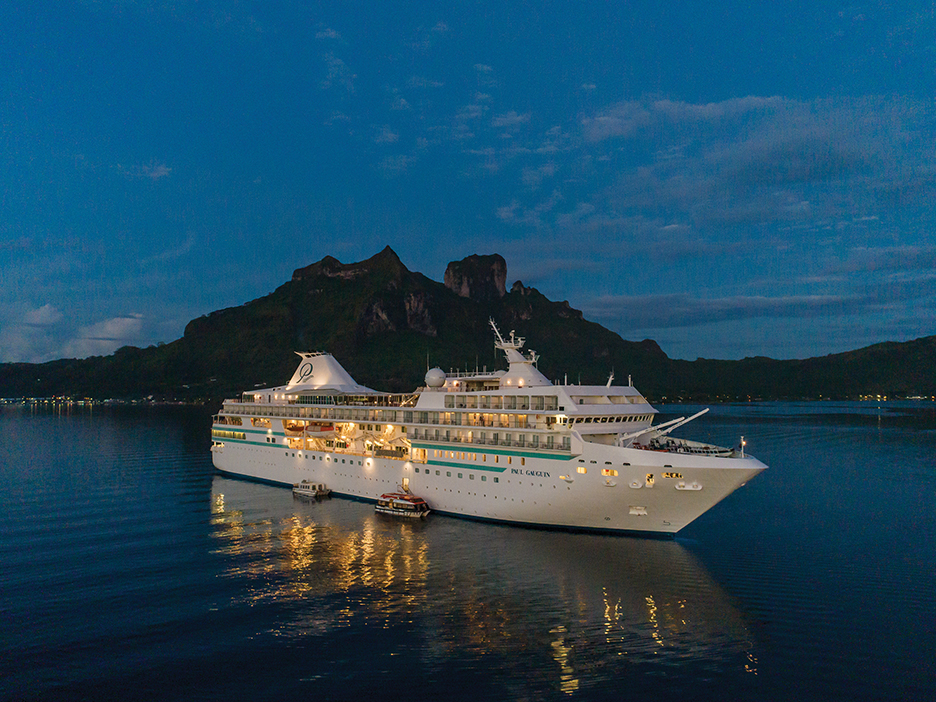
Ponant also operates Paul Gauguin Cruises, specializing in excursions to French Polynesia on the firm’s signature MS Paul Gauguin, a luxury 330-passenger vessel outfitted by the studio of Parisian architect Jean Philippe Nuel. Large staterooms with ocean-view balconies and butler service, fine dining and a spa are among the amenities that distinguish this high-end boutique line.

Demonstrating Ponant’s commitment to environmental awareness and activism was its leadership role in the recently convened Blue Climate Summit aboard the MS Paul Gauguin. Attended by Prince Albert II of Monaco and President Édouard Fritch of French Polynesia, the convocation drew 250 scientists, policy makers, business leaders and environmental activists.

“There has never been a more important or urgent time for the world to address ocean protection and climate change,” stated Stan Rowland, CEO of Blue Climate Initiative, sponsor of the inaugural event. Proud that the MS Paul Gauguin was selected as the host ship, Ponant CEO Hervé Gastinel submits, “The partnership with Blue Climate Summit is a natural fit, as we also have ambitious objectives to protect the ocean and the communities our ships visit.”

The m/s Paul Gauguin was built to sail the lagoons of the South Pacific.

Considered a premier small-ship line by cruise journalist Gary Bembridge, Windstar Cruises is known for its luxurious vessels, including wind-assisted sailing yachts. The company recently announced its first Red Sea/Persian Gulf itineraries, some which pass through the Suez Canal, for those weary of the usual Caribbean or Mediterranean ports-of-call.

The new cruises include some of the region’s most alluring destinations and travelers can enjoy the voyages on Windstar’s traditionally themed Wind Class sailing yachts, such as its intimate 148-passenger Wind Star. “With impressive UNESCO sights, beautiful beaches and wildlife, top-rated golf courses, amazing snorkeling and diving, and of course, great shopping, Windstar is excited to introduce our guests to the Red Sea and Persian Gulf,” explains Windstar Cruises president Christopher Prelog. Boarding a yacht with teak decks and traditional sails atop towering masts provides a nostalgic, romantic setting for traversing exotic seas to some of the most ancient sites on the planet.

Miami-headquartered Norwegian Cruise Line is well known for its massive, 20-deck ships that entertain 4,000-plus passengers with casinos, water parks and nightclubs. However, Hurtigruten Expeditions is an authentically Norwegian carrier, one whose vessels are a fraction of the size, but offer an intimacy that suits the company’s commitment to onboard education and preservation of the planet’s most fragile habitats.

Nonconformist nautical adventurers may also consider booking a small barge meandering the canals of Europe, ideal for a group of friends or family. This kind of laid-back cruise involves diminutive, repurposed barges accommodating six to 12 passengers. Because the boat moves at a decidedly leisurely pace (less than five miles per hour), passengers can wander off on hikes or bike rides, then easily catch up with the escargot like progress of the vessel. Speaking of gastronomy, many barges retain accomplished onboard chefs who stock up periodically at charming local markets.

Comments Off on Not Your Grandparents’ Cruise

Changing the Skyline

By Marlene Ridgway

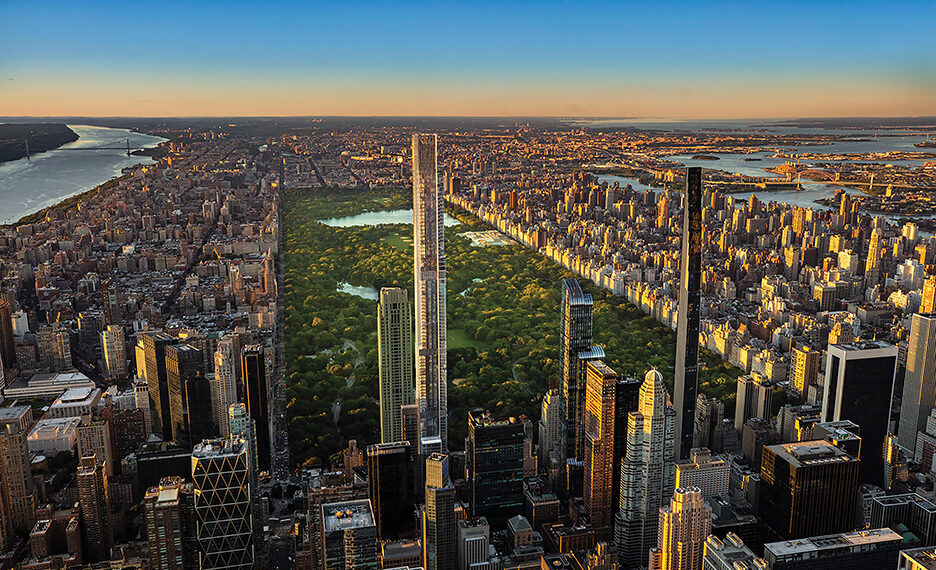
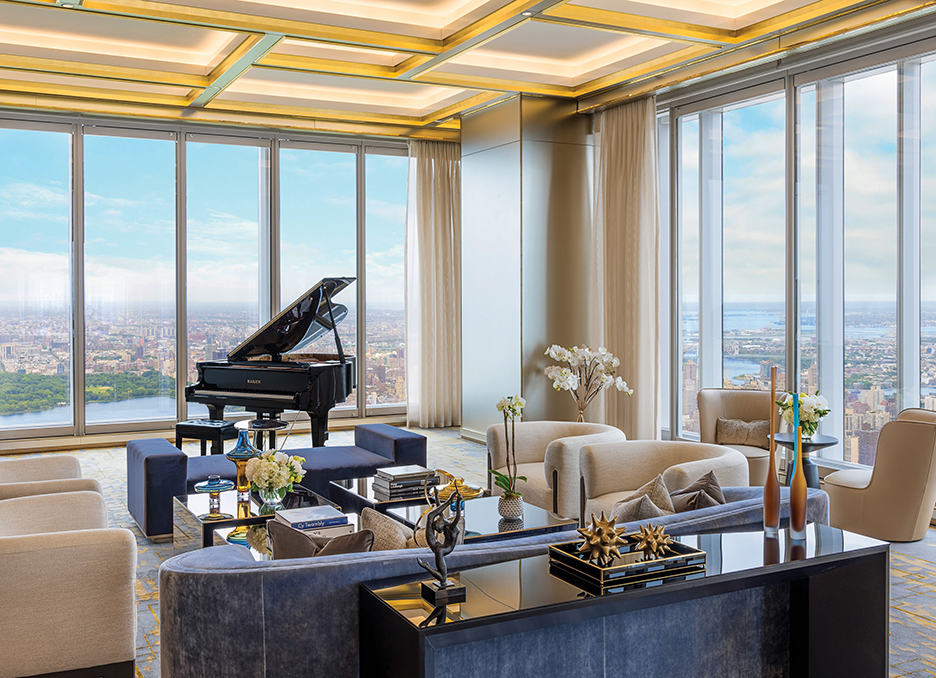
New York City’s Central Park Tower is now the largest residential building in the world. Its 179 luxury condos reside above Nordstrom flagship department store. “I believe that Central Park Tower is a proven testament to how far one can go, especially in a city like New York, but with the technological advances in vertical transportation and the ever-increasing strength of materials available, with creativity and ingenuity, the sky is the limit,” says Joaquin Stearns, the senior vice president of development of Extell Development Company, about going even higher.

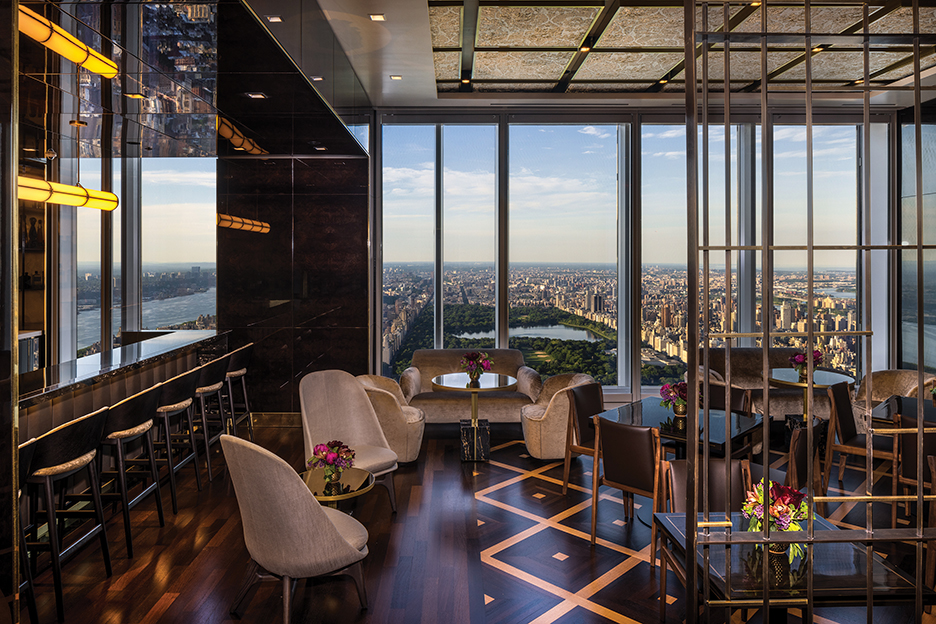
Central Park Tower 100th Floor

The Central Park Tower design was developed by Extell and brought to fruition by architect Adrian Smith + Gordon Gill Architecture, after decades of planning. “We worked with the world’s most talented designers, engineers, and architects to conceptualize and develop a product that exemplifies luxury, appeals to a discerning buyer and that would also resemble nothing else out there,” notes Stearns. The reflection of sunlight on the glass and its unique slender design have made Central Park Tower a stunning addition to New York City’s skyline.

Credit Jonathan Walgamott of Extell

At 1,550 feet, the glass-encased building with walls of windows boasts panoramic views of the city and beyond while tackling the challenge of sustainability. The super slim design takes up little land but it also utilizes solar power and wind, which takes some of the strain off of the infrastructure.

Stearns says, “the building exterior was designed with several different materials that were carefully selected in response to the energy efficiency of the building, but also in response to how the building would respond to the effects of sunlight throughout the day and throughout the year.” Each decision was a conscious effort to create something architecturally incredible while appealing to the residents who would live there.

Central Park Tower Amenities
Central Park Tower Pool

The corners and layers of the building, as it gets higher, were designed to handle wind while placing structural elements between residences to offer better views. “We used highly efficient low-E glass units for the windows, low reflective surfaces such as zinc panels, as well as stainless steel components throughout the vertical aspects of the building,” adds Stearns.

A technological feat, “the exterior combines elements of glass, satin-finished stainless steel, and light catching vertical and horizontal details that accentuate the interplay of texture and light,” says Stearns.

CPK Tower Amenities

“This building used a unique combination of structural components, including custom fabricated structural steel super-columns and the use of high-strength reinforced concrete lifestyle structure, which is only found in super-tall buildings.”

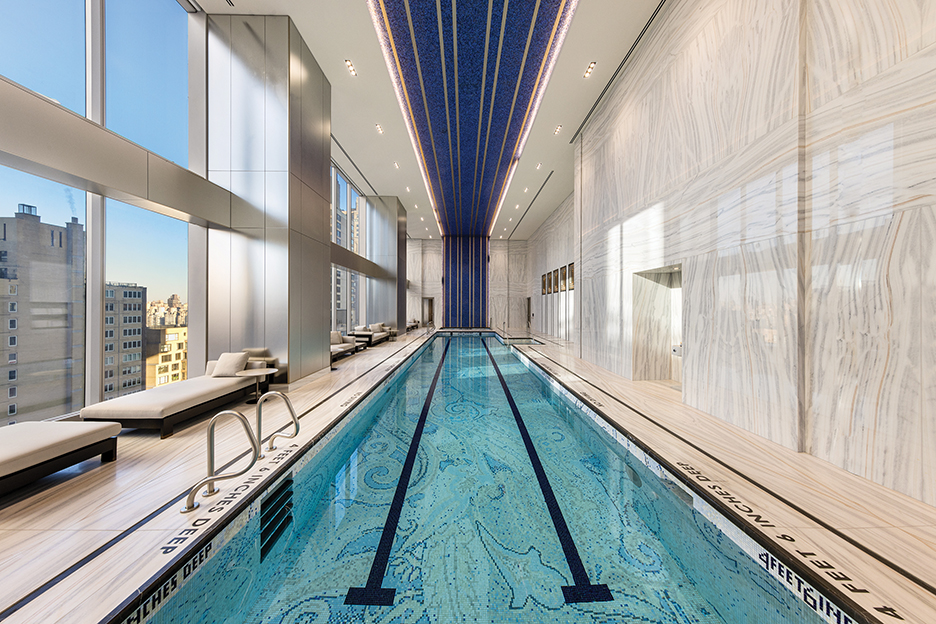
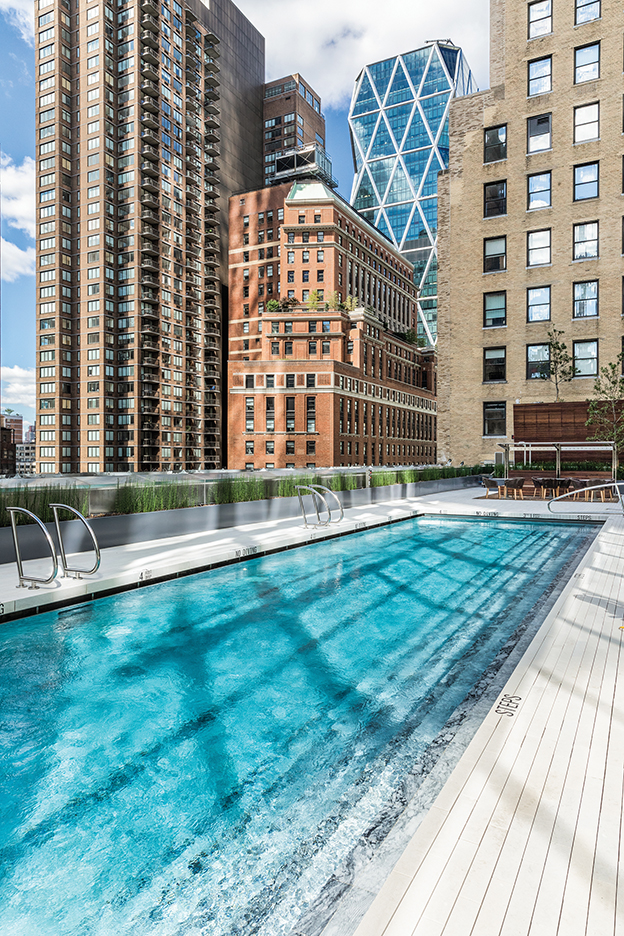
Throughout the design, none of the desired hotel-like amenities were overlooked. The terrace level offers a connection to the outdoors, which includes a luxurious 60-foot pool, elegant gardens, space for sunbathing, grilling, and fire pits.

NYC Tower Pool

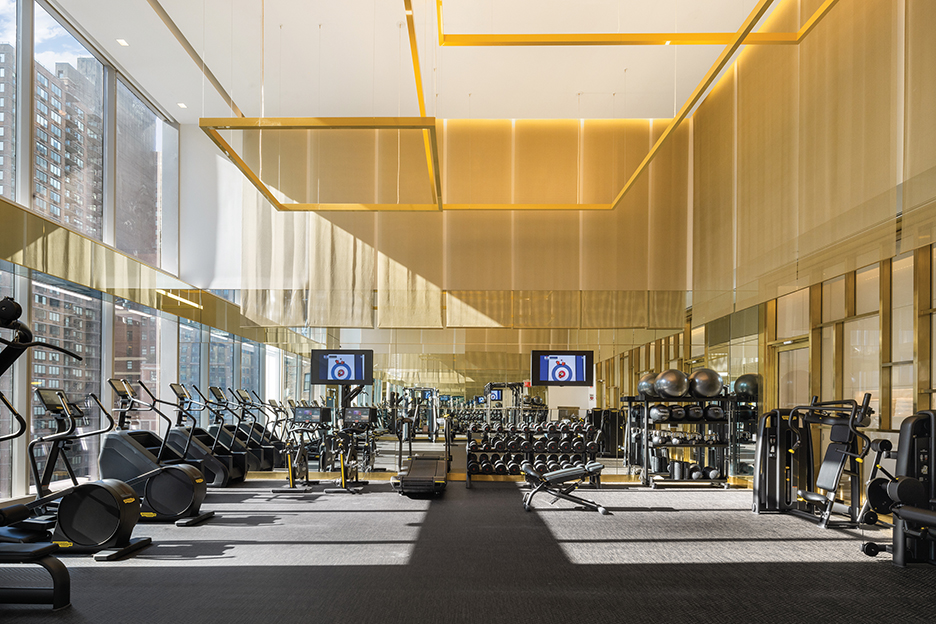
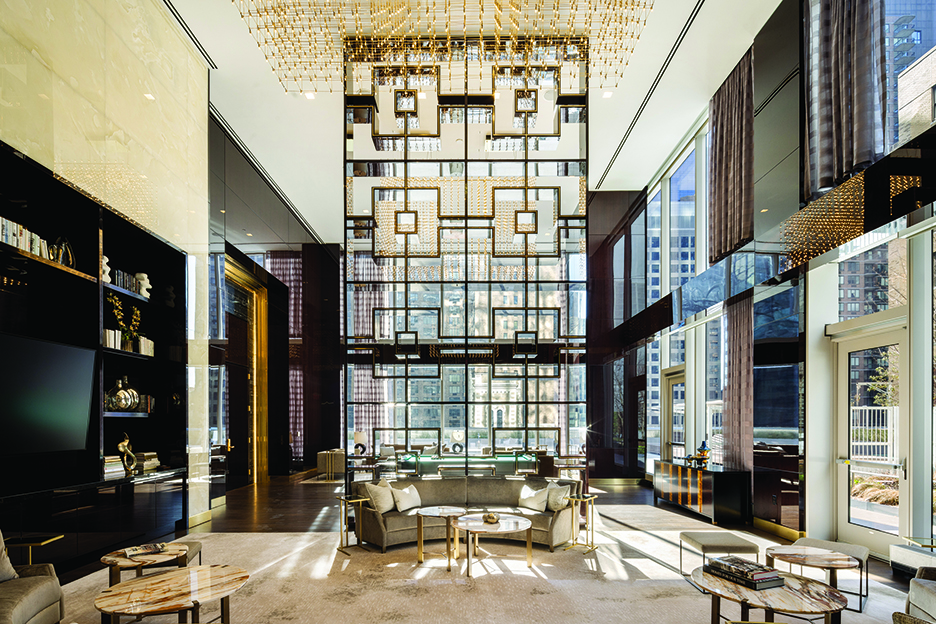
“In addition to the unmatched residences, which offer endless views, exquisite architecture, and gracious layouts, Central Park Club is a defining element that further elevates our residents’ living experience,” says Gary Barnett, founder and chairman of Extell. While inside, the tower also presents an indoor saltwater pool, game room, billiards, a private screening, and performance space. With an emphasis on wellness, the tower is home to several spas, saunas, a wellness center, sports courts, and so much more for active residents.

Nordstrom, at the base of the tower, is seven stories high and offers an incredible viewing experience for shoppers and residents, who will receive special access. Designed by James Carpenter Design Associates, the Waveform Facade makes for unprecedented views of New York City and Central Park while shopping. The curvature of the glass and zinc fins eliminates the need for reinforcement in the middle of the windows and offers uninterrupted views.

Leave a comment

Only Murders in the Building

By Ritika Jain
Photography by Evan Joseph

In New York City, it’s impossible to count the number of grand, historic buildings you end up walking past. The city is dotted with towering buildings that have withstood the test of time. If you’ve been watching the hit Hulu series “Only Murders in the Building,” starring Steve Martin, Martin Short, and Selena Gomez, you might have noticed one of them. The show is predominantly set at The Belnord, a timeless prewar residence built in 1909 that takes up an entire block on the Upper West Side.

The Belnord boasts a commanding presence with exquisite, regal architecture and private, spacious entrances for residents to comfortably unload their belongings. Despite being built over a century ago, the building offers the height of modern luxury with renovated condominiums and a redesigned courtyard, making it especially attractive for affluent buyers.

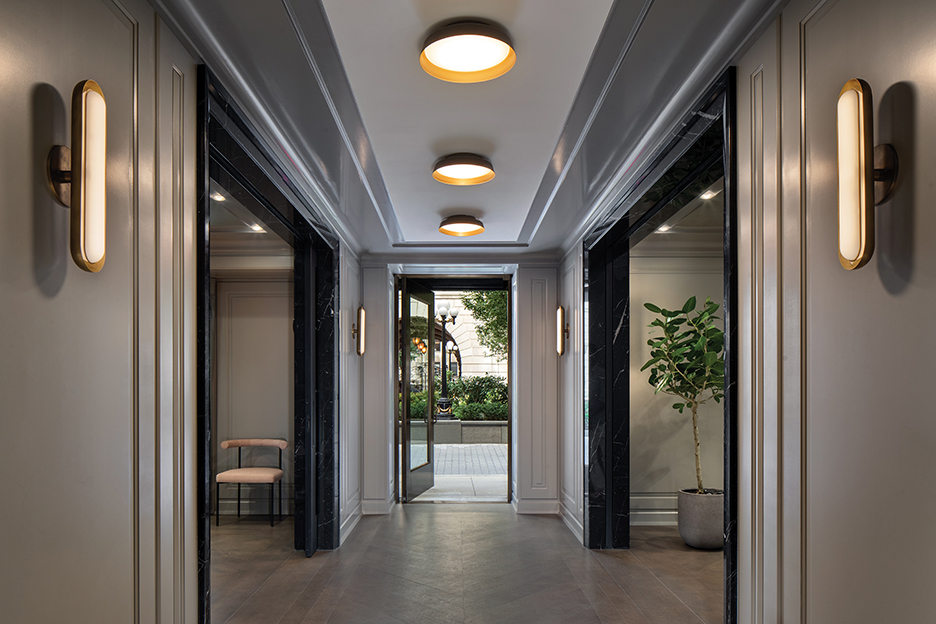
Given the location of The Belnord, one would think that privacy would be hard to attain. However, the building is structured so that residents can freely enter and exit without wrestling through a crowd. There are 6 different residential lobbies, each with a private elevator, grand staircase, and freight lift to lead them up to their residence. The lobbies themselves are extremely upscale, with white high-gloss painted wall paneling, satin nickel hardware, and restored polished mosaic floors.

The Belnord Lobby

As for the residences, they are essentially large, apartment-style homes and nothing short of impressive. Robert A.M. Stern can be credited for the interiors, rethinking the original floor plan to implement a classic layout with contemporary features that complement the building’s structure while satisfying modern tastes.

Common features include grand arrival foyers; gracious bedroom galleries; a 5-inch, rift-cut, solid white oak chevron accent floor; and custom base, casing, and crown moldings. The kitchens are also notable elements, custom designed by Robert A.M. Stern and complete with polished Calacatta Gold marble countertops, a windowed eat-in area, and appliances by the luxury appliance brand Gaggenau, including a 5-burner gas cooktop and fully integrated column refrigerator and freezer.

Upon restoring The Belnord, the architect and designer were committed to retaining the prewar aesthetic while accommodating modern living expectations, according to Maya Kadouri, The Belnord’s director of sales at Douglas Elliman. In order to accomplish this, they used some of the same materials used in the original structure to preserve the building’s original feel. While today’s homebuyers have their eyes set on all things modern, the prewar aesthetic of The Belnord is a rare offering on the Upper West Side that exudes class and opulence.

The Belnord Children's Room

“Restoring any prewar building, you have to be extremely knowledgeable in how to restore, but also create something that buyers of today can relate to while still retaining the prewar aesthetic. We try to use subtle, modern finishes and natural materials to highlight the history of the building,” explains Kadouri.

Aside from the desirable prewar design, the vast collection of amenities at The Belnord, known as The Belnord Club, also remain a significant draw for homebuyers. Residents of all ages enjoy access to a variety of spaces to dine, entertain, relax and stay active, including a sophisticated entertainment lounge with a dining room, a state-of-the-art fitness center, yoga studio, aerobics/stretching room, and a sauna with locker rooms.

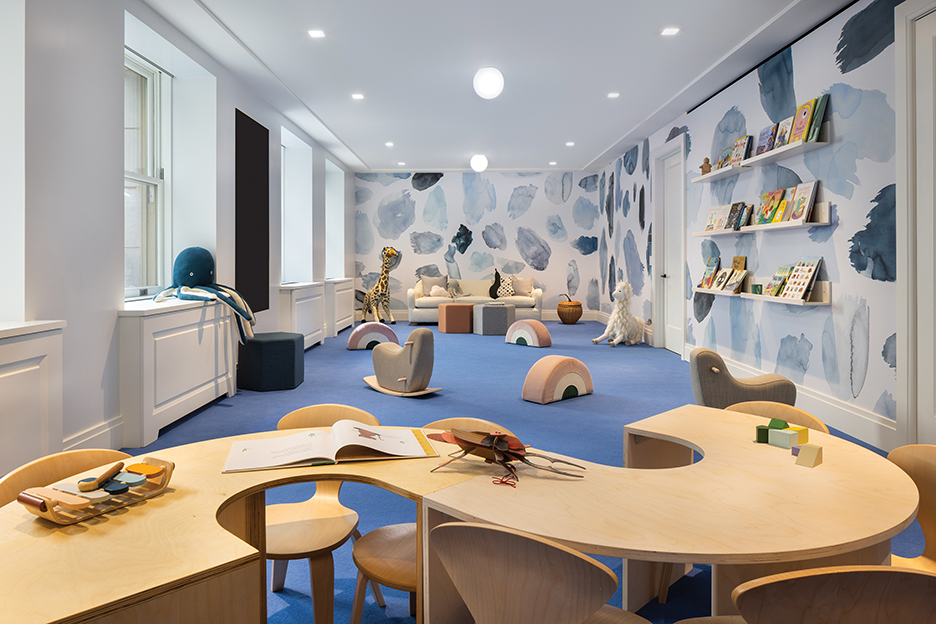
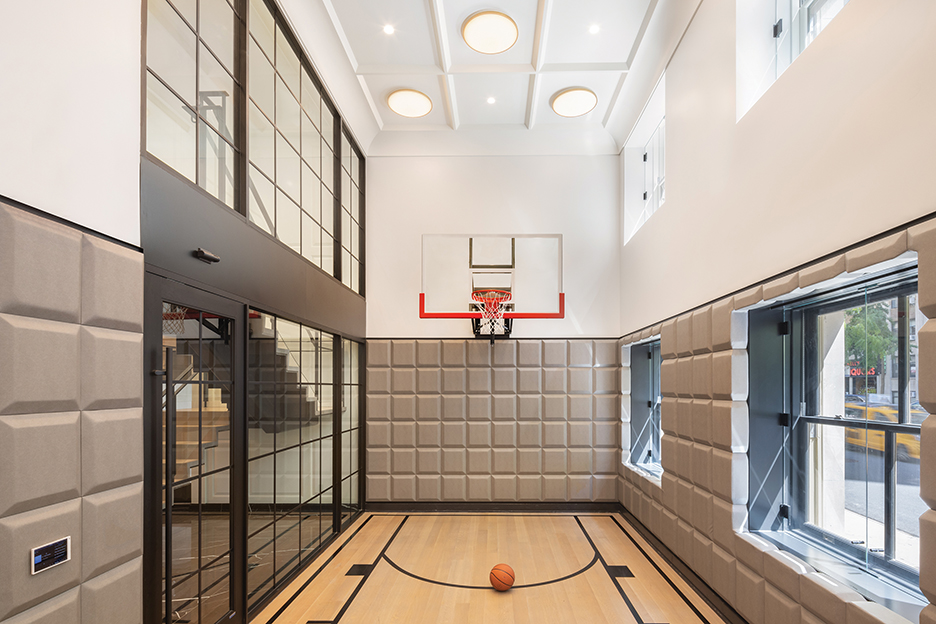
The children’s playroom is full of whimsy and imagination, creating the perfect refuge for children to play and engage while teens can congregate in the teen lounge, which offers a pool table and separate kitchen. The double-height, high-tech sports court is also popular for its leather-cushioned walls and multipurpose use.

The Belnord Sports Court

“It’s rare to find a prewar building with 30,000 square feet of interior and exterior amenities,” says Kadouri. In order to keep the building up to date with current demands, this is achieved by assessing how people like to spend their leisure time and what is missing from their residence, she says.

“The concept is to have an extension of your residence so you have somewhere else that feels like a part of your home. Now we see sports courts are very much a draw as well as separate lounges and playrooms for older and younger children.” All the amenities are strategically located on the ground floor or second floor, rather than in the basement, ensuring the utmost service and convenience for residents

The Belnord Courtyard and Garden

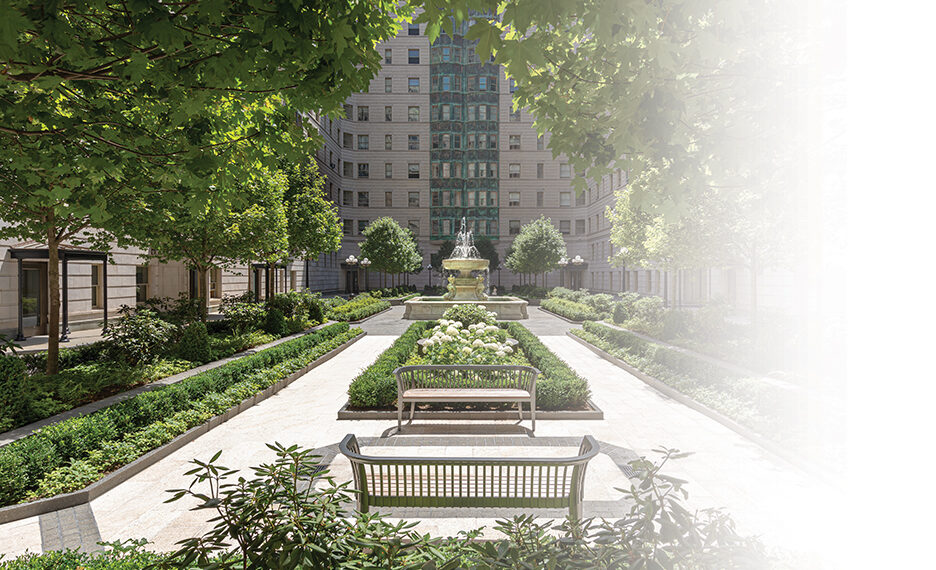
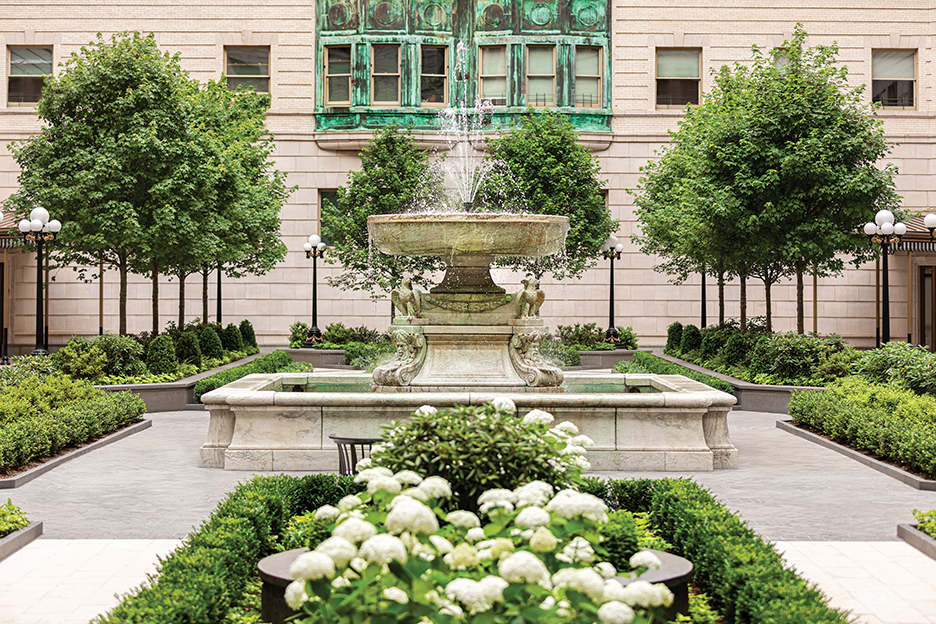
When considering all the perks The Belnord has to offer, the pinnacle is undeniably the courtyard garden, which is one of the city’s largest at 22,000 square feet. A large interior courtyard that serves as the focal point of a building is also a historic concept, harkening back to European palatial architecture, says Kadouri. Re-landscaped by Edward Hollander, it now offers beautiful greenery, a tranquil water fountain, and great light. “It adds a much-needed sense of serenity and a respite from city life,” reaffirms Kadouri.

The Belnord has seen growing interest in its residences, particularly due to its presence in the show “Only Murders in the Building,” which premiered in 2019 on Hulu and just released a star-studded second season. It serves as an important character in the story of three residents who bond over their true-crime obsession when a murder takes place in their building, coined as the “Arconia.”

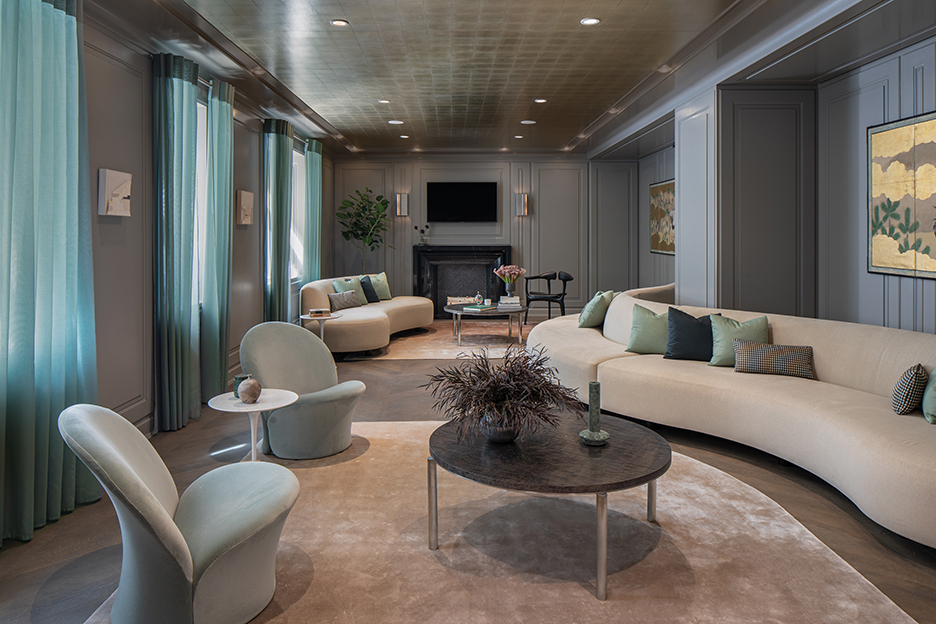
Relax or entertain in the Residents’ Lounge, which maximizes comfort and style<br />
with contemporary details and an elegant marble fireplace.

Evidently, the show markets the building well as affluent viewers are making the transition to residents. The building has had three deals over $10 million in the last month, and the condominiums are nearly 75 percent sold.

When selecting a location for their comedic murder mystery, creator John Hoffman and actor Steve Martin were looking for a rare Upper West Side retreat with a large courtyard, and The Belnord made their vision possible. Current residents have even had the perks of getting a sneak peak of the filming of the second season.

“In the last episode, they invited some of the residents as extras. A ton of crowds would form outside the gate and get a peek of the stars. There was one day they were filming and they turned all of 86th Street into a stage and brought in cars and buses for one of the scenes,” relates Kadouri.

The Belnord has a layered history and an equally intriguing present, offering a romantic city lifestyle with almost every luxury at your fingertips. Get a closer look in the show “Only Murders in the Building,” or stop by the grand structure in person. Who knows, maybe you’ll get a sneak peek of Season 3.

Leave a comment

Super Yachts’ Top 3 Trends in 2023: Luxury, Sustainability, and Technology

By Jacquelyn Elliott

The sales of super yachts have increased significantly this year. While growing in popularity, revolutionary developments have been made to the super yacht experience. 

From state-of-the-art amenities, impressive innovative technology, and off-grid solitude, super yachts continue to advance and provide an unparalleled level of privacy and luxury that cannot be matched. 

Let’s delve into the latest trends observed on super yachts this summer.

Luxury

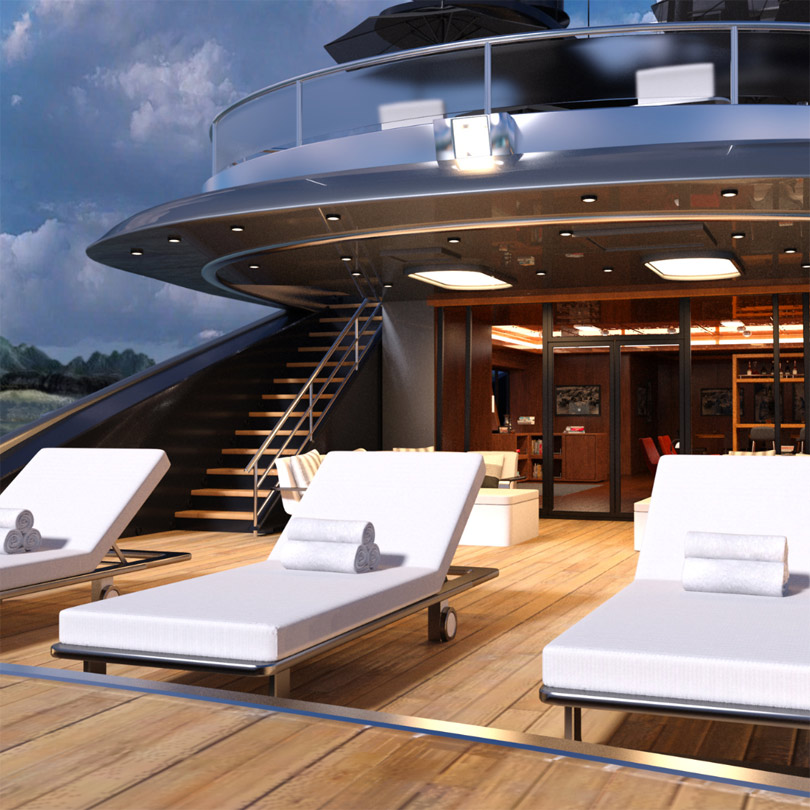
While at-sea experiences used to be exclusively for holidays and vacations, many stay aboard for everyday living. Not a single luxury is left behind, as there is nothing you can not do on board. 

A recent yacht report explains that this summer, “saunas, cryotherapy chambers, hammams, steam rooms, resistance swimming pools, massage tables, meditation rooms, and personal gyms are now all the rage.” 

Conveniently, super yachts offer the amenity to WFY or work from yacht. As remote work transitions to the new norm, super yachts provide the privacy and capability to work efficiently. 

To keep up with the demands of everyday life, super yachts encompass “lightning-fast WiFi, acoustic privacy, larger bespoke desks, and integrated computer systems that allow them to perform 99% of their work functions perfectly well at sea.” What more could you need? 

Deck of Yacht

Sustainability

In 2023, sustainability is a prominent trend aboard super yachts. Extravagance is sustainable and recycled materials are the new concept of luxury. 
Looking back, in 2022, there were a total of 6 super yachts with hybrid engines. Reports show that sustainability at sea includes “synthetic teak decking and faux leather upholstery cutting the carbon and animal footprint of each craft.” 

Also trending is a growing movement “in which yacht owners are offering financial support to conservation directives, not least as more and more of them are heading off-grid to beautiful, delicate ecosystems themselves, and realizing the true fragility of the oceans.” 

Super yacht view

Technology

These trends are just the beginning. Startups in the industry tease plans to enhance the sailing experience. 

The Yacht Sentinel plans to introduce innovative technology that will enable captains and crew members to monitor all the vital metrics in real-time, such as fluid levels, power, solar panels, batteries, engines, and maintenance.

Yacht shows will soon present virtual reality with immersive, realistic Metaverse tours of potential builds and future projects. Customers will be able to experience the thrill of sailing in a whole new way. 

Exciting developments are promised for the future of super yachts creating countless opportunities for growth and innovation. What at-sea amenity would you like to see next? 


Leave a comment

Next Stop… A Golden Era

By Roger Grody

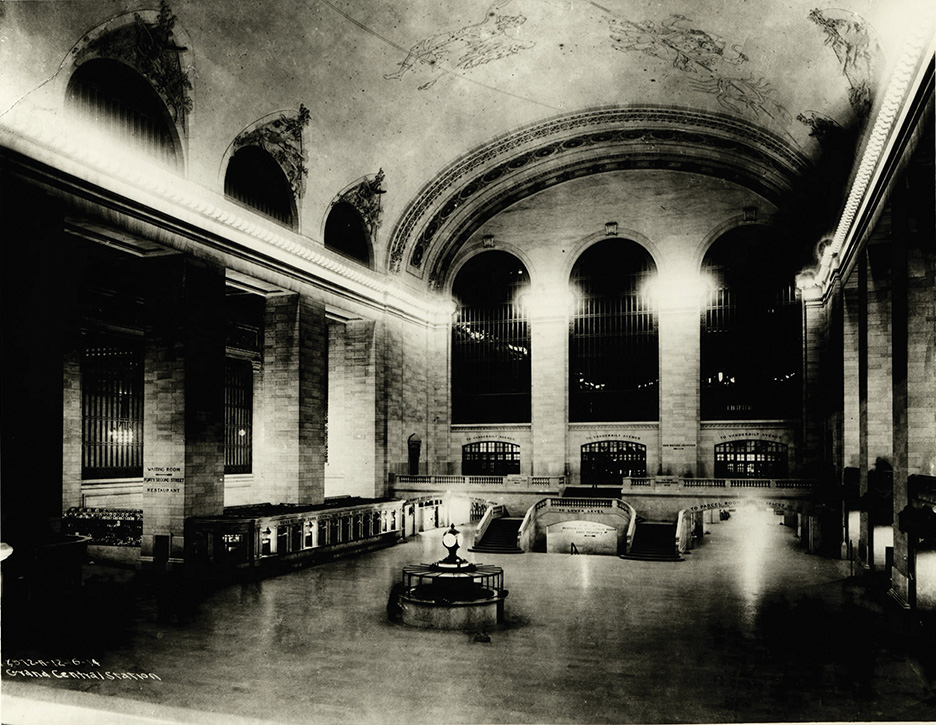
Train travel has not been the dominant mode of transportation for three-quarters of a century, but the grandeur of a golden era of rail can still be discovered without ever purchasing a ticket. Just like the movie palaces of the period, many early 20th century train stations have been meticulously restored, some transformed into compelling attractions for tourists and locals alike.

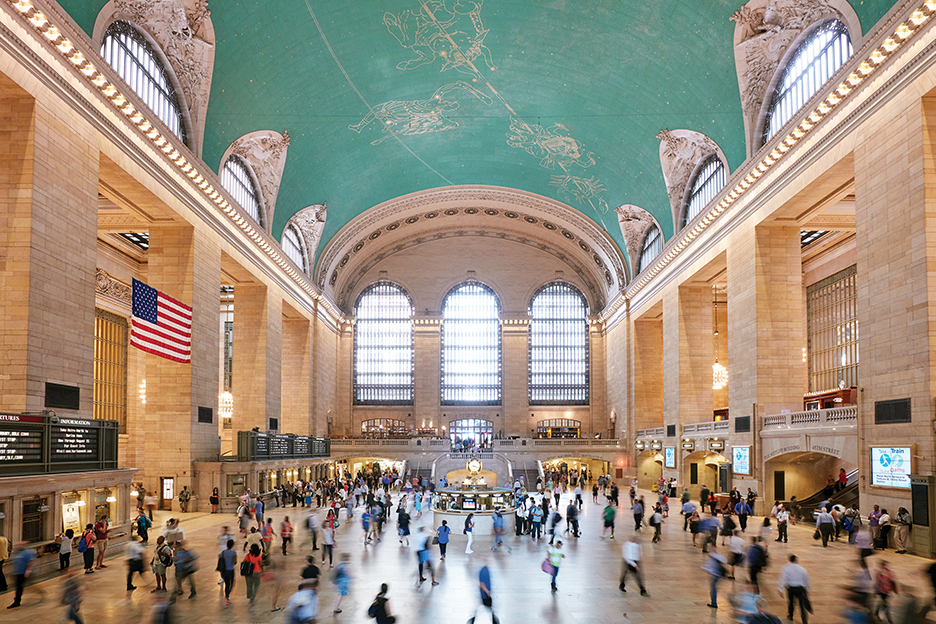
The granddaddy of them all may be New York’s Grand Central Terminal, whose current Beaux-Arts building was inaugurated in 1913. Although Amtrak departs out of Penn Station, Grand Central still services commuter lines to suburban New York and Connecticut, while subway passengers connect here. The landmark is home to a wide array of food services, from sit-down restaurants (e.g., Grand Central Oyster Bar, Cipriani Dolci) to gourmet specialty purveyors such as Jacques Torres Chocolate or Murray’s Cheese.

Historic Main Concourse - Credit Grand Central Terminal
Main Concourse - Grand Central Terminal

Like rail landmarks across the country, Grand Central Terminal’s history ranges from soaring heights to tragic declines, and it ultimately took a 1978 ruling by the U.S. Supreme Court to save it from demolition. During the controversy, Jacqueline Kennedy Onassis, who was a high-profile member of the Committee to Save Grand Central Terminal (as was architect Philip Johnson), argued for the station’s preservation. She queried, “Is it not cruel to let our city die by degrees, stripped of all her proud monuments, until there will be nothing left of all her history and beauty to inspire our children…?”

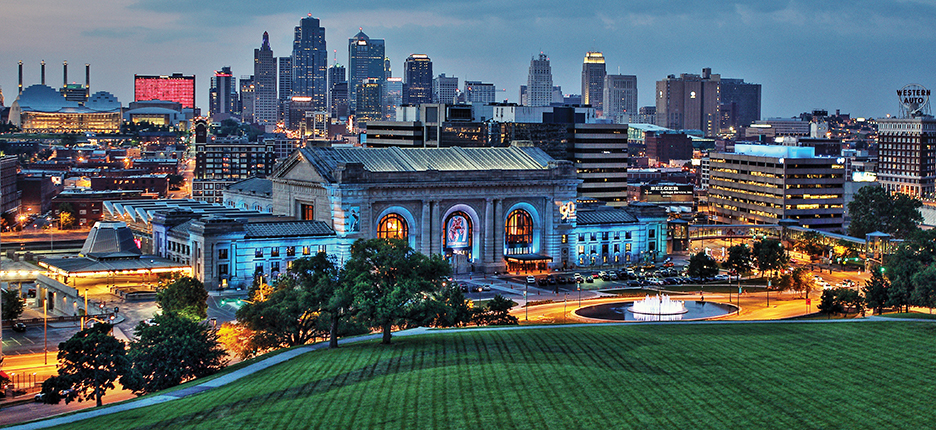
Union Station Kansas City has been reimagined as a multipurpose cultural center but remains an iconic symbol of the community.

Although its first passengers boarded trains in 1894, the Romanesque-style Union Station of St. Louis became a global hub during the city’s 1904 World’s Fair. Today, only local commuter trains run through Union Station, but the city has used the restoration of the historic landmark to fuel nearby redevelopment, attracting new hotels and shopping. The grand concourse of the terminal, with its Tiffany stained glass windows, has been polished up and a world-class aquarium now calls the station home.

Across the state, Union Station Kansas City (exceeded in size only by Grand Central and Penn Station in New York) opened in 1914 but shuttered in 1985 after decades of declining passenger volume. An ambitious plan to reimagine the Beaux-Arts station — it was transformed into a cultural center with an interactive science museum, exhibition space, planetarium and live theater — concluded in 1999. A catalyst for downtown development, the station’s evolution has been critical to the renaissance of the entire metropolis, insists George Guastello, president and CEO of Union Station Kansas City. Noting its image is as iconic to Kansas City as the Gateway Arch is to St. Louis or Empire State Building to New York, Guastello states, “It’s become the visual voice of our community, the monument that brings the city together.”

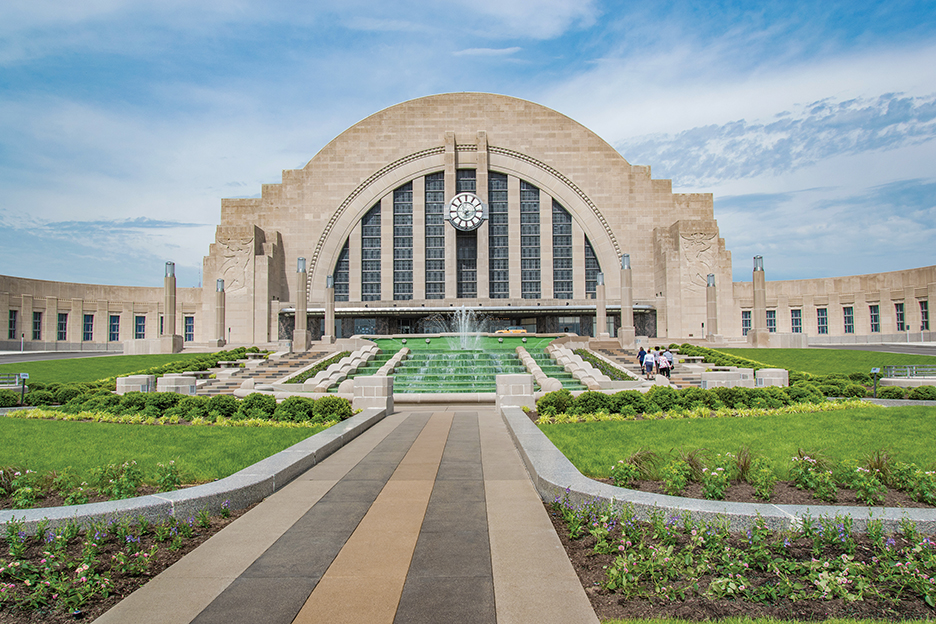
Cincinnati Union Terminal, opened in 1933, is a superb example of Art Deco architecture in America.

The Kansas City landmark still performs the role for which it was originally designed, albeit on a much smaller scale, as passengers board Amtrak’s Southwest Chief to Chicago or Los Angeles, and the Missouri River Runner to St. Louis. With approximately 2 million annual visitors, Guastello suggests the revitalized facility has again become the lively ecosystem it was early in the last century. “It’s a model for what an historic train station can become in the 21st century,” he says, adding, “It’s not just a station but a source of civic pride…It’s the piazza of Kansas City.”
Opening in 1933, in the height of the Art Deco era, Cincinnati Union Terminal remains one of America’s great examples of that glamorous architectural style. The station’s soaring rotunda spans 180 feet and features impressive mosaic murals by German-American artist F. Winold Reiss. Cincinnati Union Terminal no longer accommodates the 200-plus trains per day it was designed for, but travelers can still board the Amtrak Cardinal to New York or Chicago, and the facility has become home to several museums.

Denver’s Union Station, a Neoclassical landmark rebuilt in 1914 after a devastating fire, is another worthy destination for history buffs. The trendy Crawford Hotel now overlooks the station’s sumptuous Great Hall, where restorations of the original 1,200-pound chandeliers create a dramatic scene shared by hotel guests and rail passengers. The westernmost monument to the golden age of rail in America is Los Angeles’ Union Station, which presents an artful melding of Spanish Colonial Revival and Art Deco architecture.

Bruce Scottow, former program coordinator at the Los Angeles Conservancy — he continues to conduct walking tours of Union Station for the organization — reports the building has always exemplified the California lifestyle. “Completed in 1939, it was late in coming and is often regarded as the last of the great railway stations,” explains Scottow. L.A.’s Union Station has appeared in movies such as Blade Runner, Bugsy, Catch Me If You Can, and The Dark Knight Rises, prompting preservationist Scottow to comment, “Any movie star would be jealous of its film credits.”

Today, in addition to accommodating Amtrak service, the station is the hub of L.A.’s underappreciated subway and commuter train networks, and its restoration has attracted trendy restaurants and brewpubs. “Union Station is no longer the end of the line…it has never been busier than it is now,” states Scottow.

Among the world’s most beautiful trainstations, and representing an innovativeadaptive reuse, is the formerGare d’Orsay onthe banks of the Seine in Paris, inaugurated in 1900. The magnificent Beaux-Arts building is better known today as Musée d’Orsay, which houses one of the greatest collections of Impressionist art on the planet, including iconic pieces from Monet, Van Gogh and Renoir.

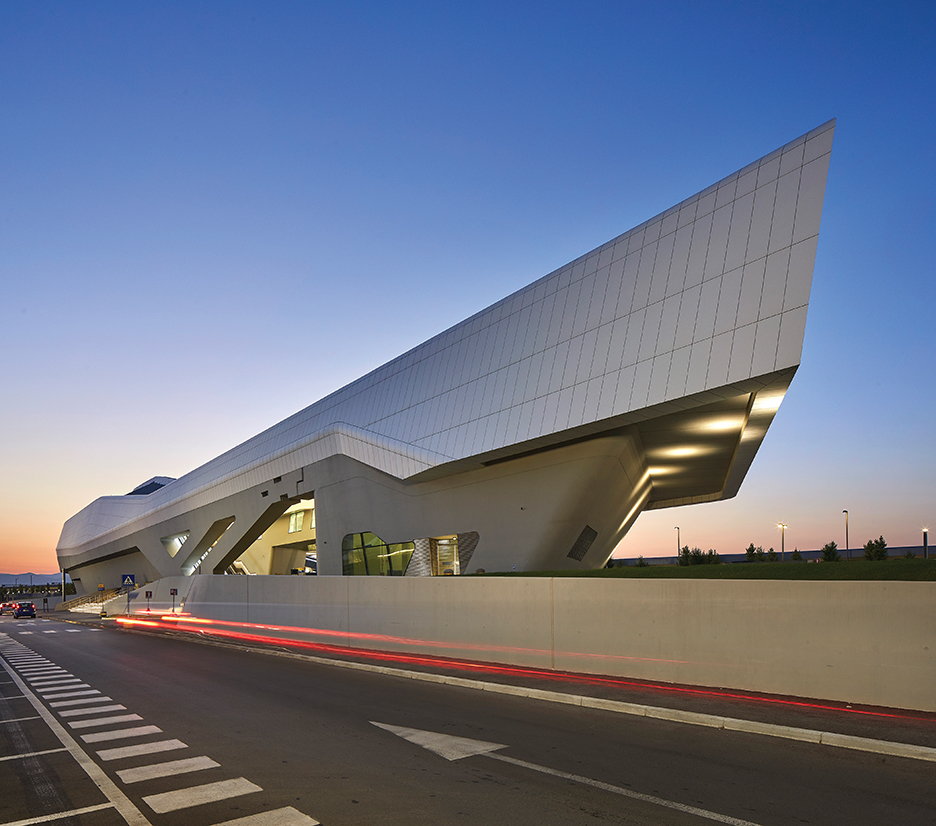
The Napoli Afragola railway station, a vision of pioneering architect Zaha Hadid, has become a metaphor for modern Italy.

At Musée d’Orsay, two giant clocks face the river — highly Instagrammable is the glass dial of one that doubles as a window — and the museum’s restaurant itself is a work of art. Across town, however, is arguably the world’s most glamorous rail station restaurant, the gilded Belle Époque-style Le Train Bleu at Paris’ Gare de Lyon, an historic station where passengers climb aboard aerodynamic, 200 mile-per-hour TGV trains to Barcelona, Milan or Geneva.

Occupying the site of a former 16th-century monastery in Porto, Portugal is the São Bento Railway Station, another Beaux-Arts masterpiece clad in remarkable wall murals. The historic scenes were created from 20,000 ceramic tiles, mostly the blue-and-white azulejo tiles that are a signature of Portuguese craftsmanship. Designed by architect José Marques da Silva, the station was completed in 1916 after a decade of painstaking labor. São Bento makes a memorable first impression for tourists arriving in one of Europe’s most beautiful cities.

Not all notable stations are historic, and a renaissance in train travel — particularly fueled by investments in high-speed rail in Europe and Asia — has resulted in extraordinary new stations being designed by world-class contemporary architects. The soaring World Trade Center Transportation Hub in New York and the dramatic Liège-Guillemins train station in Belgium (both designed by renowned Spanish architect Santiago Calatrava) demonstrate that infrastructure can be aesthetically elevated, even sexy.

Naples, Italy has a 3,000-year history but the ancient city’s Napoli Afragola railway station could not be more futuristic. A vision of the late pioneering architect Zaha Hadid, the ultra-modern facility accommodates high-speed trains to Rome and connections throughout Europe, while its curvilinear design is evocative of a moving train. As much an engineering marvel as an artistic expression, the station’s interior is flooded with light yet its innovative skeleton moderates the region’s often-oppressive heat.

“This extraordinary station is the work of a great architect and of enormous strategic value, proclaimed Gioia Ghezzi, former president of Ferrovie dello Stato, the Italian state-run railway, of the opening of Napoli Afragola in 2017. Lauding the new station’s progressive state-of-the-art design, then-prime minister Paolo Gentiloni used the project as a metaphor for his nation’s acceleration into the 21st century. “With this inauguration we send a message that Italy is moving, the country is growing,” he proclaimed.
In contemporary America, where the expedience of travel tends to be valued more than its experience, the joys of touring by train have almost been forgotten. The rails were abandoned when speedier modes of transportation emerged, but the glorious architecture of rail culture has outlived the trains. Not only can the cavernous structures be appreciated for their physical grandeur, but these noble landmarks may even inspire a nostalgic journey. The ticket window is still open.

Leave a comment

Positive Energy

By Marlene Ridgway

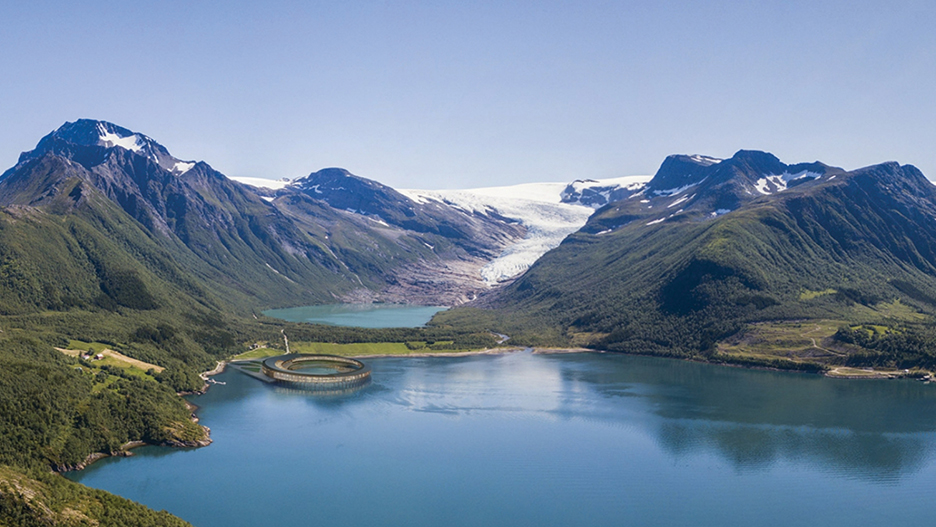
In just two years, the first fully carbon-neutral and emission-free resort, Six Senses Svart will welcome guests to stay and explore, all while combating the pollution that the travel industry typically generates.

The 94-room resort will offer adventure and conscientious travelers an incredible way to experience and preserve the unique environment of the Svartisen glacier in Norway. The revolutionized resort plans to take sustainability and energy efficiency to a new level by not only eliminating negative impacts on the surrounding environment from start to finish, but also generating its own energy through solar panels and geothermal wells.

Guests will get an immersive experience where they can enjoy the surrounding landscape guilt-free. “Six Senses Svart aims to become a prototype for the future of sustainable hospitality,” says Jeff Smith, vice president of sustainability for Six Senses.

The eye-catching, ring-shaped resort will combine a futuristic design and technological innovation with earthy, organic materials that use the least embedded energy. The circular green form is tactile, creating a feeling of openness and perpetual consciousness of nature as it gives the building a transparent appearance. The happy side effect is its ability to collect energy from the roof and offer panoramic views and privacy with the expanded distance between rooms.

Svartisen glacier

Preserving and Generating Energy

The resort will be poised above the water and landscape to minimize the impact on the environment, a notion that has influenced every decision about the project along the way. Six Senses Svart aims to demonstrate that carbon neutrality can be not only feasible in a sophisticated development at an eco-sensitive site, but can also be profitable.

The resort will also funnel solar energy back into the running of the hotel, boat shuttle, and energy needed for building, making it possible for the resort to function entirely off the power grid. Such energy-positive buildings could deliver 89 percent of the 45 percent decrease in emissions required to reach the scenario where global warming is limited to 1.5°C above pre-industrial levels.

To create a self-sustaining travel destination, the resort will employ its own waste and water management, recycling, and renewable infrastructure. The team will work with existing sustainable fishing and farming operations and engage like-minded local suppliers for the restaurants and bars. All of this will make the zero waste dining venue possible where everything from food storage, prep, and dining will be a proactive, sustainable decision. For example, “whatever isn’t eaten fresh from the farm may get pickled or utilized in some other way,” according to Smith.

Kayaking at Six Senses Svart

Health and Wellness

The resort will not simply have a positive impact on the area, but will also prove restorative for guests looking for an authentic and unplugged experience. Outdoor adventures, such as biking, hiking, and horseback riding will entertain guests while the spa and fitness center will encourage even more rest and rejuvenation.

Six Senses Svart will cover the full gambit of integrated wellness, with state-of-the-art equipment and wearable technology assimilation, integrating a specially developed Svart Touch concept that will further elevate the brand’s pioneering wellness approach.

Leave a comment

Traveling by Design

By Roger Grody

In a world filled with compelling architecture, there is little reason to stay in a nondescript glass-and-stucco hotel replicated in cities around the world without regard to local culture or sensibilities. For travelers seeking enrichment from their destinations, the first priority is booking a room at an architecturally distinctive hotel, one with historic significance or contemporary aesthetics imagined by a world-class architect.

Emphasizing the diversity of hotel design, Shelley Hornstein, senior scholar and professor emerita of architectural history and visual culture at Toronto’s York University, notes, “Architecturally important properties aren’t necessarily luxury properties.” She reports that architectural tourism has become extremely influential in the hospitality industry, based on the draw of UNESCO World Heritage sites alone, and that social media fuels the trend. “Instagram, for example, is one principal ‘venue’ that has taken site awareness to meteoric levels!” says Hornstein, whose most recent book is Architectural Tourism: Sight-Seeing, Itineraries and Cultural Heritage.

Regarding hotel aesthetics, Hornstein suggests, “For those who can afford it, design tops all. We see this from hotel industry advertising, and the latest and greatest are always sought after.” Explaining that hotel architecture is demographically driven, Hornstein notes that comfort and convenience are frequently sacrificed for trendy design. “Function was always trumped, it seemed, by what sold well in a picture,” observes the professor.

The UniqHotels website is one source of the kind of images Hornstein contends are so powerful for hospitality consumers. It is valued by travelers looking for memorable accommodations, from treehouses to ice hotels, Hong Kong skyscrapers to Moroccan desert camps. Recounting the genesis of his venture, founder Daniel Hoffmann reveals, “My travels to over 70 countries made me realize the finite chances of staying in genuinely unique accommodations in our lifetime.” He began building a database that ultimately evolved into the UniqHotels platform, now boasting approximately 1,500 listings.

Fogo Island Summer

Hoffmann describes UniqHotel’s readers as travelers and adventure-seekers searching for inspirational accommodations, but they are not necessarily architecture buffs. “Due to the heavy focus on visual presentations, UniqHotels can be a source of entertainment for anyone, even if a visitor is not specifically interested in architecture,” says the European-based travel advisor.

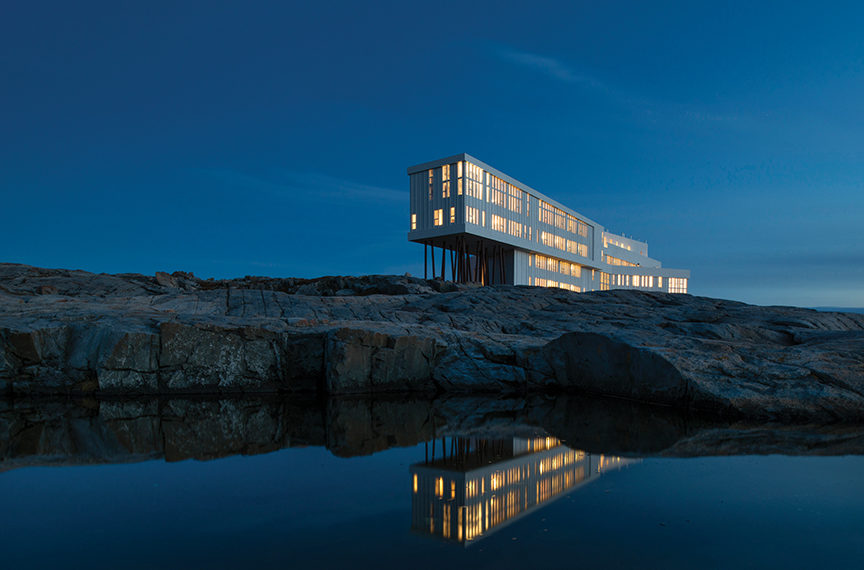
One UniqHotels listing is Fogo Island Inn, perched on a windswept cliff along the coast of Newfoundland. Despite its incorporation of elements from traditional local architecture, one would hardly expect to find this modern minimalist hotel in such a remote location.

Designed by architect Todd Saunders (based in Norway but a native Newfoundlander), the property’s 29 one-of a-kind rooms or suites feature wood-stove fireplaces and commanding views of the rugged North Atlantic coastline through floor-to-ceiling windows. Representing the ultimate Fogo Island accommodations is the Inn’s 1,100-square-foot Flat Earth Suite, showcasing panoramic views in three directions.

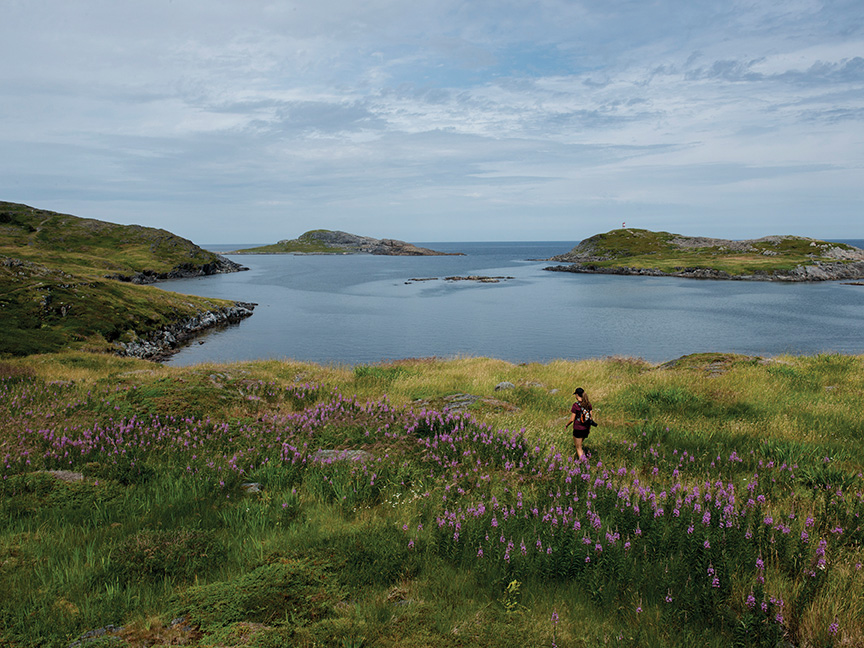
Fogo Island, Newfoundland, Canada

“Fogo Island Inn is deeply tied to Fogo Island and the architectural traditions of outport Newfoundland in the way it meets with the natural landscape,” reports Amanda Decker-Penton, director of the Inn. “Fogo Island Inn’s contemporary design is the perfect marriage of old and new, and speaks to both our past and our present —and, of course, our future,” she adds. An initiative of Shorefast, a nonprofit founded by eighth-generation Fogo Islanders, the hotel is exceptionally eco-friendly, and everything from building materials to the seafood served in the dining room are sustainable. “From its inception, Fogo Island Inn has adopted a responsible approach to design in order to uphold a high-fidelity relationship with the natural world,” explains Decker-Penton. The project and its impact on the community were captured in the award-winning 2015 documentary film Strange & Familiar: Architecture on Fogo Island.

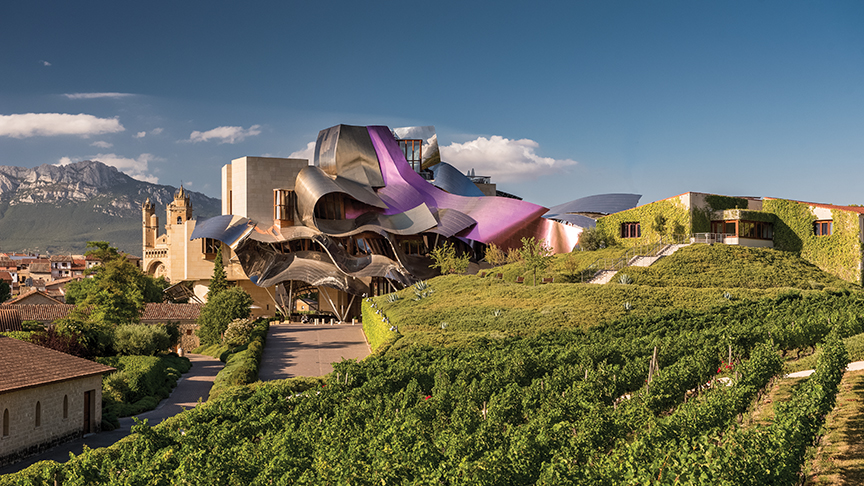
Rioja is Spain’s most legendary winegrowing region, where grapes have been cultivated since the Phoenicians occupied the Iberian Peninsula. Rioja has a traditional, old-school reputation, but the Hotel Marqués de Riscal challenges that image. The dazzling hotel, connected to a venerable winery of the same name, is instantly recognizable as a Frank Gehry original, as its wavy metallic skin is reminiscent of the architect’s iconic Disney Concert Hall in L.A. or Guggenheim Museum in Bilbao. What gives this structure new dimension is an injection of wine country color into its ribbons of titanium, a delightful contrast to the vineyards surrounding it.

The terms of Gehry’s engagement for the design were reportedly agreed to over a bottle of Marqués de Riscal 1929 (the architect’s personal vintage). The winery subsequently named a new wine, the Frank Gehry Selection, after the architect, and the hotel’s Gehry Suite offers spectacular views of vineyards and the medieval village of Elciego. The renowned architect said of this project, “I wanted to design something exciting and festive, because wine is pleasure,” and playfully characterized his effort as “a marvelous creature, with its hair flying in all directions, launching itself over the vineyards.”

So many great architects have left their imprint on Chicago’s skyline that the Windy City is essentially an ever evolving museum of architectural history. Among its collection of distinctive hotels is The Langham Chicago, a luxury property occupying 13 floors of a high-rise designed by groundbreaking modernist Mies van der Rohe.

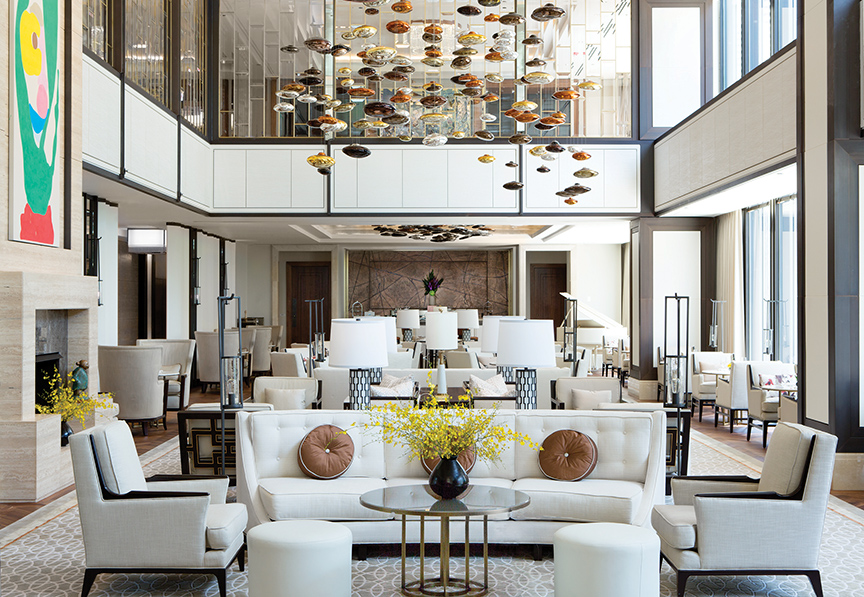
First impressions are important when traveling, and the hotel lobby — what guests experience upon walking through the door — can become a meaningful memory even before receiving their room key. Floating above The Langham Chicago’s main lobby, a sleekly furnished mid-century-inspired space, is a striking 60-foot installation of handblown glass, designed by Jana Růžičková and Tomáš Hovorka of Lasvit, a renowned Czech glassworks firm. “Chicago architect of record Goettsch Partners and London-based interior designer Richmond International created a space that marries the traditional aesthetics of The Langham brand within a Mies van der Rohe- designed building,” explains Langham Chicago managing director Edward Shapard. “The marriage between fine art, architecture and interiors is prevalent throughout the hotel,” he adds. Prior to the pandemic, and planned to
resume, are hotel art tours that connect guests with the building’s architectural heritage.

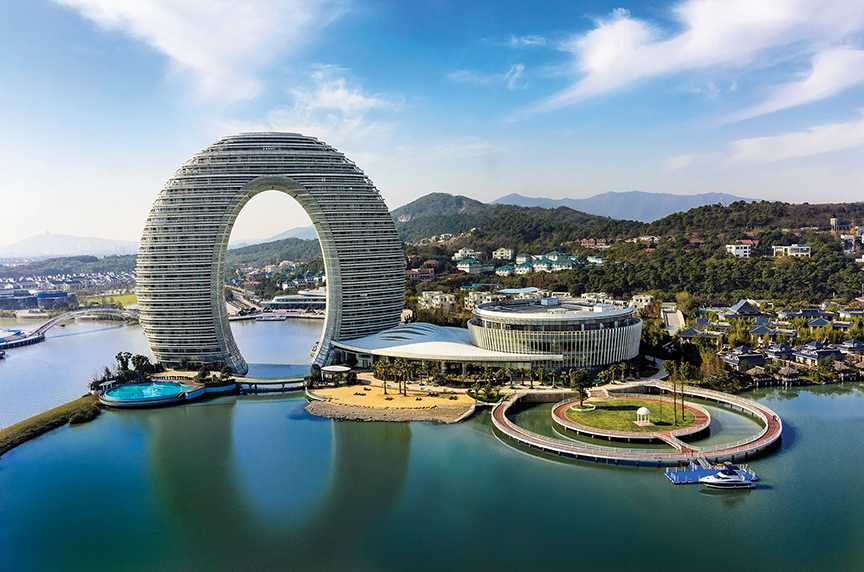
Located in China’s picturesque Zhejiang province, close to Shanghai, is the Sheraton Huzhou Hot Spring Resort, a 27-story horseshoe-shaped structure, equal parts sculpture and hotel. Evocative of a ring, the moon or a traditional Chinese bridge, the structure is dramatically reflected on the surface of Lake Tai, especially when illuminated at night. The hotel was designed by MAD Architects — the global firm is known for its playful, audacious approach to design — and its signature tower rises 400 feet above the water.

According to Judy Shen, deputy general manager of Sheraton Huzhou Hot Spring Resort, guests are captivated by the design, and tourists share photos of it on social media. “Even if they’re not guests, young visitors still like to pay a visit and mark the unique experience with a photo,” says Shen, comparing the property to iconic hotels like Burj Al Arab in Dubai. “The architectural design of the hotel plays a very important role in helping consumers make a decision,” adds the manager. “Hotels with special architectural features represent an important collection within Marriott International’s overall portfolio, and significantly affect guests’ expectations of their experience,” Shen states.

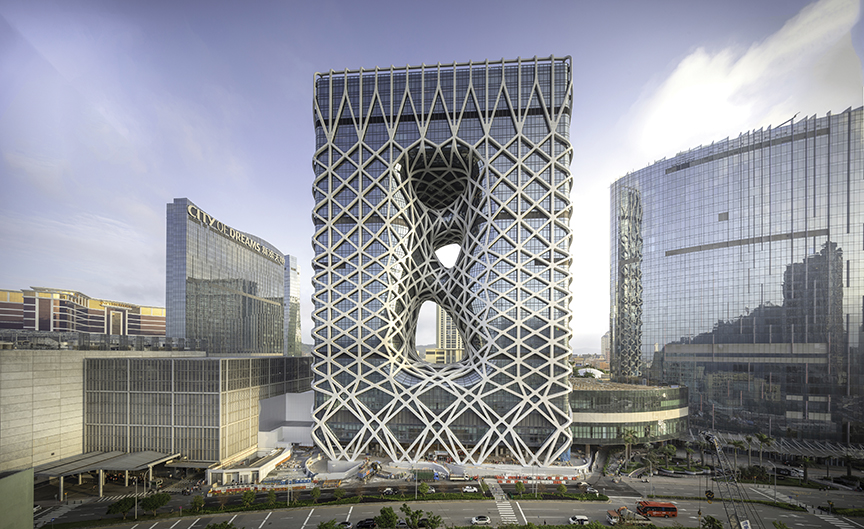
Like its sister city of Las Vegas, the gambling capital of Macau features an eclectic array of architectural styles, but the late Zaha Hadid wanted to create something unique to this former Portuguese colony off the coast of China. Her futuristic design for the 40-story Morpheus hotel is wrapped in a free-flowing lattice inspired by Chinese jade carving traditions. Project director Viviana Muscettola explains, “Macau’s buildings previously referenced architectural styles from around the world, but Morpheus has evolved from its unique environment and site conditions as a new architecture expressly for this city.”

Among the diverse properties listed on UniqHotels are the Taj Lake Palace on an island in India’s Lake Pichola, Budapest’s Four Seasons Gresham Palace whose Art Nouveau lobby is stunning and Los Angeles’ Ace Hotel, which oozes Hollywood heritage.

Leave a comment


America’s Most Expensive Homes
Alabama Real Estate | Alaska Real Estate | Arizona Real Estate | Arkansas Real Estate | California Real Estate | Colorado Real Estate
 
Connecticut Real Estate | Delaware Real Estate | Florida Real Estate | Georgia Real Estate | Hawaii Real Estate | Idaho Real Estate
 
Illinois Real Estate | Indiana Real Estate | Iowa Real Estate | Kansas Real Estate | Kentucky Real Estate | Louisiana Real Estate
 
Maine Real Estate | Maryland Real Estate | Massachusetts Real Estate | Michigan Real Estate | Minnesota Real Estate | Mississippi Real Estate
 
Missouri Real Estate | Montana Real Estate | Nebraska Real Estate | Nevada Real Estate | New Hampshire Real Estate | New Jersey Real Estate
 
New Mexico Real Estate | New York Real Estate | North Carolina Real Estate | North Dakota Real Estate | Ohio Real Estate | Oklahoma Real Estate
 
Oregon Real Estate | Pennsylvania Real Estate | Rhode Island Real Estate | South Carolina Real Estate | South Dakota Real Estate | Tennessee Real Estate
 
Texas Real Estate | Utah Real Estate | Vermont Real Estate | Virginia Real Estate | Washington Real Estate | West Virginia Real Estate
 
Wisconsin Real Estate | Wyoming Real Estate

Style Selector
Select the layout
Choose the theme
Preset colors
No Preset
Select the pattern