All posts by Unique Homes Staff

Bringing Mindfulness Home

By Alyssa Gautieri

Whether with a deep breathing exercise or mantra meditation, practicing mindfulness or meditation helps to improve mental, emotional, and physical well-being. “When you meditate, you are tuned into the present moment — acknowledging how you feel, witnessing your breath, and being mindful of yourself,” says Josephine Atluri, author, mindfulness and meditation coach, and host of the Responding to Life podcast.

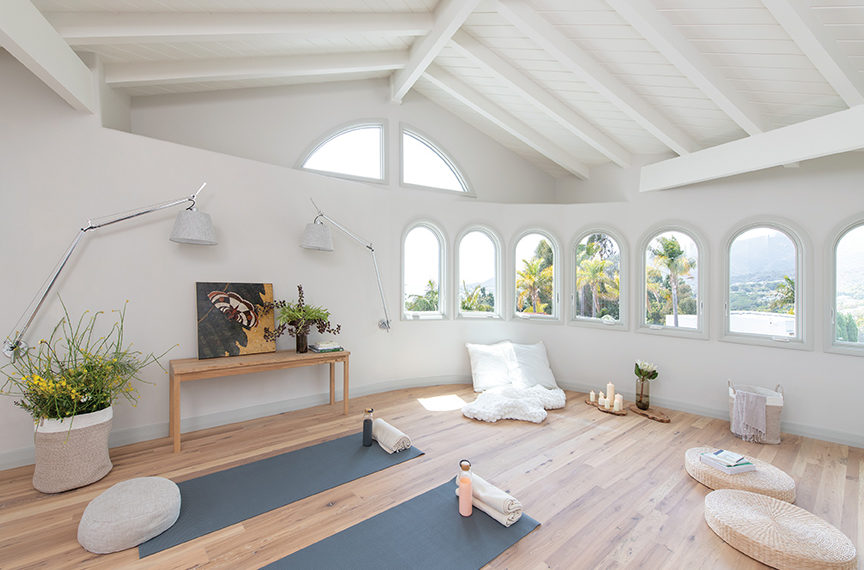
Sensory wellness rooms, meditation nooks, and at-home spas make it easier to escape the stress of everyday life. “If you’re new to meditation or mindfulness, it can be really challenging to step away from all of that outside noise and chaos, so it is beneficial to have a space that removes all of those things for you,” says Atluri.

“Dedicating a room to promoting well-being encourages moments of mindfulness by committing time, energy, and space,” says Sarah Barnard (WELL + LEED AP), a leading designer of environments that support mental, physical, and emotional well-being.

With more people working from home, “we are interacting with our homes more than ever before, and there is a general shift toward valuing home designs that offer comfort and emotional support,” Barnard says.

“I have definitely noticed a trend toward wellness-inspired spaces — especially with the pandemic,” agrees architect William Hefner, who crafts environments that feel private, nurturing, and comfortable. “We often think of wellness as an indulgence or treat, like attending a yoga class or a weekend getaway at a spa,” Barnard adds.

“A wellness room doesn’t replace those things necessarily, but it does supplement them and makes it easier to bring the benefits of those practices into everyday life.”
Practicing mindfulness or meditation can help move our state of negativity to one of positivity. “We can easily get caught up in our inner critic and all of the negativity that surrounds us,” says Atluri. “Mindfulness helps us become aware of ourselves. Various strategies such as gratitude and affirmations can pull us out of a cycle and shift us into an alternative way of thinking.”

If you’re able to recognize that stress is physically affecting you, mindfulness can help halt the pattern. “With mindfulness, you are able to use your breath to move yourself into a calmer state of being,” says Atluri, who says you’ll notice physical differences within your body during and after meditation.

If you’re looking to be more mindful at home, craft a relaxing space by taking note of what experiences and sensations you find soothing. “When designing wellness-focused homes, it’s important to respect individual sensory needs — from installing personalized lighting and temperature controls to facilitating restorative activities,” says Barnard.
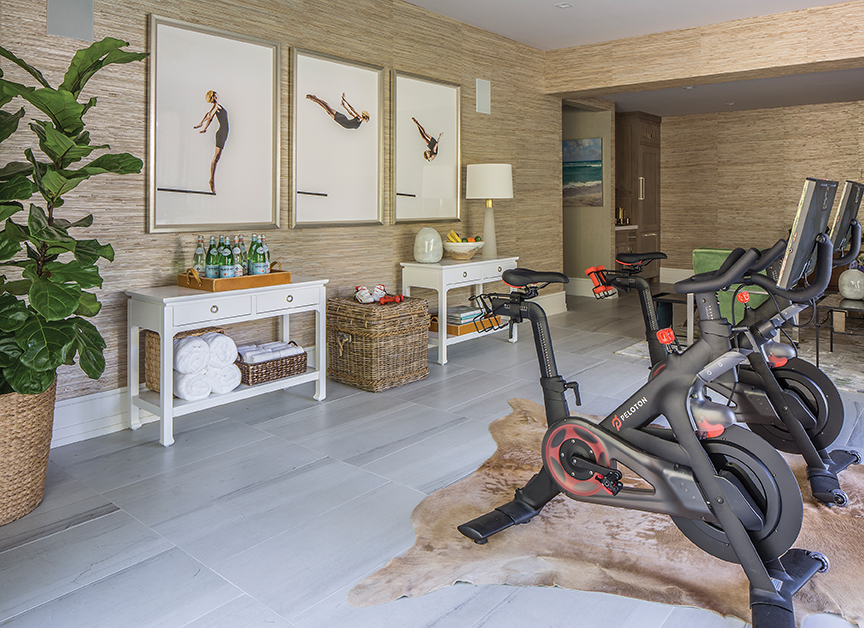
Barnard adds, “For some people, wellness may come from stimulation and activity. These clients may find a space with saturation, high contrast textures, and opportunities for activities — whether related to motion or creativity. Other clients may prefer environments consisting of a neutral palette, free from distractions, with soft or smooth materials.”

Elements of nature — like plant life, natural textures, and peaceful views — are nearly universal in creating calm. “Incorporating natural elements into the palette is essential when crafting relaxing spaces,” says Brittany Farinas, CEO and creative director of House of One. Farinas uses moss, wood textures, and crystals to emphasize and evoke feelings of tranquility.

“Natural elements such as wood, stone, and greenery help create the serene aesthetic in a wellness space,” Farinas adds. “My favorite colors to incorporate are different shades of green for calmness and white for an elegant and sophisticated look.”
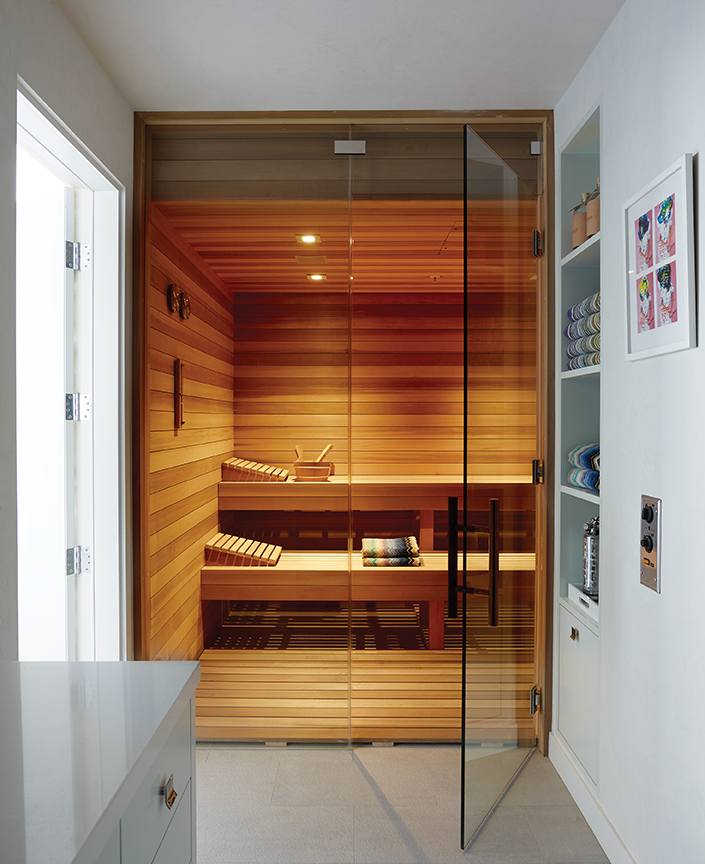
When bringing mindfulness practices into your home, Atluri says to start small. “Practicing mindfulness and meditation for even a couple minutes a day will reap great benefits because you’re giving yourself a moment to pause, to breathe, and to reconnect with yourself,” she says.

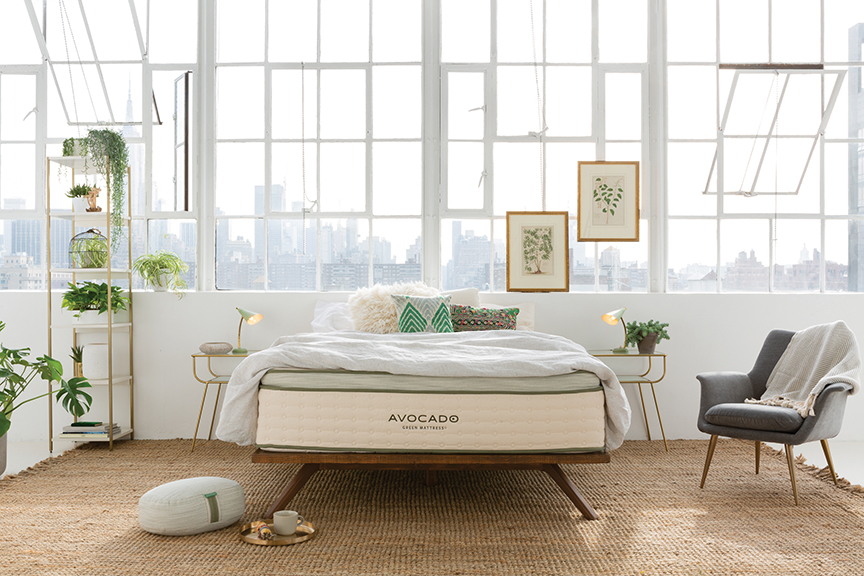
“Practicing wellness at home is uniquely beneficial because it offers you the chance to create a special place in your home to escape daily stresses, calm your mind, and just be,” says Jessica Hann, vice president of brand marketing for Avocado Green Mattress. “Taking a few minutes for ourselves to relax and tune out the noise can set the tone for your whole day.”

According to Atluri, tying a new ritual to an existing activity will help you develop the habit faster — such as practicing 10 minutes of mindfulness after brushing your teeth in the morning or washing your face in the evening. When trying something new, Atluri reminds us to, “always give yourself grace, and be kind and compassionate to yourself.

Be proud of the days that you’re able to accomplish your goal and on the days that it isn’t what you hoped for, know that there is another day where you get to try.”
Leave a comment

Traveling by Design

By Roger Grody

In a world filled with compelling architecture, there is little reason to stay in a nondescript glass-and-stucco hotel replicated in cities around the world without regard to local culture or sensibilities. For travelers seeking enrichment from their destinations, the first priority is booking a room at an architecturally distinctive hotel, one with historic significance or contemporary aesthetics imagined by a world-class architect.

Emphasizing the diversity of hotel design, Shelley Hornstein, senior scholar and professor emerita of architectural history and visual culture at Toronto’s York University, notes, “Architecturally important properties aren’t necessarily luxury properties.” She reports that architectural tourism has become extremely influential in the hospitality industry, based on the draw of UNESCO World Heritage sites alone, and that social media fuels the trend. “Instagram, for example, is one principal ‘venue’ that has taken site awareness to meteoric levels!” says Hornstein, whose most recent book is Architectural Tourism: Sight-Seeing, Itineraries and Cultural Heritage.

Regarding hotel aesthetics, Hornstein suggests, “For those who can afford it, design tops all. We see this from hotel industry advertising, and the latest and greatest are always sought after.” Explaining that hotel architecture is demographically driven, Hornstein notes that comfort and convenience are frequently sacrificed for trendy design. “Function was always trumped, it seemed, by what sold well in a picture,” observes the professor.

The UniqHotels website is one source of the kind of images Hornstein contends are so powerful for hospitality consumers. It is valued by travelers looking for memorable accommodations, from treehouses to ice hotels, Hong Kong skyscrapers to Moroccan desert camps. Recounting the genesis of his venture, founder Daniel Hoffmann reveals, “My travels to over 70 countries made me realize the finite chances of staying in genuinely unique accommodations in our lifetime.” He began building a database that ultimately evolved into the UniqHotels platform, now boasting approximately 1,500 listings.

Fogo Island Summer

Hoffmann describes UniqHotel’s readers as travelers and adventure-seekers searching for inspirational accommodations, but they are not necessarily architecture buffs. “Due to the heavy focus on visual presentations, UniqHotels can be a source of entertainment for anyone, even if a visitor is not specifically interested in architecture,” says the European-based travel advisor.

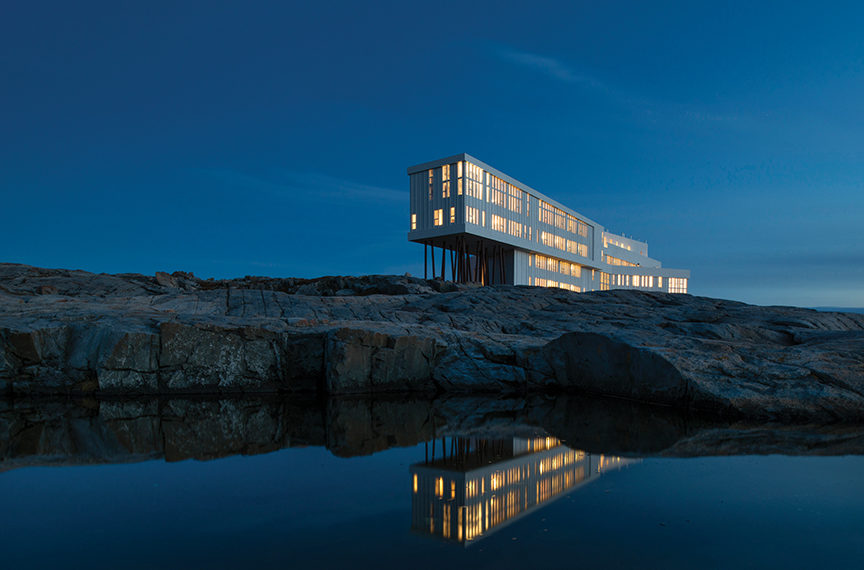
One UniqHotels listing is Fogo Island Inn, perched on a windswept cliff along the coast of Newfoundland. Despite its incorporation of elements from traditional local architecture, one would hardly expect to find this modern minimalist hotel in such a remote location.

Designed by architect Todd Saunders (based in Norway but a native Newfoundlander), the property’s 29 one-of a-kind rooms or suites feature wood-stove fireplaces and commanding views of the rugged North Atlantic coastline through floor-to-ceiling windows. Representing the ultimate Fogo Island accommodations is the Inn’s 1,100-square-foot Flat Earth Suite, showcasing panoramic views in three directions.

Fogo Island, Newfoundland, Canada

“Fogo Island Inn is deeply tied to Fogo Island and the architectural traditions of outport Newfoundland in the way it meets with the natural landscape,” reports Amanda Decker-Penton, director of the Inn. “Fogo Island Inn’s contemporary design is the perfect marriage of old and new, and speaks to both our past and our present —and, of course, our future,” she adds. An initiative of Shorefast, a nonprofit founded by eighth-generation Fogo Islanders, the hotel is exceptionally eco-friendly, and everything from building materials to the seafood served in the dining room are sustainable. “From its inception, Fogo Island Inn has adopted a responsible approach to design in order to uphold a high-fidelity relationship with the natural world,” explains Decker-Penton. The project and its impact on the community were captured in the award-winning 2015 documentary film Strange & Familiar: Architecture on Fogo Island.

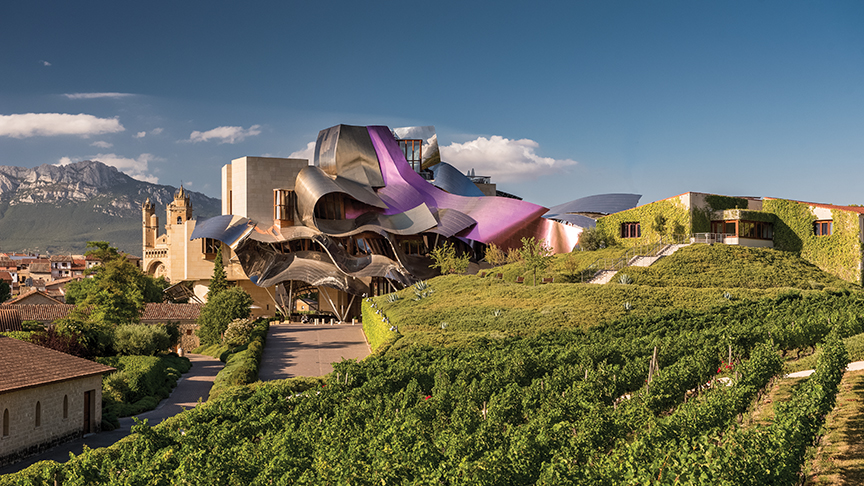
Rioja is Spain’s most legendary winegrowing region, where grapes have been cultivated since the Phoenicians occupied the Iberian Peninsula. Rioja has a traditional, old-school reputation, but the Hotel Marqués de Riscal challenges that image. The dazzling hotel, connected to a venerable winery of the same name, is instantly recognizable as a Frank Gehry original, as its wavy metallic skin is reminiscent of the architect’s iconic Disney Concert Hall in L.A. or Guggenheim Museum in Bilbao. What gives this structure new dimension is an injection of wine country color into its ribbons of titanium, a delightful contrast to the vineyards surrounding it.

The terms of Gehry’s engagement for the design were reportedly agreed to over a bottle of Marqués de Riscal 1929 (the architect’s personal vintage). The winery subsequently named a new wine, the Frank Gehry Selection, after the architect, and the hotel’s Gehry Suite offers spectacular views of vineyards and the medieval village of Elciego. The renowned architect said of this project, “I wanted to design something exciting and festive, because wine is pleasure,” and playfully characterized his effort as “a marvelous creature, with its hair flying in all directions, launching itself over the vineyards.”

So many great architects have left their imprint on Chicago’s skyline that the Windy City is essentially an ever evolving museum of architectural history. Among its collection of distinctive hotels is The Langham Chicago, a luxury property occupying 13 floors of a high-rise designed by groundbreaking modernist Mies van der Rohe.

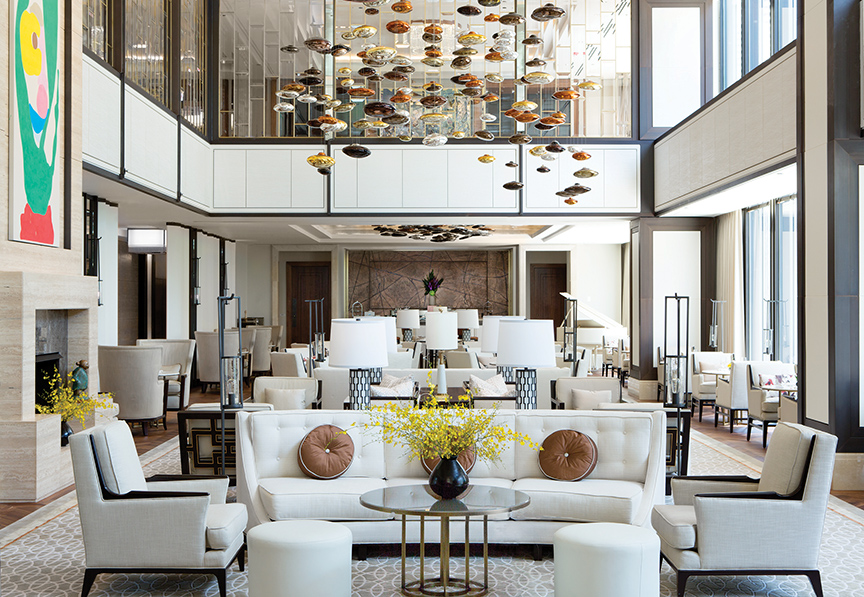
First impressions are important when traveling, and the hotel lobby — what guests experience upon walking through the door — can become a meaningful memory even before receiving their room key. Floating above The Langham Chicago’s main lobby, a sleekly furnished mid-century-inspired space, is a striking 60-foot installation of handblown glass, designed by Jana Růžičková and Tomáš Hovorka of Lasvit, a renowned Czech glassworks firm. “Chicago architect of record Goettsch Partners and London-based interior designer Richmond International created a space that marries the traditional aesthetics of The Langham brand within a Mies van der Rohe- designed building,” explains Langham Chicago managing director Edward Shapard. “The marriage between fine art, architecture and interiors is prevalent throughout the hotel,” he adds. Prior to the pandemic, and planned to
resume, are hotel art tours that connect guests with the building’s architectural heritage.

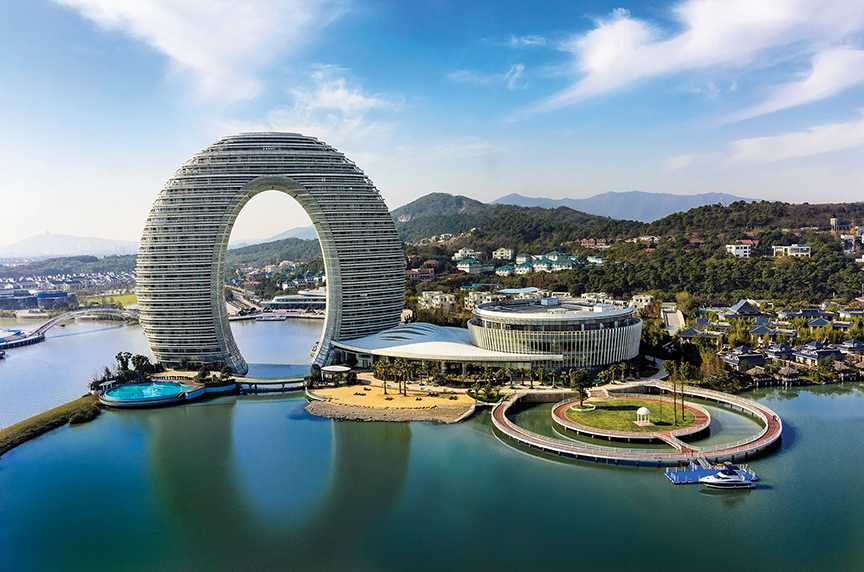
Located in China’s picturesque Zhejiang province, close to Shanghai, is the Sheraton Huzhou Hot Spring Resort, a 27-story horseshoe-shaped structure, equal parts sculpture and hotel. Evocative of a ring, the moon or a traditional Chinese bridge, the structure is dramatically reflected on the surface of Lake Tai, especially when illuminated at night. The hotel was designed by MAD Architects — the global firm is known for its playful, audacious approach to design — and its signature tower rises 400 feet above the water.

According to Judy Shen, deputy general manager of Sheraton Huzhou Hot Spring Resort, guests are captivated by the design, and tourists share photos of it on social media. “Even if they’re not guests, young visitors still like to pay a visit and mark the unique experience with a photo,” says Shen, comparing the property to iconic hotels like Burj Al Arab in Dubai. “The architectural design of the hotel plays a very important role in helping consumers make a decision,” adds the manager. “Hotels with special architectural features represent an important collection within Marriott International’s overall portfolio, and significantly affect guests’ expectations of their experience,” Shen states.

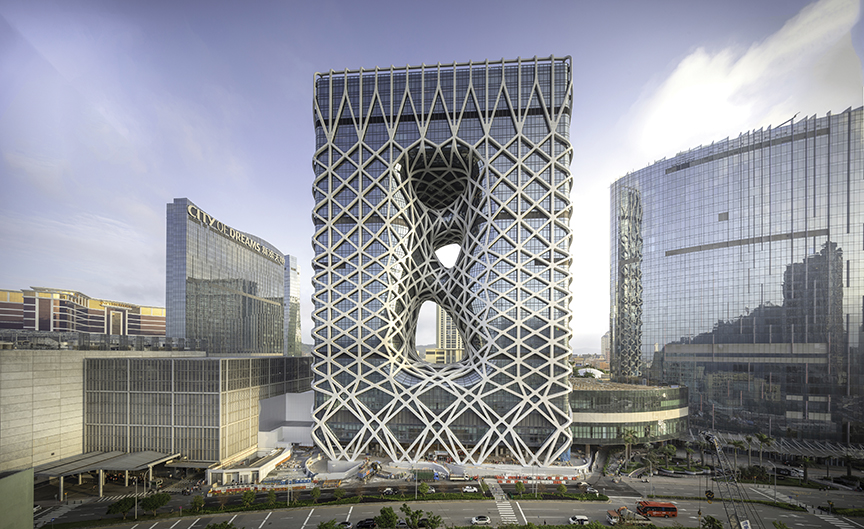
Like its sister city of Las Vegas, the gambling capital of Macau features an eclectic array of architectural styles, but the late Zaha Hadid wanted to create something unique to this former Portuguese colony off the coast of China. Her futuristic design for the 40-story Morpheus hotel is wrapped in a free-flowing lattice inspired by Chinese jade carving traditions. Project director Viviana Muscettola explains, “Macau’s buildings previously referenced architectural styles from around the world, but Morpheus has evolved from its unique environment and site conditions as a new architecture expressly for this city.”
Among the diverse properties listed on UniqHotels are the Taj Lake Palace on an island in India’s Lake Pichola, Budapest’s Four Seasons Gresham Palace whose Art Nouveau lobby is stunning and Los Angeles’ Ace Hotel, which oozes Hollywood heritage.

Leave a comment

Angel Investing 101

By Roger Grody

The democratization of Wall Street through disruptive platforms like Block and Robinhood has made it easier for people with relatively modest means to pursue opportunities previously limited to blue-blooded clients of esteemed financial institutions. In addition to stocks, bonds and options, small investors can now participate in creative startups before they are ever listed on major exchanges. In fact, with a few clicks of a mouse, anyone can be a so-called “angel investor.”
Most viewers of Shark Tank, the ABC show on which celebrity investors buy into nascent companies created by cash-strapped entrepreneurs, have dreamed of having such access to talent. Now those opportunities are available through StartEngine, promoted by one of the Sharks himself, Kevin O’Leary, who serves as the firm’s strategic advisor. On StartEngine, one can invest in fledgling companies whose products range from ultra premium spirits to drones, fintech to cosmetics.

StartEngine celebrates investment paths for the “little guys” who have no access to the initial public offerings (IPOs) reserved for VIP clients of prestigious Wall Street firms. On this platform, a mere $100 can purchase a piece of a promising new enterprise that might someday be a household name. “At StartEngine, our mission is to help entrepreneurs achieve their dreams, and we’re doing that by democratizing access to capital,” states StartEngine co-founder and CEO Howard Marks, who suggests that when companies have a close connection to an excited fan base, they have greater success in raising capital and maintaining commitments to those fans-turned-investors.

Republic is a multifaceted firm best known for its investments and advisory services in cryptocurrency and digital enterprises, including the recently launched Republic Realm, a metaverse real estate portfolio. But real-world businesses are also prominently featured, and among current listings are upscale artisanal confectioner Sugarfina, Congreso Park condominiums in Mexico City, and Kaiyō, a trendy rooftop restaurant in San Francisco. Republic’s Cityfunds allow retail investors to participate in hot real estate markets like Austin or Miami.

Opportunities listed on the Republic website are thoroughly vetted, with only 2% of companies seeking participation accepted, and Republic itself is a co-investor in all of them. At any time, 75 to 150 companies are listed on the platform, which claims more than 1.5 million individual users. Chuck Pettid, who heads Republic’s retail division, reports investment opportunities begin at as little as $100 and observes, “People are looking to invest in what they believe in and what they’re familiar with.”

“This is the first time startup investments have been brought to the public in scale and open to virtually anybody, anywhere regardless of wealth,” says Pettid of Republic’s role in democratizing investment opportunities. Approximately 30% of investors are women and 10% are minorities, well above the industry average, while residents of more than 100 countries are represented among Republic’s participants. “I believe retail investors are much more sophisticated than people give them credit for,” insists Pettid.

Wefunder is another platform allowing small investors to participate in promising entrepreneurial enterprises. Opportunities currently listed include Gamestar+, an interactive video game streaming platform, and Arqlite, a company deploying new technologies for plastic recycling. Aptera Motors, which manufactures solar-powered vehicles, raised $2.9 million on the site and CEO Chris Anthony states, “Wefunder has been a great platform to expose our brand to millions.” He adds, “We’ve been able to offer people an opportunity for equity in our company, making them instant brand ambassadors.”

Yet another company offering crowdfunding is SeedInvest, where even novice investors can create an entire portfolio of emerging brands, while Yieldstreet provides investment opportunities previously available only to an elite clientele. “Yieldstreet is a pioneer in providing retail investors with access to alternative investments to help them build a modern portfolio beyond traditional stocks and bonds,” explains company founder and CEO Milind Mehere. He adds, “Its award-winning technology platform provides access to investment products across a range of asset classes such as real estate, commercial or consumer credit and fine art.”

Leave a comment

A Night Out

By Ritika Jain

Designer fashion specifically offers fashion-forward customers a diverse selection of the most bold, experimental pieces that reflect modern style, but also foreshadow upcoming trends. Neiman Marcus curates that experience, selling high-end clothing, shoes, handbags, and accessories from many of the best designer fashion houses in the game: Balenciaga, Chanel, Givenchy, Jimmy Choo, Prada, and Saint Laurent, to name a few.

While bright, funky colors have returned to the zeitgeist of modern-day fashion, minimalist tones will never go out of style. Here is a roundup of a few striking, designer black-and-white pieces on the market that collectively  create the perfect outfit for a night out on the town, yet can be worn year round.

Franck Muller Watch

Franck Muller Watch

The beauty of accessorizing is that it can enhance an entire outfit. This Franck Muller watch from the Master Square Collection immediately dazzles the eye, encased in 18-karat rose gold and encrusted with diamonds. The textured dial contains dramatic Roman numeral lettering and three-hand movement, which are complemented by the black rubber-lined alligator strap. Priced at $49,200 and boasting a total diamond carat weight of 3.54, this piece is timeless.

Dolce & Gabbana Handbag

Dolce & Gabbana Handbag

Dolce & Gabbana honors its commitment to bold expression in this typographic sketch-print shoulder bag, crafted with Napa leather and adorned with the designer’s flashy medallion front and center. Priced at $2,495, the handbag is equipped with a sliding chain shoulder strap and flap top with double-snap closure, serving practical and stylistic purposes. If there’s any way to make a statement, it’s with gold embellishments and graffiti. This piece offers a splash of flamboyance in an otherwise simple, classic look and matches well with the Prada boots featured below.

Saint Laurent Jacket

Saint Laurent Jacket

Top off the attire with this butter-soft leather jacket by Saint Laurent, which sports long sleeves, notched labels, zip cuffs, and an asymmetrical zip front. This $4,990 jacket is an easy fit that can be layered over a dress, shirt, or blouse to complete the perfect ensemble, marked by expensive leather and shiny trappings. With the Franck Muller watch glimmering from your wrist, embrace the feel of effortless confidence that this jacket provides.

Prada boots

Prada Boots

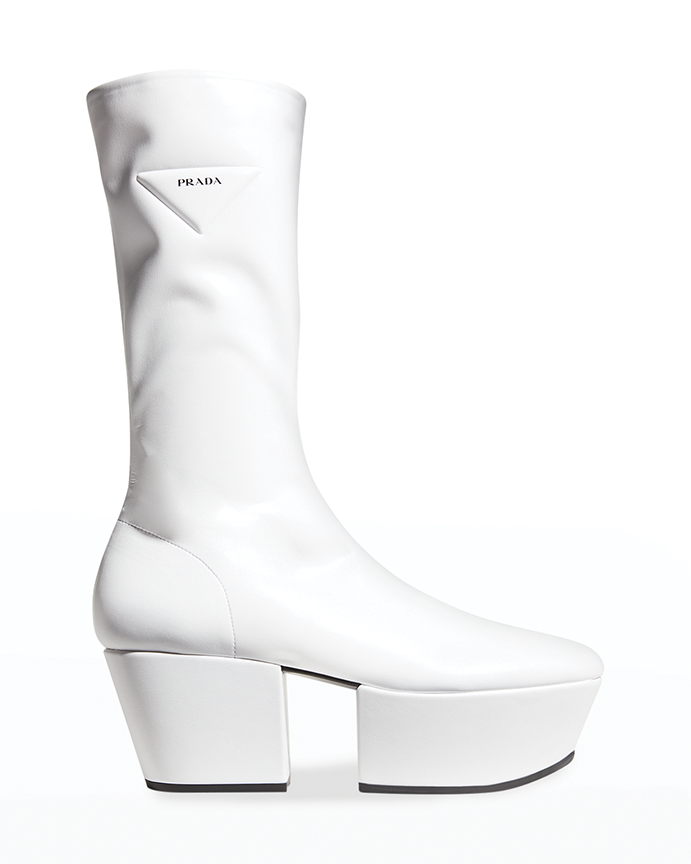
If you’ve been searching for the perfect pair of platform boots, look no further. Resembling the style of the highly fashionable go-go boots, these tall platform booties by Prada make the ultimate style statement with their high-
quality, sleek Napa leather, bolstered by a 2.8-inch block heel. Priced at $1,450 and available in black and white, they are not only incredibly trendy, but also offer comfort and flexibility fostered by an elastic collar and round toe, allowing for a durable fit. Wear these to elevate any look and transform the streets into your own runway.

Leave a comment

Miami’s Arsht Estate

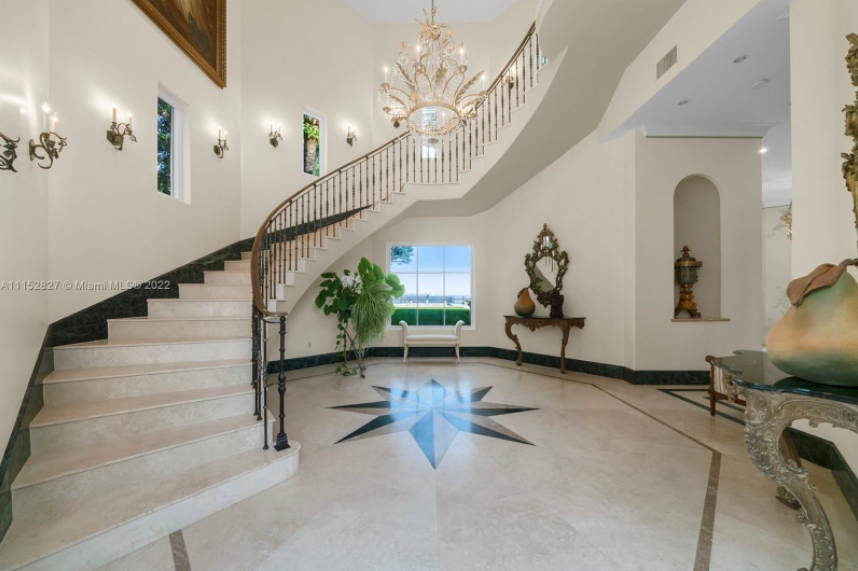
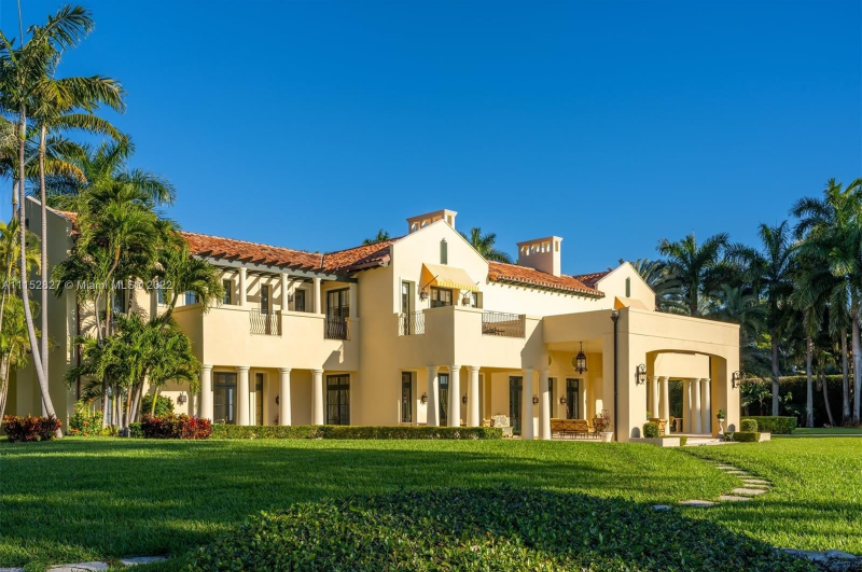
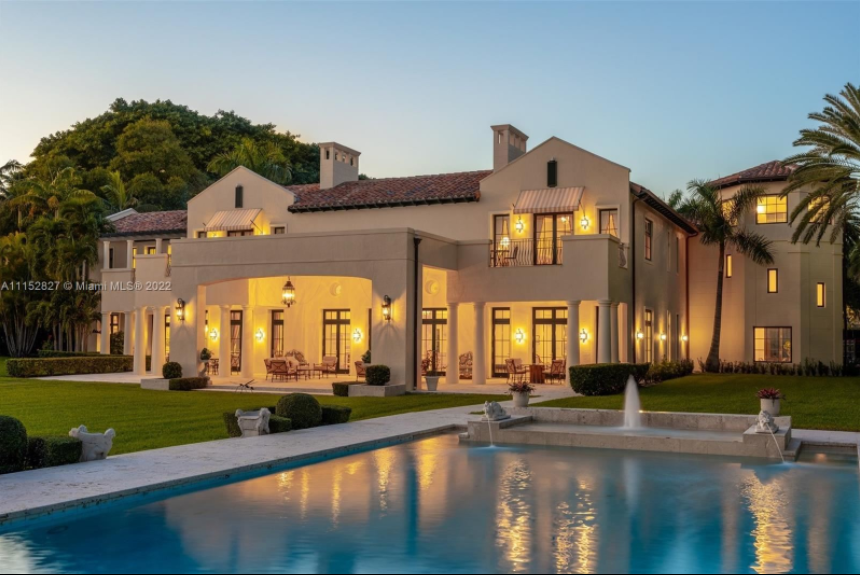
Miami’s Arsht Estate: a magnificent 4+ acre parcel directly on Biscayne Bay that is comprised of 2 homes, each w/ sweeping views of Key Biscayne, and downtown Miami. The main residence, Indian Spring, was built in 1999 & designed for entertaining w/formal living room, Grand Salon, dining room, & Garden Room overlooking the terrace, pool, & bay.

Arsht Estate Miami

It includes a gourmet kitchen, office, 5BR/5BA/4½ BA, + 2 BR/2 BA guest suite, 6-car gar & tennis court. Villa Serena was built by W J Bryan in 1913 & has been expertly restored. Astonishing views are captured from the living room, dining room, sitting rooms, primary BR, office, & 2nd floor BRs. Across the lush grounds find a 2-BR guesthouse atop a 3-car gar. This is a once in a lifetime opportunity in the heart of Miami.

Arsht Estate Miami

Join us on Instagram @uniquehomes_media

Wednesday, June 8, 2022, noon ET

For a LIVE tour of this home!


For pricing, more photos and information view the full listing here: Arsht Estate.

Leave a comment

Fast Yet Fashionable

By Roger Grody

Fast-food operations are not what they used to be, and even the term “fast food” is passé, with trade associations turning to more attractive euphemisms like “quick- service restaurant” (QSR) or “fast-casual” establishment. The latest generation of eateries represents much more than a corporate image makeover, however, with a commitment to artisanal ingredients and even fine dining principles adapted to lower price points and rapid turnaround.

The concept of fast food integrating more upscale standards is well represented by the now-ubiquitous, publicly traded Shake Shack, the progressive burger joint founded by fine dining entrepreneur Danny Meyer. The creator of legendary (and pricey) Manhattan restaurants Union Square Cafe, Gramercy Tavern and Eleven Madison Park proved that quality ingredients, chef-driven techniques and top-drawer customer service were adaptable to the quick-service sector.

QSR magazine editorial director Danny Klein, who is exposed to hundreds of quick-service concepts every year, reports, “In the beginning of the pandemic, there was a rush to comfort food, as people gravitated to dishes they understood and related to.” He adds, “But now we’re again seeing more global cuisines and an emphasis on healthy food.” Klein explains the provision of higher-quality food at accessible prices was the impetus of the more sophisticated fast-casual movement that emerged about a decade ago. Now, concepts his magazine refers to as “fast-casual 2.0” focus more on chef-driven menus in affordable, convenient settings.

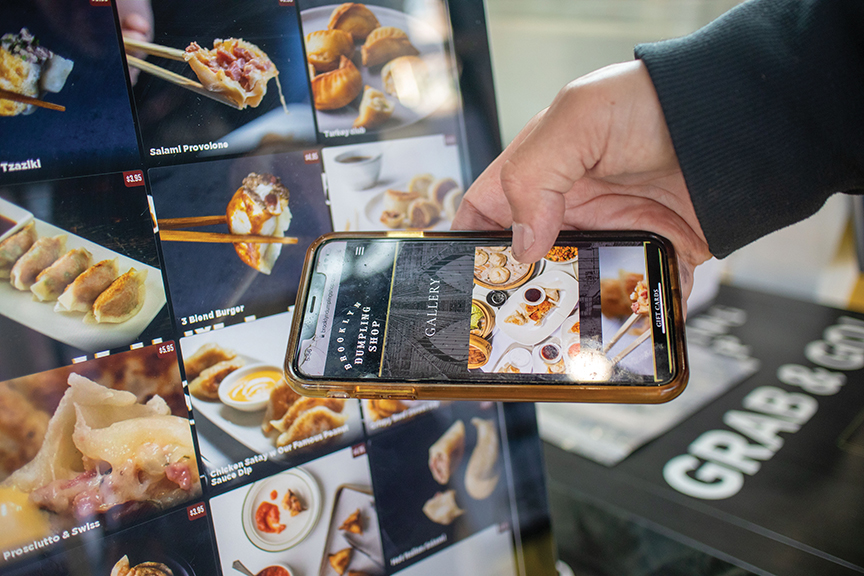
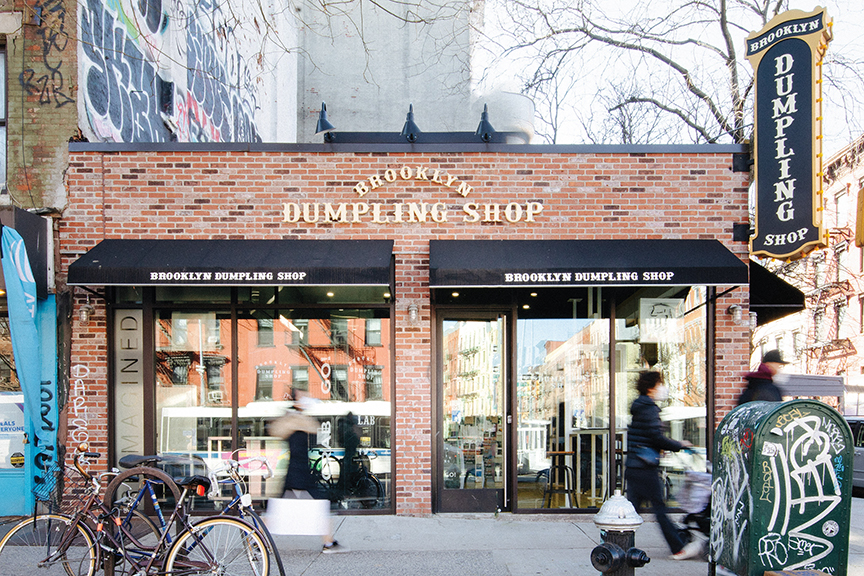
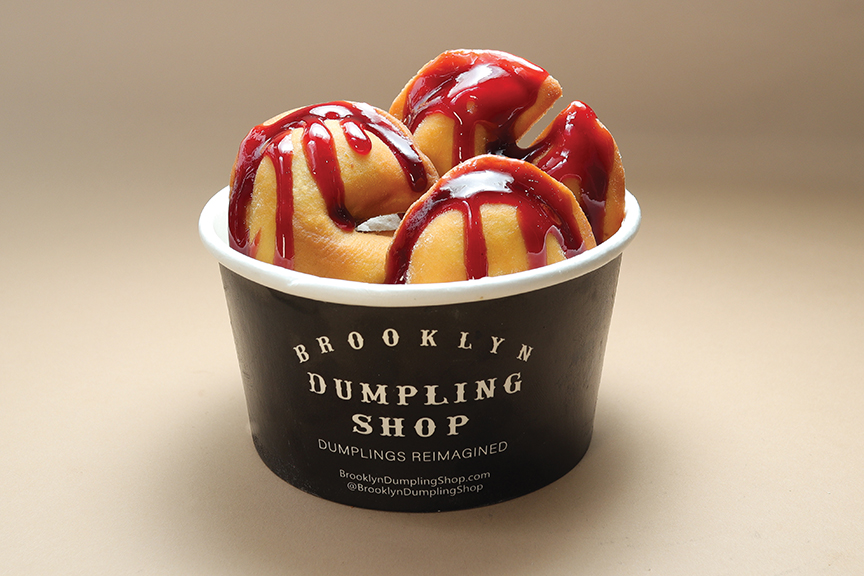
Dumplings, whether authentic fare at a Chinatown dim sum restaurant or upmarket versions filled with foie gras or black truffles in trendy establishments, represent a current obsession among food enthusiasts. Brooklyn Dumpling Shop offers an expansive menu of iconic American flavors folded into little pockets of dough, including Philly cheesesteak, Reuben and PB&J sandwiches, as well as sausage-and-egg, lamb gyro with tzatziki and dumplings that satisfy a craving for chicken parmigiana.

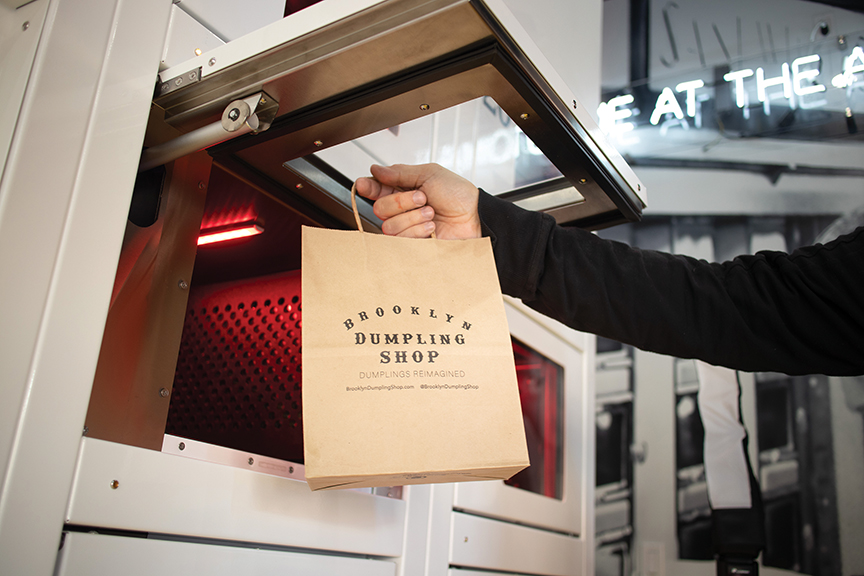
Founder Stratis Morfogen began serving the sandwich-themed dumplings at his upscale Brooklyn Chop House, and when the kitchen could hardly keep up with demand, launched a QSR concept. At Brooklyn Dumpling Shop, customers order in advance on their smartphones or at automated kiosks, then grab their orders from a designated temperature-controlled locker, eliminating human interaction.

The no-contact system surely appeals to pandemic-weary consumers, but was designed strictly for efficiency. “We’ve got driverless cars, so why not bring back the automat?” queries Morfogen, referring to New York’s nostalgic automated diners from the first half of the 20th century. Both the system and dumplings have been well received by customers, and the business community is responding, too, with hundreds of Brooklyn Dumpling Shop franchises being contracted around the country. “Dumplings are social and make great bar food,” says the restaurateur, who notes, “Everybody loves the concept of a two-ounce sandwich.”

QSR magazine’s Klein believes the versatility of the dumpling and the company’s commitment to automation will benefit Brooklyn Dumpling Shop’s ambitious expansion plans. While he notes there will always be demand for the in-store dining experience, the trade journalist reports, “There’s growing interest among consumers to have as little face-to-face interaction as possible, preferring to place an order by phone and grab their food out of a locker.” Noting the restaurant industry has sometimes been slow to evolve, Klein states, “One of the positive outcomes of COVID was that it ushered in years of technological innovation.” He suggests this will result in more kiosks, voice-activated ordering tablets and even artificial intelligence in the drive-through lane.

Another major trend in the restaurant industry, from Michelin three-star restaurants to the corner quick-service eatery, is the introduction of plant-based menu items. While Klein is skeptical of its widespread adoption outside urban areas, even the most ubiquitous brands now offer some plant-based options.

Metro Atlanta’s Slutty Vegan is one of many quick-service concepts appealing to the now-mainstream interest in
veganism, and offers some sloppy, indulgent “burgers.” Beefsteak, with locations in a handful of major American cities, was founded by celebrity chef/humanitarian José Andrés, and while not purely vegan, markets itself as a celebration of vegetables. Many of the menu items are entirely plant-based, but some dairy, egg, chicken, and seafood can be incorporated into bowls or salads that are easily customized. The only beefsteaks to be found are tomatoes, and the burgers are entirely plant-based at this concept, whose rarefied pedigree draws attention.

This is not the first foray of the Michelin-starred chef into fast food, and one suspects more of his high-flying peers from the world of fine dining will follow.

Chef Roy Choi, a native of Seoul and Culinary Institute of America alum, is credited with discovering the unique synergies of Korean and Mexican cooking, both cuisines he grew up with on the streets of Los Angeles. His fleet of Kogi trucks continues to rumble through L.A., and the renegade chef’s unique fusion fare (e.g., kimchi quesadillas, Korean short rib tacos) has practically gone mainstream. Chains like St. Louis-based Seoul Taco (it, too, began as a food truck), are continuing Choi’s tradition, offering Korean-sauced tacos, burritos, nachos, and quesadillas with a choice of bulgogi, spicy pork, chicken, or tofu, along with kimchi fried rice and even churros with strawberry-Sriracha sauce.

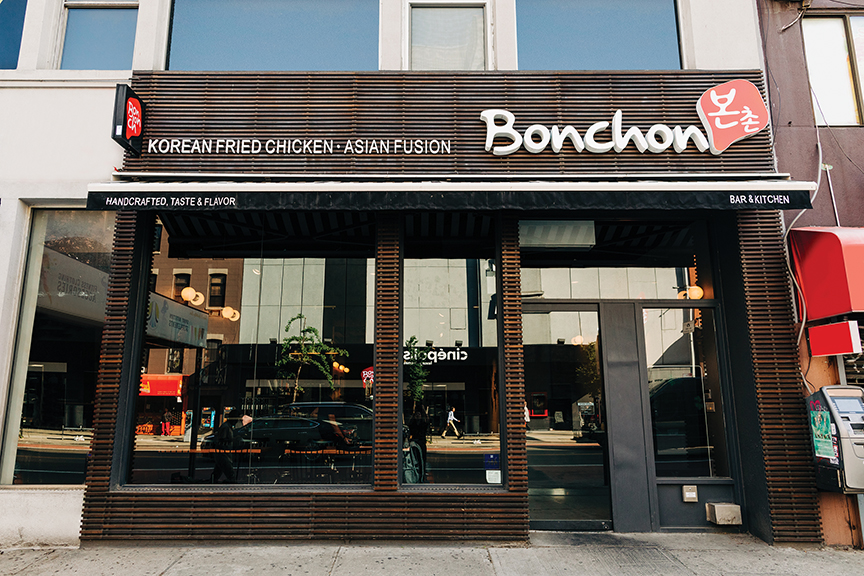
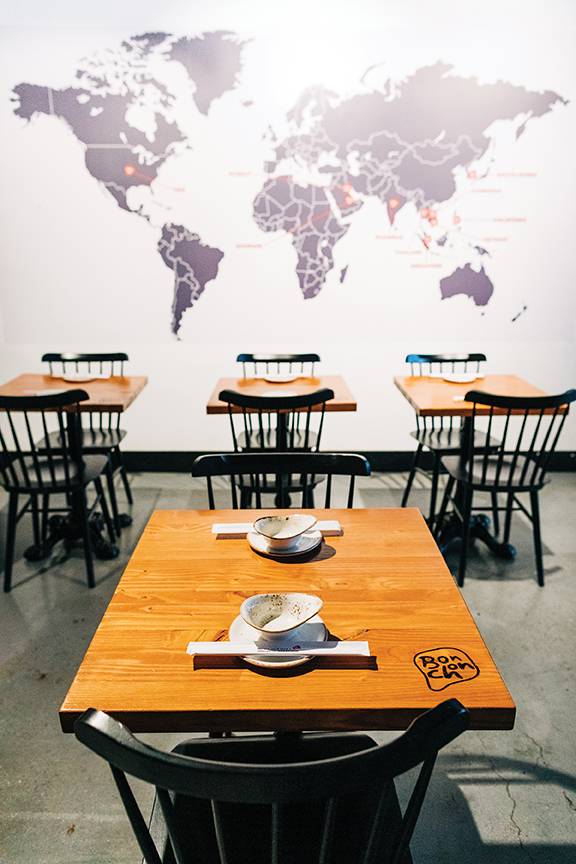
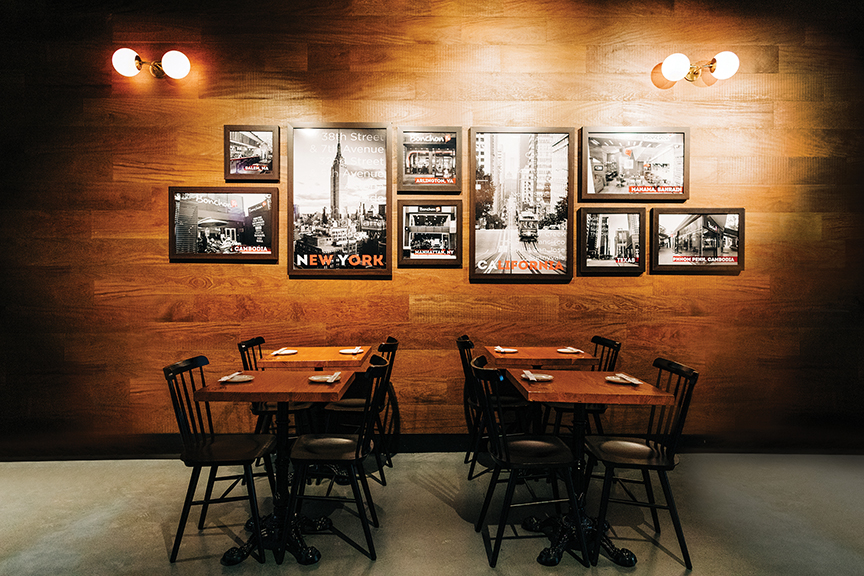
Bonchon — the rapidly growing company began in South Korea and now has more than 370 restaurants worldwide — is another chain taking advantage of the widespread acceptance of Korean cuisine. Bonchon’s specialty is its highly relatable fried chicken, an American staple introduced by U.S. troops during the Korean War, transformed by the locals and exported back to the States as something a bit more exciting. The eatery also offers takoyaki (Japanese fried octopus balls), soft buns stuffed with pork belly that are reminiscent of an upscale dish authored by celebrity chef David Chang, and bibimbap, Korea’s classic egg-topped rice bowl with meat or tofu.

Bonchon now has more than 100 U.S. stores, including a new prototype with a smaller footprint and more streamlined menu. CEO Flynn Dekker comments, “Now, with the increased interest of Korean art and culture in recent years — the Oscar-winning film Parasite, the Netflix sensation Squid Game and K-pop artists like BTS — you’ve got all the right ingredients for mass appeal of Korean cuisine and Bonchon Korean fried chicken, in particular.”

From the talent behind Sushi Roku, a super-premium Japanese restaurant, and the founder of assembly line pizza chain PizzaRev comes Yakumi, a fast-casual establishment with the style and quality of high-end sushi bars, but more approachable prices. Sushi preparations feature sophisticated touches one expects at much pricier establishments, such as salmon drizzled with true soy and dusted with sesame seeds, or crispy shallot- crowned albacore splashed with ponzu sauce. The inaugural Yakumi location is in Burbank, California, but given its ambitious leadership, you can be sure this concept will proliferate.

Indian is another ethnic cuisine currently enjoying its moment, and Curry Up Now is rapidly expanding from its San Francisco Bay Area roots. The concept’s emphasis is on Indian street food — specialties range from traditional samosas and miniature naan bread bits with tikka masala dip to vegan, Indian-themed “burritos” — and much of the menu is plant-based. Further globalization of the quick-service sector is represented by promising concepts such as Nando’s, featuring peri-peri chicken (a specialty of Portugal via Mozambique), Mediterranean-themed Cava and La Granja, a Peruvian-inspired chain with locations throughout Florida.

Café d’Avignon is a concept from the owners of Pain d’Avignon, a bakery/restaurant that supplies some of New York City’s top restaurants and hotels with artisanally crafted bread. Customers at Café d’Avignon enjoy a croissant or quiche Lorraine for breakfast and a niçoise salad or croque monsieur tartine later in the day, complemented by an impressive repertoire of baked goods. The fast-casual eatery, beloved by Francophiles, has multiple locations in New York and is seeking opportunities in other major markets.

Burgers and fries may still rule the world of fast food, but endless alternatives and sophisticated products are making the grab-and-go routine infinitely more exciting.

Leave a comment

Windows of Imagination

By Roger Grody

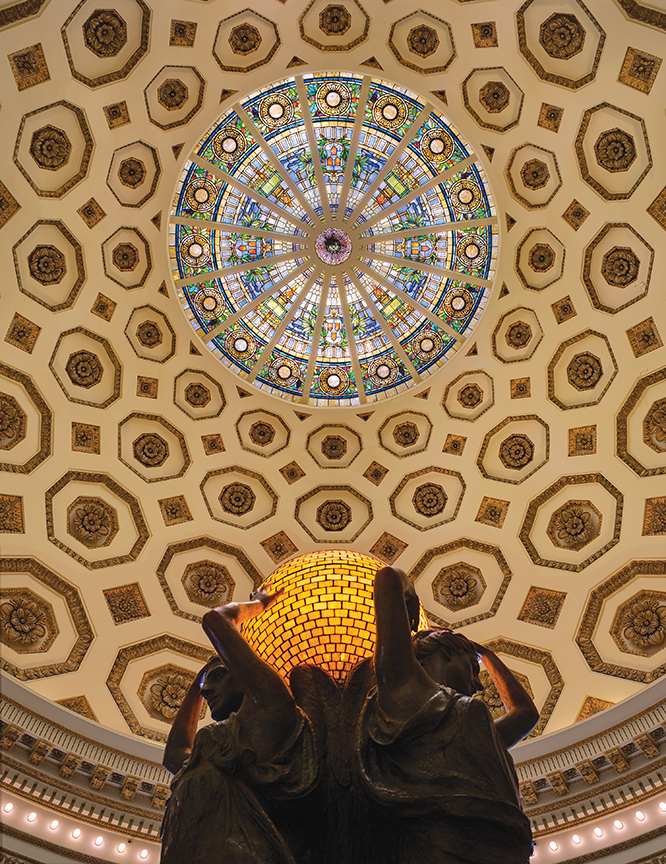
For most people, the admiration of stained glass is reserved for worship services, tours of European cathedrals or Tiffany lamps, but the versatility of the centuries-old art is being rediscovered by craftsmen around the world. Contemporary stained glass artisans are designing windows and wall sculptures for trendsetting hotels, corporate offices and sleek modern homes, giving the ancient art an entirely new image.

Windows of Imagination

The medium’s transition from religious symbolism to a more secular, modern expression of art was pioneered by Frank Lloyd Wright, whose Prairie-style residences were enhanced with extraordinary leaded glass windows, doors and ceilings referred to as “light screens.” Julie L. Sloan, whose book Light Screens: The Leaded Glass of Frank Lloyd Wright examines several decades of Wright’s prolific glass design, confirms the architect’s aesthetics were a clear departure from those of contemporaries Louis Comfort Tiffany and John La Farge. “His clear glass in abstract patterns was nothing short of revolutionary,” reports Sloan, who notes that, unlike the nearly opaque stained glass in preceding centuries, Wright’s light screens were designed to integrate indoor spaces with the natural environment.

Windows of Imagination

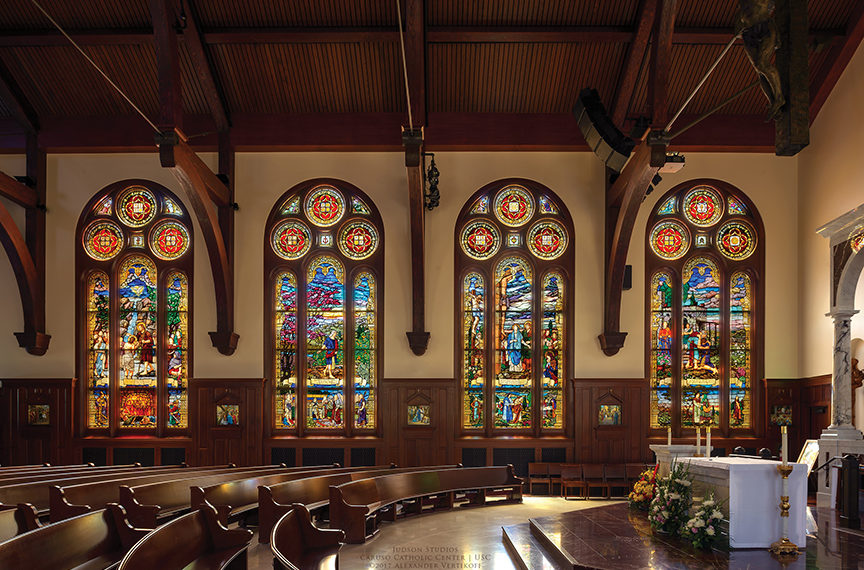
Although it was founded at the end of the 19th century, Los Angeles’ Judson Studios does not treat stained glass as simply architectural salvage, but as a dynamic contemporary medium. Its artisans apply avant-garde designs and innovative techniques to a wide range of projects that transcend religious institutions. David Judson, fifth-generation company president and author of Judson: Innovation in Stained Glass, reports, “Glass has maintained its relevance over time because it reflects contemporary society. What remains unchanged is the pure, visceral impact of color and light through stained glass.”

Signature projects of Judson Studios include the Natural History Museum in L.A. and the iconic Air Force Academy Chapel in Colorado. The firm’s pioneering efforts in fused glass — this technique creates the effect of leaded glass without the need for soldered metal dividers — led to Judson’s creation of the world’s largest fused glass window in 2018. The formidable panel, encompassing more than 3,400 square feet of art glass, was installed in the Church of the Resurrection in Leawood, Kansas.

“The design world is increasingly attracted to the medium for its vibrant color and connection to tradition, the idea of taking something old and making it new,” says Judson of the introduction of glasswork into contemporary settings. He adds, “The beauty of glass is that it can withstand the environment while dealing with light in a different way … that interpretation of light can have a great impact.”

Windows of Imagination

Adamm’s Stained Glass & Art Gallery in Santa Monica, California, exhibits the works of prominent stained glass artisans, and in addition to churches and synagogues, owner Adamm Gritlefeld installs his own glasswork in trendy hotels and celebrity-owned residences. His restoration projects have included Frank Lloyd Wright residences and the former Tower Theatre in downtown L.A., recently reimagined as a particularly showy Apple Store.

While bold palettes frequently draw consumers to this medium, Gritlefeld reports that intriguing designs composed of colorless diamond-shaped glass with varying textures and beveling account for many of his current architectural commissions. “People are inspired by what they see in museums or traveling and seek to reproduce it,” explains the glass specialist, who adheres to traditional fabrication techniques. “A recent client admired some windows in Italy and wanted the same look in his Malibu villa,” reports Gritlefeld of a typical request.

Windows of Imagination

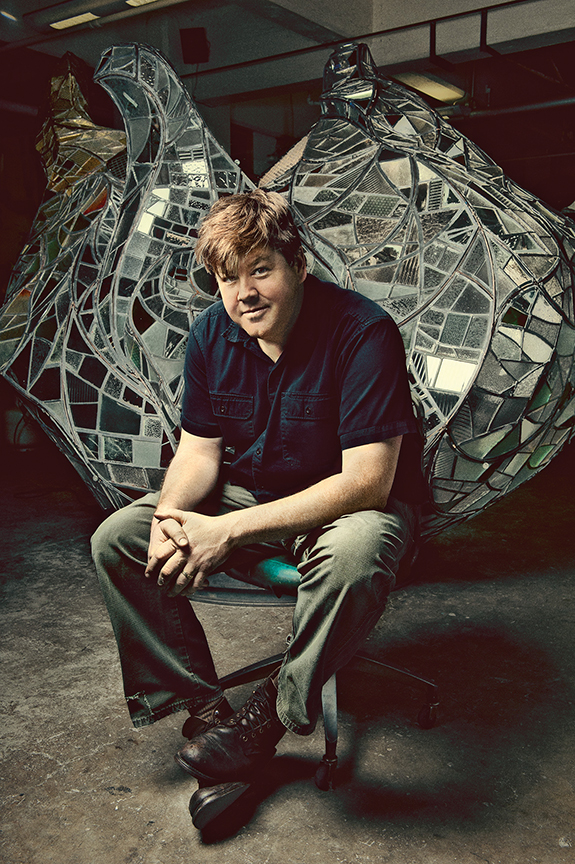
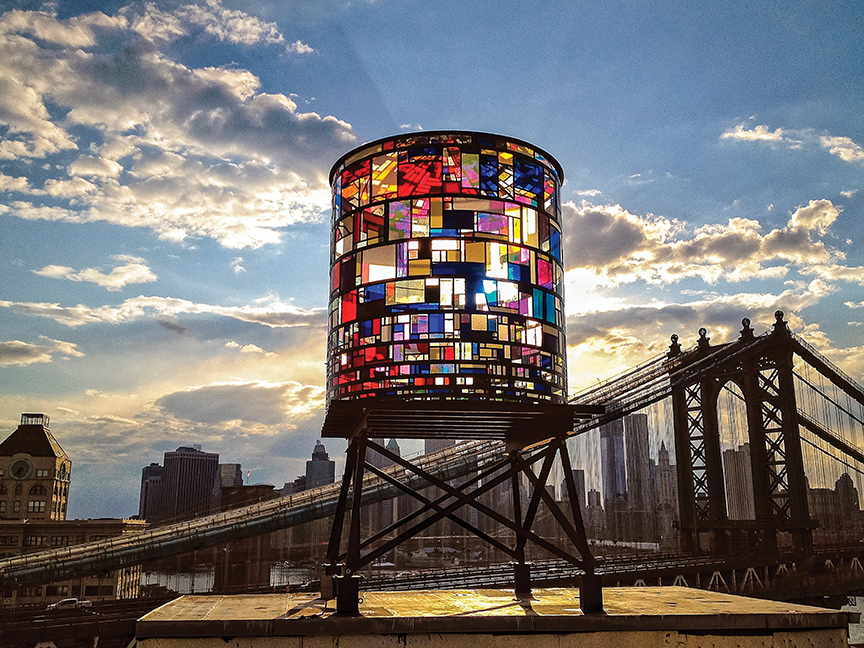
The work of Brooklyn-based artist Tom Fruin is in demand by architects, galleries and private collectors around the world. Rather than glass and lead, Fruin works with scavenged, reclaimed pieces of plexiglass and steel. The artist, who once created quilts from materials most people would consider litter, explains, “Those items showed patterns of human behavior and informed the design of my glass structures.” The artist’s glass houses, public art installations injecting explosions of color in urban spaces from Copenhagen to Orlando, transform discarded materials into enriching art.

His compelling series of water towers — vibrantly colored versions of the nondescript rooftop water towers scattered across the skyline of his adopted hometown of Brooklyn — are unexpected eye candy for motorists entering the borough on the historic Brooklyn Bridge. “Water towers, part of an overlooked infrastructure, are emblematic of all of New York, and mine change people’s perceptions about their surroundings,” says Fruin.

The illuminated, solar-powered structures have become iconic symbols of Brooklyn’s rebirth, and the artist has also created a full-size sculpture of the Statue of Liberty’s flame, constructed of broken windows from abandoned factories.

Windows of Imagination

Nadine Keegan, a prominent stained glass practitioner in Melbourne, Australia, is a self-taught artisan who fell in love with the medium after viewing the famous glass murals at Cosmovitral in Toluca, Mexico. “Broadly, I draw inspiration from the Romantic appreciation of the ephemerality of light and life as well as from textiles, architecture, history, and art,” reports Keegan, who cites Australian modernism, Japanese woodblock prints and Frank Lloyd Wright as specific influences.

“Contemporary stained glass fulfills many architectural roles. It can be a subtle accompaniment or bold centerpiece,” states Keegan, who creates both objets d’art and architectural windows. “The legacy of the craft is extremely important to me, and while I honor this in the content of my art, I don’t use pure lead, which is the main separation between my work and traditional leadlights,” explains Keegan. “I’ve developed ways of combining the use of zinc, Tiffany-style metalwork and fused glass to expand beyond the limitations of the past,” adds the artist, who reports growing interest in stained glass by both residential and commercial sectors in Australia.

Windows of Imagination

Lesley Green, owner of Arizona-based Bespoke Glass, reports, “When I started the company in Brooklyn, everyone I knew lived in apartments, so my initial idea was to make sets of small pieces that could be arranged in various ways depending on the space.” She still sells that line, which she calls “Elements,” but has moved on to larger installations in restaurants and retail establishments around the world. Green tends to employ a relatively tight palette of about 30 colors, and the copper foil method she practices (a technique often attributed to Tiffany) results in a distinct, uniform solder line.

Windows from Bespoke Glass generally reflect geometric patterns devoid of imagery, resulting in clean, modern aesthetics. Although her work is vaguely evocative of Wright’s, Green is more apt to draw her inspiration from textile design, murals and street art. With much of her work hanging from ceilings or on walls, the artist comments, “There are many more ways to bring the light and color of stained glass into your home beyond the commitment of an installed window panel.”

Leave a comment

Feeling the Light

By Camilla McLaughlin

As COVID-19 reset consumer appreciation for all things related to wellness, demand for in-home products from Pelotons to saunas hit record levels.

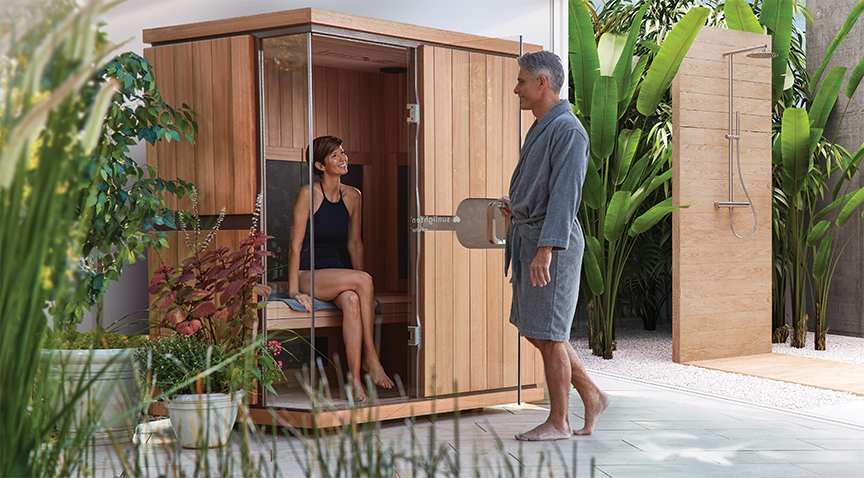
Lady Gaga is reportedly a sauna fan, along with a raft of celebs, including Jennifer Anniston and Gwyneth Paltrow. Sessions in an infrared sauna, dubbed sauna bathing, are the latest in wellness, and celebrities are not the only ones looking for a boost. Instead of raising the temperature in the air using heated stones or other sources, this modality uses infrared light to create heat within the body and does so at lower temperatures than traditional saunas, which typically are in the 200-degree Fahrenheit range.

While they lack the lore and romanticism associated with their Scandinavian peers, saunas using infrared light instead of thermal heat are gaining advocates and a growing share of wellness dollars. By mid-2021, Sunlighten, a manufacturer with a 20-year track record, reported that overall sales nationwide were up more than 60 percent over 2020’s record. By mid-summer, sales were up 30 percent in California, Texas and Florida. Even industry veterans such as Sunlighten founder Connie Zack were surprised by these increases in warm-weather states.

Anyone who has spent time in the sun has experienced infrared. Approximately 52 to 55 percent of sunlight consists of infrared rays. On the electromagnetic spectrum, a continuum of light waves organized by how they interact with matter, infrared falls just below red, the last visible light on the low end of the spectrum. The term refers to a range of waves — near, mid and far — determined by the wave size, frequency and amount of energy. Near infrared is the shortest wavelength and is credited with skin renewal. Mid is believed to reduce inflammation and promote healing. Far infrared penetrates deeper and even helps burn calories and promotes relaxation.

Clearlight

Although traditional saunas have long been considered restorative, infrared is purported to be more than just a feel-good experience and is credited with a range of effects, including boosting immunity and aiding in muscle recovery, according to the industry. While many infrared saunas just use far infrared, some combine all three waves, which manufacturers say enhances e­fficacy.

“We were the first sauna company to combine carbon and ceramic to create a superior infrared wavelength that deeply penetrates your body. The ceramic/carbon combination is unsurpassed in providing superior detoxification, stress-reduction, immunity boost, relief of joint pain and muscle soreness, relaxation and a host of other health benefits,” says Bruce Weinberg, director of marketing for Clearlight Infrared, manufacturers of Jacuzzi brand saunas.

Clearlight units also cancel out all electromagnetic fields, energy waves with frequencies below 300 hertz per second. Sunlighten, according to Zack, used clinical studies to determine how to combine all three wavelengths to bring the most benefit and also how to incorporate six different wellness benefits into the programs built into the saunas.

A typical 30-minute infrared session raises core body temperature approximately 3 degrees, an effect similar to a cardio workout. Manufacturers tout a number of benefits, and there is some research to back up these claims. In some countries, infrared is seen as therapeutic. “In Japan, infrared sauna is an accepted and standard therapy of heart disease and is even prescribed, because it is shown to improve the function of the cells that line the arteries and their blood flow,” explained Joel Kahn, MD, a cardiologist and clinical professor of medicine at Wayne State University School of Medicine.

Residential units are available in a range of sizes and configurations and are typically fabricated using Eucalyptus, Western Red Canadian Cedar or North American Basswood. Placement outside the home is also an option. Sunlighten also makes a portable unit that accommodates a single user, as well as a handheld device that directs rays to a specific place on the body.

The bottom line: It’s hard to discount the feel-good effect users report.

Leave a comment

A Summer Weekend to Remember

By Brigitte Sinoradzki

The beginning of summer is around the corner. Time to start planning a weekend getaway to one of these classic and iconic destinations!

Breakers Hotel

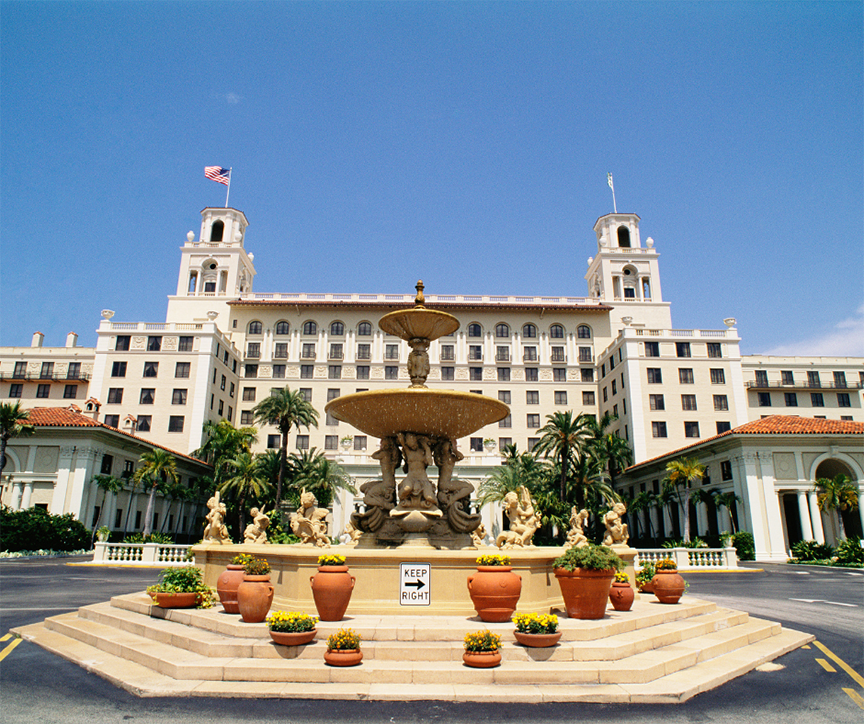
The Breakers Hotel, Palm Beach Island

The Breakers, grand in scale and appearance, is the ultimate luxury Palm Beach resort. They have something for everyone: from a family trip spent at their luxurious pool and gorgeous beach, to a girl’s weekend filled with fine dining and top of the line spa treatments, or a guy’s golfing get together. There is plenty to do in and around the hotel. If fitness is your thing, you can take a run on the beach, visit the gym at the Breakers, or take a barre or private pilates class with world-renowned instructors down the street at Labarre.

Hotel Del Coronado

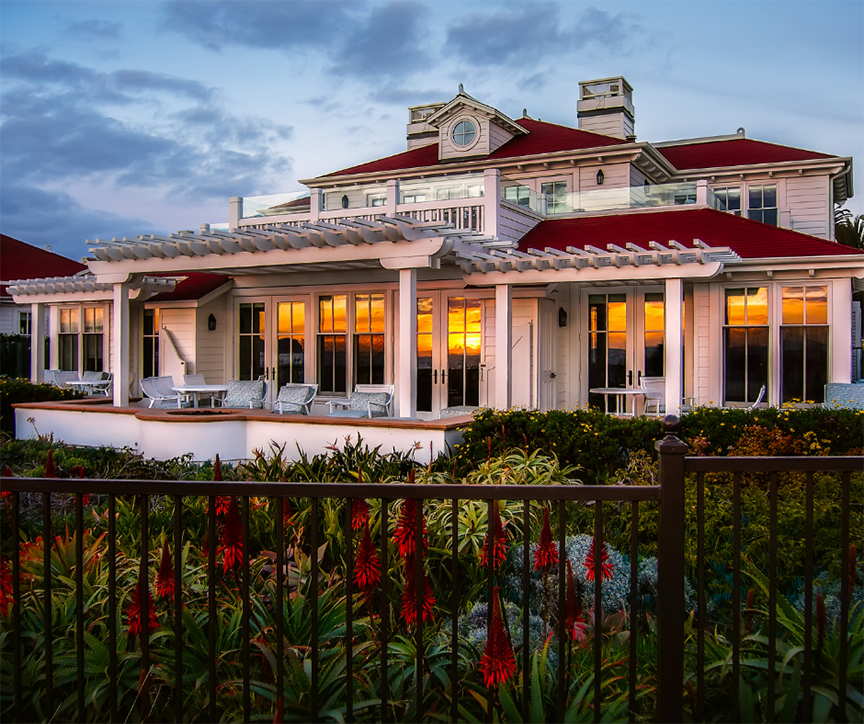
Hotel Del Coronado, San Diego

The legendary Coronado Hotel sits on one of the most beautiful beaches in San Diego, on the exclusive Coronado Island, with views so expansive you can actually see all the way to Mexico. Enjoy sunsets at their patio bar, beach bonfires in the cool SoCal breeze, or learn to surf in nearby La Jolla. Walking through the grounds at Coronado is an experience within itself, with plenty of fine dining options and high end boutiques. And, if you are into the more spooky side of things, this hotel is consistently ranked as one of the most haunted spots in Southern California.

Central Park

The Mark, NYC

There is no shortage of luxurious hotels in NYC. The Mark hotel stands out as being a favorite of the fashion elite for the Met Gala, as well as John F. Kennedy Jr.’s getaway spot when he needed time to himself. Located on the upper east side, The Mark overlooks Central Park, where you can swing by the Loeb BoatHouse for some food, drinks, and views. Fine dining and shopping is just steps away on Manhattan’s infamous Madison Avenue. A quick stroll will take you to The Metropolitan Museum. Avoid the crowds of time square at this quietly set, extravagant hotel.

Leave a comment

Florence | Italy

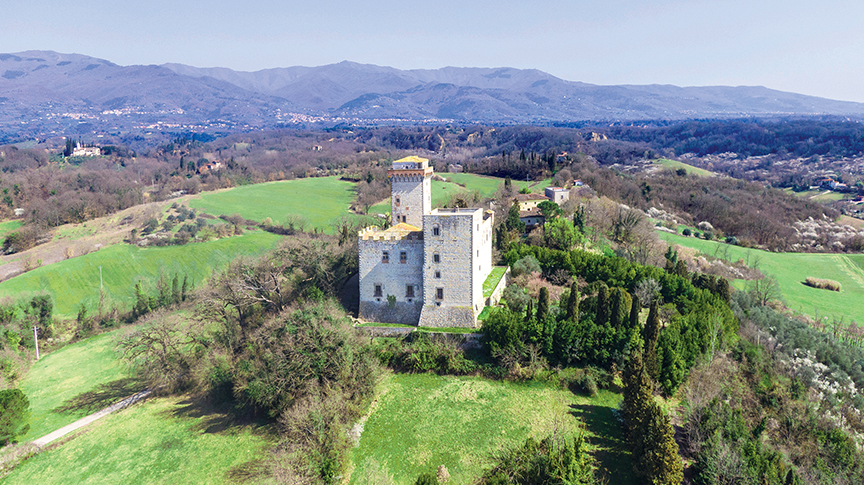
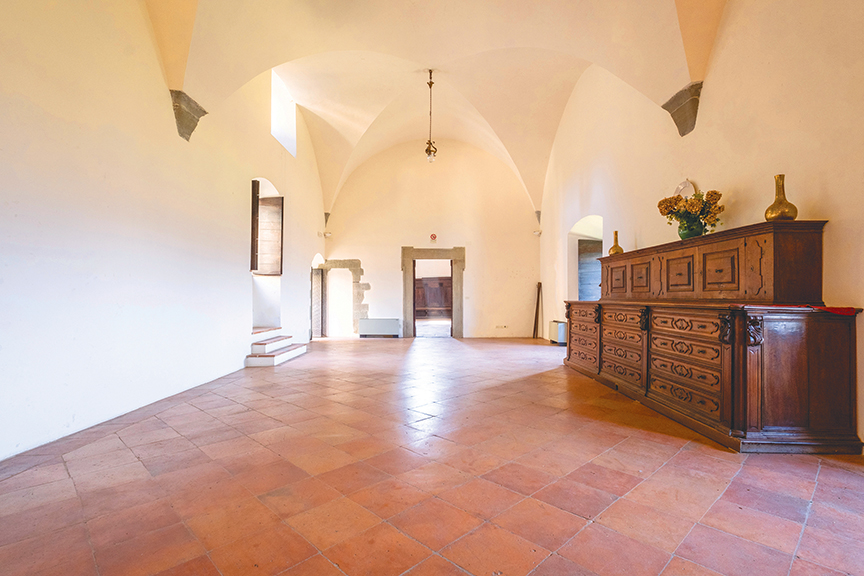
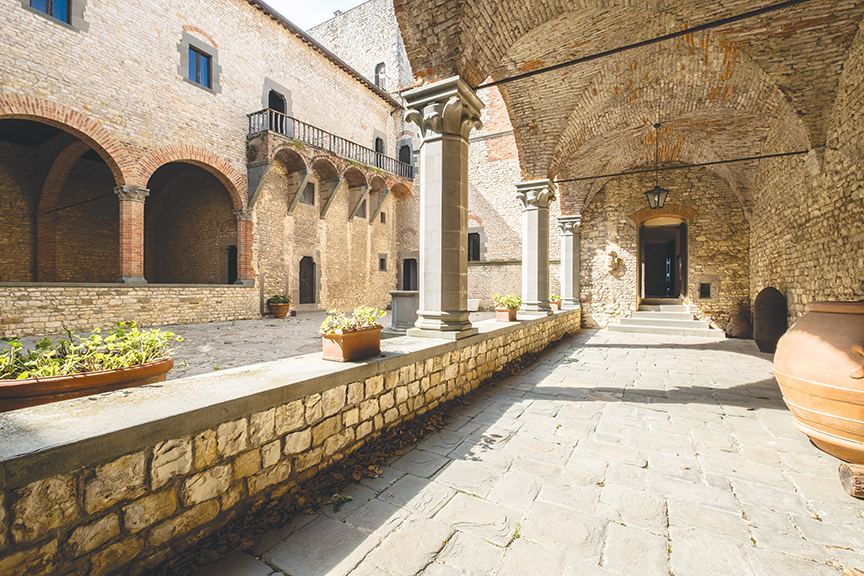
Overlooking picturesque Tuscan landscapes, the historic medieval Torre Del Castellano is recognized as a classic example of authentic Tuscan architecture as well as one of the most outstanding and well-known castles in the region.

Torre Del Castellano

Presenting a unique potential for transformation to an opulent estate, upscale boutique hotel or exclusive business enterprise, it features 23 rooms, 9 bedrooms and 7 baths, a separate chapel, viewing tower, enclosed courtyard for entertaining and events, and an expansive olive oil cellar on approximately 22 acres, just 15 miles from Florence.

See more: www.torredelcastellano.com

Torre Del Castellano

9 bedrooms, 7 baths | E10,000,000
Jean Mastagni | DRE #00479256
T. 415.310.7386 | jeanlmastagni@gmail.com
www.jeanmastagni.com | Coldwell Banker Realty

Leave a comment