


The Lone Star State’s forward-thinking, artsy capital has its own distinct personality, one that fuels imaginative residential architecture.
By Roger Grody
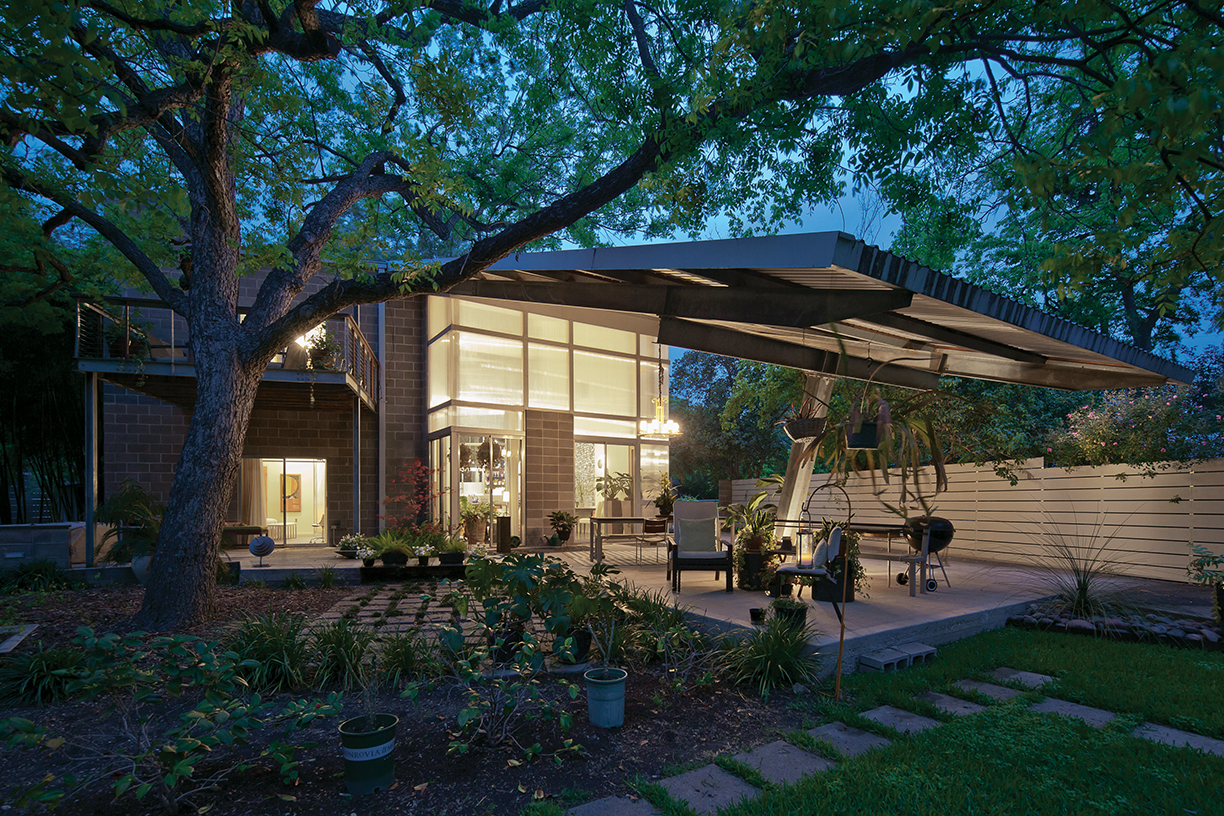
Photo courtesy of Patrick Wong/Atelierwong.com
Austin is unlike any other city in Texas, and its residents proudly embrace an eccentric, defiant attitude. A vibrant music scene, progressive politics, trendsetting cuisine, and a technology-driven economy make this metro area of two million one of America’s most dynamic. It comes as no surprise, therefore, that Austin has developed its own exciting architectural traditions.
Kevin Alter, founding partner of Alterstudio Architecture and the Sid W. Richardson Centennial Professor at the School of Architecture at the University of Texas (UT) in Austin, suggests the city is developing a strong tradition of modernism. He reports that 20 years ago there was little interest in the movement, but modern architecture’s ability to connect to the outdoors — it suits the region’s scenic Hill Country nearly year round — has endeared it to Austinites. He also cites attitudes of new residents from other regions of the country (Alter himself is a transplanted New Yorker), the draw of UT and a growing technology industry presence as fueling modern design.
“There are a lot of very good architects in the city, given its relatively small size,” says Alter, asserting there is more interesting residential architecture in Austin than in the giant metropolises of Houston and Dallas. “There’s also a youthful optimism in Austin, so people aren’t looking back in history for inspiration.” Contrasting Austin to more traditional, less architecturally tolerant cities, Alter suggests, “Because of that optimism, there’s not a ‘looking-over-your-shoulder’ mentality here for property owners interested in building modern residences.”
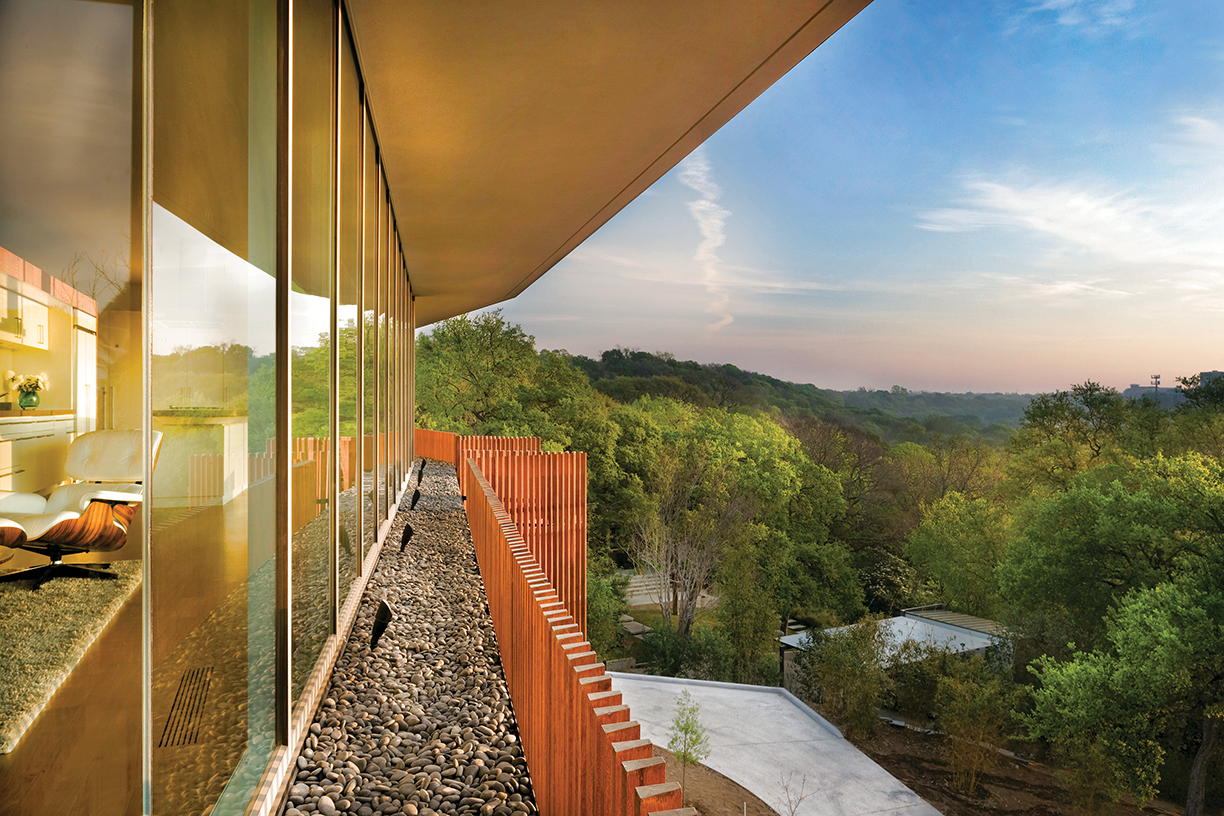
Photo courtesy of Paul Finkel
Real estate broker Brian Linder is a licensed architect and founder of The Value of Architecture, a multi-city network of real estate professionals specializing in architecturally significant homes.
After establishing that niche in Los Angeles, Linder expanded his practice to Austin, appreciating both its family-friendly lifestyle and wealth of exceptional architecture. “Buyers here are willing to pay a significant premium for homes designed by signature architects,” says Linder.
The specialty broker reports one the most desirable neighborhoods in Austin is the trendy South Congress (SoCo) district, where the original housing stock is being replaced with exciting modern architecture. “The area is popular with urban expats from cities like New York, San Francisco and L.A., and buyers are taking their accrued appreciation from those places and investing in good design,” says Linder.
Representative of the top architectural firms in town are Bercy Chen Studio, Jay Hargrave Architecture, Chioco Design, and Minguell-McQuary Architecture.
Austin architects, according to Linder, soften the sometimes austere modernism found in L.A., noting their work emphasizes texture through incorporation of native materials. “Elements like site-gathered stone and reclaimed lumber or brick add a more human scale defined by those materials,” he says. While modernism is becoming the city’s preferred style, there is also ample demand for contemporary farmhouses, a theme promoted by local developers.
One of the priciest current listings in Austin is a striking modern home encompassing 5,400 square feet of living space, offered at $8.5 million. The design, from prominent local firm Dick Clark + Associates, features panoramic views of the city skyline through 60 feet of retractable floor-to-ceiling glass in a living area that opens onto an infinity-edge pool.
Offering a distinctly different lifestyle is a 558-square-foot penthouse-level condominium at the Seaholm Residences in downtown Austin, listed at $399,000. Built on the site of a former power plant, this project helped energize demand for high-rise living in Austin and The Independent, designed locally by Rhode: Partners, will be the tallest residential tower west of the Mississippi when completed. Professor Alter reports that as recently as 2005, investment in downtown condominiums was anemic, but young professionals now arriving in town relish the city center.
“We want to make sure we create spaces that fit our clients, beyond aesthetic or stylistic preferences, beyond basic function,” says Sean Guess, founding principal of the Austin firm Faye and Walker. While he does not view his work as reflecting a particular signature, Guess is among those talented young architects contributing to Austin’s evolution as a city increasingly identified with modern design.
“I tend to focus on the essence of a form, stripping away extraneous information, and carve out spaces from those fundamental forms,” says Guess. Raised in nearby Temple, Texas, Guess suggests that despite Austin’s reputation as the Lone Star State’s least-Texas place, the city’s spirit of risk-taking and independence — certainly reflected in its architecture — is very much the product of the Texas ethos.
“This is a very eclectic community that attracts a great variety of people and backgrounds, which results in creativity and diversity in its architecture,” says Guess of Austin. Among the architect’s acclaimed projects is the home he designed for his own family, dubbed the “Elephant House” because its wrinkled grey corrugated fiber-cement facade is evocative of elephant hide. Some interior walls are clad in clear-coated plywood, making Guess’ novel use of everyday materials reminiscent of Frank Gehry’s early work.
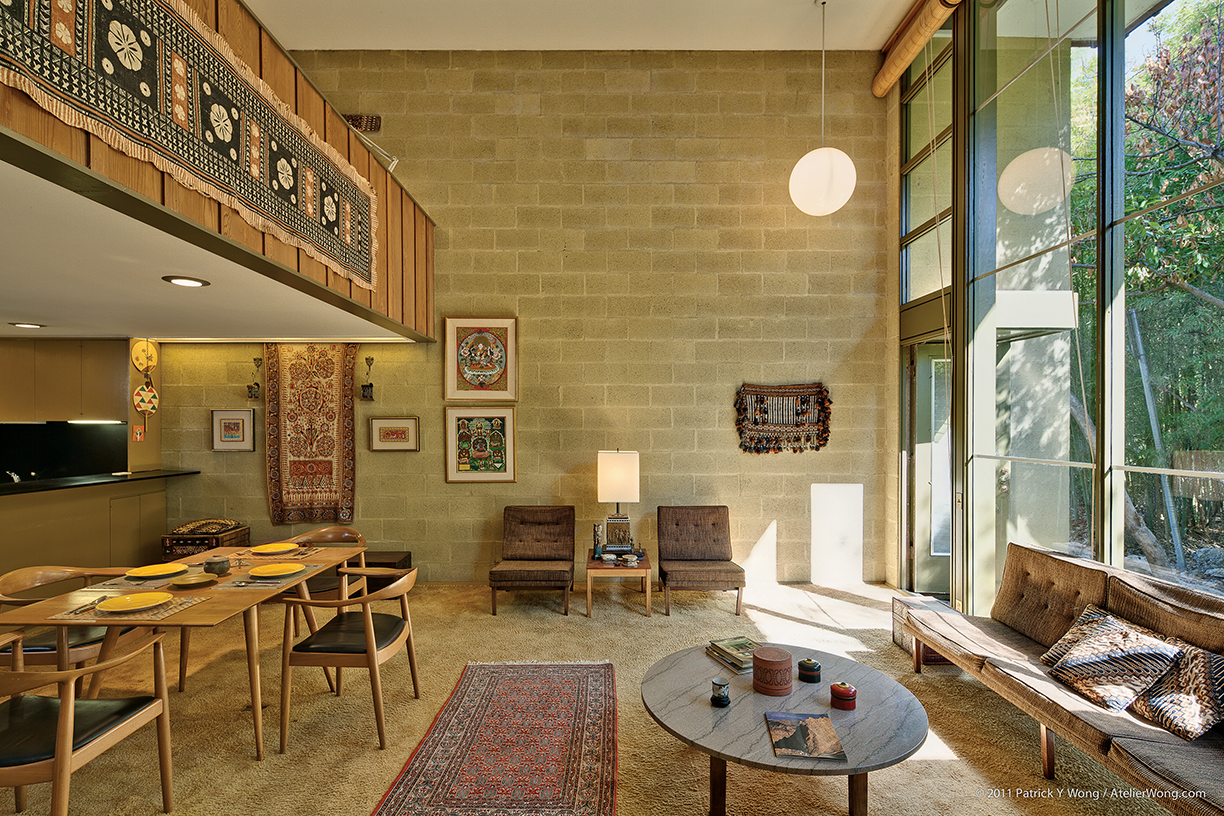
Photo courtesy of Patrick Wong/Atelierwong.com
“I appreciate modern architecture that reflects tasteful, principled design,” says Linder, who is less inspired by facsimiles of Tuscan villas. He is kept increasingly busy in the Texas capital, as Austin’s exceptional architects work overtime to meet demand from buyers with a passion for innovative residential environments.
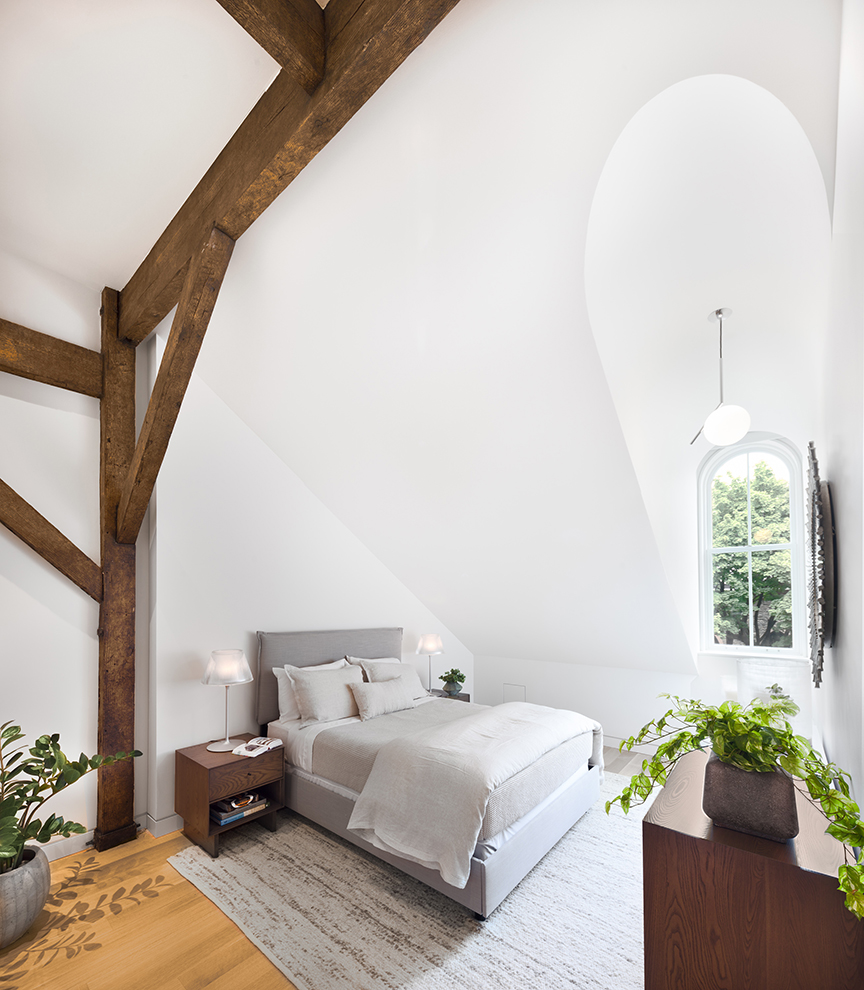
Residences at Prince Street. Photo courtesy Aaron Thompson.
Outfitting homes with an artistic ceiling creates a complete, dynamic space, often tying assorted aspects of home design together, from art to functioning space. In these examples, designers inspired to use interesting techniques have created complex designs that demand people to look up.
Gallery-Style Spaces
The character of a home is often shaped by the items inside it, including art or artistic detailing. Helping to define a home’s character, high ceilings within the home allow ample wall space for art lovers to adorn their walls with prized masterpieces. One example is seen in this Artefacto-designed residence in Bal Harbour, Florida, which boasts 10-foot-plus ceilings with customized panel backlights and recessed lights. The Oceana Bal Harbour unit also features floor-to-ceiling windows framing the breathtaking ocean and Intracoastal views.
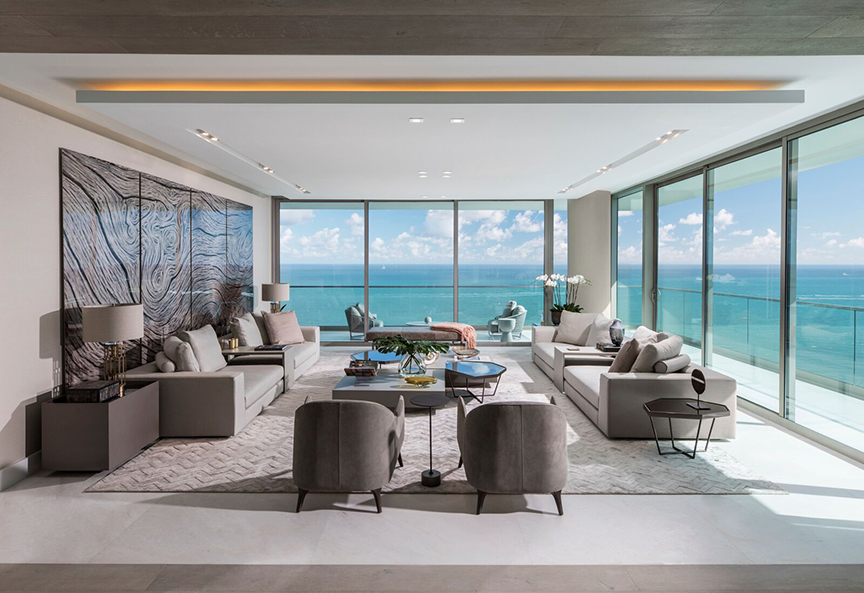
Photo courtesy Barry Grossman.
Embracing the Outdoors
A space can evoke different feelings depending on the environment, both inside and out. To embrace the elements, some spaces utilize the outdoors by bringing them in. Miami’s Brickell City Centre boasts a $30 million climate ribbon, a steel-and-glass elevated trellis that hovers over the retail center. An achievement in artistry and first of its kind, guests and residents of Reach and Rise can gaze at the sculptural element, as it protects them from inclement weather, captures sea breezes to regulate air flow and temperature, collects rainwater for reuse and allows them to enjoy natural light in an open-air environment.
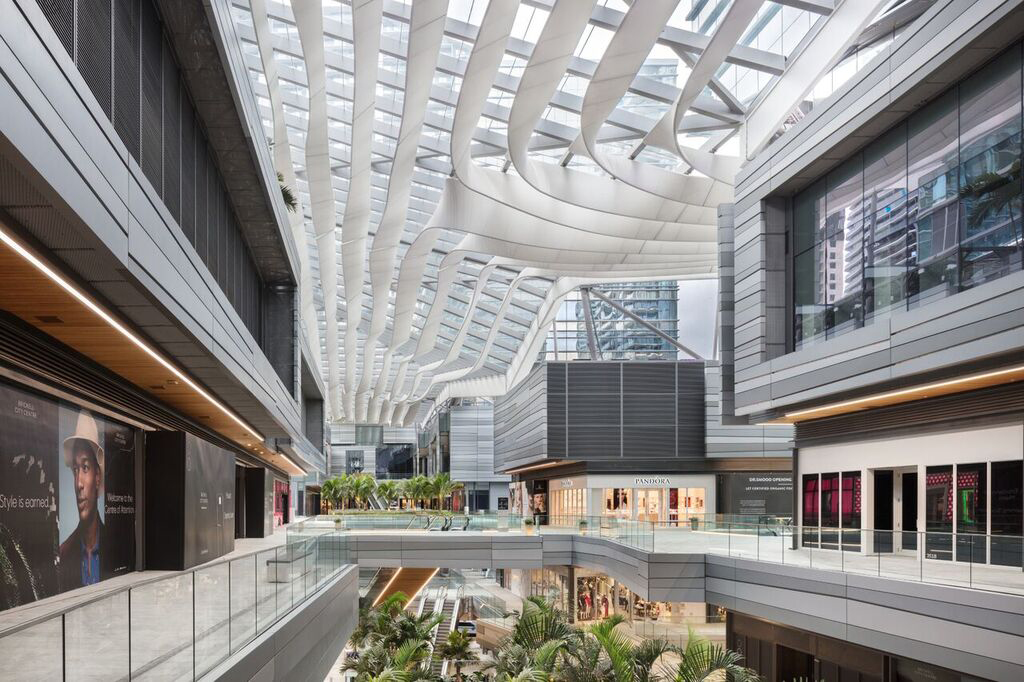
Photo courtesy Brickell City Center.
Smiling at the Past
Historical architecture is highly appreciated in the design industry, as it creates a traditional atmosphere for designers to either enhance or refresh with modern additions. These traditional styles of architecture extend into the home, seen through classic ceilings that add a unique element to the space. Residences at 62-66 North Third in North Williamsburg, New York, feature exposed, high concrete ceilings as a nod to the neighborhood’s industrial past. The residences embody a sense of character, design, and detail that combines modern and traditional Williamsburg in these expansive homes.
Another example with an authentic ceiling design is in this top-floor townhouse at the Residences at Prince Street, formerly part of St. Patrick’s Old Cathedral. The gabled ceilings with exposed wood beams reflect an authentically of the period; existing moldings and details were replicated throughout to create a top-floor living area with skylights and a cozy feel.
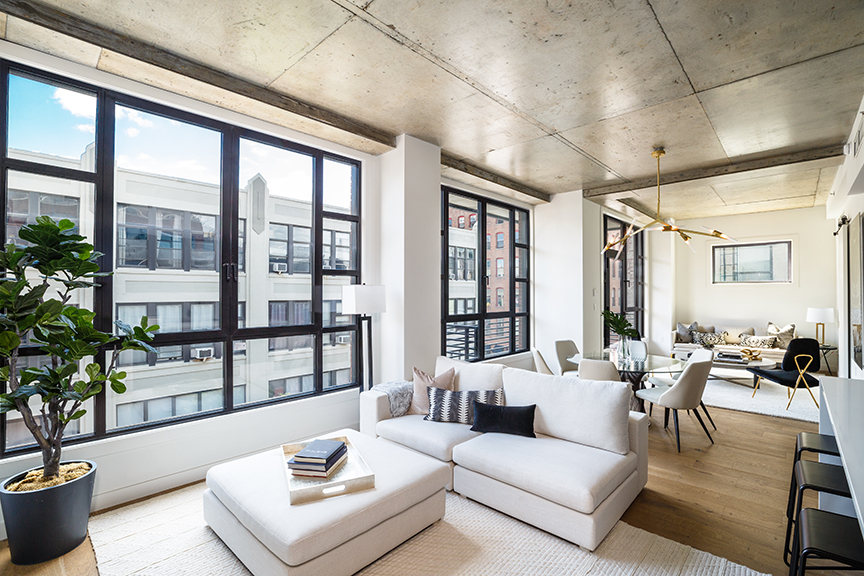
Photo courtesy MNS.
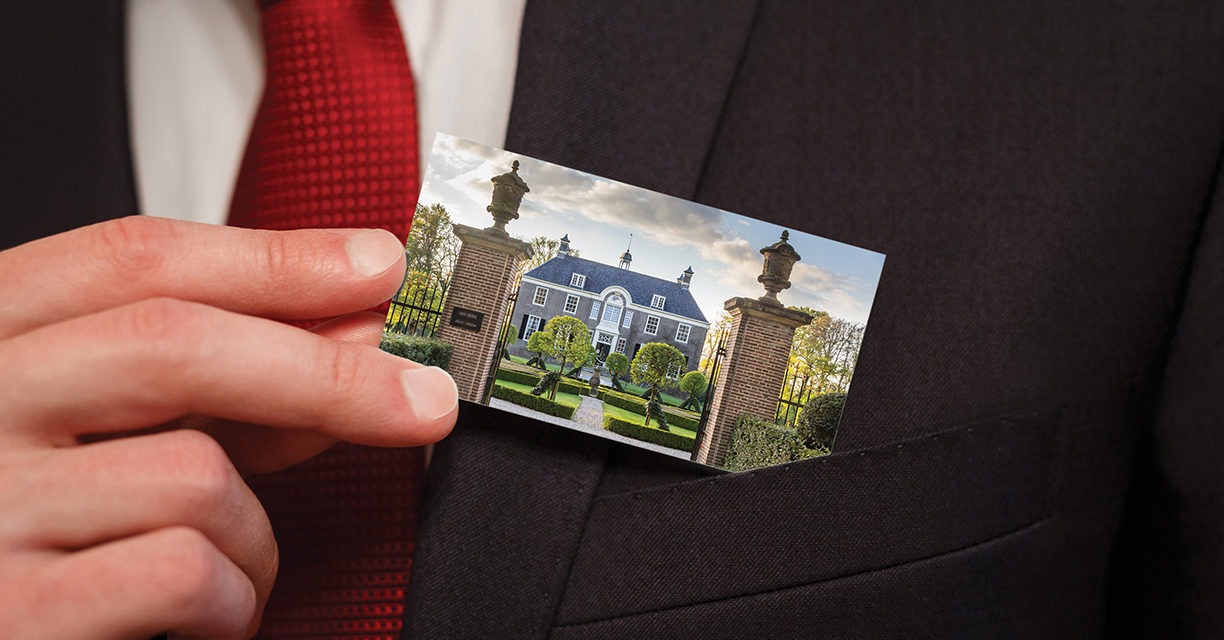
The practice is not new, but the frequency and acceptance of pocket listings has grown.
By Camilla McLaughlin
Off market … private listing … coming soon. These phrases in high-priced markets characterize properties offered for sale, but not publicly listed in the traditional manner in the MLS. The way these listings are perceived has changed significantly in the last 10 years.
Even after the advent of formalized platforms such as the MLS, the most expensive properties were often closely held, giving rise to the term “hip-pocket” listing. Traditionally, in the industry, pocket listings have evoked concern that unscrupulous agents would keep them in house and pocket the entire commission.
Post recession, the number of pocket listings seemed to increase exponentially; most in the industry remained skeptical. Today, the terms “off-market” or “private” listing are often used instead of pocket, and, in a number of places, it is becoming an acceptable — some would even say savvy — marketing strategy.
“Now I’ve noticed it’s really changed and it’s a lot more accepted,” says Patrick Ryan, senior vice president and managing broker, Related Realty, Chicago.
“It’s certainly become a very big part of our market, and it’s not something we’re necessarily driving. We’re being led by what the sellers want,” says Chris Dyson with The Agency in Beverly Hills.
In a survey of members conducted by the Institute for Luxury Home Marketing (ILHM) for Unique Homes, an overwhelming majority, 97 percent of agents responding, said private listings were part of their market. A third indicated there were only “a few,” while 17 percent saw it as a growing trend.
“As I travel around the country training agents from a variety of other states, I hear differing opinions,” says Florida agent Tami Simms with Coastal Properties Group International in St. Petersburg, who is also a trainer for the Institute. “In some markets, it works in a positive way, and in some markets, it’s considered to be underhanded.”
In the ILHM survey, 38 percent of respondents agreed that industry professionals looked more
favorably on off-market listings. About a quarter disagreed with this statement, while 35 percent neither agreed or disagreed.
The latest twist in off-market properties are platforms and professional networks, accessible only to licensed agents, designed to facilitate the sharing of information. The Top Agent Network, a national affiliation of agents in the top 10 percent of the market, is a forum for premier agents to exchange information. Additionally, networks formed just to publicize off-market properties are popping up in hot market cities such as Austin.
In August, several agents from The Agency in Beverly Hills launched thepls.com, the Private Listing Network. In little more than six months, the network claims 600 active listings worth $3 billion. Approximately 5,000 agents have signed on to the service. “Information shared on the platform is information they already email to one another on a daily basis,” says Dyson, who founded the network along with James Harris and Mauricio Umansky of The Agency.
“We have always had off-market activity. However, I think it is even greater right now,” says Meghan Bach with Colorado Landmark, Realtors in Boulder. Not only have they become more common, but there is greater acceptance among consumers. “People used to think they were Realtor-driven and that the listing agent was trying to double-end the sale. This is very much not the case today. It is seller-driven,” says Bach.
Ask agents about off-market practices and responses vary by location. In Palm Springs, Lucio Bernal with Coldwell Banker Residential Brokerage says, “We typically do not see off-market as being common in the valley. Privacy does not seem to be an apparent issue here.”
On the other hand, in Los Angeles’ platinum locales, Bob Hurwitz, founder and president of Hurwitz James Company, says, “Off market, a.k.a. pocket listings, have become so popular that the terms are basically oxymorons. It is frankly ludicrous.”
Technology also plays a role in this trend. “There have always been pocket listings, but it’s a little more evident now because of our electronic world and the fact that information is so immediate and widespread. The truth is if a house is of any substance, it generally doesn’t remain private,” says Joyce Rey, executive director, Coldwell Banker Global Luxury.
Lack of inventory is also boosting interest in private listings. Boulder has seen 10-plus percent appreciation year-over-year since 2013; demand still far exceeds inventory. “Good products fly off the shelf, so having a pocket that brokers chat about, and get under contract fairly hassle-free is ideal for sellers, particularly in the high end,” says Bach.
In Atlanta, Jaime Turner and Heather Armstrong with Engel & Völkers find, “The shortage of inventory is worrisome to both buyers and sellers. Sellers are hesitant to list and sell without an identified home to move to. By using an off-the-market strategy, sellers are able to command a price that gives them the comfort of selling while they look for a home to purchase. Buyers like it because they feel like they are getting ahead of the curve and are able to see a home that has limited showings. It has also been a good tool for us because when we have a seller that is concerned with finding a home, we utilize our agent connections and resources to locate the right home for our seller.”
For properties not in a luxury price bracket, off-market might not be the right route. “In the lower end, anything below $1.5 million in our market, coming to market creates a bidding war and advantageous sales prices for sellers. The higher end, $2.5 million and up, sells word of mouth and pretty close to where initially priced,” says Bach. Even for high-end properties, she says, “I do see huge value in coming to the market and being broadly online. That said, when there are privacy issues — divorce, job transitions, health issues — off market makes so much sense.”
Desire for privacy remains a major incentive for sellers. According to research from Luxury Portfolio International, privacy has never been more important to wealthy consumers who are also concerned about identity theft.
This desire has fueled an increase in requests from high-end sellers asking agents to privately market their homes. “Sellers actually demand it more than a Realtor suggests it to them,” explains Ryan. “They don’t want to be bothered with people just going through the house. They don’t want it to be a museum tour, so they instruct agents to be strategic and not make property information available to the public.”
Some contend not being available to the general market potentially enhances a home’s cachet. “A lot of buyers want something that they officially can’t have. Anyone that can essentially offer something that not everyone else can have, has a unique value in itself,” says James Harris. “The reality is the less you can tell people, the more exclusive it becomes, and the more people want it.”
But restricting information about a property to a limited audience is not without risk. “It’s a two-edged sword for sellers,” says Rey. “Is privacy worth getting less money for their home? If they do not get wide exposure, they may not be getting the best price.” “It also defies logic,” says Hurwitz. “The more qualified buyers who can find a property, the more likely a sale. If a property is not visible to agents with a qualified buyer, they aren’t going to know about it and will sell something else they can find.”
“I also hear a variety of opinions. Some sellers like the idea of avoiding showings, open houses, etc. (for privacy and convenience) if they can get a price they’re happy with without listing on the open market. The opposing argument tends to be that not offering it on the open market isn’t working in the best interest of the customer if there could be better terms/conditions in a wider pool of prospective buyers,” says Simms.
Even those who express concern about this approach recognize there are situations in which not being on public platforms is a strategic move. Hurwitz has used pocked listings on rare occasions for celebrity clients who wish to remain as anonymous as possible.
“Sometimes certain types of clients are not really comfortable having lots of people come see a property,” says agent Jennifer Ames with Coldwell Banker Residential Brokerage in Chicago. In instances like this, Ames says she will do a marketing campaign directly to agents who work in this price bracket. Invitation-only previews of big, exclusive properties are a traditional avenue to publicize properties.
Luxury properties often take significantly longer to sell than those priced close to the median.
According to research from Concierge Auctions, average days on market for the highest-priced properties in top markets hovers around 522 days, ranging from 55 days in San Francisco to 1,062 in Nashville.
Once a home is listed on the MLS the clock begins ticking on the number of days on market. “The way the market works in the U.S., if you go on the market everything has to become public. Not just the price and the address, but the days on market. The longer a property is on the market, the more detrimental it becomes for the property,” explains Harris.
Being on the MLS opens the door to inclusion on public platforms including Zillow, Trulia and many others. Along with days on market, changes in photography, prices, and broker representation are all tracked. “We’ve started to realize more and more with the Internet, you want to have all your ducks in a row before going on the MLS,” says Ryan.
“Coming soon” has become an official category incorporated into a growing number of MLS systems. “We see a lot of Coming Soon strategy as opposed to off market in Florida,” says Simms. “I believe that the off-market approach is more appropriate for properties that are particularly expensive and/or unique, which would likely end up having a tremendous number of days on the market if listed traditionally.
Initially offering a property off market is considered an effective method to test a price. “If you are trying to get a very aggressive number for your house, you may want to start off market to test the price,” says Harris. Agents also use this strategy when an owner has a much higher price in mind than the market will likely accept.
“It’s a way to test the market without going on record,” says Ames. Another circumstance that could call for an interval of off-market strategy, she says, is a situation where owners don’t actually plan to move for months, but still want to give the property exposure.
In the pre-Internet era, agents relied on phone calls to agents who worked in similar price brackets. But, “you could only call so many people and network so much,” shares Ryan. Today, robust CRM systems give agents a laser focus on most-likely buyers. Additionally, national brands and affiliate groups promote networking among agents both nationally and internationally.
More formalized networks and platforms such as thepls.com are a way for agents to keep track of what’s available. For example, in Los Angeles, agents might receive hundreds of emails a week regarding off-market properties. “The PLS is essentially a place where agents can put information, so it can be searched when another agent needs it. That was really the motivation behind it,” says Dyson.
Tried and true methods to ensure those who work in luxury are aware of new listings, both off-market and publicly listed, remain the most important marketing tools, particularly for well connected agents.
Will the penchant for private listings continue if markets cool? While blockchain reduce reliance on the MLS? Both questions point to variables that could affect the off-market trend in the future.
The “Market Maker”
“Market maker” is the way Robert Dankner characterizes what he does. Dankner, president of Prime Manhattan Residential, takes off-market to the next level by finding and creating opportunities for buyers and sellers in tight markets in New York City. “There are a lot of people looking for the same thing that doesn’t exist, which is why they’re all creating things for themselves,” he says referring to the boom in renovations.
Dankner sees market potential others often overlook and is equally skilled at bringing clients —buyers and/or sellers — together, crafting a deal advantageous to both. “In my world, off-market is something that not everybody can do. In addition to obviously being extremely well connected, you have to have a memory like a computer because as things arise on both sides of the equation, you have to be able to mix and match very quickly to see what can be put together. It’s just a matter of having the resources and tools to know where and how to hunt. There’s no algorithm, no smoking gun. It’s just a matter of understanding every nook and cranny from the standpoint of things that used to be on the market or understanding through connections who, what, why and where somebody might be willing to part with something under the right conditions.”

Photos courtesy of iStockPhoto.com

Strength in the home sales market in southwest florida is due to community amenity programs, higher interest rates and long-term buyers.
By Amanda Schultheis, Senior Consultant of John Burns Consulting
Our selling season is officially over in Southwest Florida. The beaches are quieter, locals are able to get a tee time, I can finally get a restaurant reservation again and builders are tallying their sales. Most builders we’ve spoken with recently report moderate to strong sales with increasing interest from Northeast buyers seeking tax shelter. Fort Myers has regained strength by diversifying product offerings, and we will likely upgrade the market to Normal next month.
Other takeaways from our field research include:
- It’s not just the active adult communities that are performing well. It’s no secret that Southwest Florida is a retiree haven, but we have observed increased demand from family buyers. Community amenity programs that offer something for everyone are performing the strongest. A tot lot might be on one side of the community pool, while a bocce court is on the other, and all residents enjoy the extensive walking trails. Several new neighborhoods have opened with families in mind that offer low HOA fees, private yards, and good schools.
- Interest rates may be positively influencing sales. Local families and retirees alike are selling their homes and buying new before rates increase. Sales agents note increased interest from locals, and many communities priced in the $200s to $400s report double-digit monthly sales.
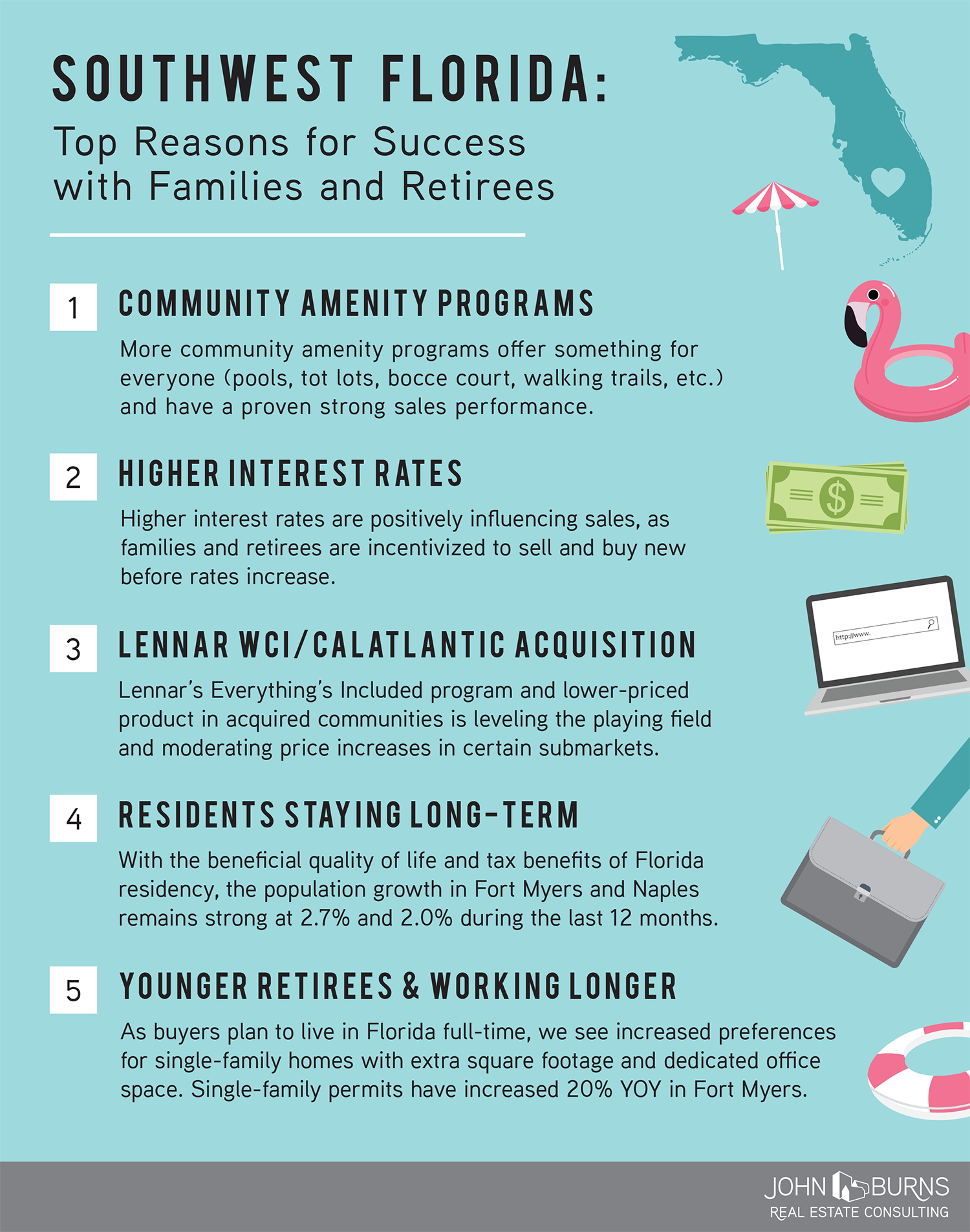
- Lennar’s acquisition of WCI and CalAtlantic is putting pressure on new home prices. Lennar’s Everything’s Included program and introduction of lower-priced product in acquired communities is attracting buyers. New home price appreciation has declined the past two years in Fort Myers and Naples as builders struggle to meet the affordability challenges by offering smaller product, larger incentives, or both.
- Residents are staying. The traditional snowbird lifestyle is becoming less popular, as the quality of life and tax benefits of Florida residency are extremely beneficial, particularly with buyers from the Northeast, California, and Illinois. Population growth in Fort Myers and Naples remains strong at 2.7% and 2.0%, respectively, during the last 12 months. Fort Myers added an additional 19,800 residents, and Naples increased 7,300 residents in the last year.
- The new retiree is younger and may still be working. We see increasing preferences for single-family homes as buyers plan to live in Florida full-time and require extra square footage as well as a garage and dedicated office space. Single-family permits have increased in both markets, including a whopping 20% year over year in Fort Myers.
Looking ahead, we expect continued strength in all Florida housing markets due to demographic trends and a favorable tax policy. We are watching the slow employment growth in Fort Myers and Naples, although employment numbers do not capture the large amount of self-employed residents who choose to live in Southwest Florida. For local insight and strategy on other Florida markets, contact Amanda or any of our Florida team members.
Photo courtesy of John Burns Consulting
From West Village to the Seaport District, these New York City residential buildings go above and beyond with their dramatic architectural features.
Breaking free of what has been the ‘norm’ of rectangular slabs, we’ve recently seen more developers and architects getting creative with these next-level terraces in a bid to capitalize views, add greenery and captivate buyers and residents.
X
90 Morton, West Village’s latest condominium conversion, boasts four levels of terraces designed by concept architect, Asaf Gottesman. While New York City codes require buildings to recede as they rise in “wedding-cake” fashion, Gottesman broke free of this constraint by cantilevering terraces over the setbacks, increasing external terraces, ample natural light and privacy for residents.
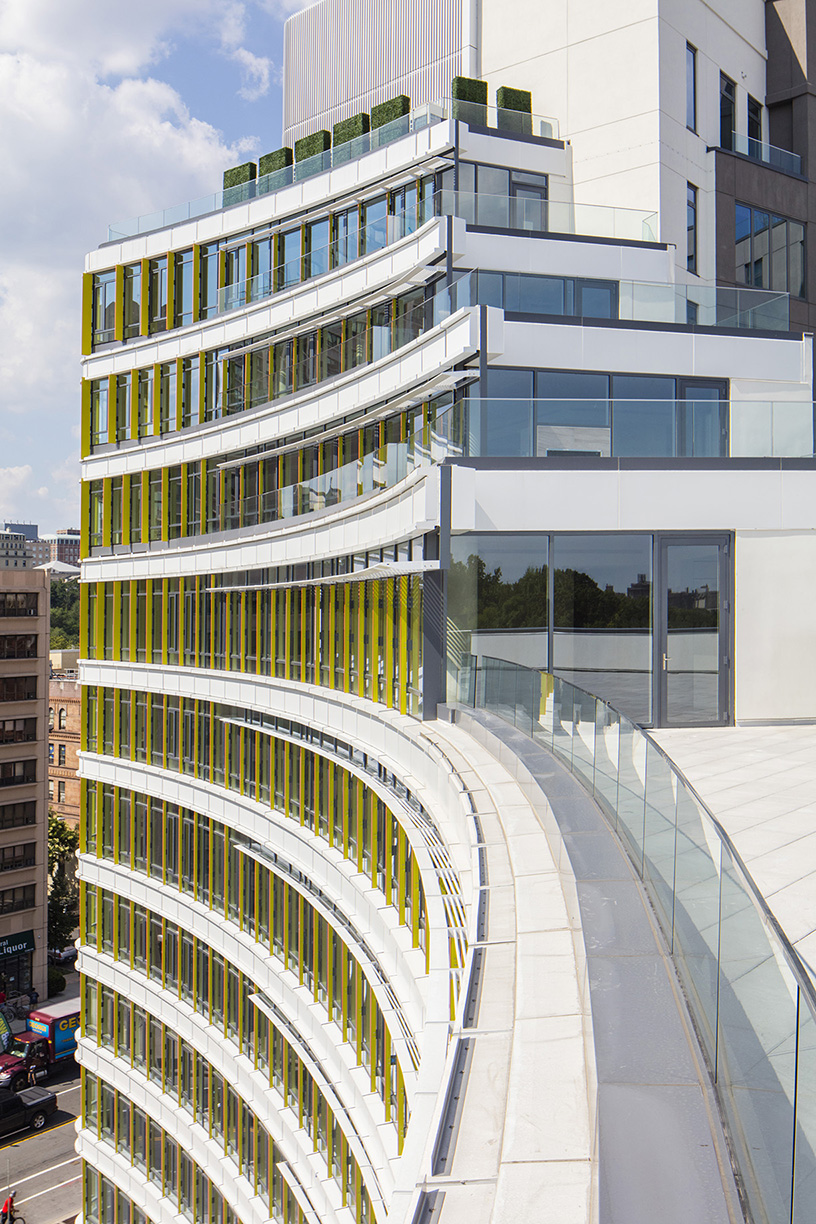
Photo courtesy of FXCollaborative
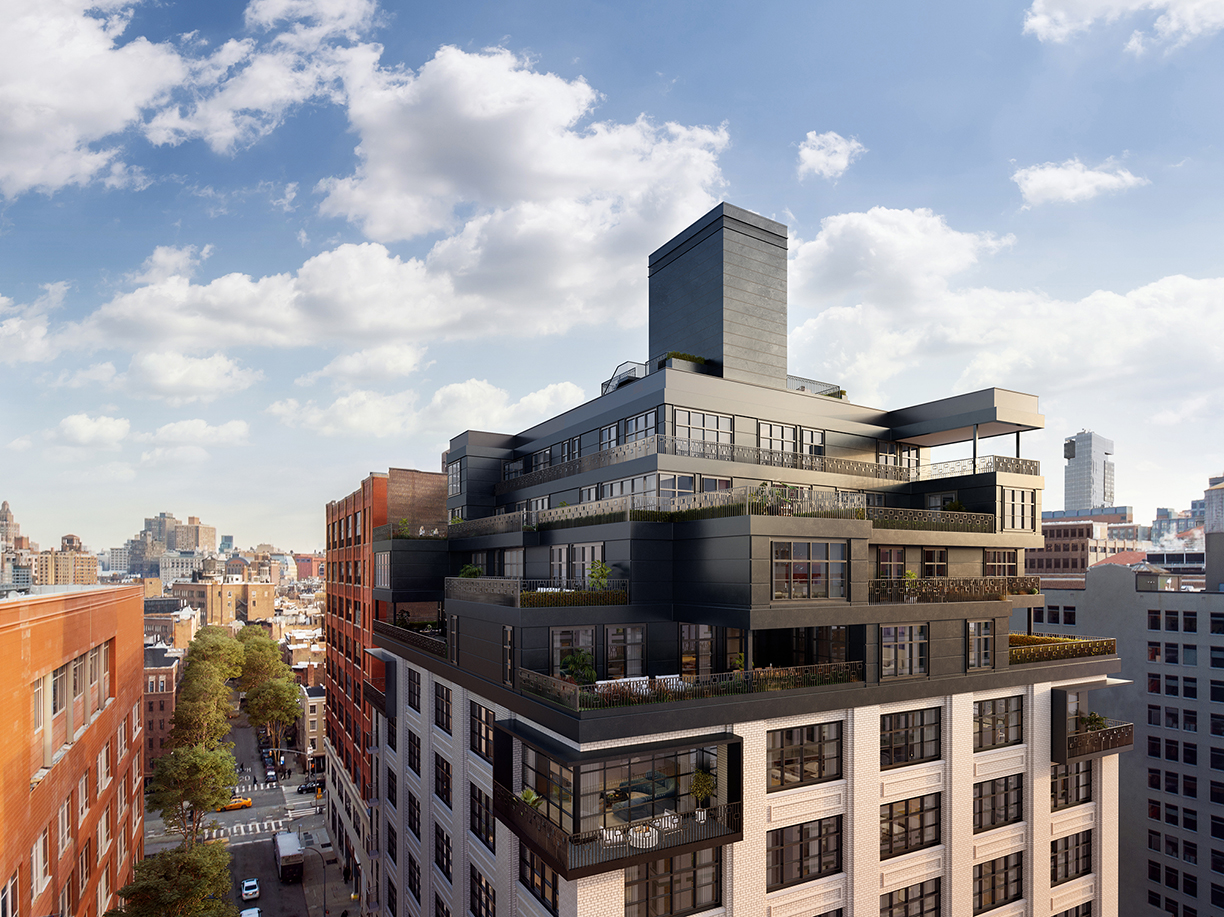
Photo courtesy of Binyan by IF STUDIO
Circa Central Park, an Upper Manhattan residential development, boasts residence 8A, a three-bedroom unit with 1,968 square feet of space and an expansive private terrace that overlooks Frederick Douglass Boulevard and the neighboring Central Park. Designed by FXCollaborative, the team kept in mind the iconic traffic circle and ensured the terrace echoed the gradual curvature of Frederick Douglass Circle.
Designed by Hill West Architects, Seaport Residences, the 60-story luxury condominium in Manhattan’s Seaport District, features terraces that spiral up the building in a helix-like movement, illuminating the skyline with long baguettes of lights wrapping its crown like a modern residential lighthouse.
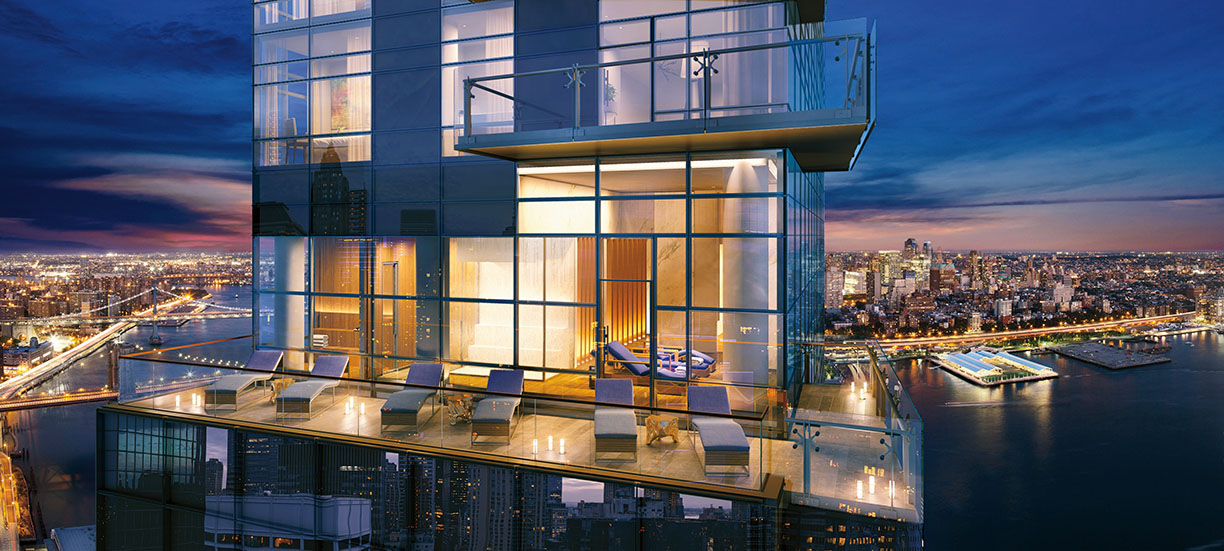
Photo courtesy of Williams New York
Through its Random Acts of Kindness campaign, real estate marketing leader Parkbench.com encourages good deeds in every neighborhood.
By Roger Grody
One of the fastest-growing start-ups in the real estate industry is Parkbench.com, an innovative, neighborhood-based collaborative through which real estate professionals enhance their presence in the community. The platform also hosts businesses, residents and nonprofit organizations, connecting people on multiple levels and strengthening communities throughout the U.S. and Canada.
The Toronto-based company was founded by entrepreneur Grant Findlay-Shirras and his wife Amanda Newman, a local Realtor. The concept, which establishes an exclusive website for a Realtor in every neighborhood, provides a vehicle through which that real estate professional can build his or her business while creating a more cohesive, tightknit community. After launching his wife’s website in 2013, Findlay-Shirras founded Parkbench.com to accommodate demand from Realtors in every state and province.

Parkbench.com CEO
Grant Findlay-Shirras
“Everybody who lives, works or plays in a neighborhood has something to say, and this platform provides immense value to the community while building a Realtor’s brand,” says the CEO. Findlay-Shirras explains Parkbench.com allows Realtors to elevate their roles to what they once were: pillars of the community who generate referrals by collaborating with local businesses, residents and organizations. It is a technology-driven approach to old-fashioned relationships.
“All Realtors want to provide value to their communities and expand their spheres of influence, but most don’t know how to go about it,” says Findlay-Shirras, who adds, “We believe in the Law of Reciprocity. Those who provide value to their communities will prosper.” Parkbench.com has also become the largest single provider of local news, aggregating local content from around the Internet and updating it daily on its Realtors’ respective websites.
Because Parkbench.com’s mission is to make neighborhoods stronger, both socially and economically, a corporate culture of giving comes naturally. After Hurricane Harvey hit Texas last August, Parkbench.com donated 10 percent of its revenue the following month to the nonprofit Feeding Texas. This past February, the firm implemented a Random Acts of Kindness campaign in honor of National Random Acts of Kindness Week, February 11-17, 2018.
“The entire company is built on this motto: Give value first, and have faith that you will receive something in return,” says Findlay-Shirras, who adds, “And why not give it randomly to see people’s awesome reactions?” The Parkbench.com CEO, who created the Local Leader® Marketing System used by his network of 1,000-plus Realtors, reports that members in cities throughout the U.S. and Canada — including New York, Vancouver, Phoenix, Los Angeles, Austin, Philadelphia, Seattle, Toronto, and Miami — participated in the February campaign.
Among the random acts of kindness extended by Parkbench.com, Realtors were buying coffee for the neighborhood, handing out flowers on Valentine’s Day, reprising the lost art of dispensing compliments to strangers, and cleaning up litter in the community. Local Realtors videotaped and posted their random acts for a companywide competition, with the winning Realtor receiving $1,000 to donate to his or her favorite charity.
Parkbench.com also supports nonprofits beyond the neighborhood level, and selected causes have included fostering entrepreneurship in Kenya, assisting the homeless and funding disaster relief. “The spirit of the company is giving to the community,” reminds Findlay-Shirras of Parkbench.com’s core value. “That’s who we are.”
Photo courtesy of Parkbench.com
Celebrity brokers co-list eight Los Angeles penthouses with The Agency Development Group.
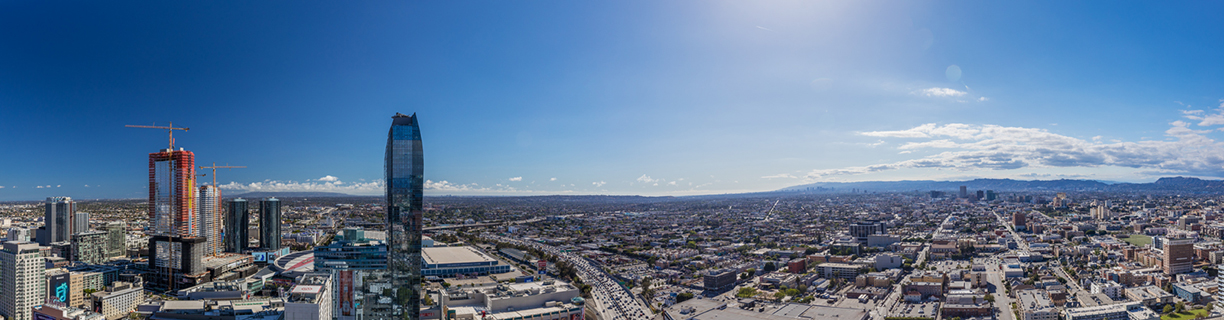
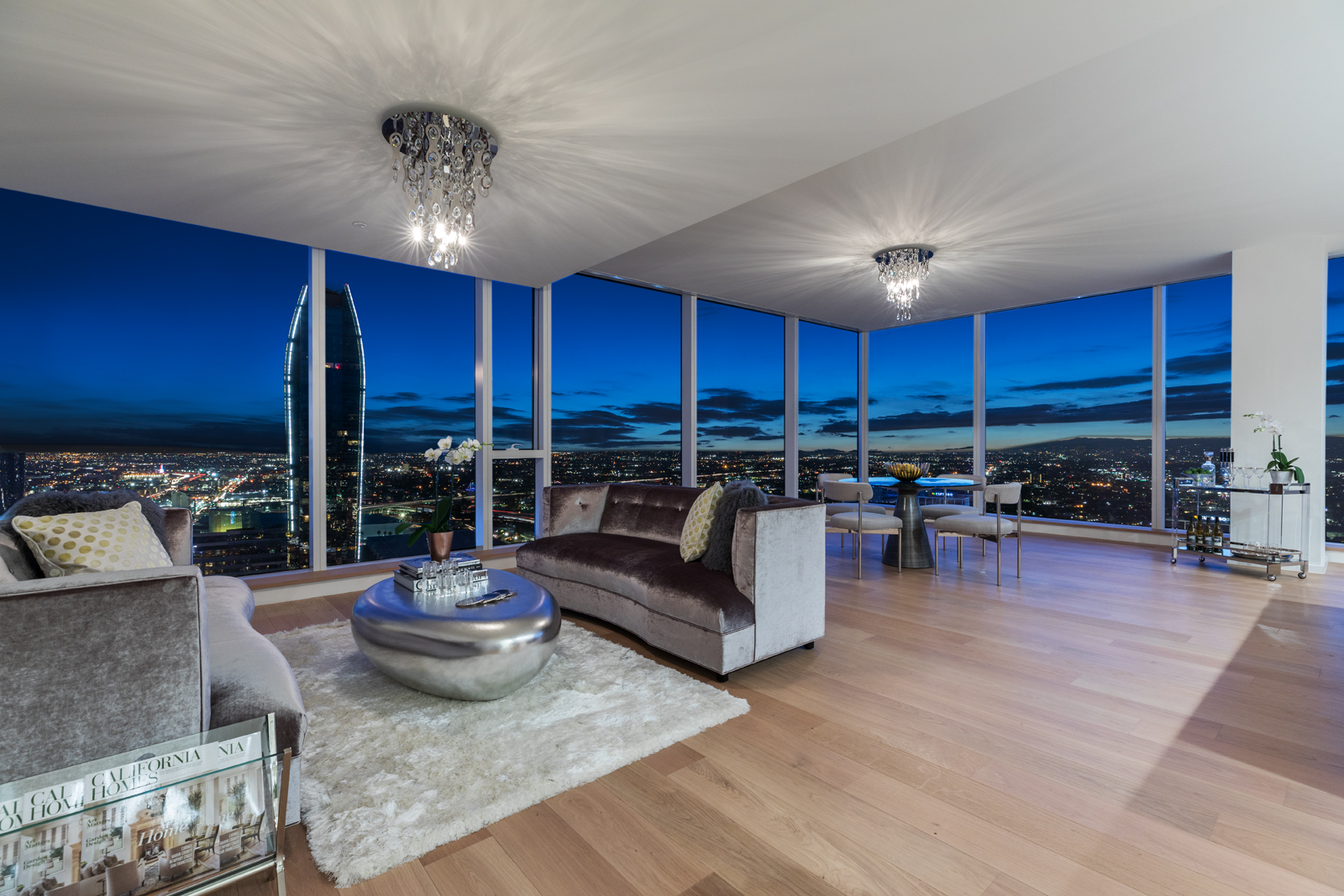
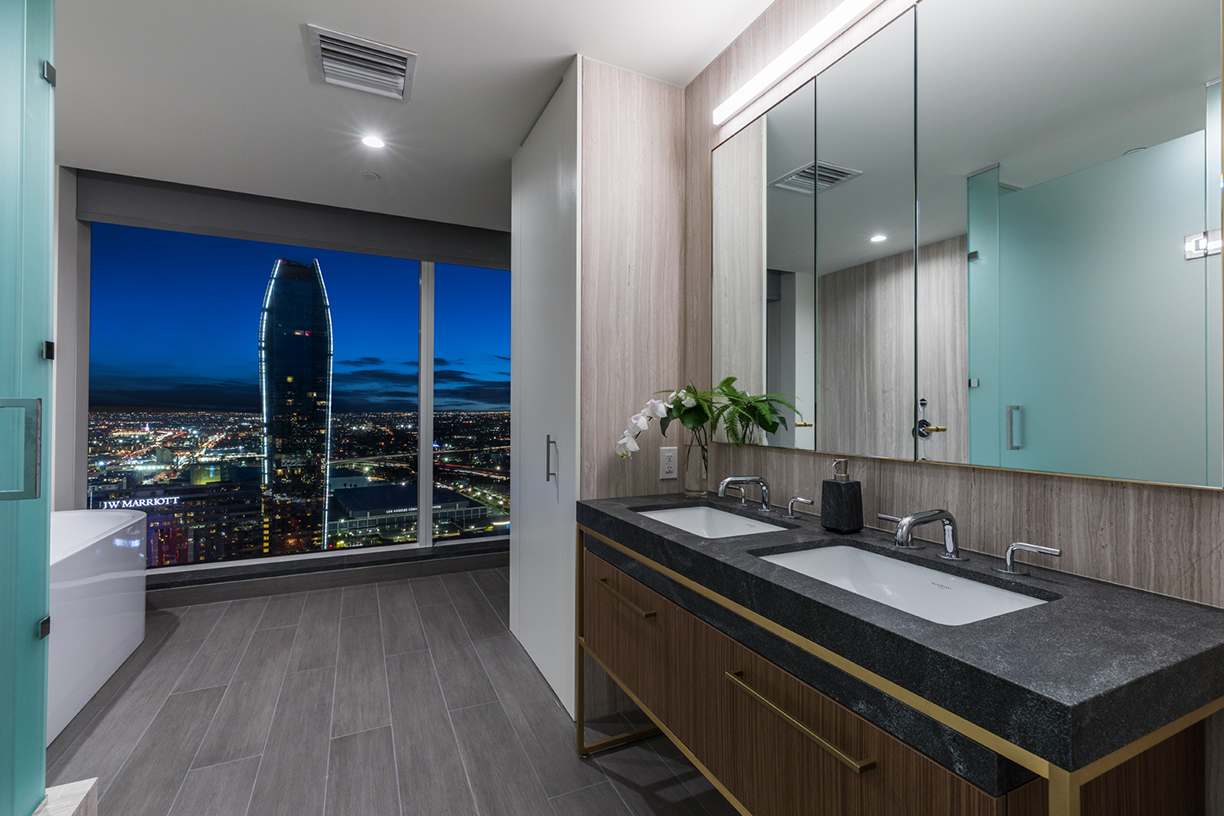
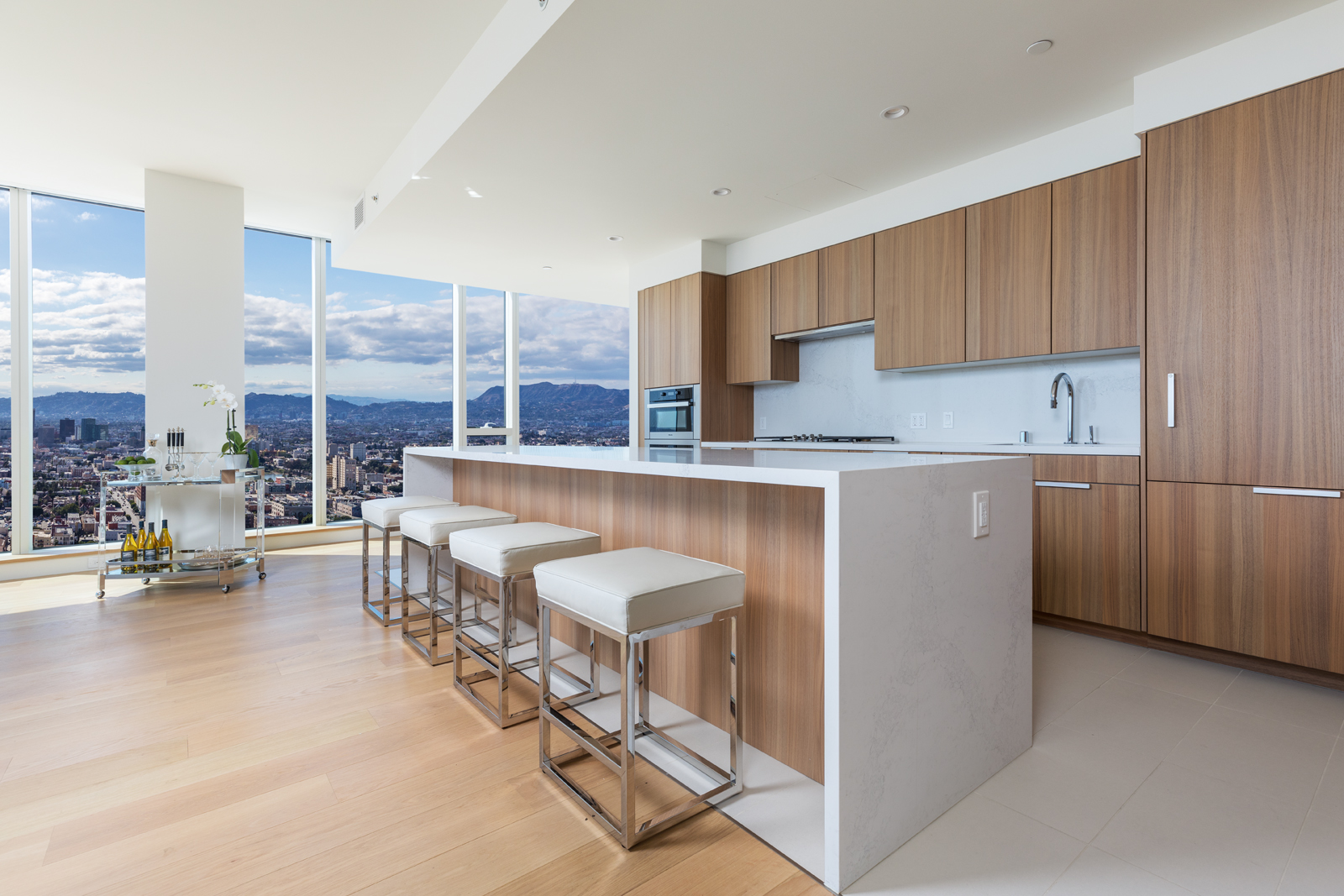
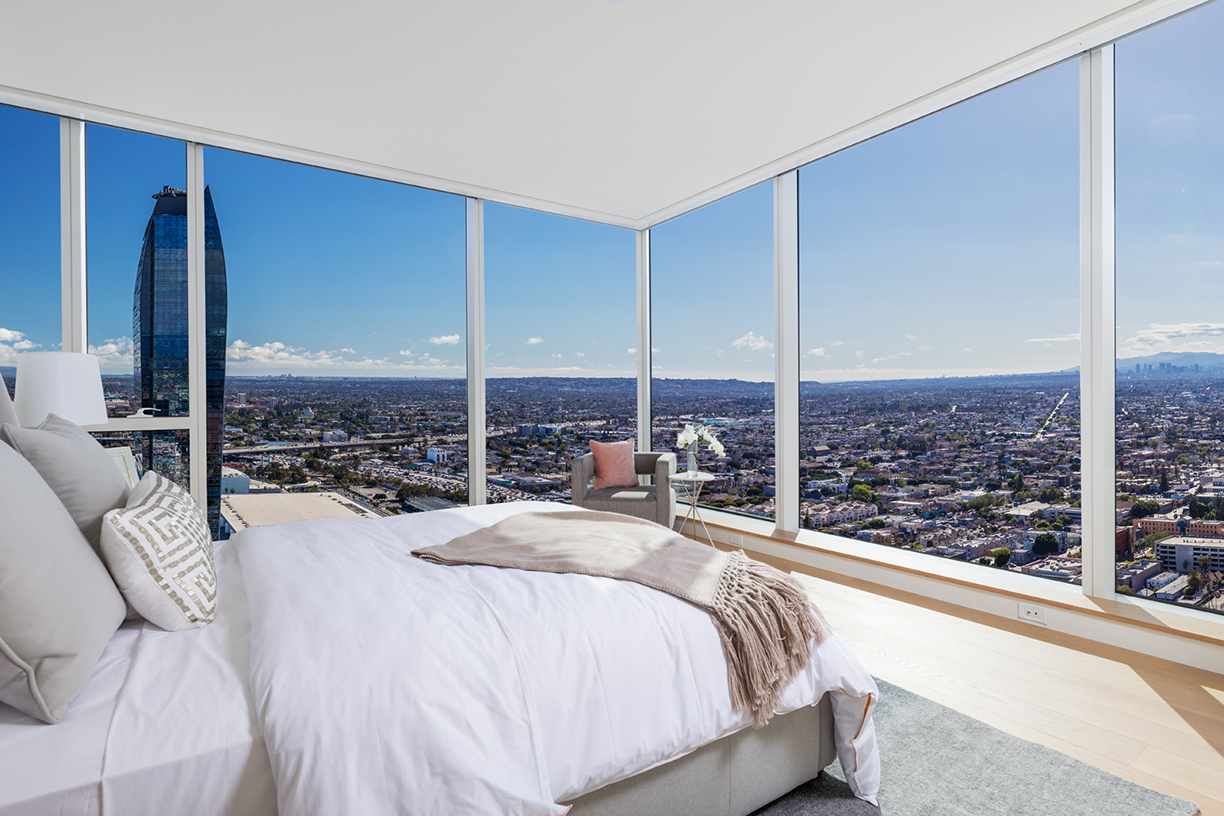
The collection is comprised of four two-bedroom and four three-bedroom residences that range in size from 1,735 square feet to 3,534 square feet with pricing starting at $2.194 million and ranging up to $6.388 million. The residences are well-appointed with expansive floor plans that capture fine sky-high views of LA through floor-to-ceiling windows.
“Greenland USA is delighted to unveil The Penthouse Collection, which will offer residents the finest in luxury, high-rise living and access to top-tier services and amenities,” said Chao Wu, general manager of Greenland USA, Los Angeles. “Located conveniently between Los Angeles’ financial district to the north and the entertainment district to the south, Metropolis brings the excitement and vibrancy of Downtown Los Angeles right to our residents’ front doors, redefining the standard of luxury, urban living.”
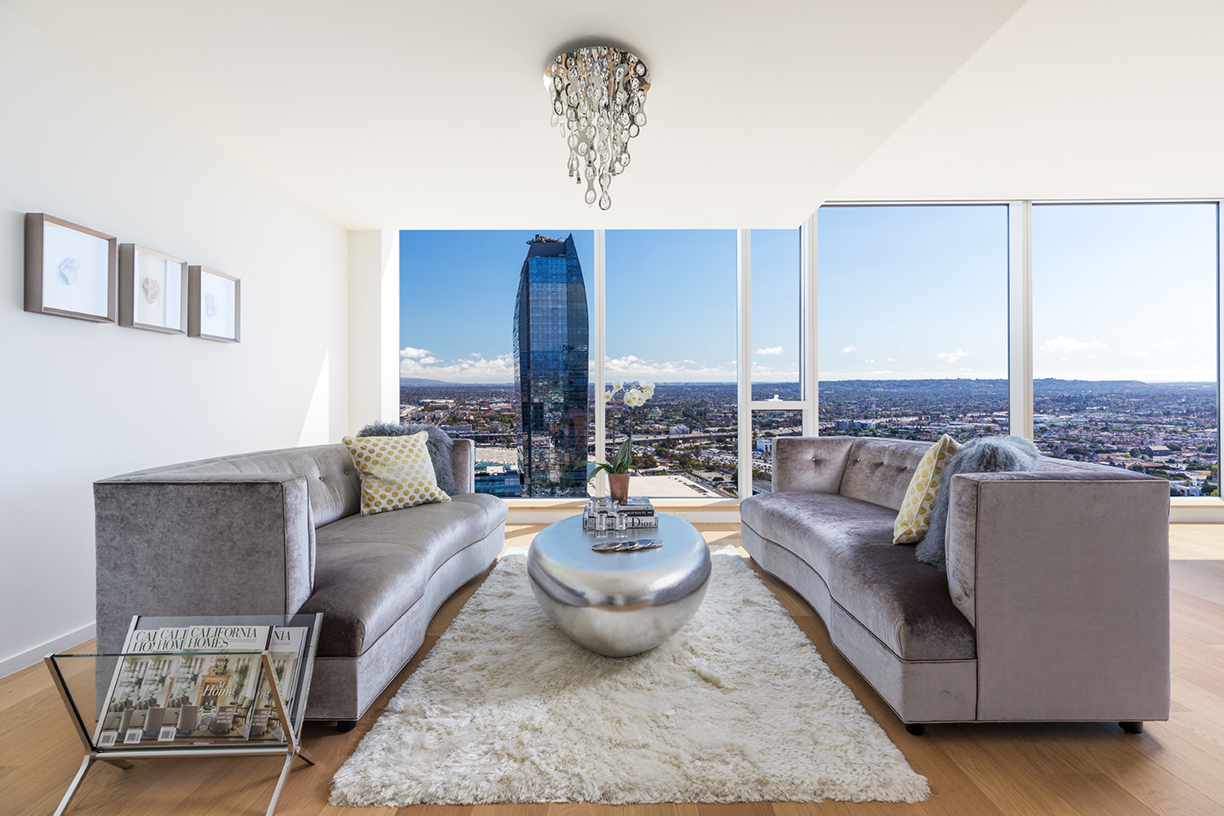
Penthouse 3906 was exquisitely envisioned by Michael Erno of Mitchell Gold + Bob Williams. Erno chose pieces that create an elevated sense of calm as one enters the first-floor living area and transitions upstairs to the bedrooms. He used a glamorous palette of shimmery greys, silvers, neutral tones and a myriad of textures to complement the opulent nature of Metropolis while not detracting from the remarkable jetliner views.
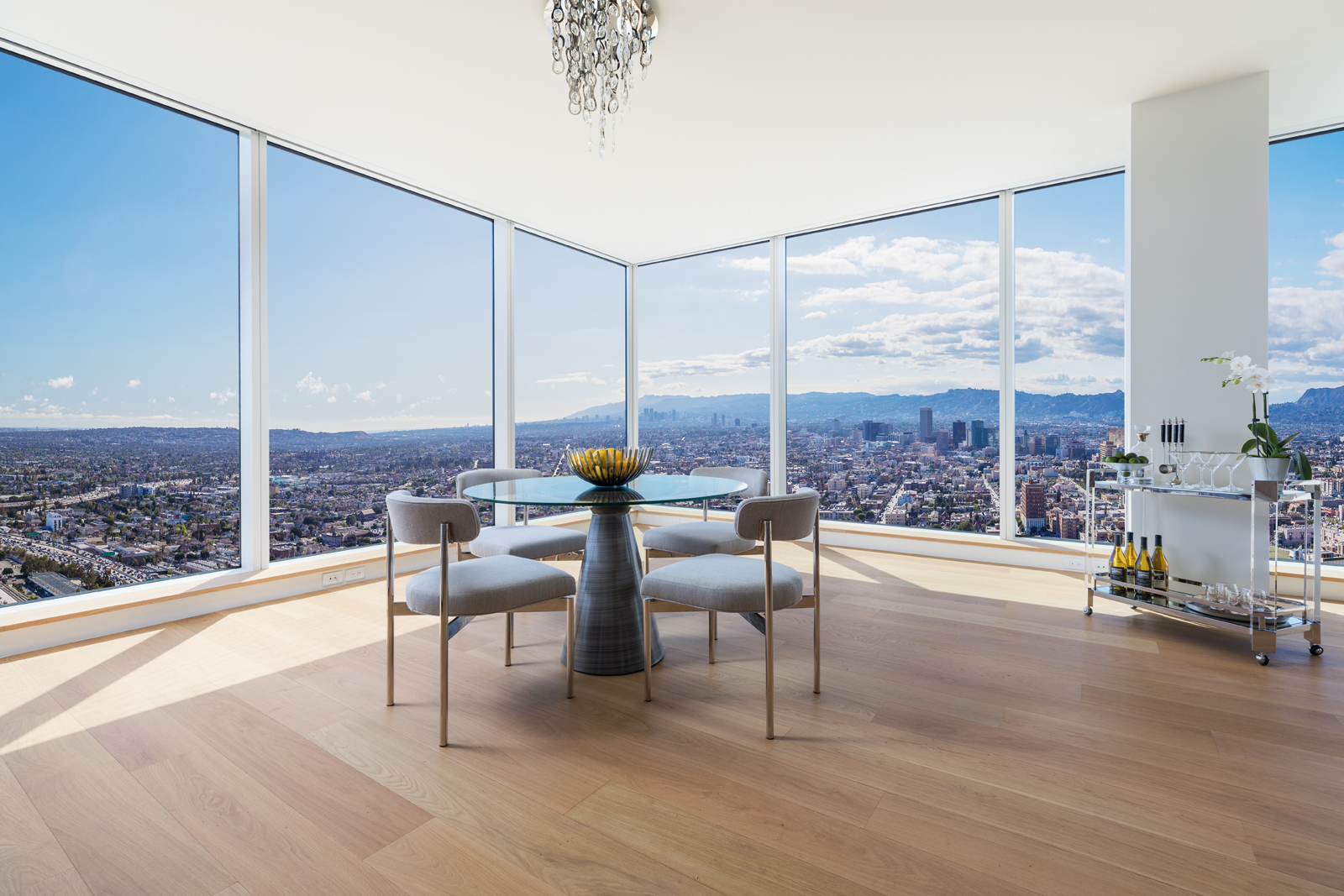
Residents will have access to a 24/7 Lobby Attendant and Dedicated Concierge, Met Six Residence Clubhouse with indoor lounge and chef’s kitchen, resort pool with a Jacuzzi, cabanas and lounge, billiard and game rooms, screening room, meditation garden and a dog park with a bathing station.
“It is exciting to see how the Downtown Los Angeles market has grown over the years and how the demand for high-end product is at an all-time high,” adds Parnes. “With unparalleled amenities and services, Metropolis is among the most sought-after properties in Los Angeles, and we are excited to be a part of this new chapter of the Downtown real estate market.”
Metropolis Los Angeles, developed by Greenland USA, has unveiled The Penthouse Collection, listed by Million Dollar Listing Los Angeles’ James Harris and David Parnes and The Agency Development Group. The unveiling of The Penthouse Collection comes on the heels of the sales success at Tower 1 and the launch of sales for Tower 2.
Among the only two-story penthouses in Downtown Los Angeles, The Penthouse Collection is located atop Tower 1 and features eight residences, with one residence envisioned by the award-winning Mitchell Gold + Bob Williams interior design firm.
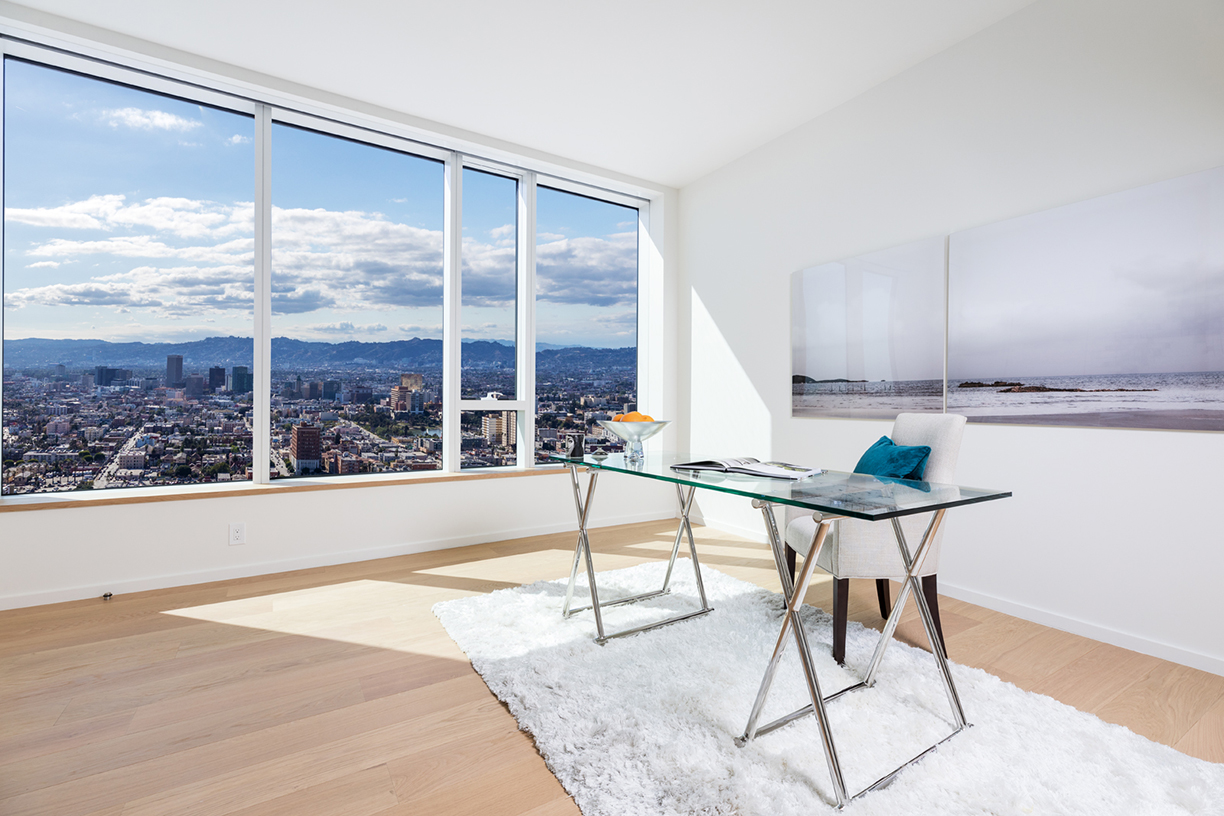
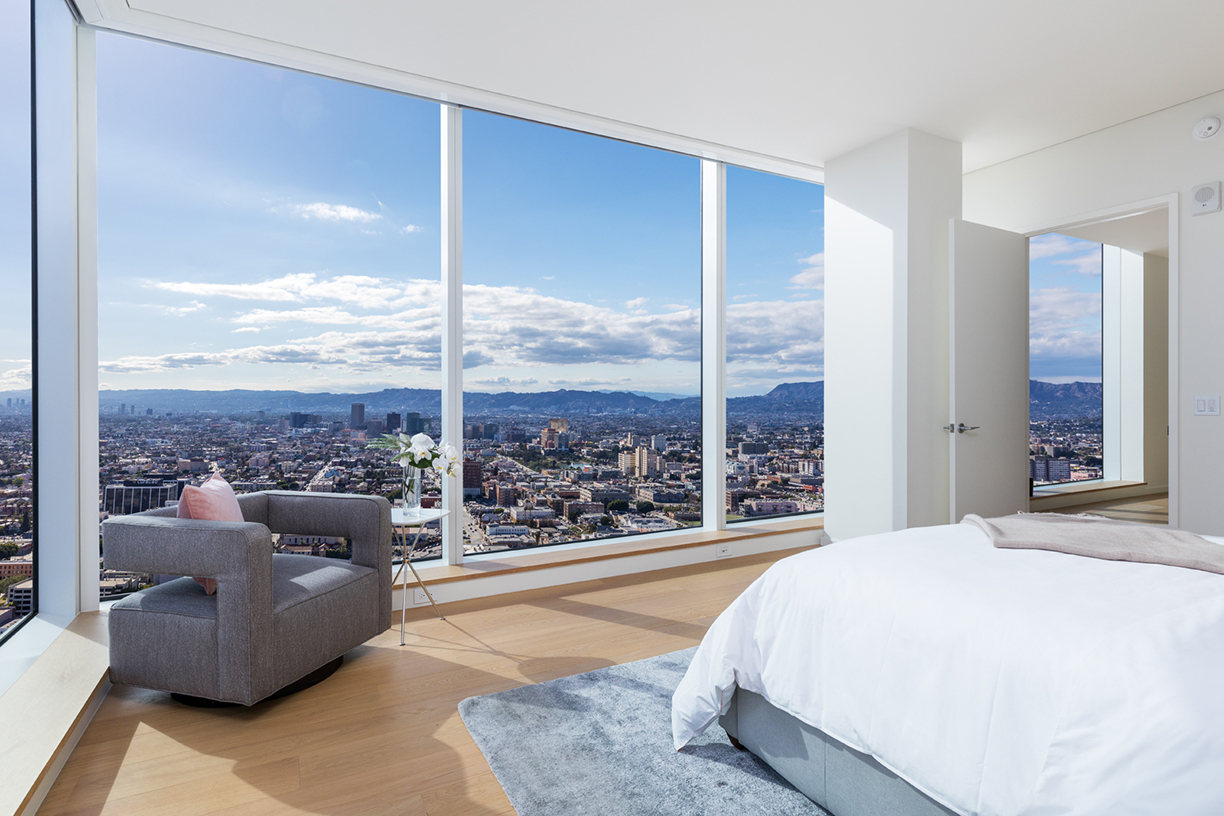
“The Penthouse Collection at Metropolis presents a unique opportunity for those seeking the finest in luxury living high above all Downtown Los Angeles has to offer,” said Harris. “These penthouses will raise the bar of luxury living in Downtown Los Angeles, and we are honored to be bringing them to market along with The Agency Development Group.”
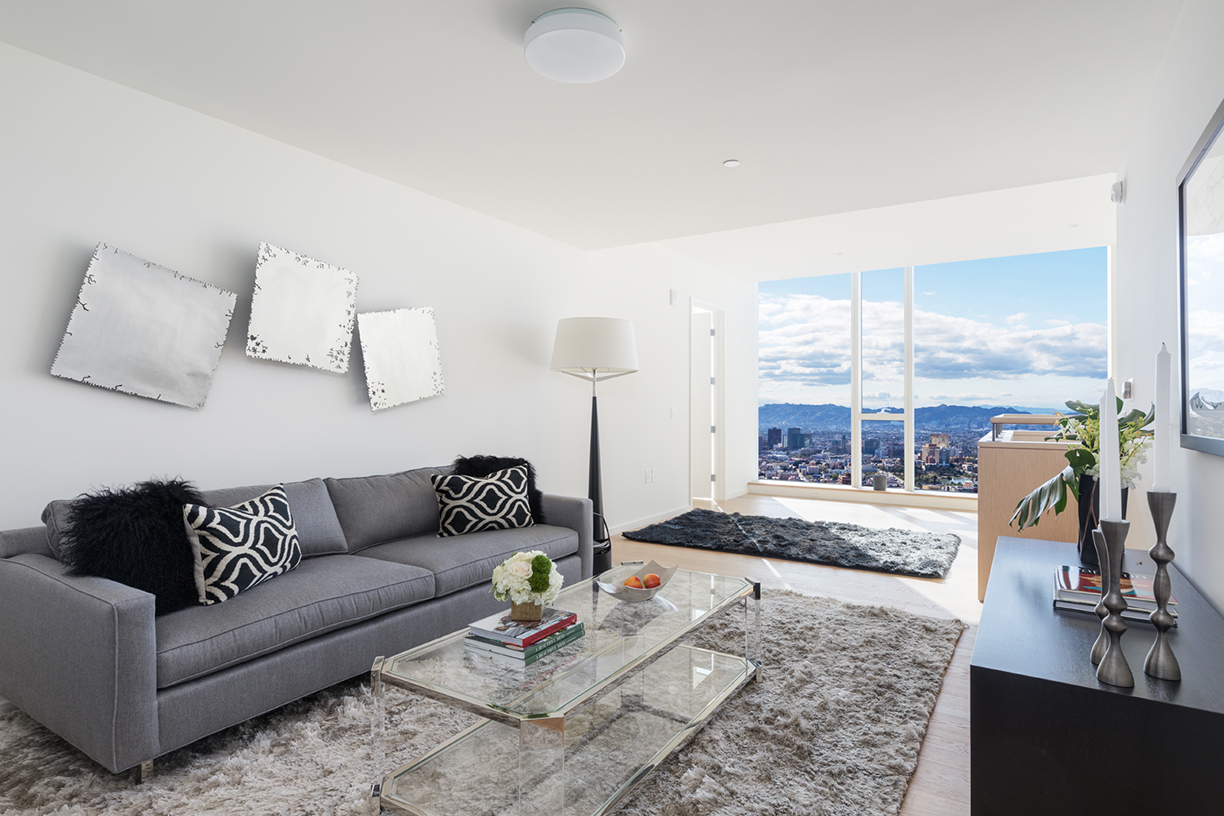
Tower 2, which will feature an incredible 3.5-acre amenity deck, will soon launch as well.
Photos courtesy of Metropolis
Crescent Communities’ acquired businesses will remain headquartered in Charlotte, North Carolina, under its existing management team.
Crescent Communities, LLC, a residential and commercial real estate company, and Sumitomo Forestry America, Inc., a comprehensive housing and wood products corporation and a wholly-owned subsidiary of Sumitomo Forestry Co., Ltd., announced the signing of a definitive agreement under which Crescent Communities’ three key businesses will be acquired by Sumitomo. The transaction is expected to close by the end of June.
“We are excited to partner with Sumitomo as their investment will continue Crescent Communities’ growth strategy and enhance our capital structure,” says Todd Mansfield, the chief executive officer of Crescent Communities. “This acquisition is evidence of Sumitomo’s favorable view of our multi-product platform and geographic footprint in high growth markets. We look forward to leveraging their extensive real estate expertise, financial strength and global network to support our ongoing commitment to unleash value for all stakeholders.”
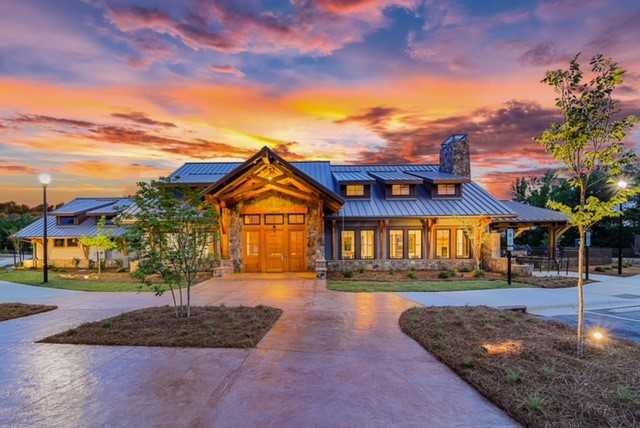
Masons Bend’s Amenity Center
“We have been pursuing further expansion of our U.S. real estate business and the acquisition of Crescent Communities is a perfect fit with our investment philosophy,” says Atsushi Iwasaki, the president of Sumitomo Forestry America, Inc. “With favorable demographics, including outsized employment growth, Crescent Communities’ markets are well positioned to support healthy long-term real estate fundamentals.
The acquired business will take the Crescent Communities’ name and remain headquartered in Charlotte, North Carolina, under the existing management team led by Todd Mansfield, Chief Executive Officer. Palmetto Bluff, the acclaimed 20,000-acre resort community with a Montage branded hotel located in Bluffton, South Carolina, will be retained by Crescent Communities’ existing owners, with the local management team continuing in their roles and David O’Donoghue continuing to serve as president.
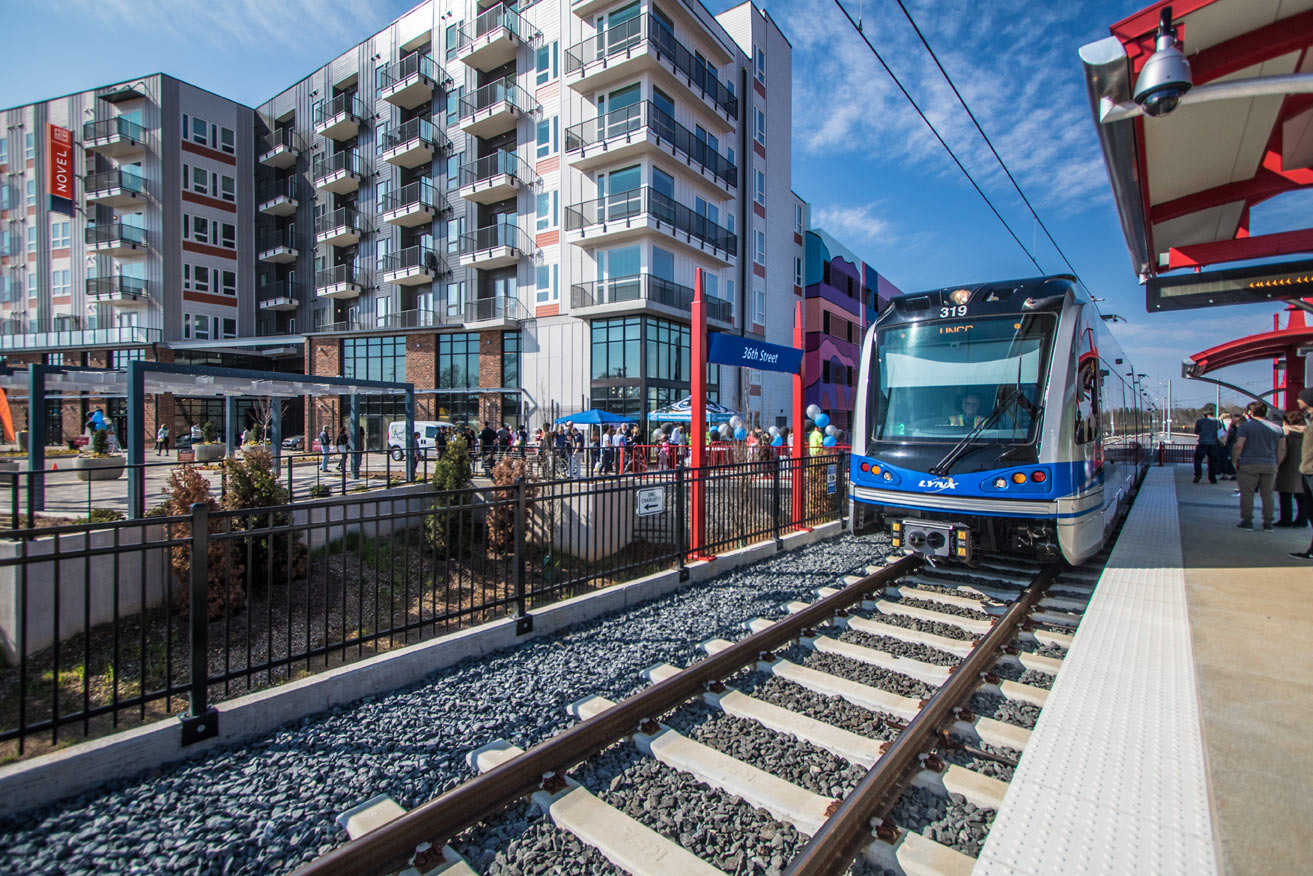
The new light rail by NOVEL NoDa and NOVEL at Providence Farm
Sumitomo Forestry America, Inc. will acquire Crescent Communities’ multifamily, single family and commercial and mixed use businesses. Crescent Communities’ multifamily business, operating under the “NOVEL by Crescent Communities” brand, includes 20 communities in development and/or operations, totaling approximately 6,400 units. The company’s Fielding Homes single family home building business includes over 1,700 single family lots across 6 communities in Charlotte and Raleigh-Durham, North Carolina.
The commercial and mixed use business development portfolio includes nearly 1.5 million square feet of assets, including the recently announced 742,000 square foot Ally Charlotte Center project in Charlotte, North Carolina. In addition, Sumitomo Forestry America, Inc. is also acquiring Crescent Communities’ development pipeline of nearly $2 billion of real estate projects, including 5,500 multifamily units, 2,200 single family units and 2.5 million square feet of office and industrial assets.
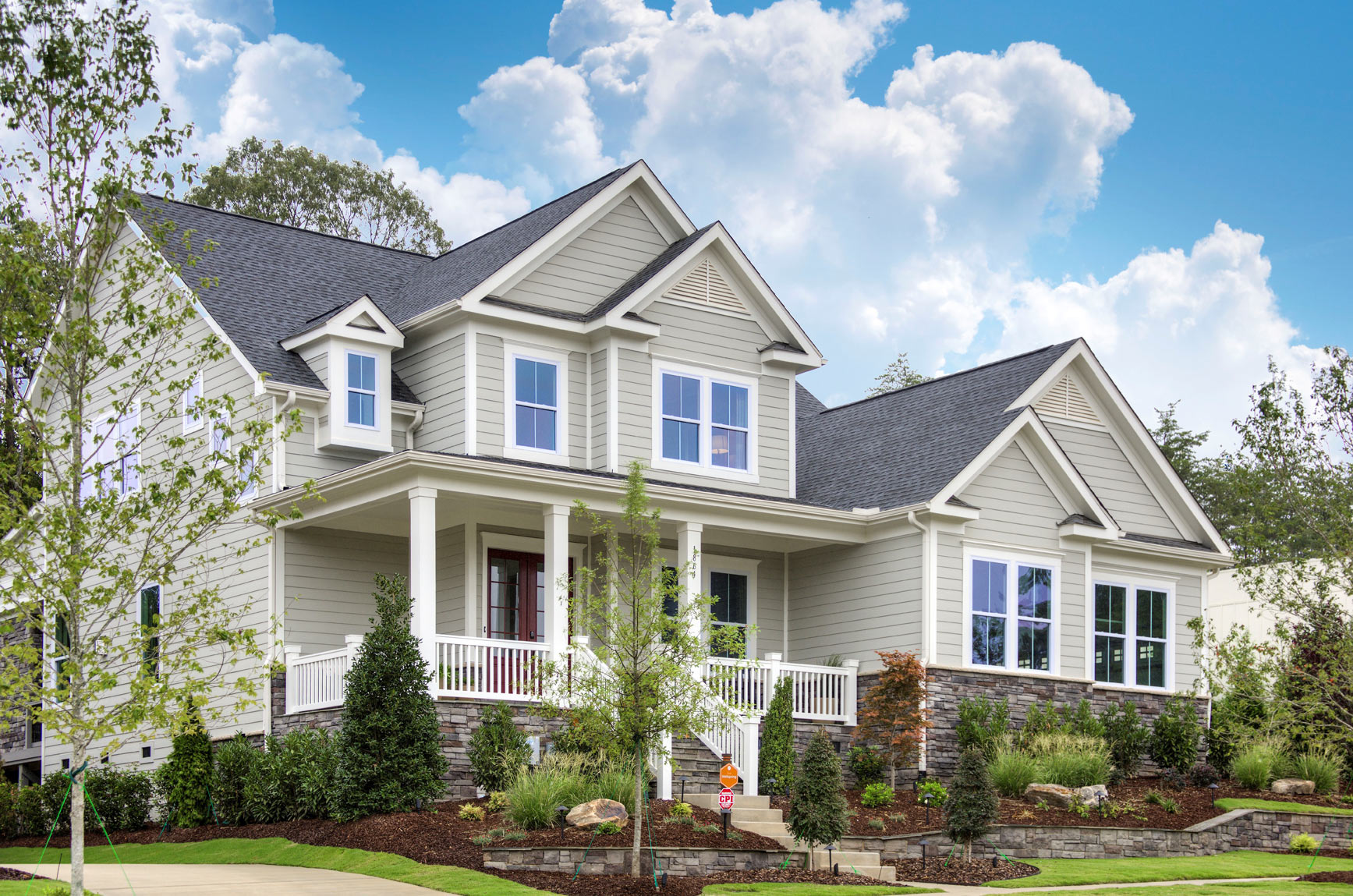
Masons Bend
Photos courtesy of Crescent Communities


Kathie Robidou
Coldwell Banker Advantage One Properties
1500 Valley River Drive, Suite 370, Eugene, OR 97401
541.484.2625 | kathie@kathiesells.com | www.advantageoneproperties.com | www.kathiesells.com
Kathie’s high energy level and her enthusiasm for helping people have propelled her to the top of her field in the real estate industry! A Coldwell Banker franchise owner and a top agent specializing in upper end and luxury homes, her expert marketing and promotional techniques are second to none and her knowledge in all aspects of real estate sales have made her one of the most successful and respected agents in Eugene-Springfield. Kathie has consistently been the #1 Listing Agent and Production Agent on a Team and is in the top 4% of agents globally. Kathie is affectionately known throughout Lane County as “KathieSells” and her team sales have well exceeded $200 million in just the past decade!
Featured Listing by Kathie Robidou
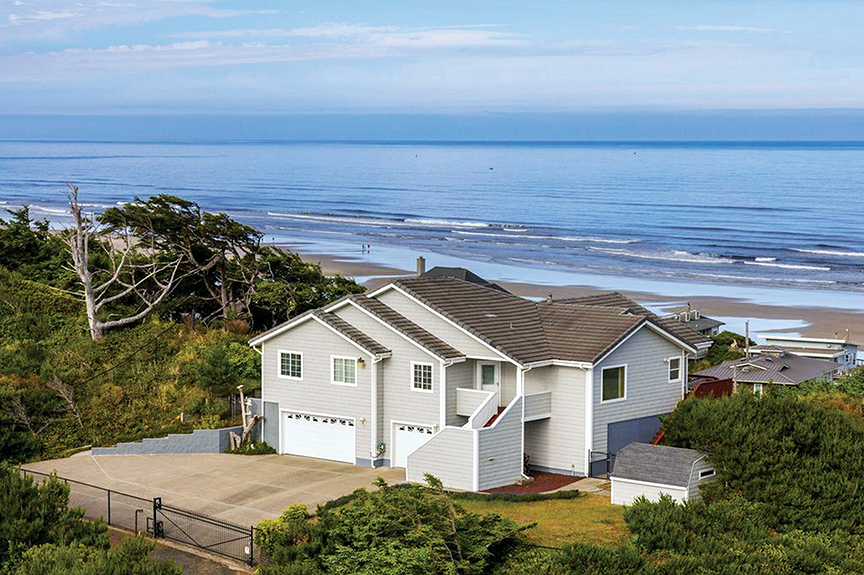
FLORENCE, OREGON
Enjoy spectacular 180-degree ocean views from this furnished, custom-built home with an expansive cedar deck, patio area and an abundance of windows to enjoy the unobstructed ocean and terrain views! The kitchen offers an island, eating bar, double ovens, corian counters and nook. The spacious master suite boasts 2 walk-in closets, a jetted tub, shower and door to the deck! Other features include a great room, formal dining, bonus room with surround sound and exercise area. The private, gated 1.61-acre lot offers area for RV! MLS#17334500
Price upon request.
Kathie Robidou originally appeared as an Elite agent in the Unique Homes Spring ’18: Elite edition. See her page here.

John Fairbanks & Marion Fairbanks
Coldwell Banker Residential Brokerage
The Fairbanks Group
388 South Lake Avenue, Pasadena, CA
626.398.9000 | 626.390.1000 | Est8homes@aol.com | www.TheFairbanksGroup.com
CalBRE #00972895 | CalBRE #01009669
With combined Real Estate experience of more than 60 years, The Fairbanks Group share a passion for their profession. John Fairbanks and Marion Fairbanks continue to bring international recognition for their people-centered, results driven professionalism. Having earned membership in the Society of Excellence and the International President’s Elite, they represent the top 1% of the company’s sales force, both domestic and international. Much of their business is repeat and referral from satisfied individuals. Always able to provide exceptional service, John and Marion are available to exceed your needs with their aggressive marketing and astute negotiating skills, coupled with a personal interest in their clients’ real estate concerns, mean results for their clients. These strengths continue to maintain John and Marion as top performing agents in the San Gabriel Valley for Coldwell Banker Residential Brokerage for more than 30 years.
Featured Listings by John Fairbanks & Marion Fairbanks
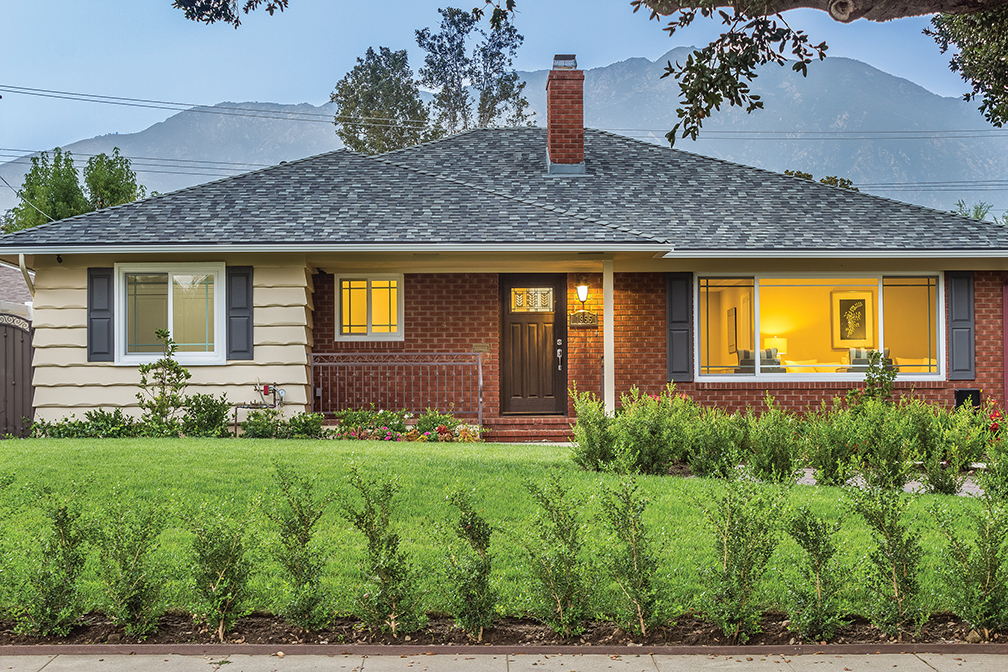
PASADENA, CALIFORNIA
1955 Brigden Road
A mountain backdrop, exquisite facade with brick accent, stately front porch and elegant curb appeal is only the beginning of this newly redesigned and renovated residence located in Pasadena’s prestigious Brigden Ranch! Offering more than 3,000 square feet of living space including 4 bedrooms (2 master suites), 4 baths, a formal living room with fireplace, a family room with Napoleon fireplace, an office, breakfast area and a chef’s delight of a kitchen. The backyard is an entertainer’s dream with an outdoor barbecue!
$1,750,000