


Propelled by natural beauty, cultural diversity and imagination, Florida has built an entire industry dedicated to luxury living.
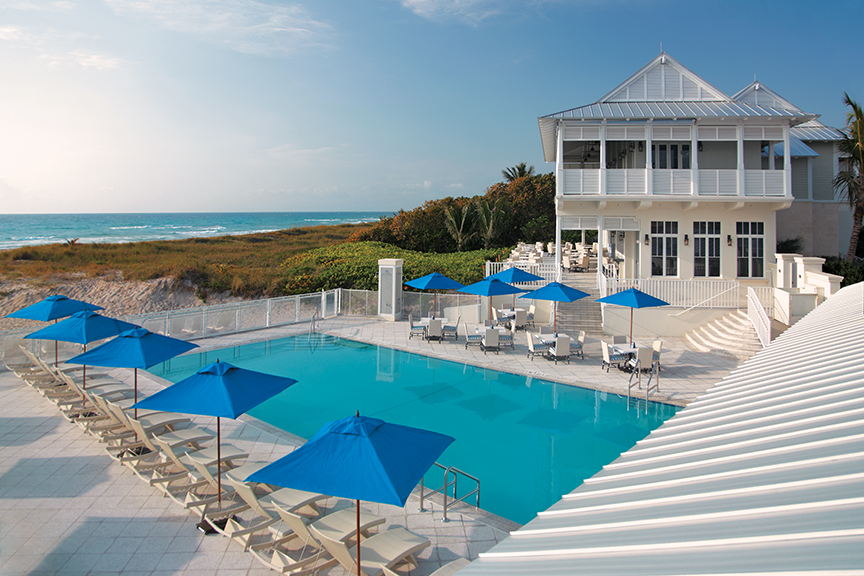
The Seagate Hotel & Spa
© Scott Wiseman
Florida is more than a single place or prevailing attitude. While its history is multicultural, this vestige of the Deep South has attracted enough newcomers to swell into the nation’s third-most populous state and an economic powerhouse. Snowbirds from up north arrived, so did Cuban and Haitian refugees looking to rebuild their lives. Ultimately, people from around the world joined native Floridians in contributing a unique energy that makes the Sunshine State a world-class destination.
Checking In
The combination of sunshine and sandy beaches is irresistible to the hospitality industry, so it is hardly surprising that luxury brands like Ritz-Carlton and Four Seasons maintain a heavy presence in Florida. “Four Seasons has a history of entering into markets and setting the standard for luxury lifestyle experiences,” says J. Allen Smith, President & CEO of Four Seasons Hotels & Resorts. To date, his company has invested in Miami, Surfside, Orlando, Palm Beach, and Fort Lauderdale, while Ritz-Carlton has more than a dozen properties in the state.
When it opened in 1954 — long before nearby South Beach became trendy — the Fontainebleau was Miami Beach’s premier hotel. Reimagined for a new generation, it now features restaurants from celebrity chefs and a vibe reminiscent of Las Vegas. Equally iconic but more buttoned-down is The Breakers, a stately oceanfront property in Palm Beach where high society has convened for a century.
The Seagate Hotel & Spa presents a stylish package of amenities in Delray Beach, including a contemporary tropical aesthetic that incorporates five eye-popping custom aquariums. “Affluent, in-the-know travelers looking for an intimate, personal setting are increasingly venturing beyond the Greater Miami area,” explains William J. Sander, III, executive vice president, director of operations and general manager of the Seagate.
On the Gulf Coast, an Edition Hotel (a modern luxury brand from Marriott International in collaboration with Ian Schrager) is being integrated into Water Street Tampa, a $3 billion, 50-acre mega-project. On the top 15 floors of the 26-story tower will be 46 Edition-branded residences, among the most luxurious of the 3,500 housing units planned for Water Street.
Orlando has shaken its reputation as a company town, but two of its best hospitality properties are at Walt Disney World. The Victorian-themed Grand Floridian Resort & Spa is luxuriously nostalgic, while the Mediterranean-esque Four Seasons Resort Orlando offers a sense of privacy, championship golf and a chic rooftop steakhouse.
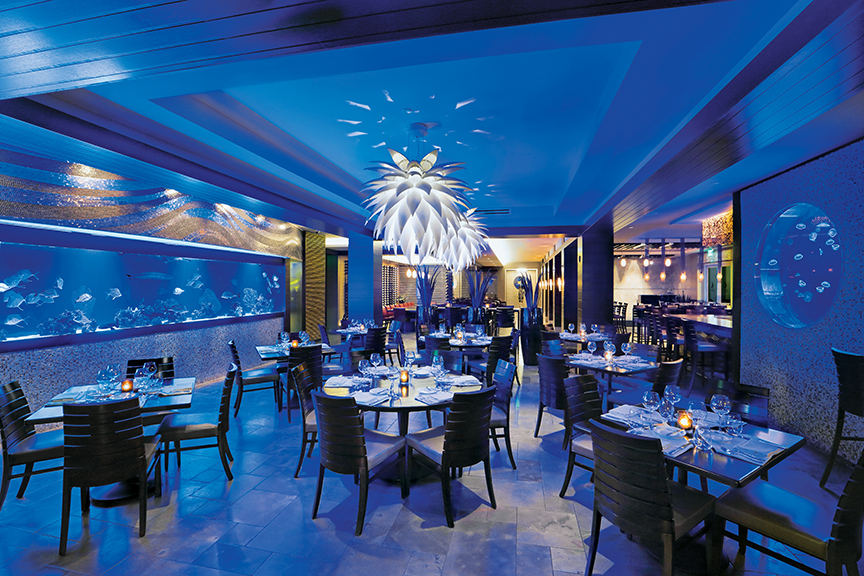
The Seagate Hotel & Spa
© DominicMiguel Photo
Real Estate Snapshot: Tampa Bay Area
Trend: The market is no longer so reserved, but still a bargain by Miami standards.
Clientele: Real estate developers, old money Floridians, newcomers looking for an alternative to South Florida.
Signature Property: Offered at $15.9 million is a historic oceanfront estate in Clearwater, with 23,900 extravagantly appointed square feet.
Settling Down
In addition to luxurious overnight accommodations, Florida leads the nation in branded residences with all the amenities of a five-star hotel. Now that Fort Lauderdale, once the capital of spring break, has grown up, the 22-story Four Seasons Hotel & Private Residences is rising over the oceanfront. More than $100 million in sales have already occurred for residences scheduled for completion in 2020. A four-bedroom, 4,200-square-foot unit is currently priced at $7.7 million.
Fortune International Group, whose development projects include the glitzy Jade Signature in Sunny Isles Beach and Auberge Beach Residences & Spa in Fort Lauderdale, responds to worldwide demand for the South Florida luxury lifestyle. President & CEO Edgardo Defortuna reports, “Developers look to differentiate themselves by bringing in international architects to create unique amenities and products.” He believes the scarcity of sites in Greater Miami and the extension of the Brightline high-speed rail project will encourage investment in other regions of Florida.
Even for a weekend, luxury is taken seriously at Aqualina Resort & Spa in Sunny Isles Beach, but there is also an opportunity to move permanently into the Mansions at Aqualina or forthcoming Estates at Aqualina. Almost ready for occupancy is the Mansions’ $38 million Palazzo del Cielo (“Palace in the Sky”) penthouse that includes complimentary use of a Rolls-Royce or Lamborghini.
Fortune International Group’s Defortuna reports that branding of residential towers, pioneered by hospitality companies, is now attracting other iconic names — Porsche and Aston Martin from the automotive industry, Armani and Fendi from the fashion world — to convey exclusivity.
Real Estate Snapshot: Greater Miami
Signature: Jaw-dropping oceanfront estates; penthouses in towers designed by “starchitects.”
Clientele: Hedge fund managers, pro athletes, international entrepreneurs.
Highest-Priced Property: 14,000 square feet of Neo-Classical opulence on 2.38 lushly landscaped acres in Coral Gables, offered at $55 million.
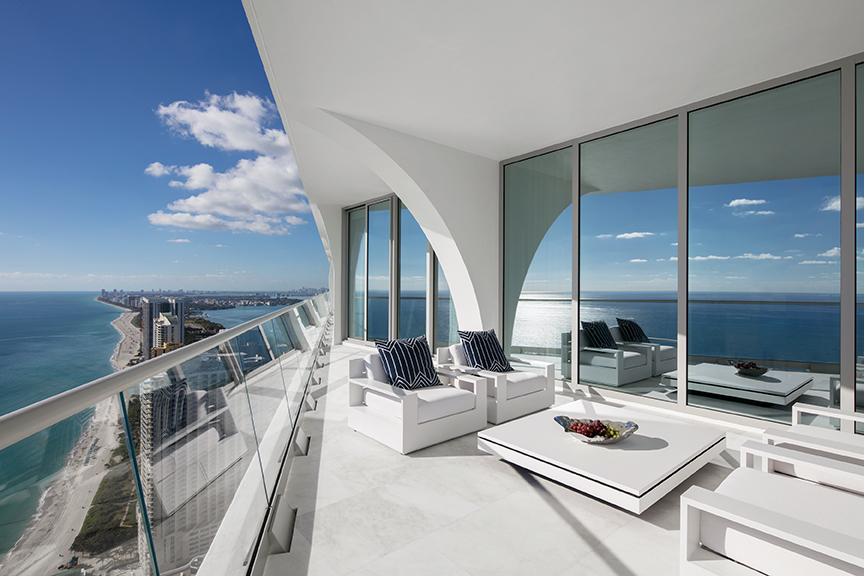
Jade Signature in Sunny Isles Beach
Photo by DBOX
Retail Therapy
With annual events like Miami Fashion Week and Miami Swim Week, designers and fashionistas are focusing their attention on Florida, where Latin influences are fused with European themes to arrive at cutting-edge fashion design. Local boutiques, from Key West to Pensacola, reflect that creative energy.
Alexis Barbara Isaias, who co-founded the trendy Alexis fashion label with mother Ana Barbara in Miami, reports the city’s fashion cred has evolved. “Miami was stereotyped as a sexy beachwear city, not a place to debut a fall collection,” says Barbara Isaias, but insists the Miami Design District, Art Basel and new fashion education programs are changing perceptions. “There’s a lot to inspire designers” says the young entrepreneur of her hometown, citing the climate, bold colors and vibrant cultures, and believes the industry will eventually spread throughout Florida.
There are luxury shopping destinations scattered throughout Greater Miami, including Aventura Mall and Bal Harbour Shops. Art, fashion and interior design intersect at the Miami Design District, where iconic labels Bulgari, Givenchy and Tom Ford compete for attention with art galleries and high-end home furnishing showrooms.
Worth Avenue in Palm Beach has been called the “Rodeo Drive of the East,” sharing many exclusive designer boutiques with Beverly Hills’ famous shopping street. Escada, Chanel, Jimmy Choo, and Louis Vuitton are just a handful of the rarified fashion labels found on this lovely sun-drenched lane.
Despite the emergence of smartwatches, demand for ultra-luxury handcrafted timepieces is sizzling. With prices rivaling Italian sports cars, no brand is hotter than celebrity-favored Richard Mille, famous for its avant-garde aesthetics. A Richard Mille boutique is found at Miami’s Brickell City Centre, which also hosts a branch of Westime, a Beverly Hills retailer whose 50-plus brands of Swiss watches include Audemars Piguet, Greubel Forsey and Hublot. Company President Greg Simonian, who clearly appreciates the sophistication of his new clientele, states, “I’m continually reminded of how many clients we already know in South Florida because they travel the world and have shopped at Westime in California.”
A watch is not the only thing you can wear on your wrist that is worth more than a typical Florida condo. Creating extravagant bracelets is Lugano Diamonds, which arrived on Worth Avenue last year, breaking into the Palm Beach market after establishing boutiques in Newport Beach and Aspen. In Naples, Gucci, Louis Vuitton and De Beers occupy storefronts at Waterside Shops.
Tiffany & Co., Burberry and Hugo Boss are among the 200 stores at Tampa’s International Plaza & Bay Street, anchored by Neiman Marcus. And in Orlando, names like Prada, Versace and Ferragamo elevate the suburban shopping experience at The Mall at Millenia.
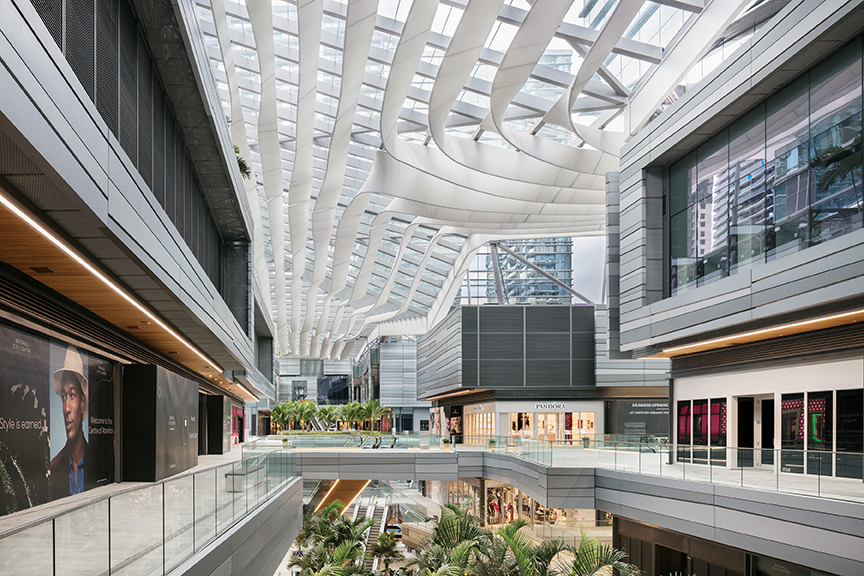
Miami’s Brickell City Centre
Real Estate Snapshot: Naples
Trend: Increasingly opulent oceanfront homes competing with more prestigious Atlantic Coast markets.
Clientele: Retired entrepreneurs and Fortune 500 execs, Miami expats.
Highest-Priced Property: 16,000 square feet of European-style elegance with beachfront exposure, offered at $49.5 million.
For the Sport of It
Florida is home to numerous major league teams, high-profile PGA events and some of the nation’s top collegiate programs, but spectators are not the only ones having fun. None of Florida’s 21 million residents live more than 90 minutes from the ocean — not to mention the state’s 30,000 lakes and network of waterways — so watersports are a part of everyone’s life.
Sailing in Florida can take many forms, from sport fishing off the coast of Destin or Panama City to boarding opulent yachts whose amenities rival luxury hotels. For those dreaming of jetting across Biscayne Bay like Sonny Crockett, Florida is the best place to acquire a high-performance speedboat.
South Florida is one of the centers of the yachting world, offering a short voyage to hundreds of Caribbean islands ripe for exploration. Brokers are currently experiencing an explosion of demand for larger, faster and more flamboyant vessels with prices equivalent to oceanfront estates. For those interested in a short-term relationship, a glamorous 230-foot Benetti superyacht — complete with eight staterooms, gym, Jacuzzi, and crew of 27 to pamper the guests — can be chartered for about $500,000 per week.
With more courses and more touring PGA professionals residing there than any other state, golf is practically a religion in Florida. “Florida remains a world-class destination for golfers, thanks to the year-round sunshine and mild weather, as well as the variety of golf courses offered throughout the state,” says Jeremy Wiernasz, general manager and director of golf operations at the multi-course PGA Golf Club in Port St. Lucie.
Offering 160-plus golf courses, Palm Beach County proclaims itself “Florida’s Golf Capital,” undeterred by Naples’ bold assertion that it is the “Golf Capital of the World.” Nobody disputes the game is an economic force statewide, generating about $9 billion annually to Florida’s economy, even more than theme parks. Florida Gulf Coast University Professor of Economics Christopher Westley reports, “The development of a corporate culture — with capital and labor moving here from higher tax and regulation states — has resulted in greater demand for golf.”
Further reflecting the synergy between golf and real estate in Florida, several homes lining the fairways at the Nicklaus-designed Bear’s Club in Jupiter are on the market for nearly $10 million. Identified as among the most exclusive courses in the world by Forbes is Key Largo’s Ocean Reef Club, where members enjoy a private airstrip, 175-slip marina and two impeccably manicured championship-caliber courses. Adjoining homes can command in excess of $15 million.
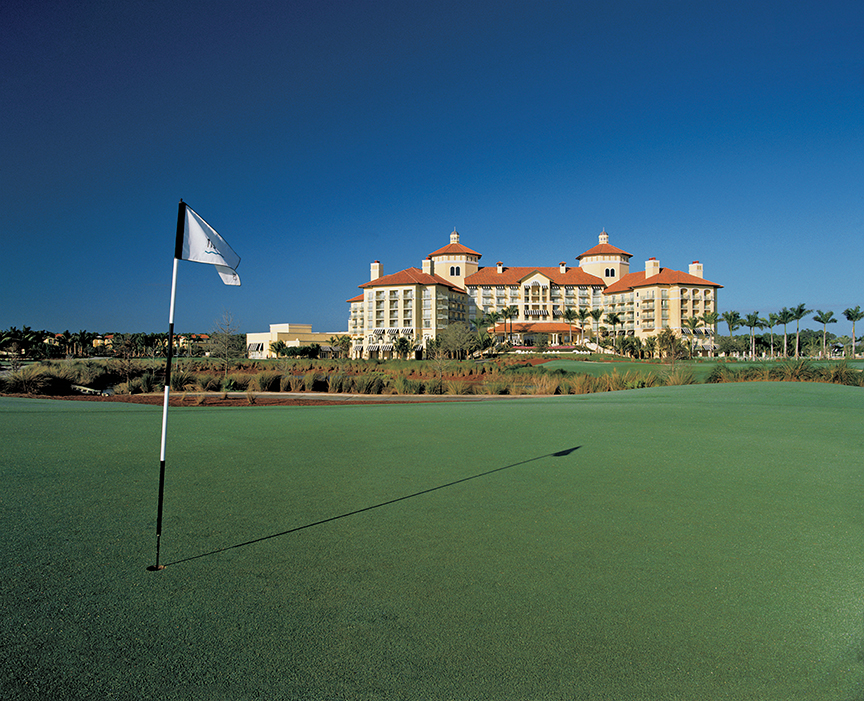
The Ritz-Carlton Golf Resort, Naples
Photo courtesy of Ritz Carlton Naples
Frequently ranked by golf journalists as the best course in the state, Juno Beach’s Seminole Golf Club is so elite it reportedly turned down golf legend Jack Nicklaus for membership. Sandwiched between Ocean Drive and the Atlantic surf, the estates surrounding the course are predictably palatial.
For equestrian sports, Florida is unrivaled. There are thoroughbred racing venues in the Tampa Bay Area and Greater Miami (some with casinos). Many of America’s most legendary horses, including Triple Crown winners Affirmed and American Pharoah, have connections to Ocala, a northern Florida city nicknamed “Horse Capital of the World.” Its hunter/jumper events draw competitors from around the globe, and multimillion-dollar ranches reflect the economic clout of the community’s biggest industry.
The Village of Wellington, outside Palm Beach, hosts the Winter Equestrian Festival, where 8,000 horses compete for more than $9 million in prize money. As one of America’s premier equestrian communities, Wellington home prices regularly gallop past $12 million in price while some ranches command $30 million.
The “Sport of Kings” also has a presence in Wellington, where the 250-acre International Polo Club Palm Beach hosts the prestigious U.S. Open Polo Championship. The accompanying social scene involves the consumption of Champagne and caviar at fêtes that sometimes make the matches feel like an afterthought.
Real Estate Snapshot: Palm Beach
Signature: Gated Mediterranean-inspired estates with ocean frontage.
Clientele: Old money, both native Floridians and New York elites settling in for the winter.
Highest-Priced Property: Over 28,000 square feet of classical elegance on the ocean, priced at a staggering $109.5 million.
Cultivated Communities
Once dismissed as a sleepy state reserved for leisurely rounds of golf or perpetual sunbathing, Florida has assembled a world-class portfolio of cultural institutions. Sarasota is known for sugar-white beaches, but The Ringling, an art museum and Venetian-style palazzo built by one of the founders of Ringling Brothers Circus, puts the city on the arts trail. St. Petersburg, long burdened with the reputation as an overgrown retirement community, has developed a robust cultural scene headlined by the Salvador Dalí Museum.
The largest performing arts venue in Florida is the Straz Center in Tampa, but Miami’s Adrienne Arsht Center hosts the New World Symphony, Florida Grand Opera and touring musicals. In 2002, Swiss-based Art Basel added Miami Beach to its exclusive calendar of events and the trendsetting festival has helped the city burnish its status on the world’s art stage.
Other cultural attractions in the state’s largest city include the Pérez Art Museum Miami and the spectacular Vizcaya Museum & Gardens on Biscayne Bay. Executive Director/CEO Joel Hoffman maintains his institution inspires people to embrace the natural beauty and cultural vitality of its host city. “Today, Miami represents a global perspective with limitless creative and artistic viewpoints and experiences,” he says.
The Miami skyline, with buildings from celebrity architects Norman Foster, Frank Gehry, Herzog & de Meuron, and Zaha Hadid, reflects the city’s dominance in the visual/interactive art of architecture. It is also a testament to a competitive luxury real estate market in which high-rise developers showcase world-class design to sell condos at a premium.
Miami is not the only Florida city where architecture contributes to the local heritage. Sarasota, nationally recognized for its Mid-Century Modern design, is the equivalent of a drive-thru museum, while both the natural environment and ethnic diversity foster a culture of creativity in Jacksonville. St. Augustine, the oldest city in the nation, showcases Spanish, French and English architecture.
Art collectors appreciate the Sunshine State’s generous clusters of galleries, such as Duval Street in Key West, Las Olas Boulevard in Fort Lauderdale, downtown Jacksonville, and Gallery Row in Naples. Tallahassee’s Railroad Square is home to more than 50 studios and galleries, while resident artists in St. Augustine are inspired by the city’s 450-year history.
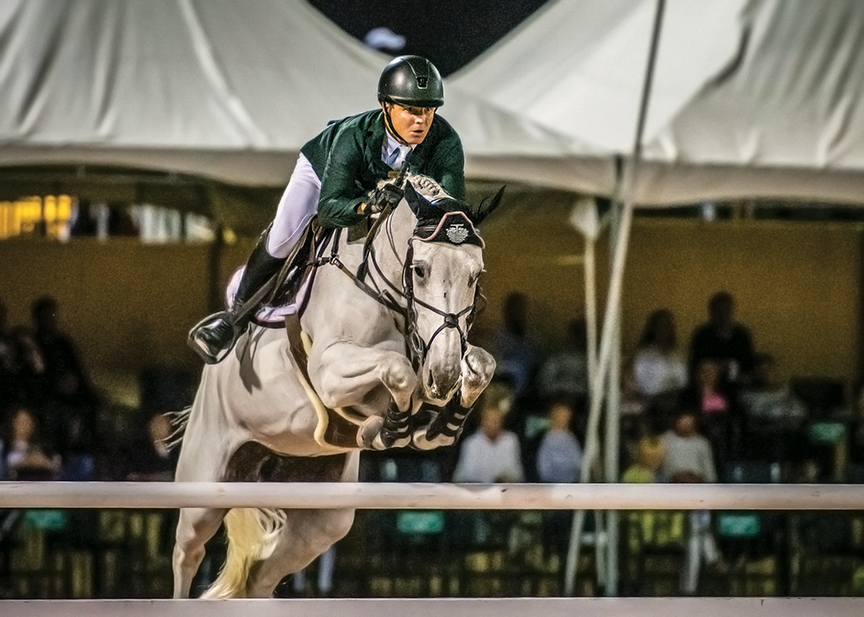
For equestrian sports, Florida is unrivaled.
Real Estate Snapshot: St. Augustine
Signature: Traditional villas that complement the city’s unique heritage.
Clientele: Affluent history buffs with little interest in showing off; old-time Augustinians.
Highest-Priced Property: Offered at $6.5 million is a nearly 8,000-square-foot villa on the Matanzas River.
Flavors of Florida
“Another day, another country,” was how the late Anthony Bourdain described Miami on CNN’s Parts Unknown. “You can eat your way across the Caribbean and through all of Latin America, and then over to Africa if you’d like. It’s all there,” he said. Contemporary Floridian cuisine, in which classic technique is applied to eclectic ingredients, takes full advantage of that diversity while showcasing resources nurtured by the state’s farmers, ranchers and fishermen. And while you can score a satisfying Cuban sandwich for a few bucks, there are some bona fide luxury experiences awaiting diners in the Sunshine State.
At Victoria & Albert’s, the restaurant at Disney World’s Grand Floridian that put the Magic Kingdom on the culinary map, a tasting menu at the exclusive kitchen-adjacent chef’s table begins at $250 per person. Celebrity chef José Andrés brought molecular gastronomy and some wildly creative mashups (e.g. jamón ibérico and caviar “tacos”) to The Bazaar in South Beach, but his latest Miami restaurant, Bazaar Mar, offers a $225 tasting menu called “A Study of the Sea.”
Many award-winning wine lists do not offer a single bottle of revered Château Pétrus, widely considered the best of Bordeaux. But the extraordinary list at Tampa’s Bern’s Steak House — thick as a telephone book and backed-up by a cellar overflowing with a half-million bottles — offers more than a dozen vintages of Pétrus, several exceeding $5,000 per bottle.
The steaks at Bern’s are justifiably renowned, but for beef with a more exotic pedigree consider Prime 112 in Miami Beach, where an eight-ounce Japanese A5 Kobe filet is priced at $280. With just eight seats, Miami’s Naoe presents an exclusive, highly personalized sushi experience, but before even ordering a glass of sake, the meter starts running at $220 per person.
Real Estate Snapshot: Orlando
Signature: Sprawling Mediterranean-style homes, often lakeside, that are long on amenities, short on pretenses.
Clientele: Corporate execs and entrepreneurs, plus some Mouseketeers at heart.
Hot Property: Under construction in Four Seasons Private Residences at Disney World is an 8,500-square-foot Mid-Century Modern-inspired home, priced at $7.945 million.
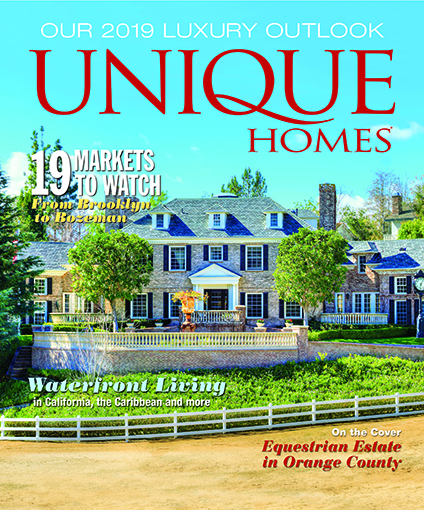
This story originally appeared in the Winter 2019 edition of Unique Homes Magazine.
Usually, it’s possible to sum up the outlook with a pithy phrase, but this year the luxury landscape is nuanced. Some markets sizzle; others simmer. Dynamic outside forces are at play and will potentially exert even more influence in 2019. In the background, the words recession and bubble are whispered, but most experts don’t see either in the cards, particularly for residential real estate in 2019.
“In most markets, I think it’s a case of ‘from great to good,’” says Stephanie Anton, president of Luxury Portfolio International.
“We’ve left a crazy market, and we’re moving into a more normal market,” shares John Brian Losh, chairman of Who’s Who in Luxury Real Estate. “We are beginning to see a more normalized market where supply is more equal to demand. Even in the luxury market, there are fewer bidding situations.”
According to Redfin, the number of competitive offers fell from 45 percent to 32 percent in 2018. Still, some ZIP codes in busy markets such as Boston, Washington, D.C., and the Bay Area remain hotbeds of competition, with the number of multi-bid scenarios increasing in the third quarter.
© istockphoto.com/JZHUK
Concerns about potential bubbles continue to percolate, but economists and other experts caution that fundamentals are strong and for real estate the next downturn will be different. “The recent tax reform and increased government spending have been a shot in the arm of the U.S. economy,” Tim Wang, head of investment research at Clarion Partners, explained to journalists at the Urban Land Institute’s fall conference. Wang and other experts expect the current expansion of the economy to continue through 2019, tapering to 2.5 percent next year.
“The housing market is following the trend in the overall economy, which needs to be noted because housing led the last downturn,” comments Marci Rossell, chief economist for Leading Real Estate Companies of the World, citing politics and global uncertainty as factors affecting real estate. This time, she says, “the casualties will be a little bit different, and because of that I don’t anticipate a meltdown.”
A cooling period is how Craig Hogan, vice president of luxury at Coldwell Banker Real Estate, characterizes the luxury climate, particularly in the second half of 2018. It’s a change Coldwell Banker has anticipated. “For any of us to think it was always going to be incredible is a little naive. The market is always going to fluctuate.” Hogan says it’s important not to interpret cooling as a market decline. “Cooling is a normal fluctuation, while a decline happens when the value of homes begins dipping.”
“There hasn’t been any great price suppression. Houses are staying on the market a little longer, but demand is still healthy,” says Losh.
“I think we’re still going to have a very strong year overall. I do believe we’re seeing price adjustments, and that’s okay. I think the key is watching how long properties are staying on the market and watching the size of the price adjustments,” observes Lesli Akers, president of Keller Williams Luxury International.
The average sales price for Sotheby’s transactions is up year over year. “From a luxury point of view, many of our companies are having a record year,” says Philip White, president and CEO of Sotheby’s International Realty. “Revenues are up, and in some cases pretty significantly,” he shares, noting that this number also reflects significant recruiting and/or acquisitions by some companies.
Recent stats show prices for upscale properties still increasing, but at a slower pace than past years. The number of sales in many places has dipped, but that differs by location, and in more than a few instances sales still exceed 2017.
Data from the Institute for Luxury Home Marketing (ILHM) shows median prices for single family luxury homes climbing 8.5 percent in November over October, while the number of sales fell 11.7 percent. For attached luxury properties, sales rose 2.6 percent with a 2.3 percent hike in prices.
Putting the current market for real estate overall into perspective, Lawrence Yun, chief economist for the National Association of Realtors, said, “2017 was the best year for home sales in 10 years, and 2018 is only down 1.5 percent year to date. Statistically, it is a mild twinge in the data and a very mild adjustment compared to the long-term growth we’ve been experiencing over the past few years.” Yun and other housing economists are quick to point out that new construction still hasn’t caught up with demand and foreclosure levels are at historic lows, factors which make the current climate different than the run up to the recession. NAR’s forecast calls for an overall price increase of about 3 percent in 2019 while the number of sales flattens or edges up very slightly.
Tale of Two Markets
Luxury’s story is a little different. “This year the luxury market has been a tale of two markets, for sure. Some areas are struggling, but most have been stronger than many realize, particularly in the first half of the year. As median prices have been slowing (and getting lots of media attention), the top 5 percent of many major metro markets nationally have been growing, with sales over $1 million up over 5 percent year over year and prices breaking records, in some cases by double digits. In the majority of markets, inventory has been selling faster. This is happening simply because of the health of the affluent,” observes Anton.
What sets this year’s outlook apart is that some places are having a strong, dynamic market, while others are seeing a softening, often only in specific price brackets. “The slowdown that started on the East Coast is having some effect on the West Coast. But it’s not a typical slowdown,” says Mike Leipart, managing partner of new development at The Agency. “Good product that has relative value is continuing to transact.”
The top three sales nationally in the third quarter, each over $30 million, occurred in Laguna, and seven out of the top 10 were in Southern California.
Rather than a general market malaise, Leipart characterizes the slowdown as more of a spec home problem. “It’s just too much has been built too fast, and not all of it is very good. The people who thought they could build a house for $15 million and sell it for $30 million are struggling.”
The higher price points in L.A. may see an even stronger downturn in the near future, suggests Bob Hurtwitz, owner of Hurwitz James Company, who typically works in the very high end. “There is a lot of inventory on the higher end, and luxury home buyers are usually in a position to wait and see. The drops in price are a lot more dramatic on property at $15 million and above, and buyers are aware of the benefit in waiting to see how it plays out. At the ultra-high end of $100 million or more, you are going to see and already are seeing huge reductions in price.” What’s hot in L.A.? Luxury penthouses in full 24-hour security buildings in prime areas, according to Hurwitz. “High-end penthouses will continue to be in-demand from foreign buyers purchasing as a part time home or for housing for their children.” Other price brackets, notably the $1.5-million to $3.5-million range, are busy, and, Hurwitz says, his agents are doing a lot of deals.
Perceptions of prices in Manhattan can be skewed, since recent closings are often for new construction for which contracts (and prices) were written a couple of years prior. Even though stats show sales decreasing, Ellie Johnson, president of Berkshire Hathaway HomeServices New York Properties, says, “There is still a healthy but steady group of buyers that are still out there in the high-end luxury landscape.” Additionally, New York is particularly keyed to Wall Street, and volatility in the stock market often means more money gets transferred into brick and mortar. “We’ve seen an uptick that we didn’t have at the beginning of the fall season,” Johnson observes. Despite a less than stellar real estate market at year end, New York remains a global gateway and the top city for global wealth.
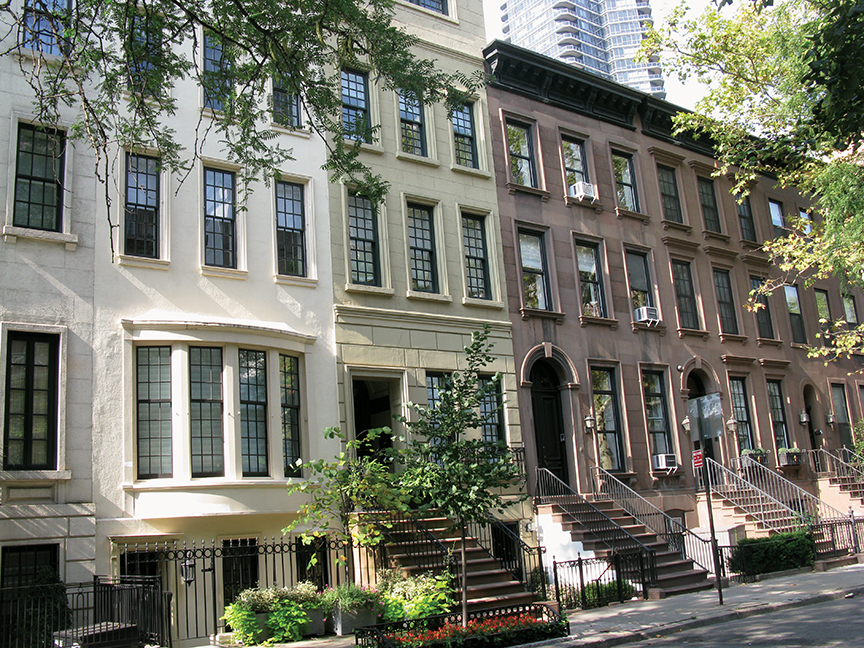
Manhattan
© istockphoto.com/CreativeImages1900
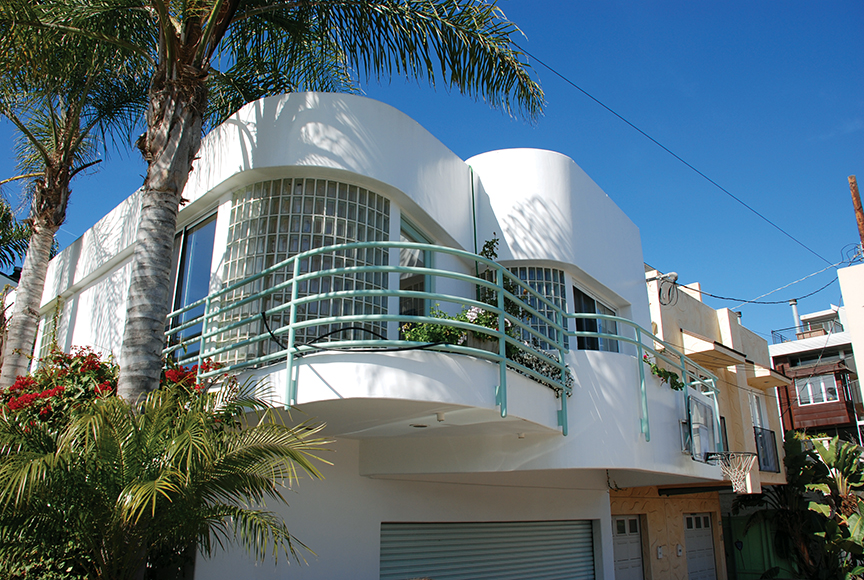
Los Angeles
© istockphoto.com/SeanPavonePhoto
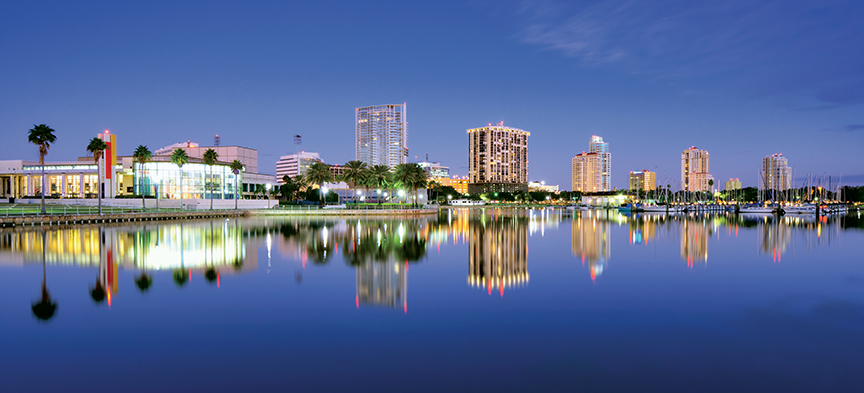
St. Petersburg
© istockphoto.com/SeanPavonePhoto
In other locations, particularly those with lower prices for upscale properties compared to California, Florida or New York, reports show strong interest and price growth. An acre in one of Atlanta’s prime addresses in Buckhead can demand as much as $1 million. It’s just one indication that luxury here continues to reach new price levels with considerable demand coming from outside the region, including buyers from California and Florida. Some relocate simply because they want a home in the city; others follow corporate moves. The city has also become a favorite for the film industry, which has become a $4 million industry. “It’s changing everything about this city,” says Debra Johnston with Berkshire Hathaway HomeServices Georgia Properties. Luxury really doesn’t begin until the $5 million threshold, says Johnston, but prices compared to Florida and California are reasonable.
At one time, it was thought it might take more than 20 years for Florida real estate to recoup from the recession. In October, the state tracked 82 consecutive months of price hikes for both single-family and condo-townhouse properties, with many cities showing double-digit increases in the number of sales. “The overall market in Florida, particularly higher-end areas such as Sarasota, Naples and Palm Beach, is definitely strong and stable. Maybe not as robust as say 2013 and 2014, but we haven’t had any major slide — except the economists talking about the market slowing down,” says Pam Charron with Berkshire Hathaway HomeServices Florida Realty in Sarasota.
“The St. Petersburg market seems to be performing differently than other Florida markets and other national trends,” observes Tami Simms with Coastal Properties Group, noting November sales skyrocketed over the prior year. “We have developed into a year-round market with luxury downtown condominiums in high steady demand.” Another sign of consumer confidence is lack of defaults on pre-construction sales. “When we experienced the crash, those buildings that had been sold out prior to completion experienced a significant number of defaults. We see none of that in this instance.”
Florida is one of several states including Texas and Nevada benefiting from changes in tax law. Tax changes not only force some to reevaluate where they live, but they also impact the margins of price brackets. “While it doesn’t mean people wholesale leave New York or San Francisco, marginal changes tickle up and trickle down to the next closest price level,” and it will take several years for that to be felt, says Rossell.
The New Market
“So many trends have taken place they are no longer trends, they are the new market,” observes Hogan, using new construction as one example. “It doesn’t matter where you go or who you talk to, new construction is part of the conversation.”
Global demographics will have a long-term impact. “What luxury is adjusting to is a different demographic worldwide. Those aging baby boomers are kind of done with big homes and the following demographic is 50-percent smaller,” Rossell says.
Changing demographics affect location and property type. “I think we’ll see increased demand for primary residences in traditional second home and resort markets. We are seeing this trend in select markets, as individuals who have the freedom to work remotely are opting to live in places where they feel their quality of life will be the best,” observes Anthony Hitt, president and CEO, Engel & Völkers Americas.
Summer 2019 will mark the most prolonged economic recovery since World War II, but wild cards including interest rates, a trade war and further instability could easily derail this expectation. However, there is a silver lining to the current market. Increasing inventories will bring some buyers back to the market and create more demand. “I think it’s going to a be a great opportunity. People will buy things that they haven’t considered, and they’re going to buy more of them. I think that’s been a big challenge. We’ve not had the inventory, and a lot of buyers kind of just fell out of the market because they didn’t feel like there really was one,” explains Akers.
ILHM President Diane Hartley believes 2019 will be a year of opportunity for both buyers and sellers provided they remain agile, innovative and adaptable to their local market influence.
This story originally appeared in the Winter 2019 edition of Unique Homes Magazine.
Every year we select locations to highlight as Markets to Watch. This year change is underway and we take a look at some top performers, others that are beginning to transition, and a handful of under-the-radar locations that are emerging.
Austin, Texas
On track for another record with sales up more than 3 percent, Austin’s luxury patina shines ever brighter. In October, the medium home value in Barton Creek increased to $1.02 million, making it the city’s first million-dollar neighborhood. Austin’s charms include no income tax to win over newcomers, but music and tech might be tops.
Bozeman, Montana
Bozeman might seem like a sleeper on this list, but with ranches, the Yellowstone Club and Big Sky country it’s an under-the-radar hangout for demi-billionaires and billionaires.
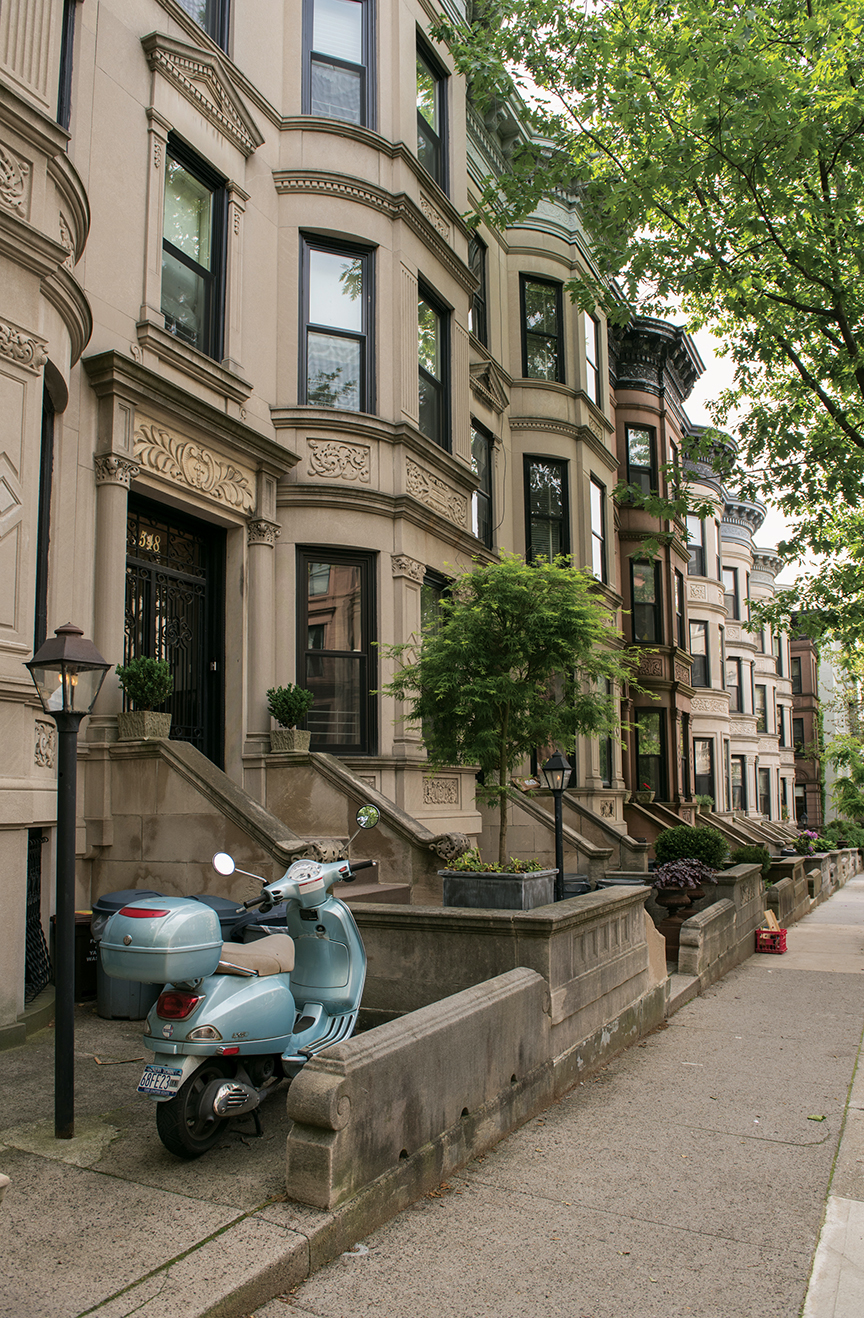
Brooklyn, New York
No longer second best! Buyers are making Brooklyn a first choice. Median prices in the most expensive neighborhoods hit the $1 million mark. Israelis, Chinese and Western Europeans also gravitate here. It’s no surprise this New York City borough is No. 2 on Urban Land Institute’s Markets to Watch.
©istockphoto.com/Auseklis
Chicago, Illinois
By August, the Chicago area recorded as many luxury sales as in all of 2016 or 2017. Sales of $1 million-and-up properties set a record in the third quarter with a 19-percent increase over 2017. According to RE/MAX, luxury is booming in the west loop area. Upscale suburbs trail the city. Lots of new condos and stunning new buildings open doors to more urban opportunities in a market that hangs in the balance.
Dallas, Texas
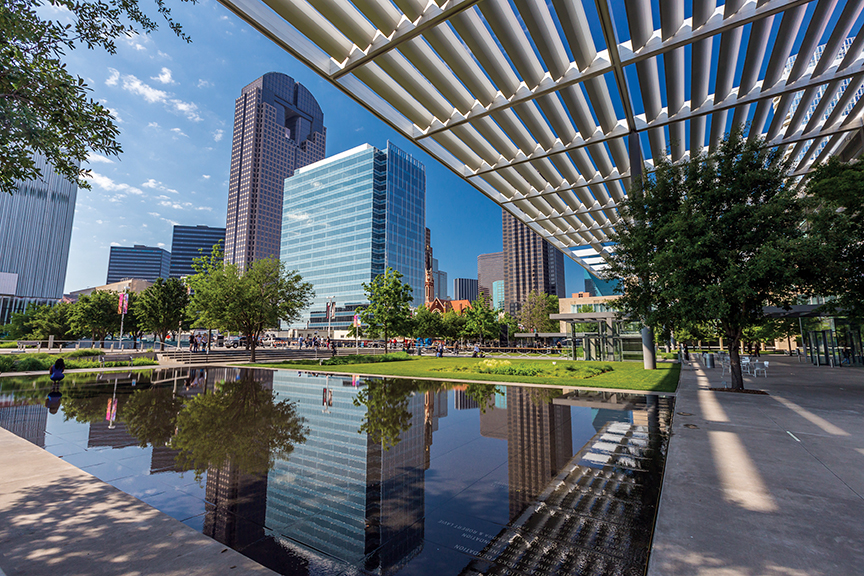
Few cities have charted a post-recession course as strong as Dallas and the city remains Urban Land Institute’s No. 1 location for overall real estate prospects in 2019. But the dramatic post-recession price increases are over, say economists. Moderating prices and adjusting inventories are positive indicators that that a move back to a normal market is underway.
© istockphoto.com/Kanonsky
Denver, Colorado
Real estate’s Rocky Mountain high isn’t over yet. Denver continues to rank in the top group on many lists. In the upscale bracket, a shift toward balance is underway with the inventory of $1 million-plus homes at about seven months. Year-over-year prices are up on average 9.29 percent. Boulder remains a sweet spot for luxury, ranking 10th among cities and towns with at least 10 neighborhoods considered million-dollar.
Las Vegas, Nevada
Projections call for appreciation as high as 10 percent this year. Nevada was the fastest growing state, with new platinum communities; forward-looking, innovative architecture; and spectacular views capturing the attention of buyers looking for lifestyle and tax relief.
Hilton Head, South Carolina
Coastal South Carolina and Georgia are ground zero for demographic shifts and the growing ability among the affluent to live wherever they want — a trend just taking off. New developments including Palmetto Bluff add to demand for the Hilton Head region.
Minneapolis, Minnesota
Moving toward balance. A long-awaited uptick in homes on the market is one of several hints of a market shift. Median prices reached a record high this fall, and homes still sell quickly. Still the inventory of homes for sale is one of the lowest in the country. Upper tier and move-up brackets are less competitive.
Northern Virginia
D.C. continues to be in the top group on watch lists but Amazon’s recent announcement makes real estate in Northern Virginia much more interesting. What the prospect portends for current homeowners is uncertain, but sure to make this a market to watch in 2019.
Park City, Utah
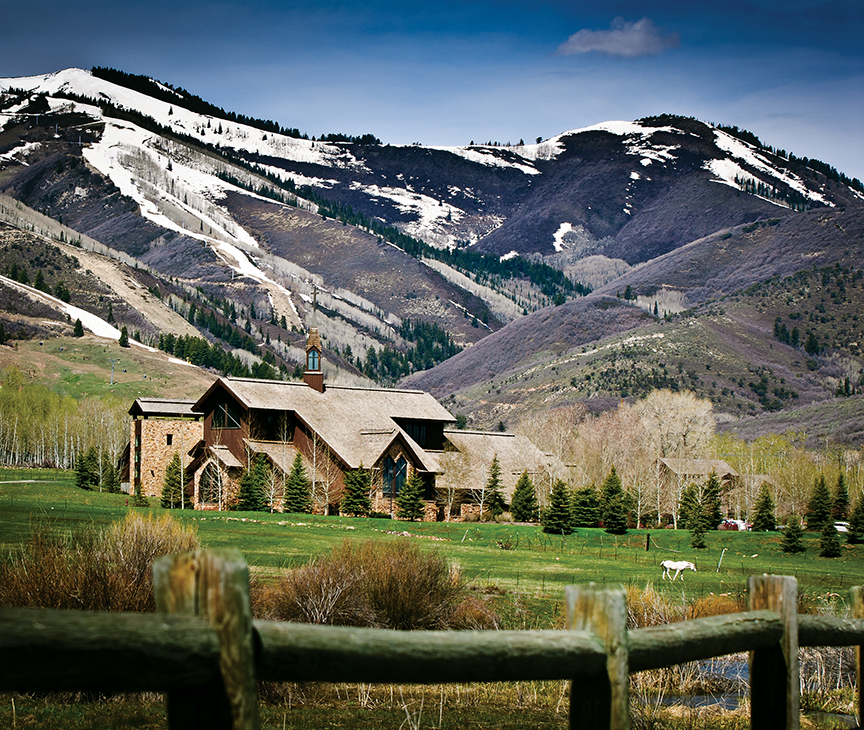
No longer just a ski hangout, this Salt Lake neighbor is luxury’s newest player. The most desirable neighborhoods see a shortfall of inventory. Land prices increased by 25 percent with the highest number of sales occurring at Promontory. Opportunities abound: new projects at The Canyons, a large expansion of Deer Valley, a $4 billion renovation of the Salt Lake airport and a bid for the 2030 Olympics.
Wikimedia Commons / Don Lavange
Portland, Maine
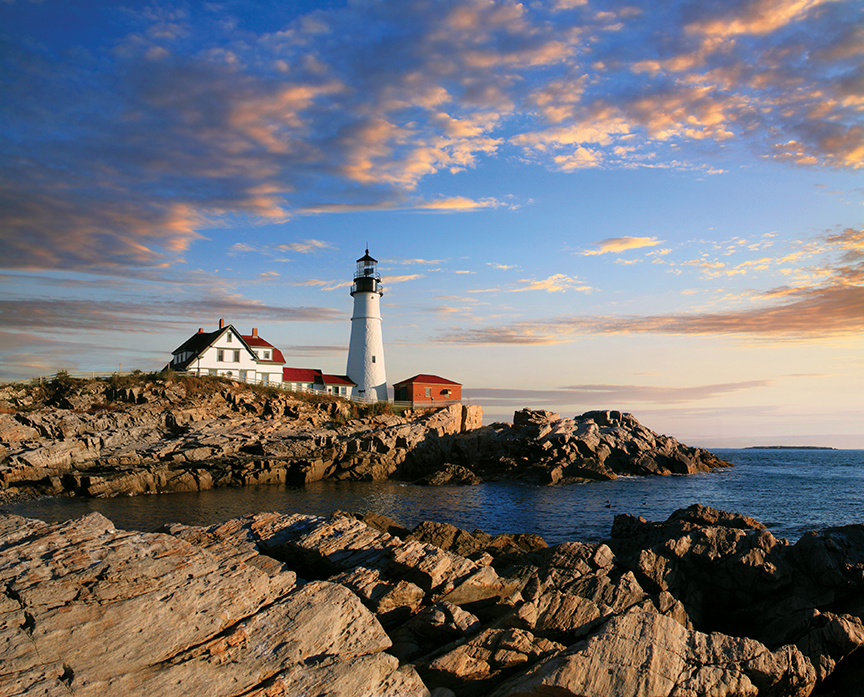
Beaches and skiing, does it get any better than that? Hipsters meet old money here. Ranked among the top 20 for entrepreneurs, the city has a growing tech industry and one of the best foodie scenes in the Northeast. Look for more new construction. Prices will continue to ease upward as more people discover this hidden gem.
© istockphoto.com/DougLemke
Santa Barbara, California
Opportunities for buyers in many California locales continue to increase as markets shift. Median prices in Santa Barbara in November were down more than 25 percent, which is good news for buyers. The area remains a prized luxury refuge and lower prices open the door for newcomers to enjoy one of the most unique locations in the U.S.
Sarasota, Florida
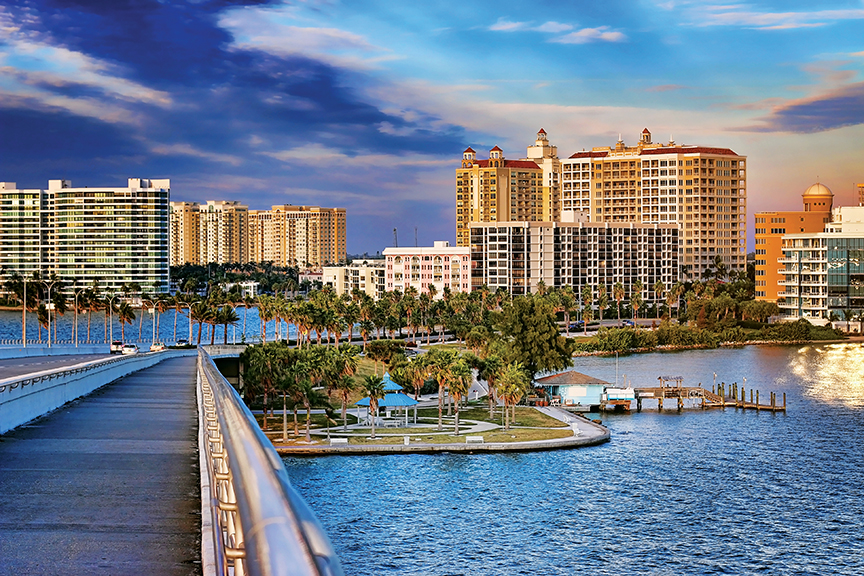
The city’s iconic waterfront is being reimagined with a vision to increase cultural programming and urban amenities. Median prices have been increasing steadily, up 25 percent since 2014. New construction means more inventory with more on the horizon. Agents report steady and growing interest in individuals from high tax states.
© istockphoto.com/KarolinaBorowski
Seattle, Washington
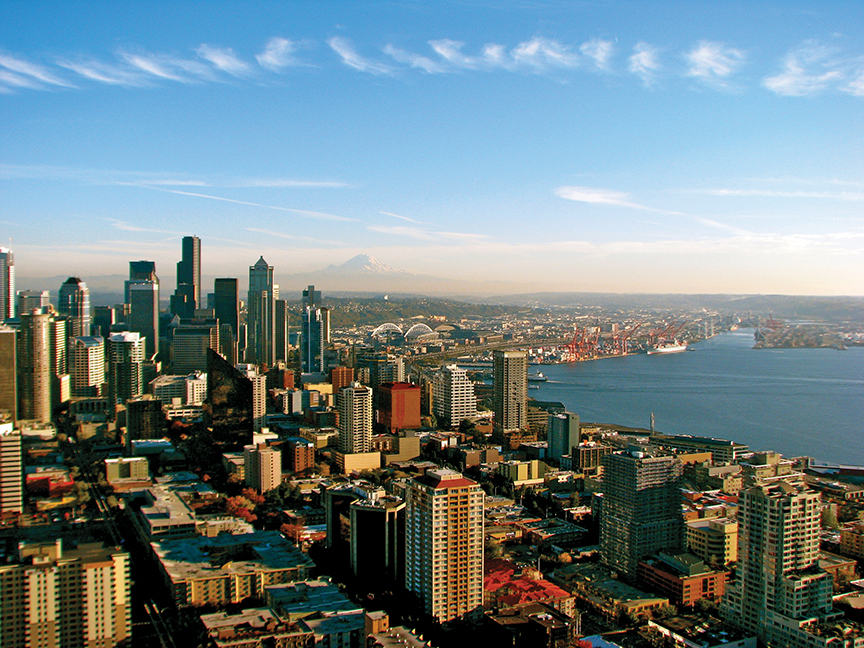
Happier times are ahead for buyers in Seattle with active listings up by 41 percent. Even though inventories are still slim, it’s a good indication the frenzy is over. Closed sales in November were down 28 percent. Homes continue to appreciate but the increase has slowed to 5 percent. For buyers and sellers this is definitely a market to watch. The city still is in top groups in many rankings, but the frenzy is over.
Wikimedia Commons / Jeff Gunn
Toronto, Canada
Canadian Baby Boomers and Millennials came together and turned up the heat on the luxury condos in 2018; single-family home sales decreased by as much as 44 percent. While the foreign buyers tax has reduced sales to overseas buyers, it’s also opening new opportunities for locals. Local buyers will continue to drive demand for condos here.
Resort Markets
Luxury’s top performers in 2018. Not only are residences in demand, but new resorts are raising the bar for luxury and reinvigorating current markets. New developments in Turks and Caicos, including the ultra-indulgent Gansevoort Villas, turn up the heat on interest in the Caribbean. Easy reach from the U.S. and private enclaves generate new interest in the Bahamas. Cabo San Lucas, Mexico is seeing new resorts and other regions along the Sea of Cortez are seeing new development. Mandarina in Nyarit is the site of One & Only’s first collection of private homes. Owning a private island continues to be an ultimate purchase and the Bahamas is ground zero.
Thanks to:
Austin Board of Realtors
Michael Saunders, Founder and CEO Michael Saunders & Company
Anthony Hitt, President and CEO, Engel & Völkers Americas
Aleksandra Scepanovic, Co-Founder and Managing Director of Ideal Properties Group
National Association of Realtors
Northwest Multiple Listing Service, Kirkland, Washington
RE/MAX Canada
Trulia
Zillow
This story originally appeared in the Winter 2019 issue of Unique Homes Magazine.
Replay Destinations, a fully integrated destination development company, has appointed Studio Piet Boon, an internationally renowned design studio, as lead designer for Half Moon Bay Antigua, the first new resort and real estate development of its kind in the Caribbean.
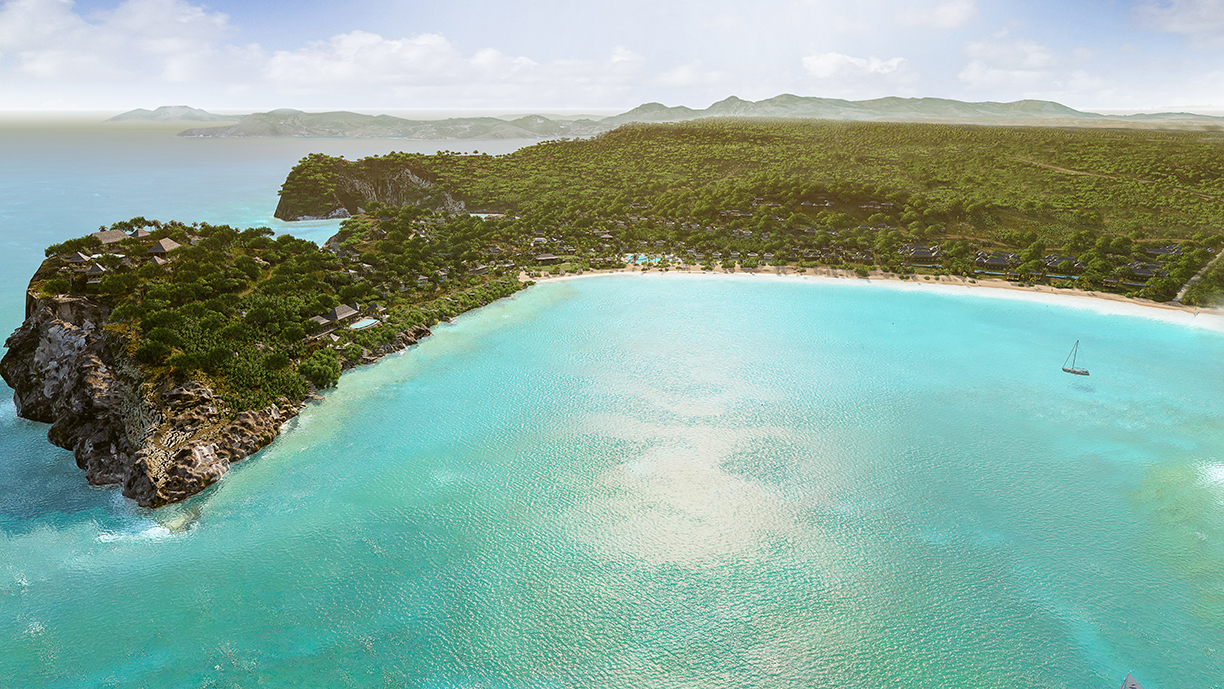
Acclaimed for award-winning luxury hotel and residential projects in Europe and the United States, the Amsterdam-based firm will lead the overall architectural and interior vision for the new Rosewood Half Moon Bay, set to take shape on 132 pristine acres surrounding one of the world’s most celebrated beaches. In collaboration with preeminent Caribbean architecture firm, OBMI which is handling architecture for the Rosewood Half Moon Bay, Studio Piet Boon will introduce a new understated contemporary design by layering the sensibilities of traditional Caribbean architecture with a modern and distinctly environmental aesthetic.
Established in 1983 by Dutch designer Piet Boon, the company’s distinctive design sensibility has also extended into custom furnishings, fixtures and many other interior related products.
Conceived and orchestrated by a masterful team of designers and rooted in Caribbean history, Half Moon Bay Antigua will redefine the Caribbean paradigm by introducing a new level of ultra-luxury that will resonate with our discerning international clientele.
Set to open in 2021, Rosewood Half Moon Bay will feature 47 pavilion-style suites, including a three-bedroom presidential suite, and will be flanked by a collection of Rosewood Residences, each thoughtfully designed and architecturally stunning showcasing captivating views.
Amenities will cater to the desires of today’s global explorer, with unobstructed ocean views, private infinity plunge pools, hammocks, open-air baths and shower gardens with live orchid walls that blur the boundaries between indoors and outdoors. Studio Piet Boon will employ a natural design palate that will flow seamlessly from the resort to the residences connecting each experience to one another and to nature.
Half Moon Bay presents a once-in-a-lifetime opportunity to create something enduring, and I am honored to help shape the future of this magnificent place. It is an inspiring landscape that truly embodies all that is beautiful in the West Indies, from the crescent-shaped white sand beach and lush tropical plant life to the rocky bluffs and panoramic views. All of these natural elements allow us to provide experiences at Half Moon Bay Antigua that capture the island’s redefined effortless luxury as well as evoke a sense of timeless elegance.
Half Moon Bay Antigua is currently comprised of 10 of the rarest and most exclusive land parcels available for sale in the Caribbean. With prices ranging from $10 million to $25 million, the 10 premier estate lots will afford a limited number of buyers the opportunity to customize a showcase home set just steps from the beach or perched on a seaside cliff.
The crown jewel of the estate lots is the Mellon Estate, a three-acre parcel situated on a dramatic bluff overlooking the turquoise water below, formerly owned by philanthropist Rachel “Bunny” Lambert Mellon. Owners and resort guests will have exclusive access to the finest services and amenities, such as an on-site biodynamic farm, an iconic cliffside cocktail lounge and a Rosewood Spa, all just steps from one of the world’s most exquisite beaches.
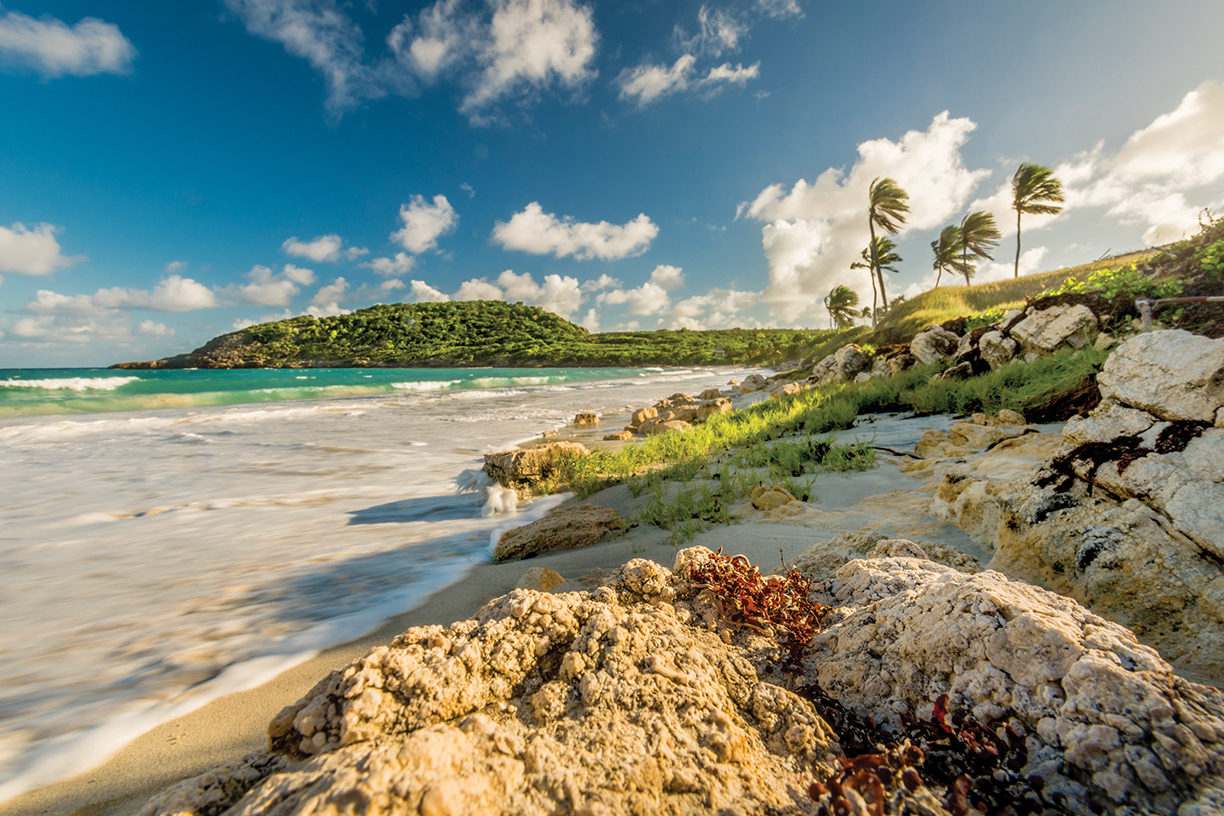
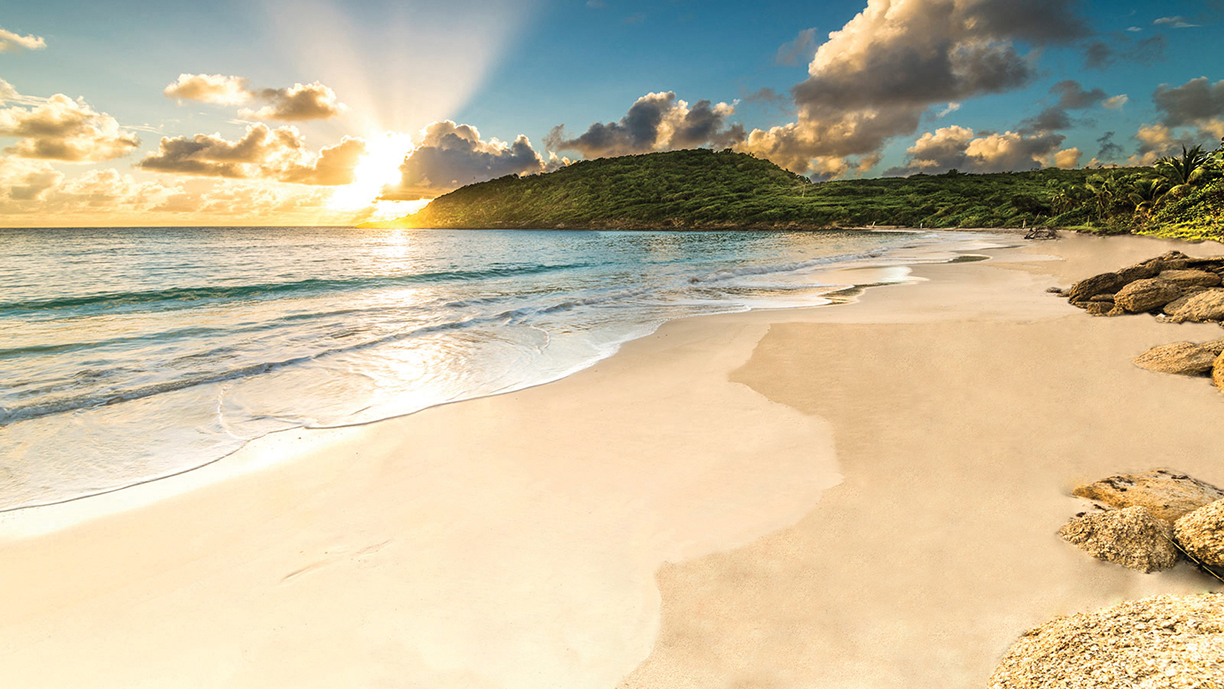
The site of the new Half Moon Bay Antigua development was previously home to Half Moon Bay Resort, one of the finest hotels ever built on Antigua back in the 1950s. The resort was frequented by notable names like Audrey Hepburn and Elton John, helping to establish Half Moon Bay as a global celebrity hot spot. With 3,200 feet of coral sand, Half Moon Bay Antigua is internationally lauded as one of the most beautiful beaches in the world, offering an unparalleled setting for what will be the most sought-after resort and residential community in the Caribbean.
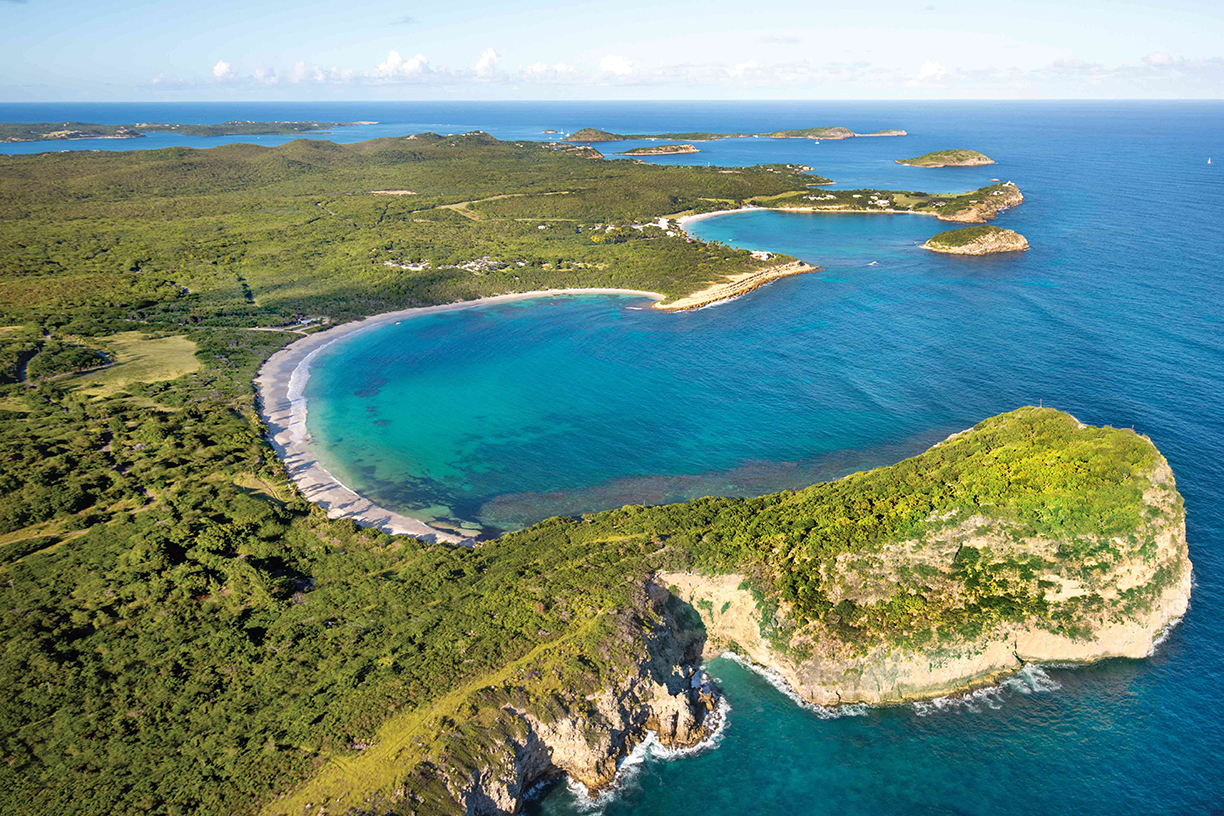
Photos courtesy of Half Moon Bay Antigua.
Nature in design is a trend that has gained momentum and continued in 2019.
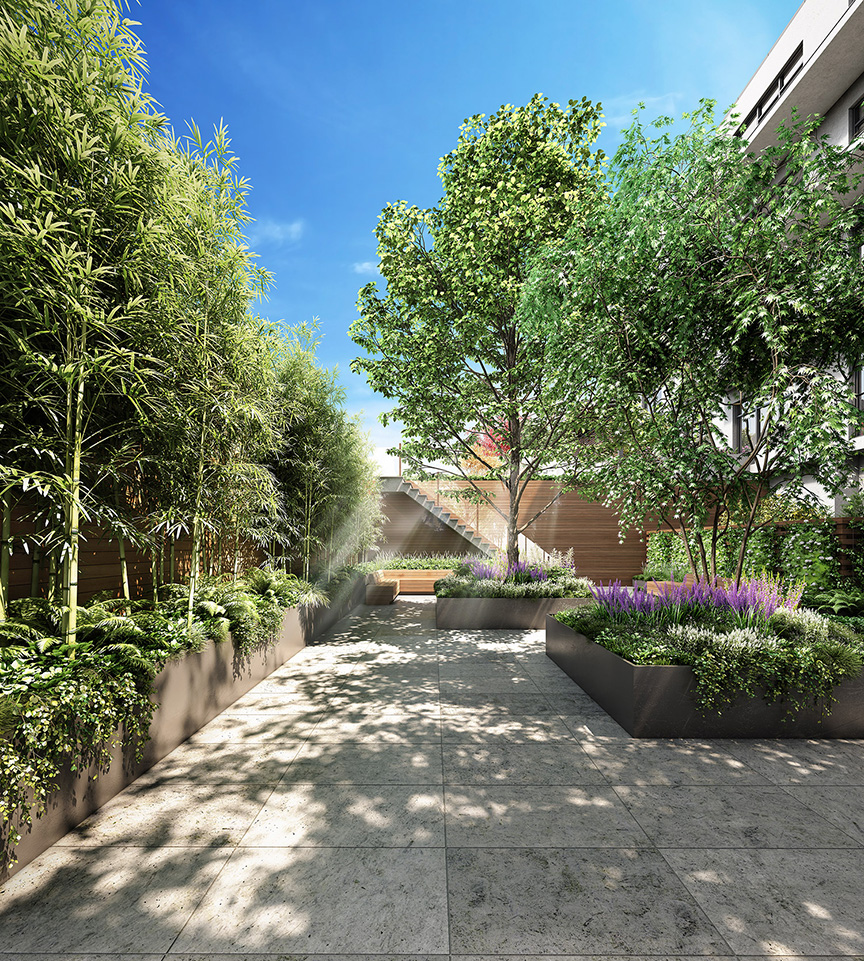
Photo courtesy of Arbor Eighteen
Finding a connection to nature may feel like an impossible task if you’re living in the city or simply lacking the space for a yard. Crowded parks and potted plants may not be the dose of nature that you are seeking. Thankfully, designers and architectures alike are taking the need for nature into consideration and incorporating green into designs and architecture — a trend that is growing in popularity. Blur the line between inside and out with these trends!
Walls of Greenery
The seamless transition between the inside and outside could make the city feel miles away. One way to make that connection is with walls of greenery and other plants, which can freshen and brighten a space. This type of addition can also soften a room that may be surrounded by concrete buildings and bustling sidewalks.
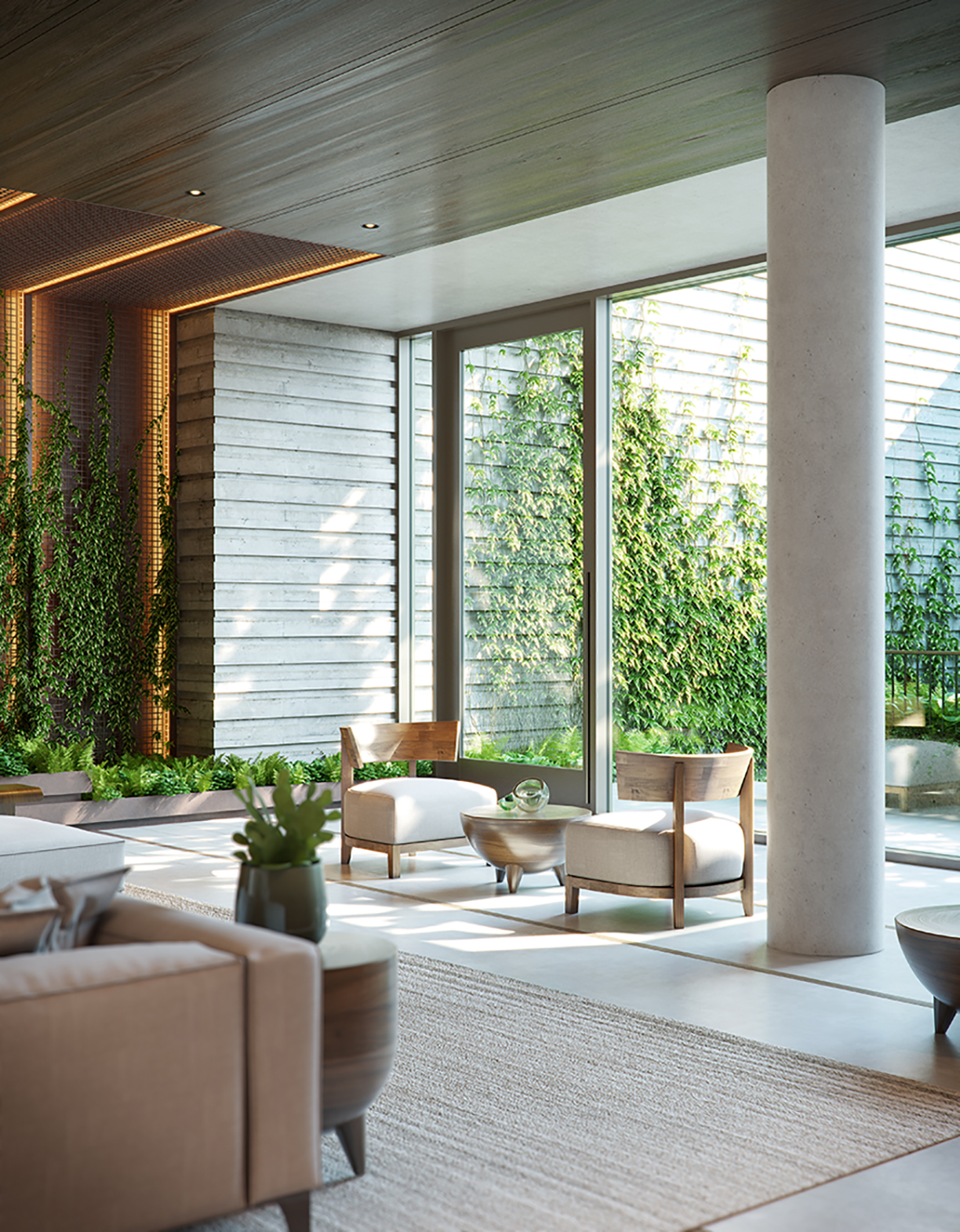
Photo courtesy of 561 Pacific
Designated Outdoor Space
City living can create a high demand for outdoor space that is tranquil and also functional. Designers are embracing the idea of green space that is outdoors and accessible. A common space that has a park-like feel has become a popular trend. The addition of natural elements brings a calming quality to an area.
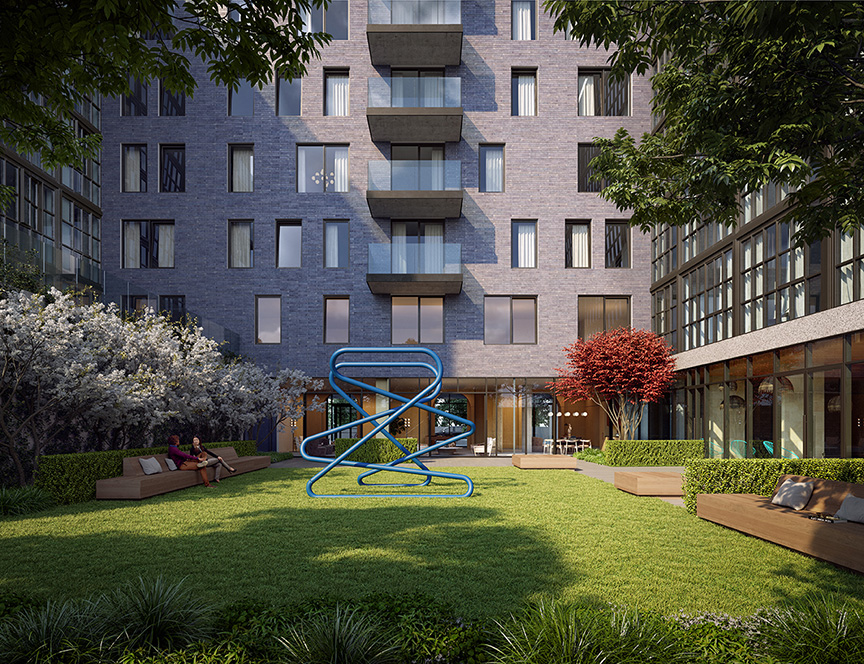
Photo courtesy of Galerie
Nature by the Poolside
Pools and spas are not an uncommon amenity for developments and resorts. However, designers and architectures are incorporating nature, such as native plants into luxury pool and spa areas to give them a softer touch. Rather than surrounding the pool with umbrellas and other structures, a few palm trees give a much more relaxed feel.
Glimpse the Outdoors
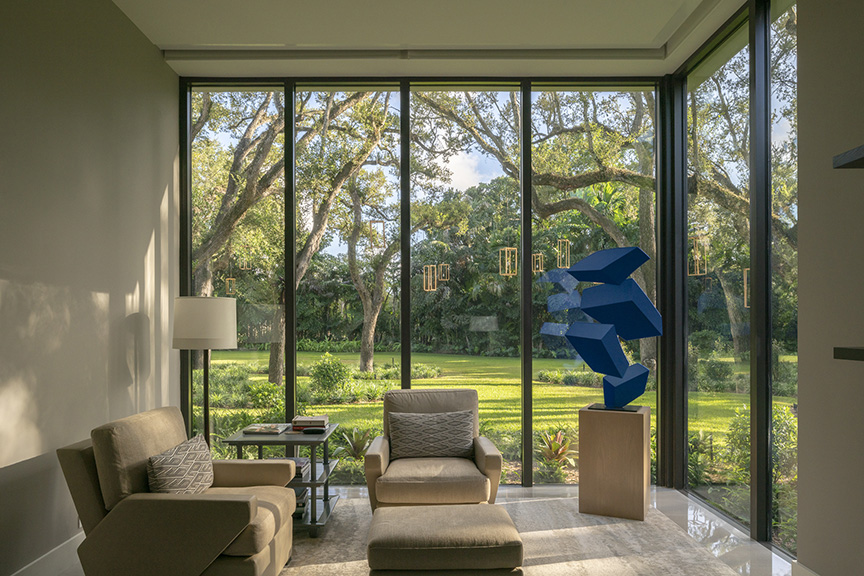
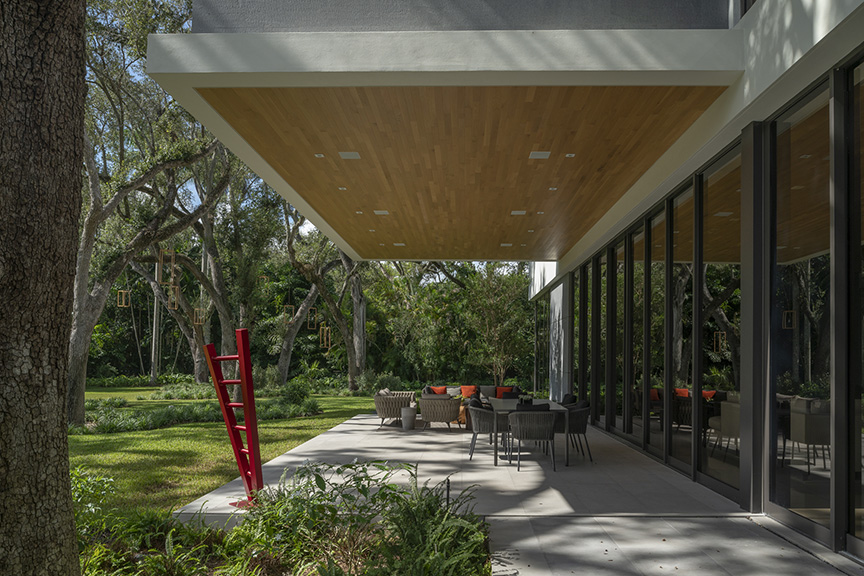
If you are lucky enough to have your own outdoor space, floor-to-ceiling windows are a way to bring the outside into your living area. Even a distant view of nature can transform the feel of your home. Walls of windows not only reveal the outdoor environment making it feel within reach but it also allows for plenty of natural light to find its way inside.
Photos courtesy of Touzet Studio
NYC projects represented by Halstead Property Development Marketing
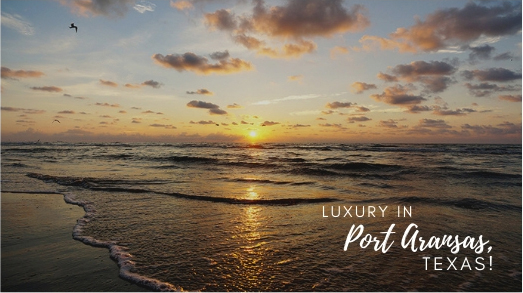
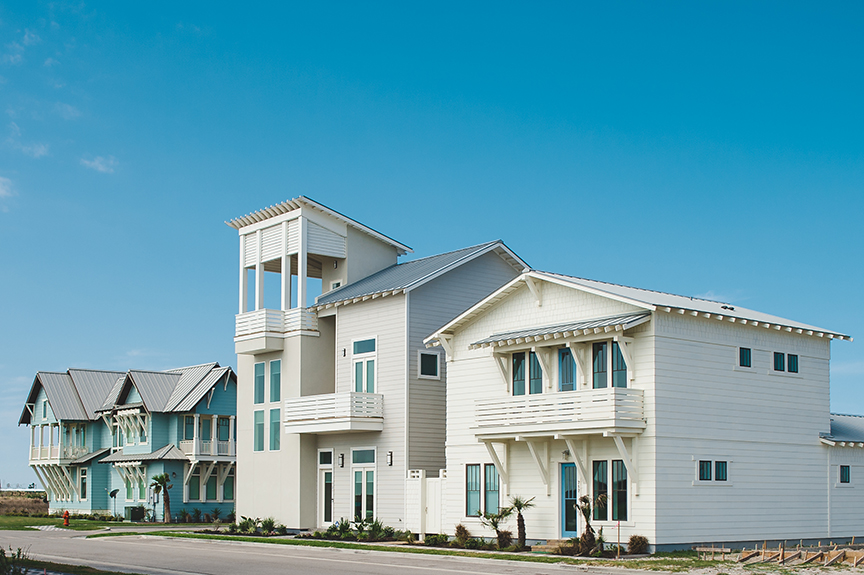
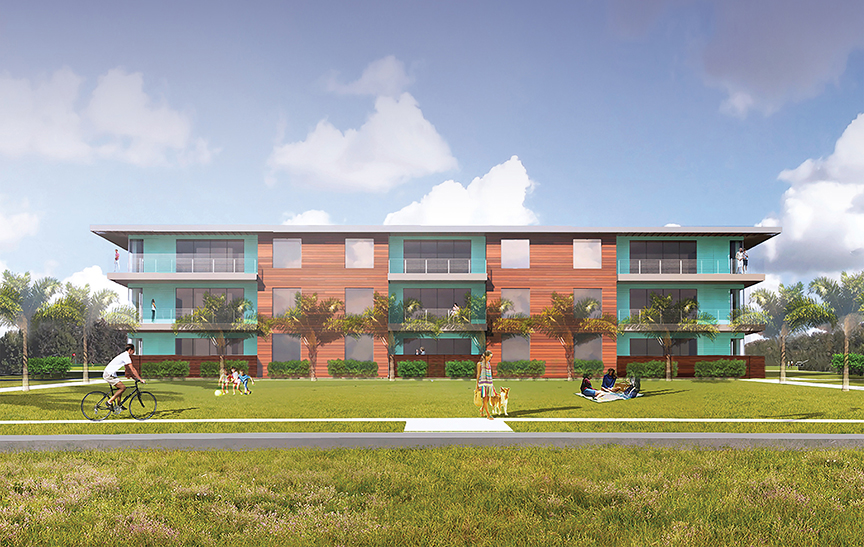
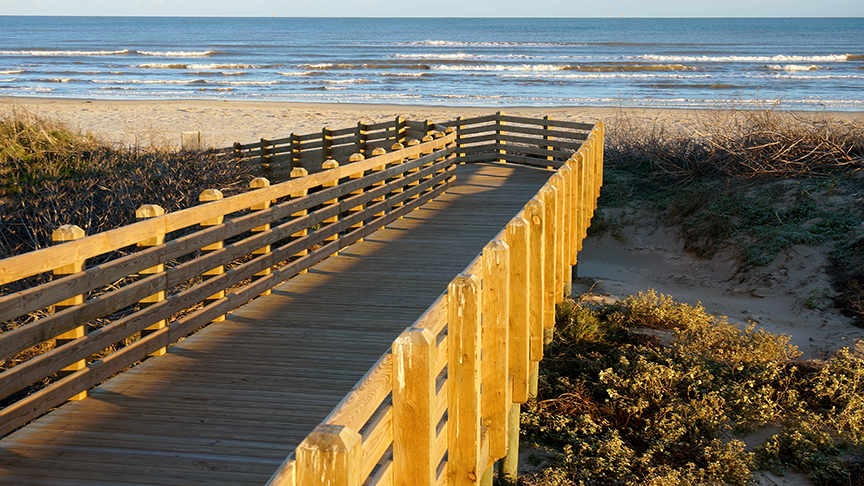
Sunflower Beach Resort & Residences is a beach development that has easy access to the Gulf of Mexico and makes an impression with luxury details and a friendly community.
Sunflower Beach Resort & Residences in Port Aransas, Texas greets you with sun, open spaces, a crisp ocean breeze, and comfort. The newly growing beach community offers a variety of luxury real estate options that will attract families and more. A permanent residence here appeals to those who crave the year-round nice weather, proximity to the beach, and the small-town feel. Equally appealing is the option to generate an income with a great rental program that is successful throughout Port Aransas.
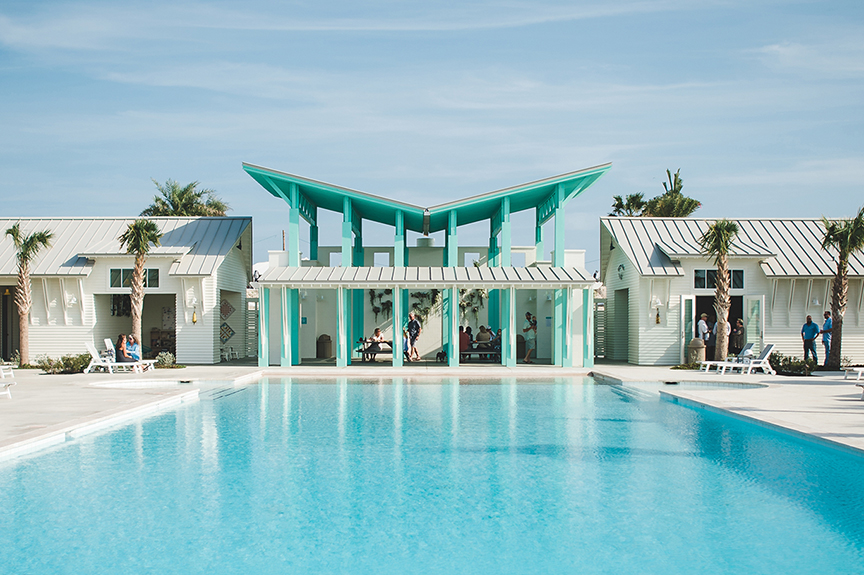
The Beach Club
The main amenity at Sunflower — The Beach Club — is now open and the whole family will relish in the specialized perks. A luxury pool is included along with cabanas, an event pavilion, and a kid’s lounge. The separate adult pool and the Bar & Grill are what make The Beach Club ideal for everyone. Ryan Ritcher, from on-site sales at Sunflower Beach Resort & Residences, says, “The club is the perfect way for the whole community to enjoy themselves and get to know each other.”
Ashleigh Robertson from on-site sales also speaks to the sense of community at Sunflower Beach, “It’s a big family here. This is the kind of place where it’s safe enough to send your kid to school on their bike.”
Ritcher explains that at the sales center they make it a point “to really get to know each individual buyer and understand what they’re really looking for.”
Real Estate
Real estate options include custom homes with modern and approachable design. Coastal lots are available with stunning natural features and easy, driveable access to the beach.
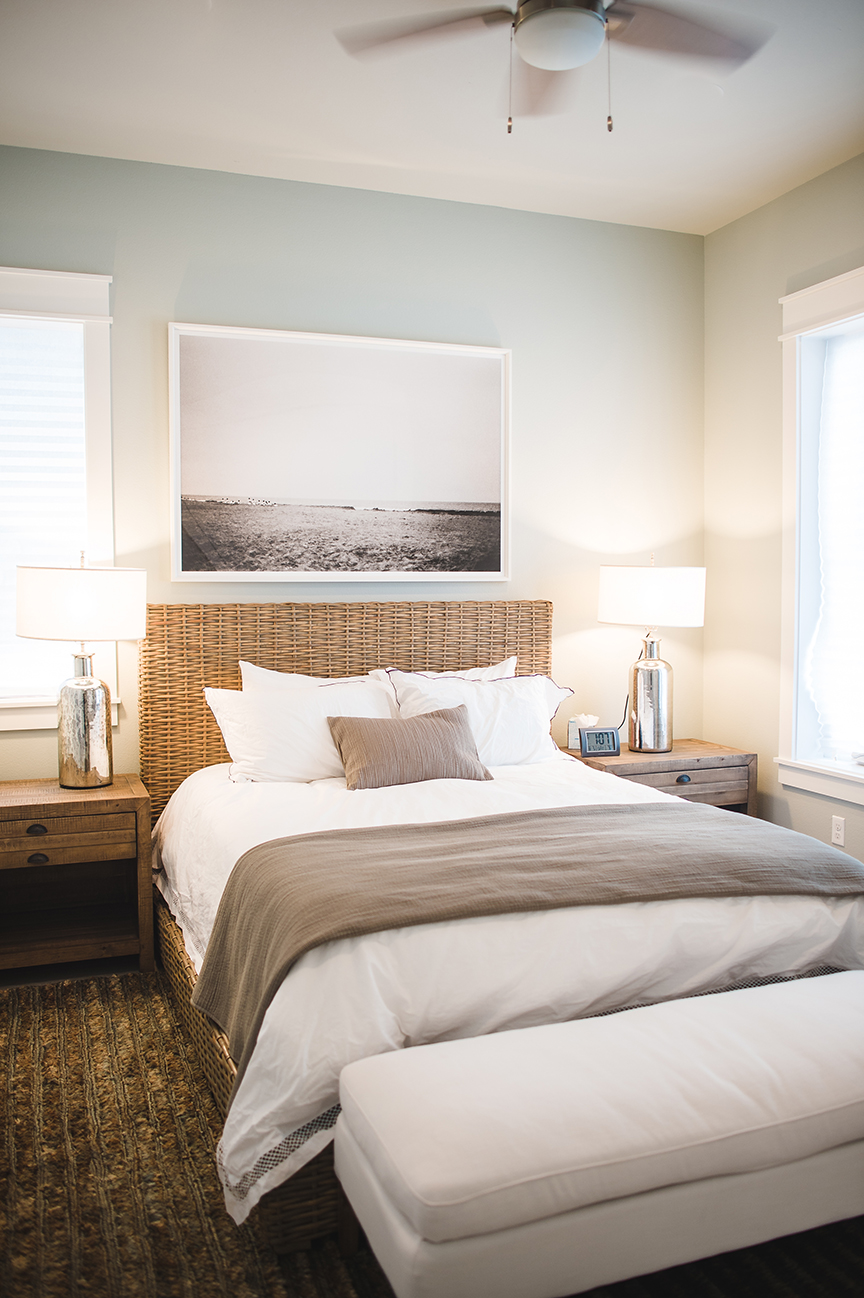
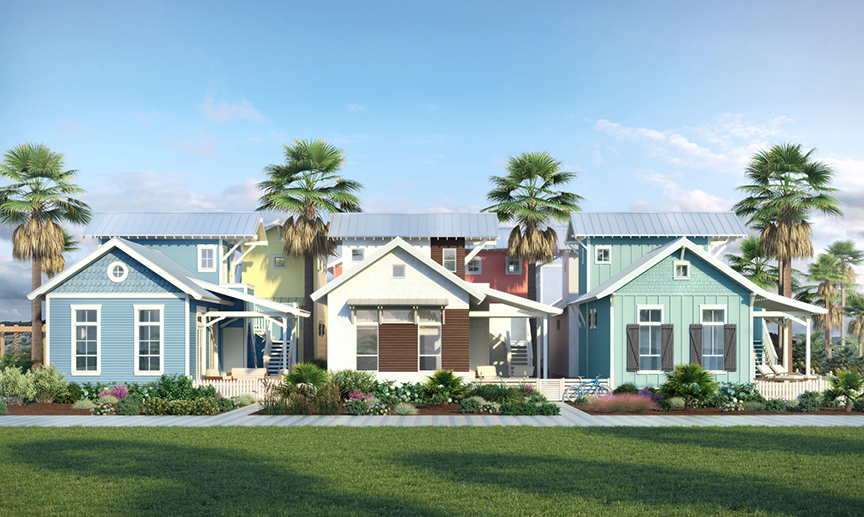
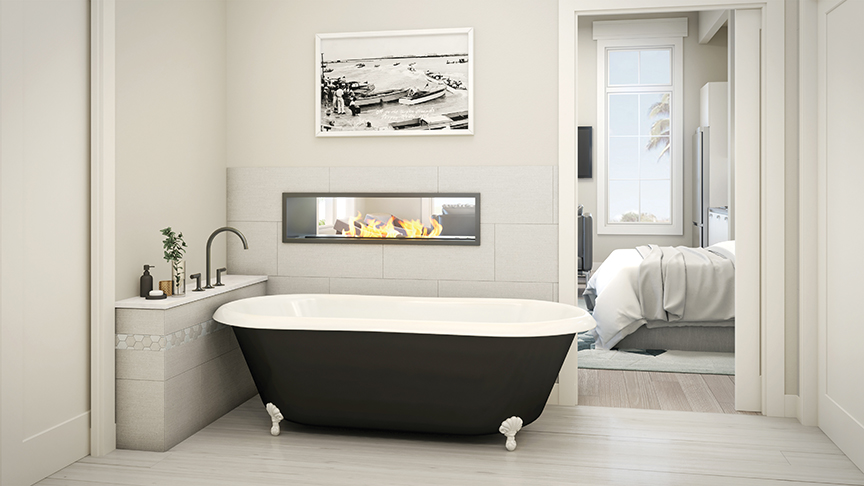
The Camp is another interesting investment that is being offered. According to Sunflower Beach Resort & Residences, “The Camp is thoughtfully designed to take you from the warmth of the Texas sunset to the intimate glow of your own fireplace. Each cabin at Sunflower Beach offers attention to luxury that you won’t find anywhere else on the coast. From its seamless indoor/outdoor spaces to camp-inspired amenities, this collection of cabins offers one-of-a kind architecture, style, and floor plans. Modern poolside condos are in the works and for all these options preferred builders Keystone, Newport Custom Homes, and Conner Coastal are available.
Features
Community Features that you and your family will love include, a sweeping and well-kept lawn, parks and play areas, pleasant streets to stroll down, unforgettable ocean views and stunning dune preserves.
Sunflower’s location in Port Aransas is an added bonus for those settling in or just visiting. The delectable cuisine that is available, the friendly beaches, golf cart accessibility and local culture makes this a fun beach destination that is only continuing to grow.
As a third-generation real estate professional with 42 years of experience in sales and executive brokerage management, Scott Webber has led a zealous and accomplished life. He has been recognized several times by the SP200 among the “Top 200 Most Powerful People in Residential Real Estate,” and his brokerage, LIV Sotheby’s International Realty, has garnered several prestigious awards including recognition as the “#1 Top Producing Sotheby’s International Realty Affiliate.”
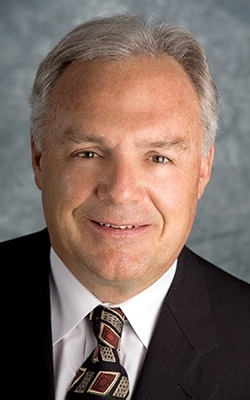
Scott will soon be adding another accolade to his collection at the upcoming 17th Annual Luxury Real Estate Spring Retreat as the recipient of the Who’s Who in Luxury Real Estate (LRE®) Lifetime Achievement Award. Presented twice annually, to a longtime member of the LRE® network, Scott was selected to commend his relentless hard work, many achievements and unwavering dedication to the industry.
“Scott has led the charge in the real estate industry for decades, setting a high bar for his peers and achieving respect at all levels along the way,” said Who’s Who in Luxury Real Estate Chairman John Brian Losh. “We are honored to recognize his contributions, adding the Luxury Real Estate Lifetime Achievement award to his many accolades.”
Scott’s extensive and successful career includes 20 years with Coldwell Banker, where he built and was president of a 26-office residential and commercial company operating in greater Denver, Salt Lake City, and Las Vegas. He has been president of the Salt Lake City Board of Realtors as well as past director of the National Organization for Realtors, and is a current member of the Young Presidents’ Organization.
In 2008, he affiliated with Sotheby’s International Realty after acquiring a Park City, Utah firm which now operates as Summit Sotheby’s International Realty. Scott also owns and operates Sierra Sotheby’s International Realty in Lake Tahoe, Nevada and California, and LIV Sotheby’s International Realty in the greater Denver, Colorado region, where he also serves as president.
Scott is a proud father and grandfather, an avid alpine skier, golfer, instrument-rated private pilot and TBM aircraft owner as well as a Harley Davidson enthusiast. He speaks fluent German, and travels frequently to Switzerland, Austria, and Scotland, where he is a member of the Royal Dornoch Golf Club.
Photos courtesy of LuxuryRealEstate.com.
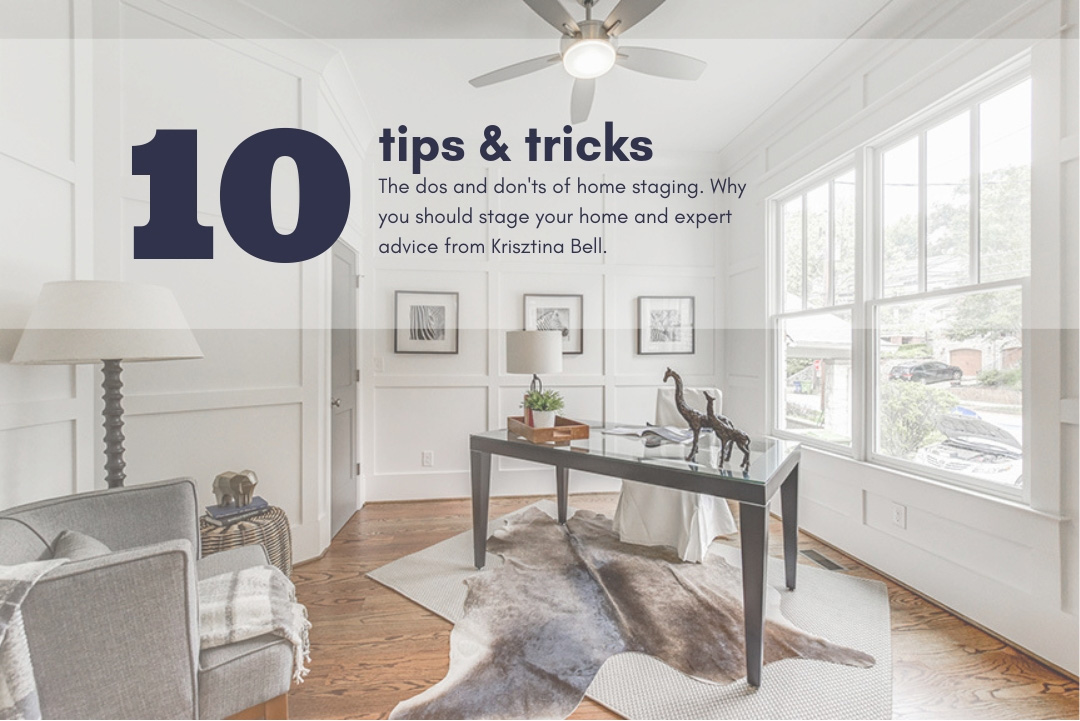
Staging your home could open the door for buyers and sellers in more ways than one. Home staging could mean decorating, furnishing and even painting an empty home that is on the market. Staging a home has been referred to as an art form and is usually used as a way to help sellers and buyers understand the possibilities that a home offers.
It is difficult for a buyer to imagine raising a family or spending a cozy holiday in a vacant space. Therefore, home staging allows buyers to imagine what their home could be. Additionally, if a room is staged well that can help a seller pitch the idea of the space as a home. The impersonal feel of an empty house can be quelled by the right coat of paint, properly arranged furniture, and other final touches, such as decor.
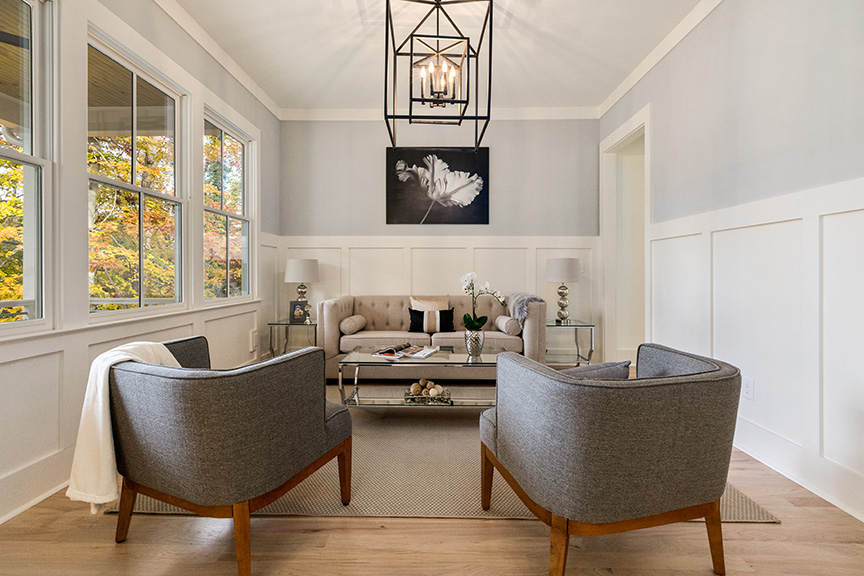
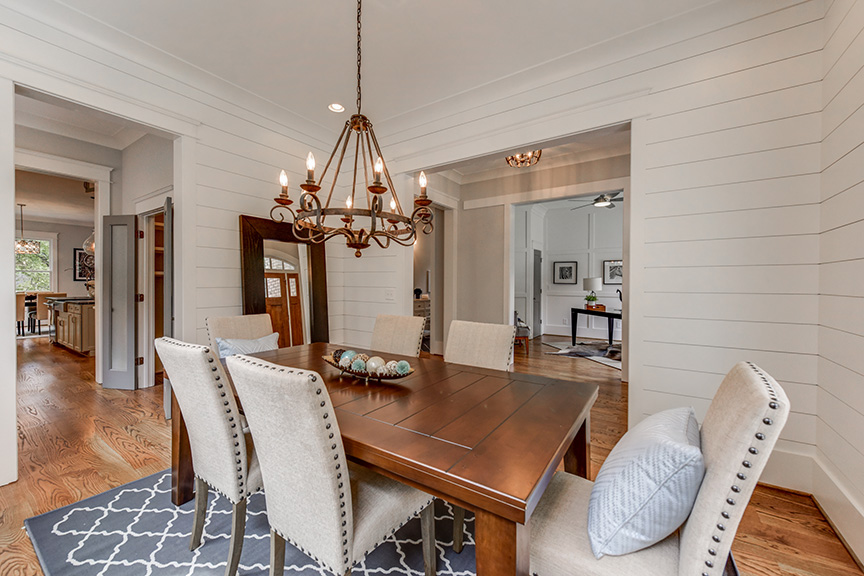
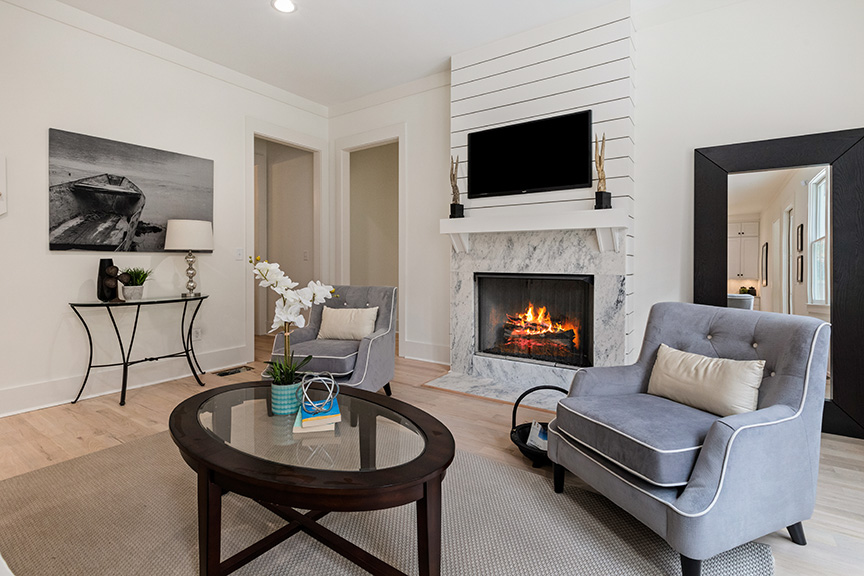
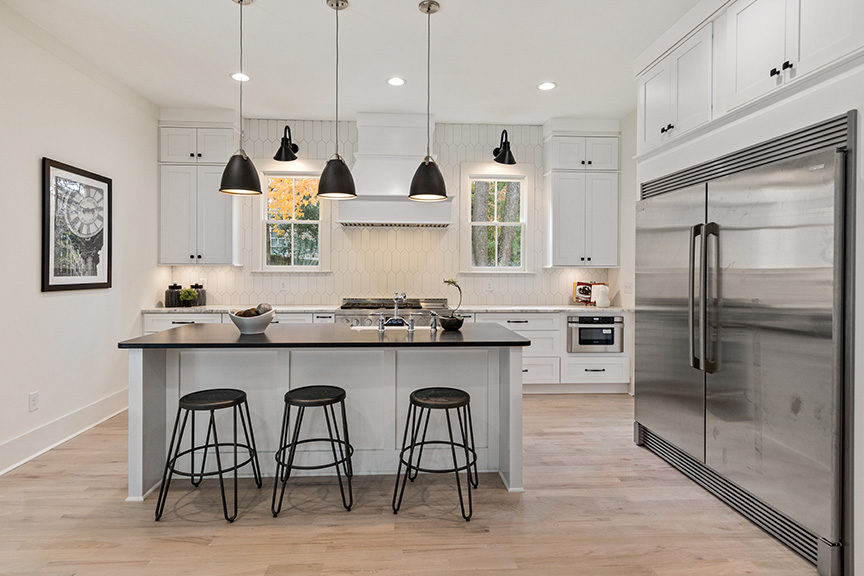
1. Organize and avoid clutter. This will make it easier for a potential buyer to see themselves living in the home.
2. Think fresh and light. Keep blinds and curtains open to let in as much natural light as possible. Also, if any of the rooms in the home are painted a deep exotic or bright neon color then it is best to neutralize each room by having walls painted a nice warm color.
3. Update and repair. Take note of any noticeable or large fixes that need to be made and take care of them early.
4. Don’t forget the exterior. The first impression a potential home buyer will have of a house will be of the exterior, so nice curb appeal is important.
5. The price is worth it. The average cost of a complete staging project is usually much less than your first price reduction. Statistically, homes that have been properly prepared for the market sell before a price reduction is needed.
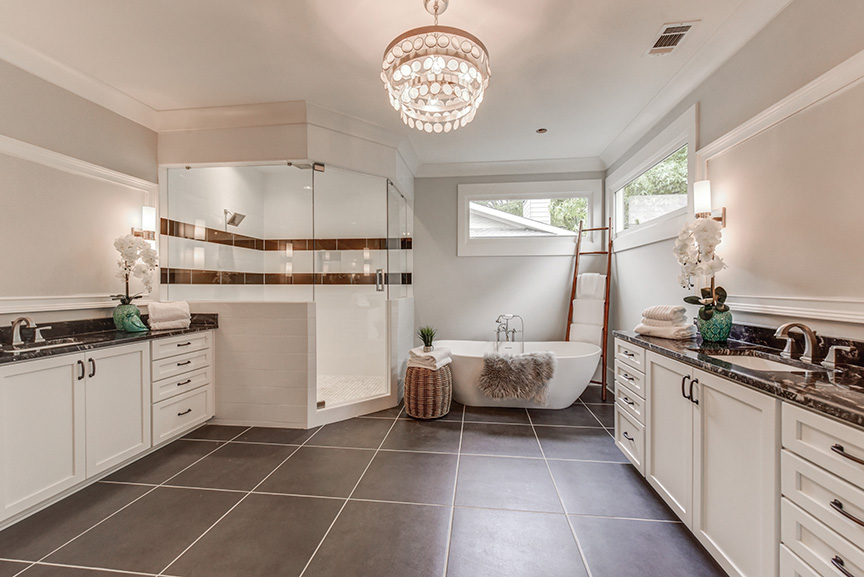
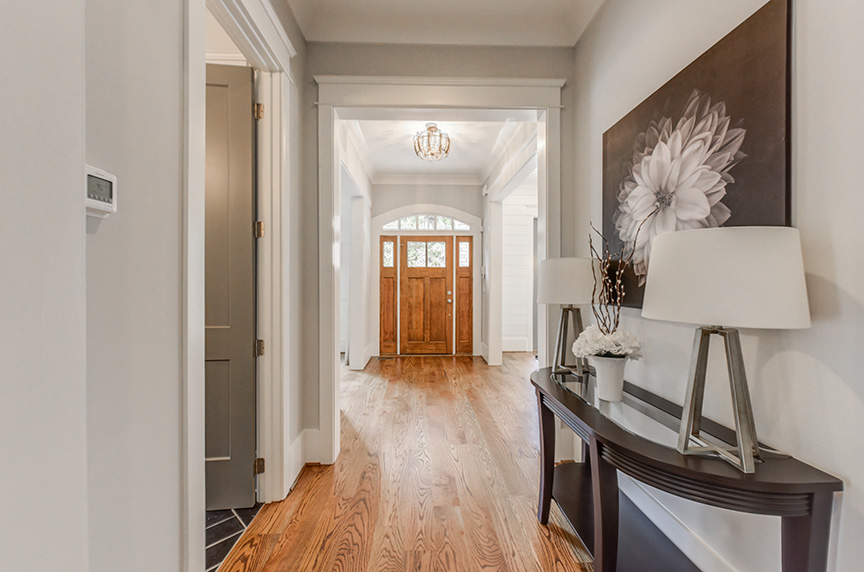
6. Decorating and staging are almost complete opposites. Decorating involves putting the existing homeowners’ tastes and styles into the house, making it personal. Staging involves taking one’s personality out of the house, so the decor is neutral and appealing to the broadest range of potential home buyers.
7. It is best to have your house staged first and then have it listed. Think of the importance of first impressions. The greatest buzz about a house is generated when it is first listed.
8. Although new to the television circuit, home staging has actually been around since the 1970s. In some areas of the country, home staging is as common as open houses. The central states are starting to recognize the value of a staged home, not because it is trendy, but because it works!
9. Do emphasize the upscale and custom features of a home with staging, but DON’T overdo it. Keep it clean lines and simple.
10. Don’t place furnishings or decor that block light or views. Do stage the home with tasteful furnishings and make it easy for prospective buyers to walk straight to amazing ocean, mountain, or island views.
Photos courtesy of Krisztina Bell, No Vacancy Home Staging
Canada’s cool climate is yielding to hot markets, attracting buyers from around the world.
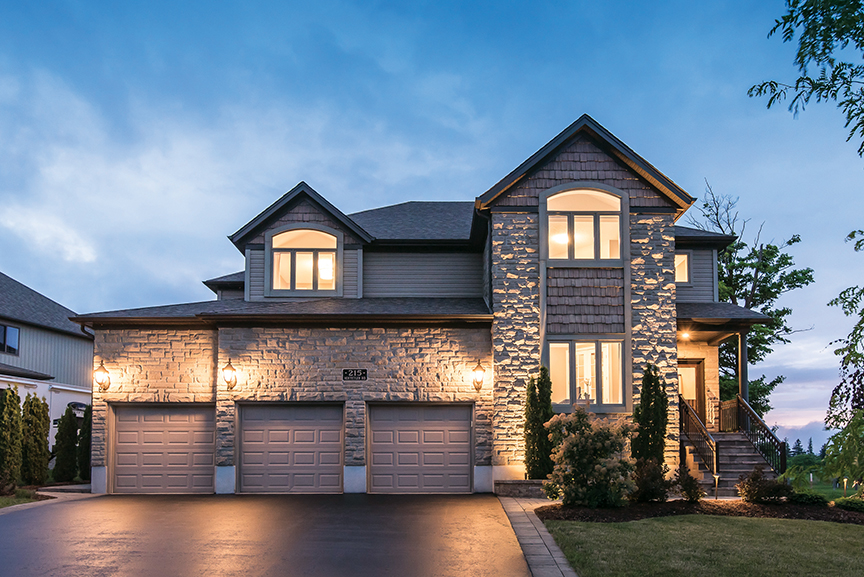
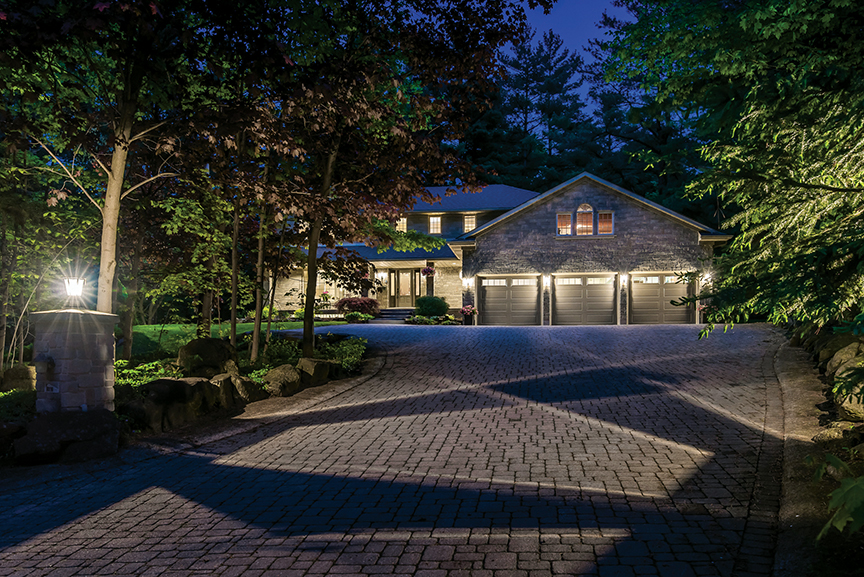
Agents showing Canadian real estate agree that areas such as Cambridge, Central Toronto, Nova Scotia, and Downtown Montreal and are appealing to buyers and families from all over the world. Their proximity to accommodating cities and the suburban feel are attracting a plethora of buyers, and these regions are only expected to grow.
Attracting buyers to the province of Nova Scotia, Mariana Cowan of Coldwell Banker Supercity speaks to the area’s growth. “With 878 parks, 33 beaches, 532 trails and pathways, universities, research and development, Nova Scotia is a great place to invest. Sales in July 2018 were the best they’ve been in six years,” she says.
Amy Assaad of Royal LePage Heritage in the Downtown Montreal and Westmount area explains that buyers there do not necessarily fit into a specific demographic. “Many properties are within walking distance to Mount Royal, but are also close in proximity to the city,” says Assaad. The variety of opportunities are attracting “many local buyers and foreigners, especially from the United States,” she says.
For Assaad, a considerable draw for buyers is The Golden Square Mile, which has been compared to New York City’s 5th Avenue. “The Golden Square Mile offers fine art museums, 5-star restaurants, endless shopping, and Mount Royal,” she says. In Cowan’s province, “You can have the seaside lifestyle that Nova Scotia is famous for, and be within minutes of our capital city of Halifax,” according to Cowan. Assaad also explains how growth is in the future. “The architecture in the area is already beautiful, and it will continue to increase in value,” she says.

With a slightly different view, Susan Macarz of RE/MAX Ultimate Realty Toronto, Ontario contends that those buying Canadian real estate do fit into a certain demographic. “Most are successful in business, whether immigrating or moving up.” Although that does not limit those suited to buy in the area. Buyers hailing from a diverse range of cultures come seeking financial independence, according to Macarz.
“Buyers come from all over the globe,” Macarz says, without neglecting her local clients. “There are also many Torontonians that are moving up and desire a country home, or a larger home for their family,” she says.
Steve Bailey of RE/MAX Real Estate Center in Cambridge, Ontario also notes that the diversity among buyers is a selling point, especially for those coming from the Greater Toronto Area. “I think what it really boils down to is that all of these cities are great places to live, work and raise a family. Each is a diverse and thriving community with a unique blend of urban and rural areas,” he says.
Similar to Assaad and Macarz, Bailey agrees that the area accommodates many different types of buyers. “We have a lot of manufacturing locally, which supports many of the families we have in the region. And we have a lot of professionals who commute out of the city,” says Bailey. “It really creates a wonderful blend of people and personalities.”
Photos courtesy of Steve Bailey. Rendering courtesy of Amy Assaad
This originally appeared in Unique Homes Fall ’18
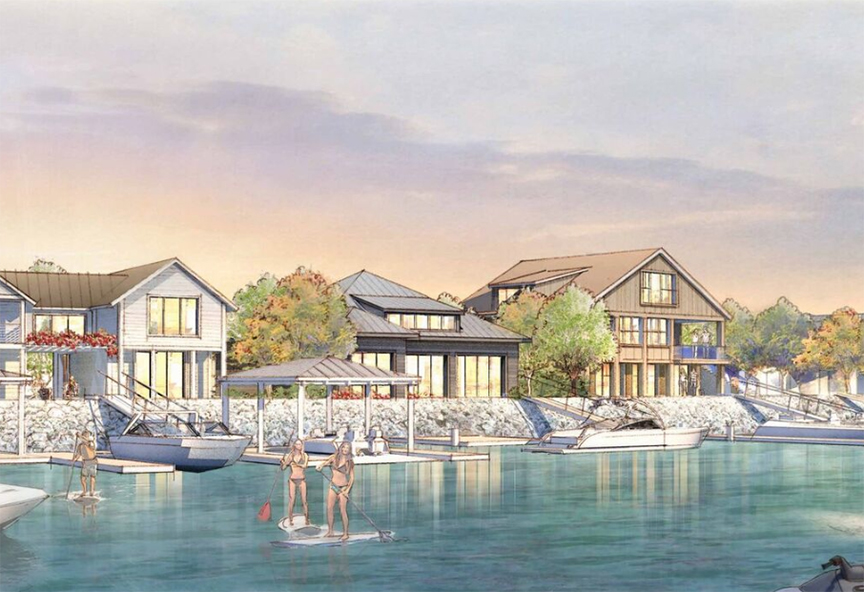
California’s Northern California Delta region can soon expect a new residential community – Delta Coves, a “wildly water-centric” real estate development in Contra Costa County, is currently under construction.
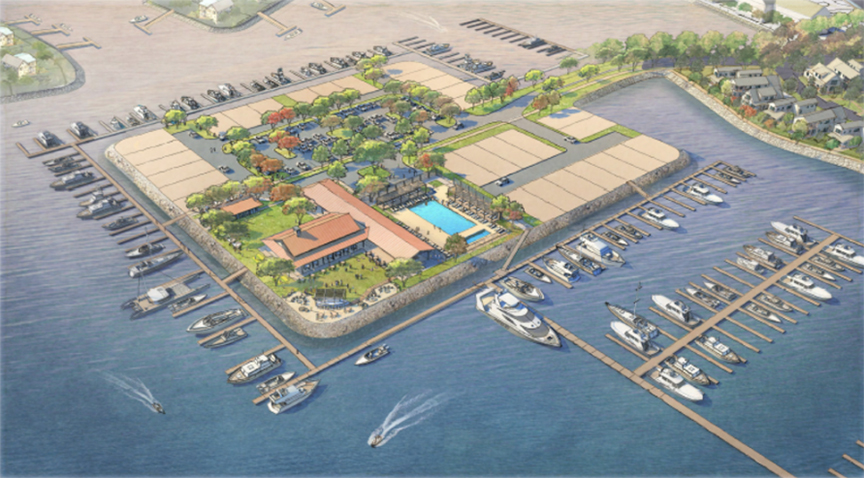
Aimed at celebrating the laid-back boating lifestyle the Delta is famous for, the project will feature approximately 560 waterfront residences with private boat docks, a 230-slip marina and a private club, the Island Camp, a 4,500-square-foot activity hub, complete with a clubhouse, fitness facilities, pool area, event lawn and a picnic pavilion upon completion. Real estate offerings will comprise four product lines, with 1,800-4,000-square-foot single-family homes ranging from $700,000 to $1.2 million. In conjunction with the completion of the first six model homes, sales will launch in spring 2019.
Delta Coves is situated in a prime location, just four minutes from “fast water” at the gateway to 1,000-plus miles of waterways for unlimited boating, fishing and water sports pursuits. The development is an hour east of San Francisco, an hour northeast of San Jose and Silicon Valley, an hour southeast of Napa and 45 minutes east of Oakland by car. Additionally, BART’s new Antioch Station, which is only eight miles away, will offer easy commutes to future homeowners.
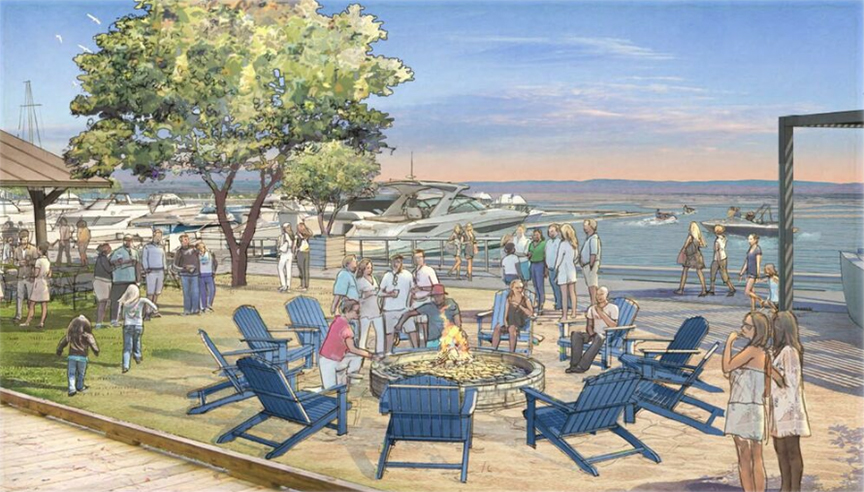
The California Delta is formed at the western edge of the Central Valley at the crossroads of the Sacramento and San Joaquin Rivers. The American, Mokelumne, Cosumnes and Calaveras Rivers feed into the two major rivers. The Delta flows west through a maze of 57 islands and channels, then on to San Francisco Bay, finally joining the vast Pacific Ocean.
In all, the Delta boasts 57,000 acres of navigable waterways. As the largest freshwater estuary on the West Coast of the Americas, this vital resource supplies fresh water to more than 23 million Californians, provides habitat to hundreds of distinct species of wildlife and sustains hundreds of thousands of acres of farmland that produce about 45 percent of the nation’s fruits and vegetables.
Photos courtesy of Claire Marshall.