



Sunflower Beach Resort & Residences is a beach development that has easy access to the Gulf of Mexico and makes an impression with luxury details and a friendly community.
Sunflower Beach Resort & Residences in Port Aransas, Texas greets you with sun, open spaces, a crisp ocean breeze, and comfort. The newly growing beach community offers a variety of luxury real estate options that will attract families and more. A permanent residence here appeals to those who crave the year-round nice weather, proximity to the beach, and the small-town feel. Equally appealing is the option to generate an income with a great rental program that is successful throughout Port Aransas.
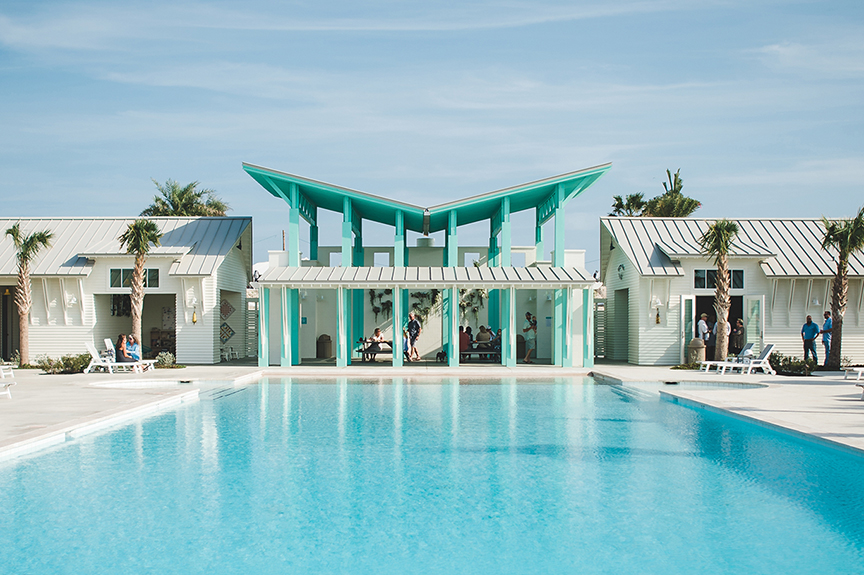
The Beach Club
The main amenity at Sunflower — The Beach Club — is now open and the whole family will relish in the specialized perks. A luxury pool is included along with cabanas, an event pavilion, and a kid’s lounge. The separate adult pool and the Bar & Grill are what make The Beach Club ideal for everyone. Ryan Ritcher, from on-site sales at Sunflower Beach Resort & Residences, says, “The club is the perfect way for the whole community to enjoy themselves and get to know each other.”
Ashleigh Robertson from on-site sales also speaks to the sense of community at Sunflower Beach, “It’s a big family here. This is the kind of place where it’s safe enough to send your kid to school on their bike.”
Ritcher explains that at the sales center they make it a point “to really get to know each individual buyer and understand what they’re really looking for.”
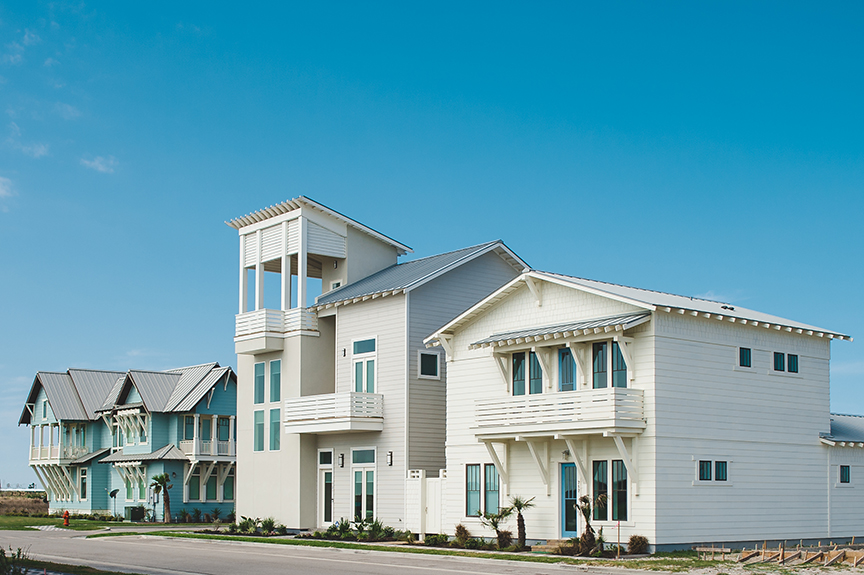
Real Estate
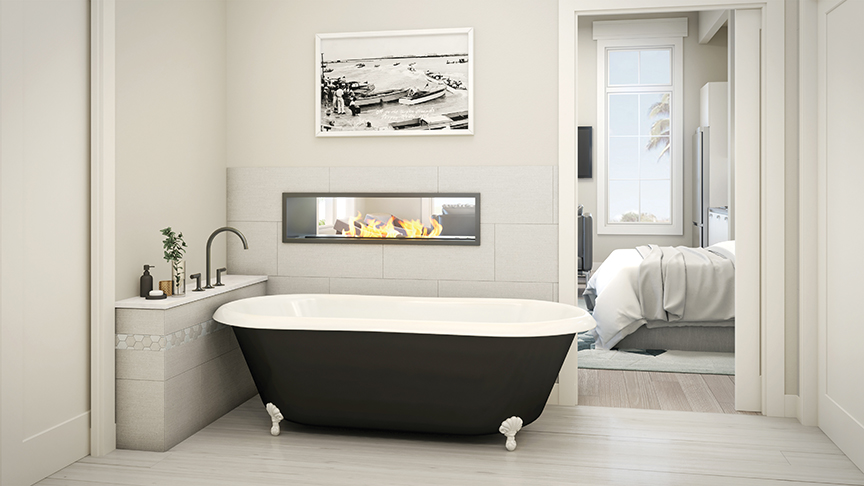
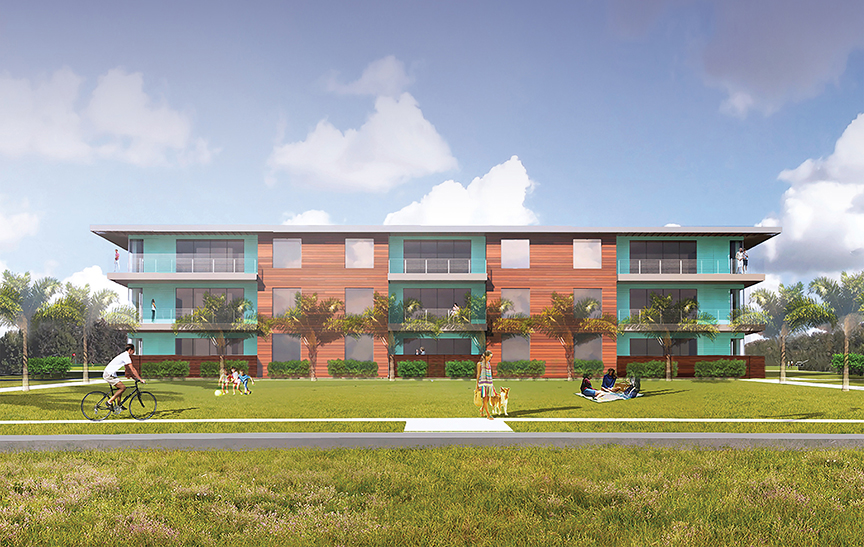
Real estate options include custom homes with modern and approachable design. Coastal lots are available with stunning natural features and easy, driveable access to the beach.
The Camp is another interesting investment that is being offered. According to Sunflower Beach Resort & Residences, “The Camp is thoughtfully designed to take you from the warmth of the Texas sunset to the intimate glow of your own fireplace. Each cabin at Sunflower Beach offers attention to luxury that you won’t find anywhere else on the coast. From its seamless indoor/outdoor spaces to camp-inspired amenities, this collection of cabins offers one-of-a kind architecture, style, and floor plans. Modern poolside condos are in the works and for all these options preferred builders Keystone, Newport Custom Homes, and Conner Coastal are available.
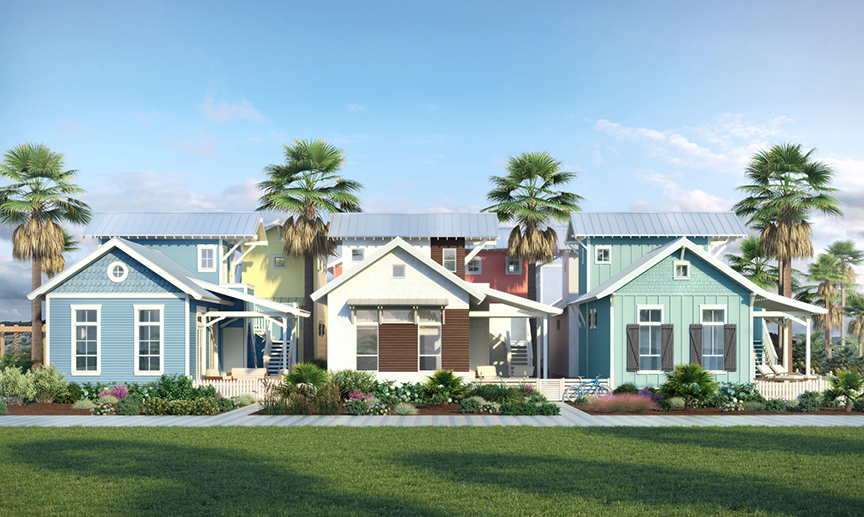
Features
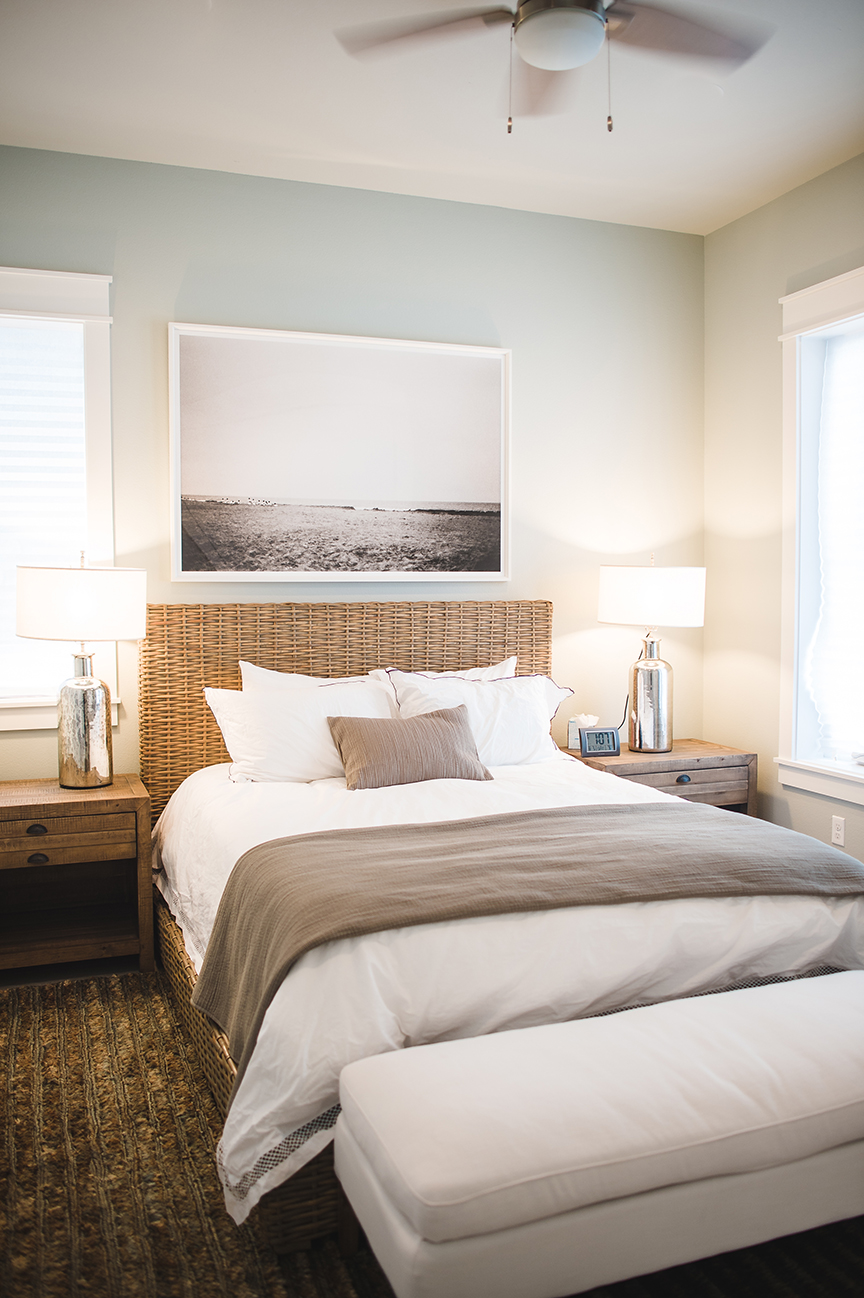
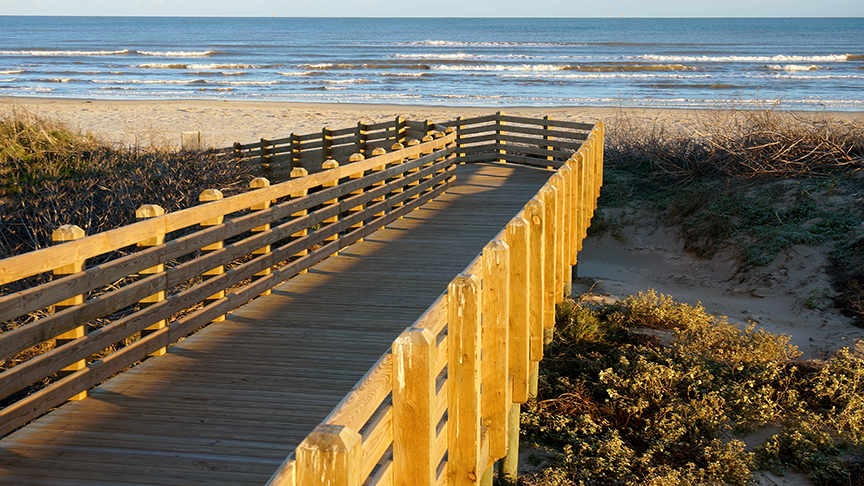
Community Features that you and your family will love include, a sweeping and well-kept lawn, parks and play areas, pleasant streets to stroll down, unforgettable ocean views and stunning dune preserves.
Sunflower’s location in Port Aransas is an added bonus for those settling in or just visiting. The delectable cuisine that is available, the friendly beaches, golf cart accessibility and local culture makes this a fun beach destination that is only continuing to grow.

Giuseppe Tomasetti, a former international business lawyer and the founder of Tomasetti Family Winery, has been selected as the featured speaker for the 13th Annual Luxury Real Estate International Symposium. The esteemed event will take place January 16th through the 18th in Milan at The Westin Palace, where Who’s Who in Luxury Real Estate members will convene to share with other leaders in the industry, network with top real estate professionals and build their global referral network.
Since 2015, Giuseppe Tomasetti has been a full-time farmer and wine producer at the Tomasetti Family Winery, a boutique winery he established with his family in Santa Croce di Polesine, in the Bassa Parma region of Italy, in 2006. Although prior to his vintner years, much of his life was spent in the U.S. He received his JD degree from George Washington University and served as legal counsel to US House and Senate politicians followed by his own practice emphasizing in area mergers and acquisitions as well as international corporate tax and finance.

Drawing on his years of experience in cross-border commercial agreements and acquisitions that sometimes required as many as five jurisdictions, Giuseppe Tomasetti will address the present state of the luxury real estate market from three perspectives. He will examine common errors Europeans and Americans tend to make outside their respective markets. Tomasetti will also discuss external influences, such as the profound effect the generational passage has already had on the market along with the matter of weather and how significant of a role it can play.
Photos courtesy of LuxuryRealEstate.com.
These U.S. West Coast resorts are lauded for their outstanding views, stellar dining options, and luxurious vacation packages and amenities.
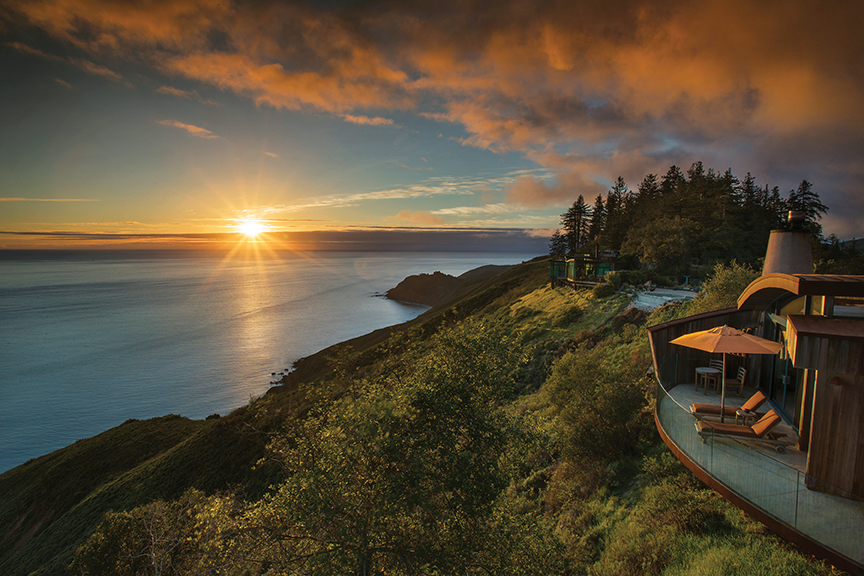
POST RANCH INN, BIG SUR, CALIFORNIA
A serene retreat along the California coastline, the Post Ranch Inn offers both beautiful ocean and mountain views. None of the rooms include televisions or alarm clocks, so a vacation here really is one for relaxation and retreat. Available to all guests are nature walks, stargazing, infinity pool spas, and spa packages.
Courtesy of Kodiak Greenwood
THE RITZ-CARLTON, HALF MOON BAY, CALIFORNIA
Escape the hustle of San Francisco and Silicon Valley and retreat to this resort, just 30 minutes from both. The Ritz-Carlton offers secluded cliff-top views of the Pacific and an opportunity to enjoy the California woods. With a luxury spa, tennis and other amenities, this resort proves Half Moon Bay is not to be overlooked.
Photo by Veronica Werhane

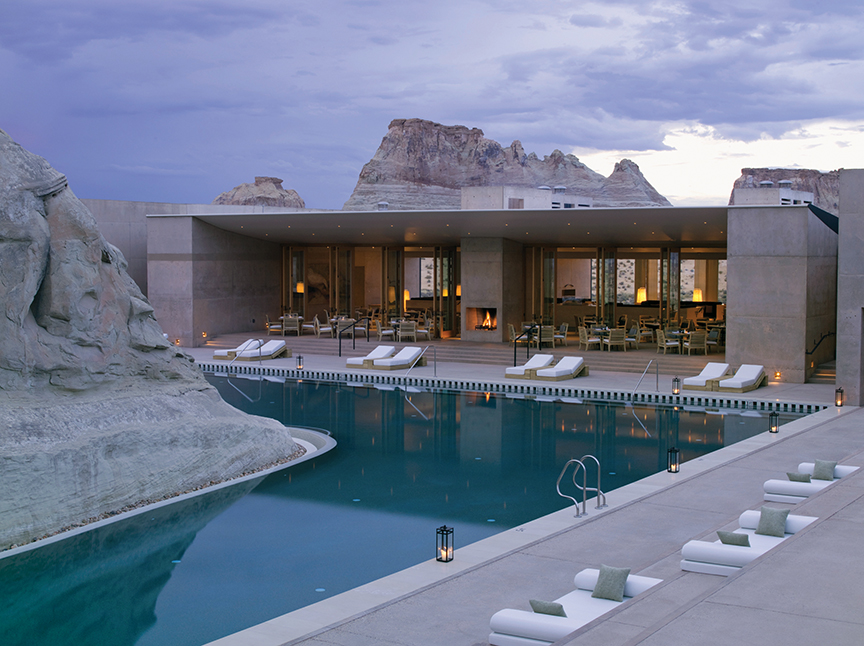
AMANGIRI, UTAH
The 5-star Amangiri is smack in the middle of the Colorado Plateau, offering unbeatable views of Canyon Point, Utah’s geological masterpieces. With an emphasis on wellness, this resort will rejuvenate guests with opportunities for hiking, climbing, and relaxing at the spa. Explore the canyons by hot air balloon or kayak Lake Powell; the expeditions are endless.
Courtesy of Aman
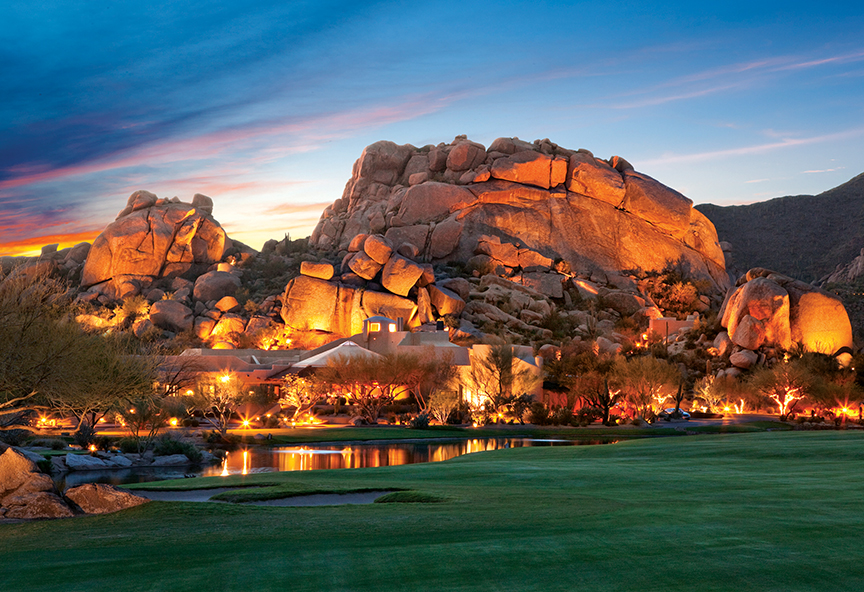
BOULDERS RESORT AND SPA, ARIZONA
Travel + Leisure voted Boulders Resort and Spa the Best Hotel in Arizona, and with good reason. For the most luxurious and private getaway this resort has to offer, choose the Villa Retreat. This package includes two expansive villas, complete with a private infinity pool, Japanese soaking tub, barbecue pit and kitchens, and large master bedroom overlooking massive rock formations.
Courtesy of Boulders Resort and Spa
As a third-generation real estate professional with 42 years of experience in sales and executive brokerage management, Scott Webber has led a zealous and accomplished life. He has been recognized several times by the SP200 among the “Top 200 Most Powerful People in Residential Real Estate,” and his brokerage, LIV Sotheby’s International Realty, has garnered several prestigious awards including recognition as the “#1 Top Producing Sotheby’s International Realty Affiliate.”

Scott will soon be adding another accolade to his collection at the upcoming 17th Annual Luxury Real Estate Spring Retreat as the recipient of the Who’s Who in Luxury Real Estate (LRE®) Lifetime Achievement Award. Presented twice annually, to a longtime member of the LRE® network, Scott was selected to commend his relentless hard work, many achievements and unwavering dedication to the industry.
“Scott has led the charge in the real estate industry for decades, setting a high bar for his peers and achieving respect at all levels along the way,” said Who’s Who in Luxury Real Estate Chairman John Brian Losh. “We are honored to recognize his contributions, adding the Luxury Real Estate Lifetime Achievement award to his many accolades.”
Scott’s extensive and successful career includes 20 years with Coldwell Banker, where he built and was president of a 26-office residential and commercial company operating in greater Denver, Salt Lake City, and Las Vegas. He has been president of the Salt Lake City Board of Realtors as well as past director of the National Organization for Realtors, and is a current member of the Young Presidents’ Organization.

In 2008, he affiliated with Sotheby’s International Realty after acquiring a Park City, Utah firm which now operates as Summit Sotheby’s International Realty. Scott also owns and operates Sierra Sotheby’s International Realty in Lake Tahoe, Nevada and California, and LIV Sotheby’s International Realty in the greater Denver, Colorado region, where he also serves as president.
Scott is a proud father and grandfather, an avid alpine skier, golfer, instrument-rated private pilot and TBM aircraft owner as well as a Harley Davidson enthusiast. He speaks fluent German, and travels frequently to Switzerland, Austria, and Scotland, where he is a member of the Royal Dornoch Golf Club.
Photos courtesy of LuxuryRealEstate.com.
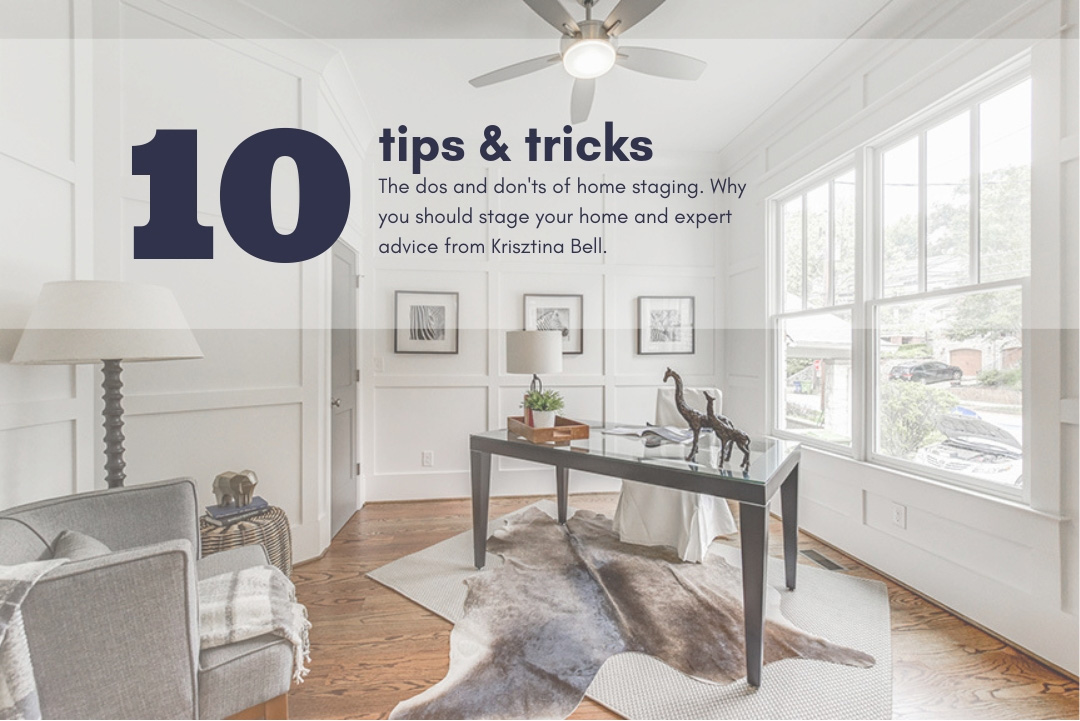
Staging your home could open the door for buyers and sellers in more ways than one. Home staging could mean decorating, furnishing and even painting an empty home that is on the market. Staging a home has been referred to as an art form and is usually used as a way to help sellers and buyers understand the possibilities that a home offers.
It is difficult for a buyer to imagine raising a family or spending a cozy holiday in a vacant space. Therefore, home staging allows buyers to imagine what their home could be. Additionally, if a room is staged well that can help a seller pitch the idea of the space as a home. The impersonal feel of an empty house can be quelled by the right coat of paint, properly arranged furniture, and other final touches, such as decor.
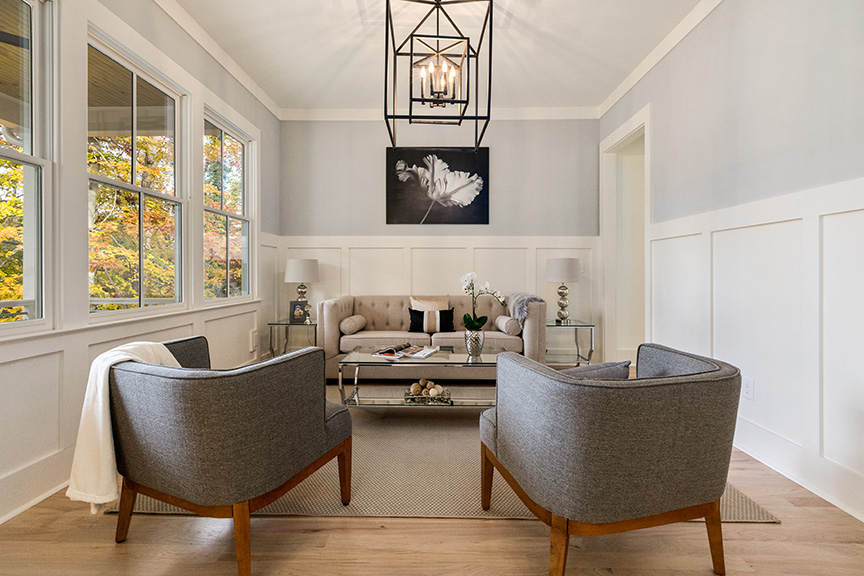
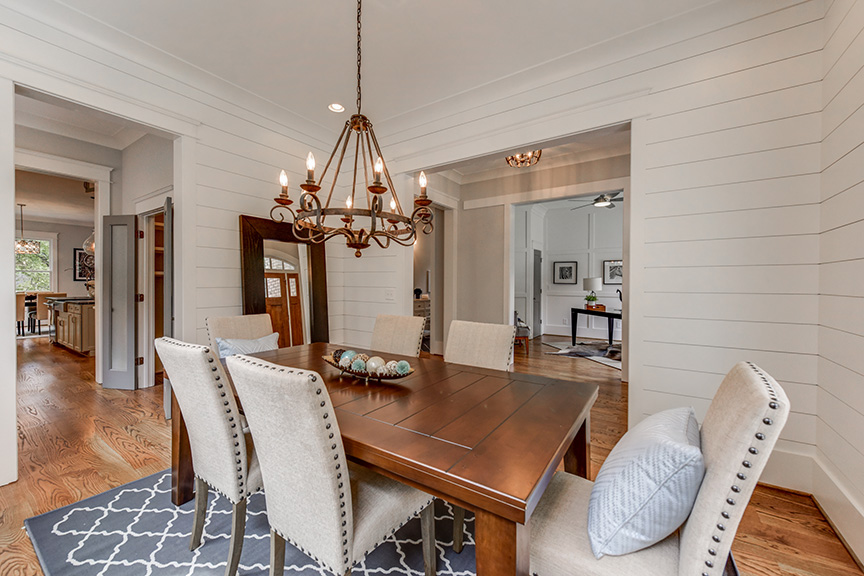
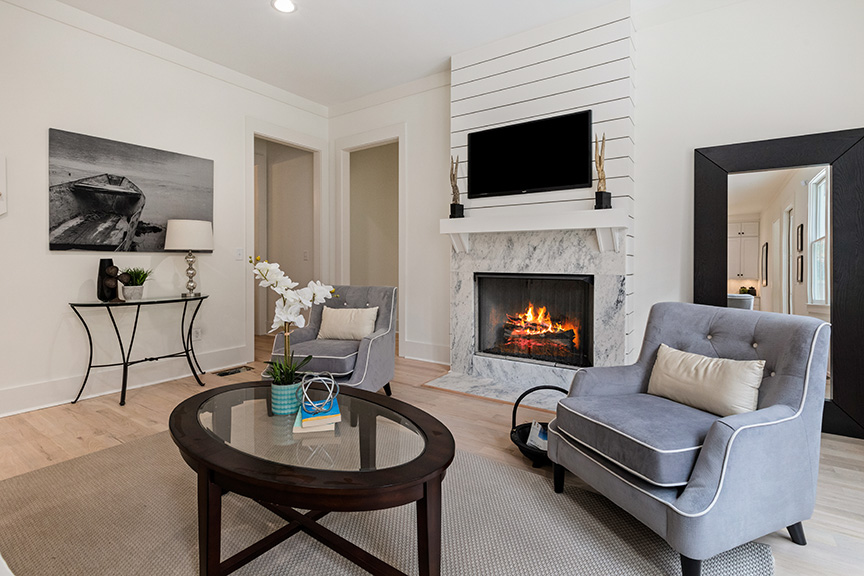
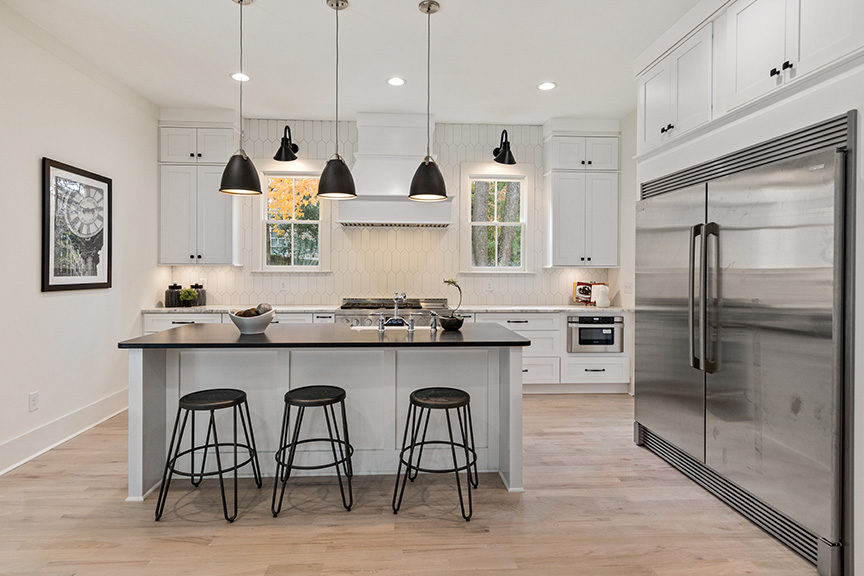
1. Organize and avoid clutter. This will make it easier for a potential buyer to see themselves living in the home.
2. Think fresh and light. Keep blinds and curtains open to let in as much natural light as possible. Also, if any of the rooms in the home are painted a deep exotic or bright neon color then it is best to neutralize each room by having walls painted a nice warm color.
3. Update and repair. Take note of any noticeable or large fixes that need to be made and take care of them early.
4. Don’t forget the exterior. The first impression a potential home buyer will have of a house will be of the exterior, so nice curb appeal is important.
5. The price is worth it. The average cost of a complete staging project is usually much less than your first price reduction. Statistically, homes that have been properly prepared for the market sell before a price reduction is needed.
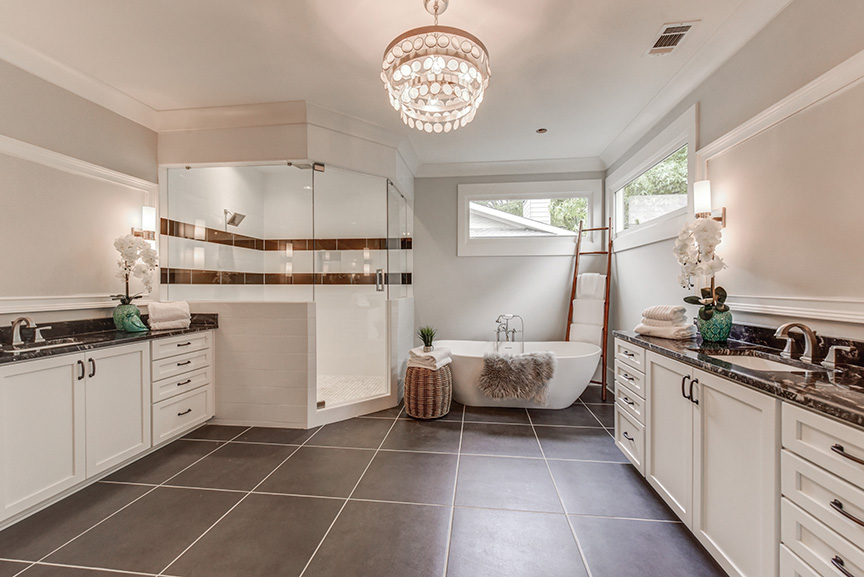
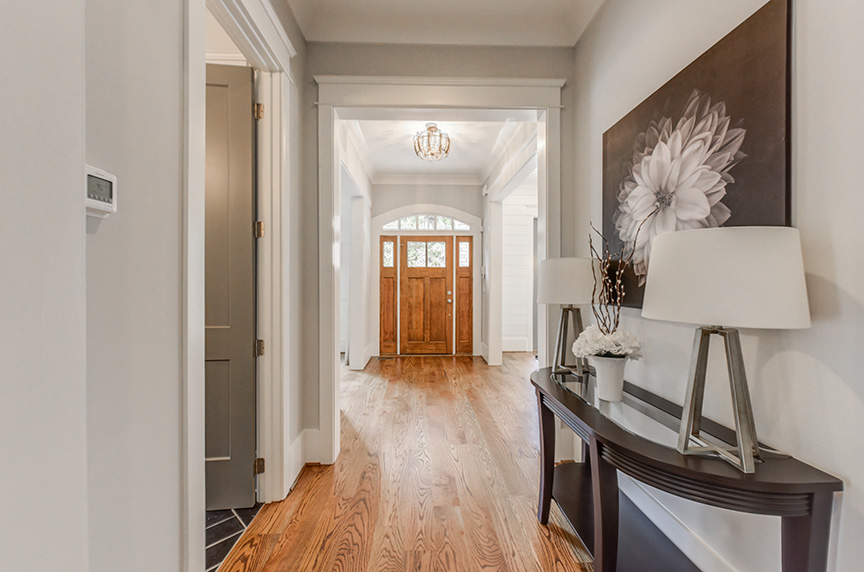
6. Decorating and staging are almost complete opposites. Decorating involves putting the existing homeowners’ tastes and styles into the house, making it personal. Staging involves taking one’s personality out of the house, so the decor is neutral and appealing to the broadest range of potential home buyers.
7. It is best to have your house staged first and then have it listed. Think of the importance of first impressions. The greatest buzz about a house is generated when it is first listed.
8. Although new to the television circuit, home staging has actually been around since the 1970s. In some areas of the country, home staging is as common as open houses. The central states are starting to recognize the value of a staged home, not because it is trendy, but because it works!
9. Do emphasize the upscale and custom features of a home with staging, but DON’T overdo it. Keep it clean lines and simple.
10. Don’t place furnishings or decor that block light or views. Do stage the home with tasteful furnishings and make it easy for prospective buyers to walk straight to amazing ocean, mountain, or island views.
Photos courtesy of Krisztina Bell, No Vacancy Home Staging
“Port A is one of the last really authentic beach towns and it’s only going to grow,”
Cinnamon Shore in Port Aransas, Texas withstood the unforgiving winds of hurricane Harvey and came out on top.
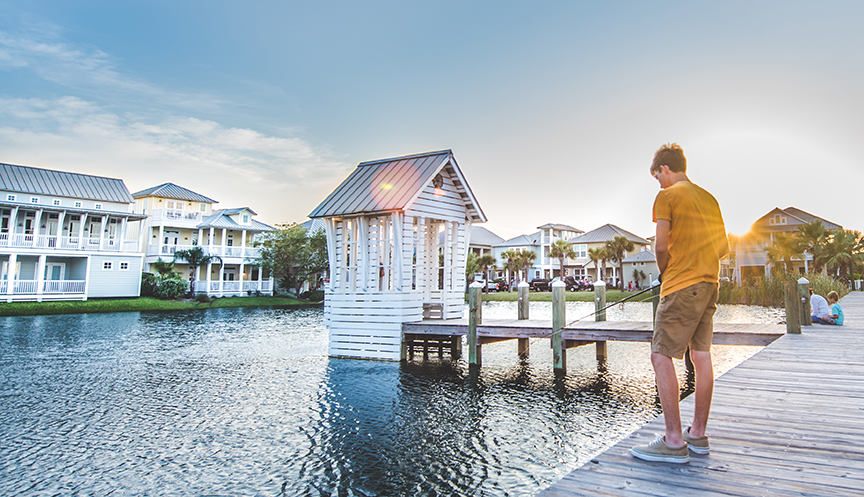

The strict building standards, the lock-and-leave storm procedure and more are a testament to the development’s dedication to creating a durable and safe place to live. “Residents and guests can relax because they can just lock their doors and leave if there is a storm,” says Jodi Peters, managing real estate broker at Cinnamon Shore. But once you visit you won’t want to leave.
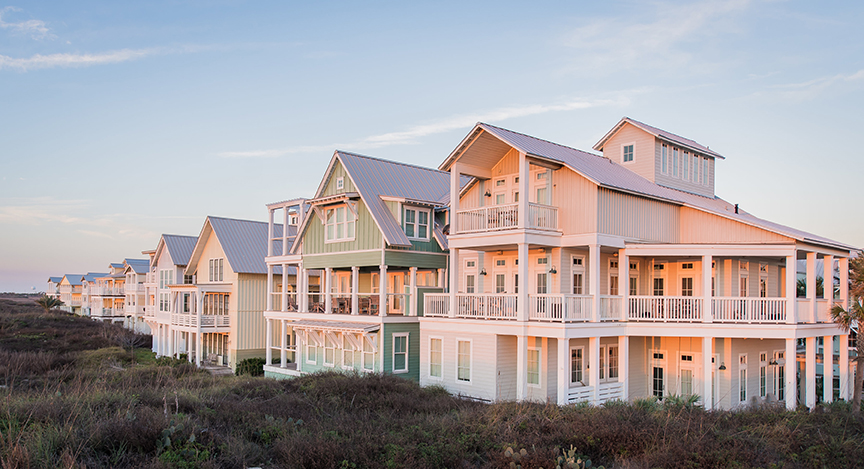
Upon entering the community that is Cinnamon Shore, the modern yet cozy architecture catches your eye yet melds perfectly with the carefully incorporated natural elements. “The dunes are really special. Not every beach has this beautiful, thick greenery that separates the homes from the water,” says Peters. The undeniable Southern beach tones immediately make you feel as if you’re at a serene beach getaway.
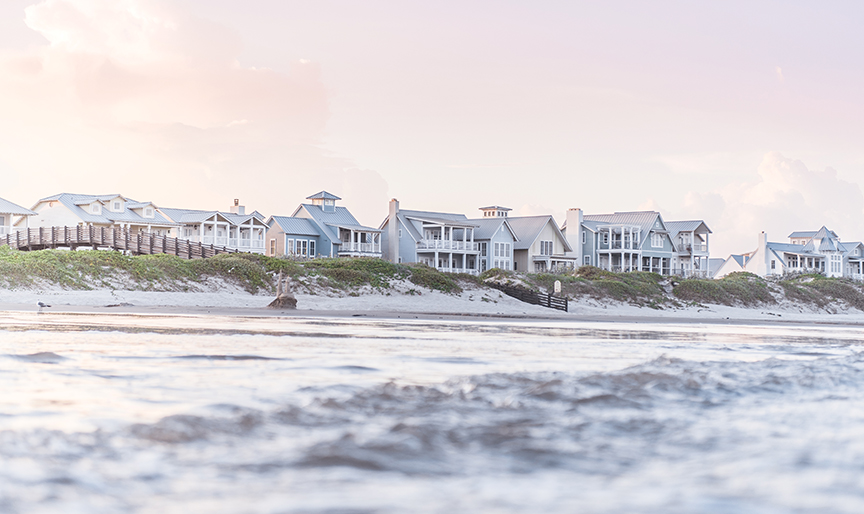
Clean white accents are crisp against beach tones, and modern design ties the community together and sets a standard within the community that doesn’t feel stiff or forced.
Despite the closeness to the beach — most balconies offer spectacular views — the residences are built 11 to 13 feet above sea level and adhere to building codes and regulations that have been tested and have proven to be reliable and sturdy.
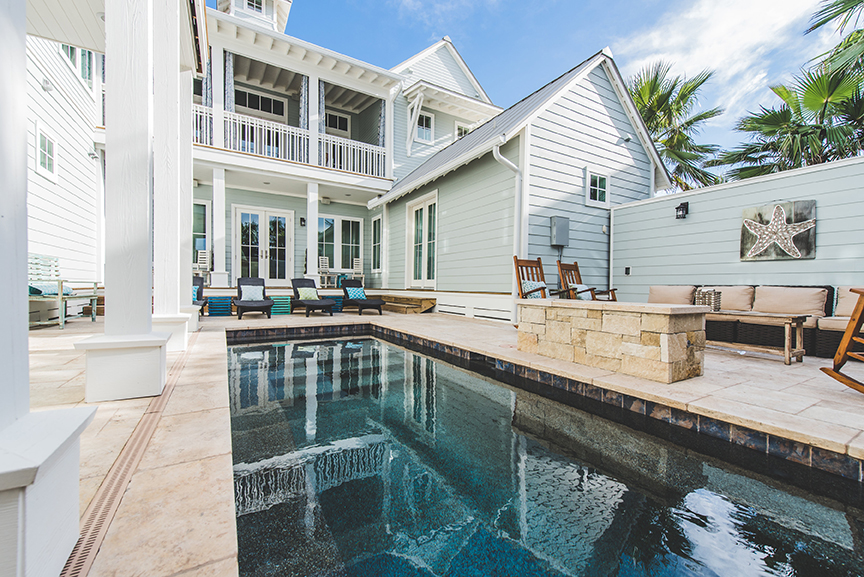
“It’s a safe area that is perfect for families and empty nesters,” says Jeffrey Hentz, president and CEO of the Port Aransas/Mustang Island Chamber of Commerce & Tourism Bureau. With that distinct feeling of safety, the community seamlessly incorporates amenities that will have guests feeling as if they’re at a coveted resort. However, rather than scooting away from other guests and fighting over seats around the pool, the community encourages getting to know the other residents, without sacrificing the necessary privacy for a relaxing vacation or stay.
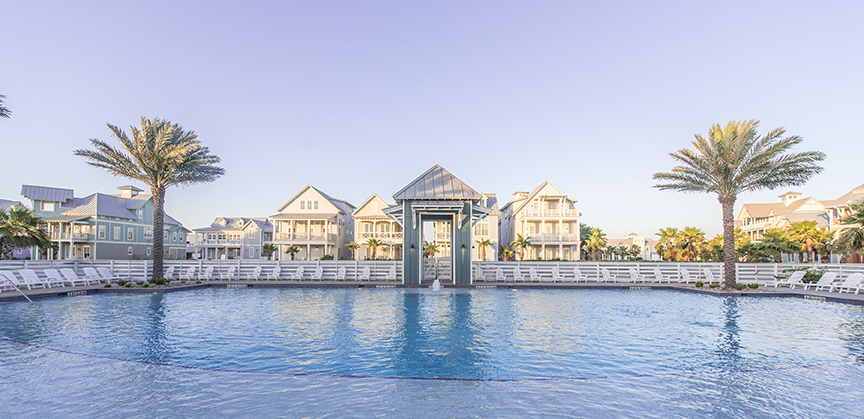
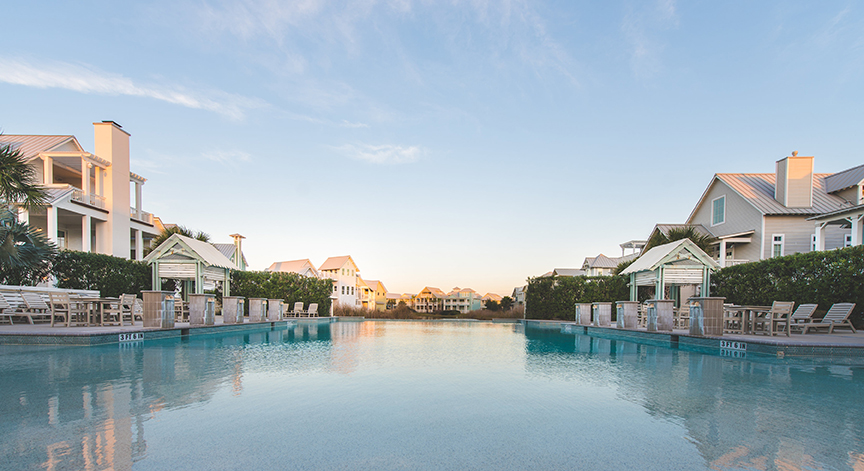
Areas like the fire pit — a popular gathering point with smores to accompany peaceful nights, the community pool, the social circle, and the great lawn provide endless opportunities to meet people or enjoy a serene evening by the water. “Small things like the fire pit bring everyone out and together,” according to Hentz.
The balance that Cinnamon Shore has created is the perfect formula for success.
The sense of safety as if you’re in a neighborhood where you’ve lived your whole life doesn’t dull the excitement or variety of activities and nightlife that are available within the development or just a short trip into town away. Lisabella’s within Cinnamon Shore is the perfect evening dining venue. The rest of Port A offers a variety of cuisine ranging from authentic Italian food at Venetian Hot Plate to the “you catch it, we cook it” option that is offered at several local restaurants.
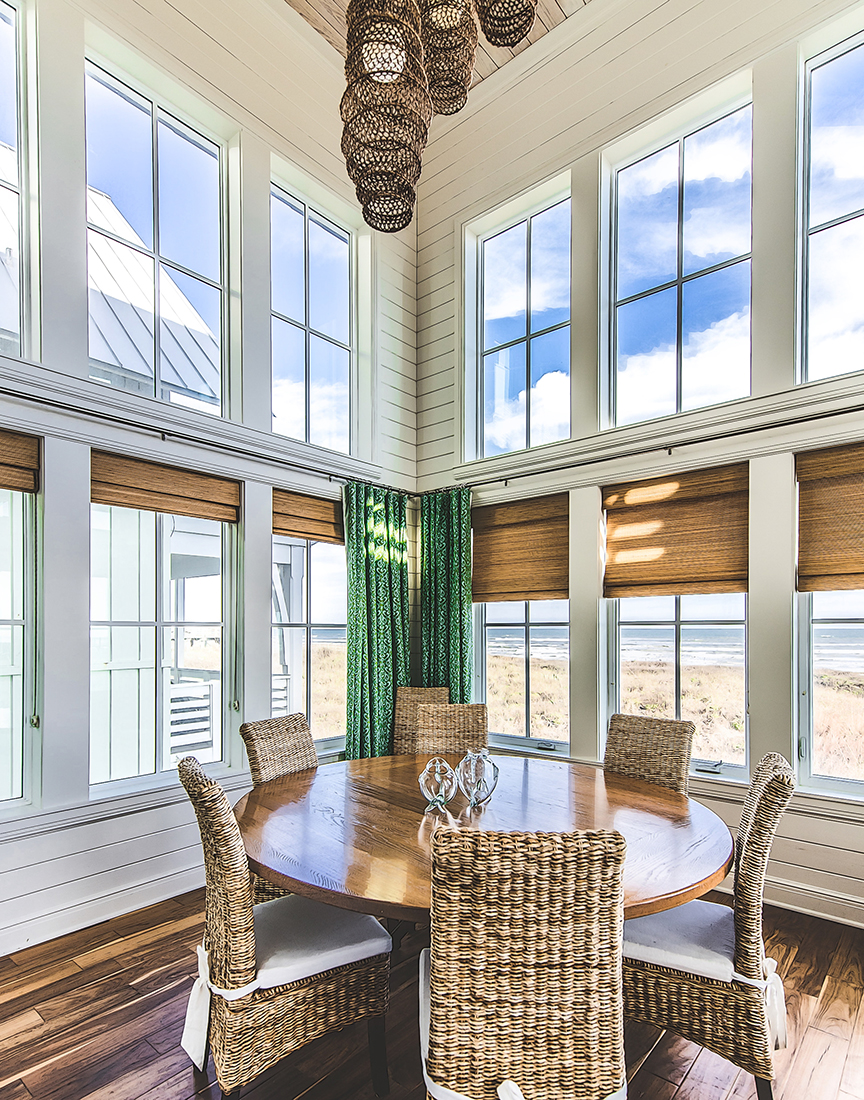
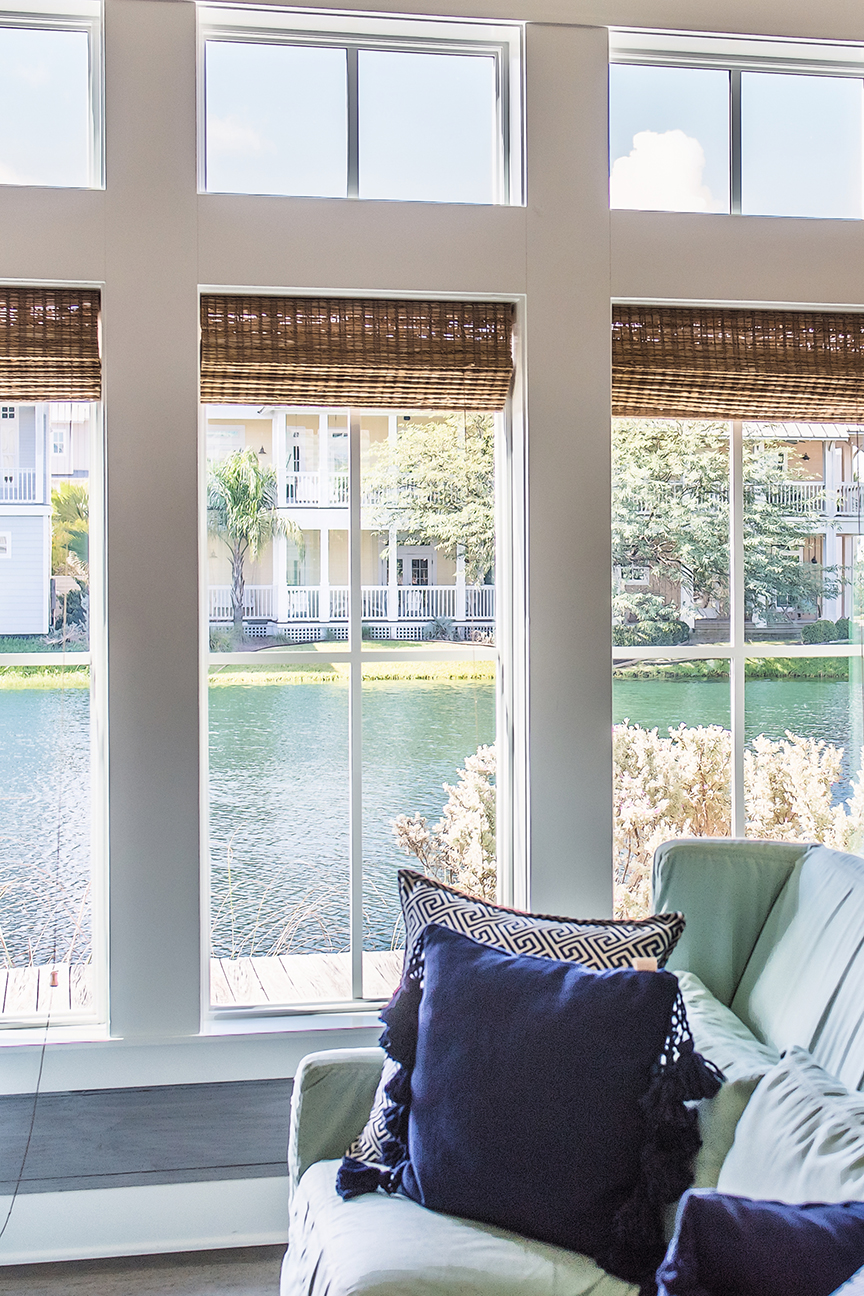
Nature is a big part of Port Aransas and Cinnamon Shore has taken special care to include Hummingbird Park, a fishing pier, Lake Colby and Lake Gavin and, of course, easy access to the Gulf of Mexico for those looking to get away from the big cities. “The pier is a popular spot in the afternoons. It’s the perfect spot to relax and enjoy a summer night,” says Peters.
Cinnamon Shore might be your next permanent home, vacation spot, or rental that you’ll fall in love with.
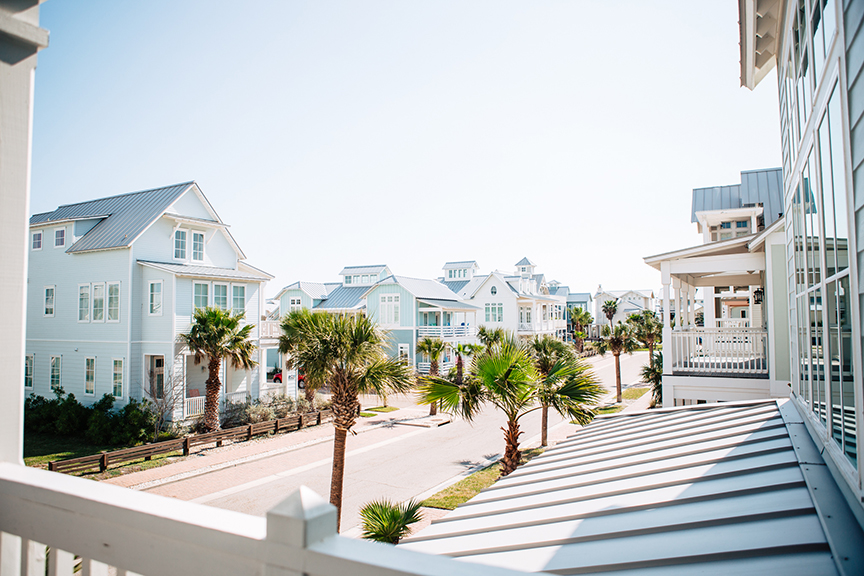
Real estate options include homes, condos, cottages, homesites, and penthouses.
—Cottages nestled around sunset park range from $585,000 to $689,000.
—Condos are available with one to four beds.
—Four bedroom penthouses are also available with current prices in the range of $790,000.
—Various beach homes are available with options for up to 5 beds and 6 baths.
Cinnamon Shore has already proven its success, but there are big plans for expansion already underway. “It’s the original seaside village on the Texas coast,” says Peters. “It just keeps getting more beautiful and intricate with every detail.”
Cinnamon Shore South is going to be a 300-acre New Urbanist community and will include two luxury pools, views of a Texas-sized lake, and vistas of both the Gulf of Mexico and the bay.
Photos by Shannon Lafayette/ courtesy of Cinnamon Shore
10 Years Later
Our year-long look at what’s changed in U.S. luxury real estate since the 2008 recession.
When it comes to architectural styles and design trends, authenticity — not opulence — is what consumers want today.
Contemporary … modern … innovative … intentional … authentic … flexible … sum up residential real estate today. During the recession and early recovery, expectations focused on the “new normal,” what real estate and life, in general, would be like following such a seminal event. But real change is often subtle yet inexorable, and that is the story of residential architecture and design over the last 10 years.
After almost a decade, the much hyped new normal has finally arrived. Almost suddenly, it seems everything — architecture, design, outdoor connections, consumer attitudes — has been revamped in ways that entirely transform luxury homes. “It’s not just about how beautiful the building is, but what’s the experience. That’s a big evolution from where we were pre-recession,” observes Bruce Wright, AIA, vice president and principal at SB Architects.
Architecture
“Before the recession, I would say of the 60 to 70 homes we design a year, we would get one contemporary request and maybe a transitional request from clients. Now it’s flat-out contemporary. We’re talking flat roofs, pools on the roofs, outdoor screened rooms up on the upper levels,” says
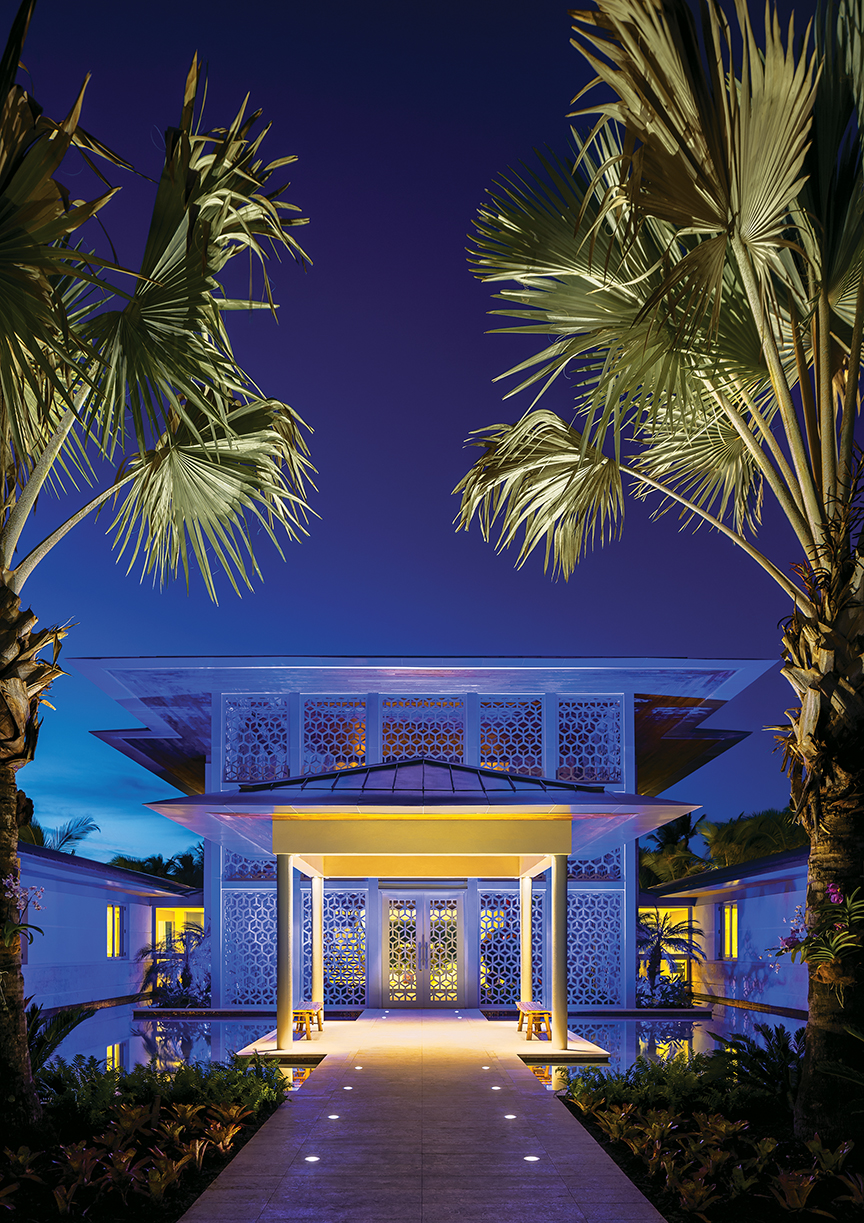
Michigan architect Wayne Visbeen, AIA. “The resurgence of mid-century modern has also been a big, big part of our business.” Even when clients want homes that reflect regional architecture and connections, he says, “it’s with a contemporary edge, definitely with more simplicity and less frou-frou.” Visbeen’s firm works in 48 states and 10 countries, and he sees the move toward contemporary, notably a warm contemporary, playing out nationwide. Also in demand, even in locations as diverse as Beverly Hills and Miami, is an interpretation of contemporary dubbed “modern farmhouse.”
In the South, Stephanie Gentemann, AIA, a partner at g2Design in Savannah and director of Palmetto Bluff’s design review board, a transitional aesthetic, which she sees as a blend between contemporary and traditional, is gaining prominence. Gentemann also sees modern farmhouse garnering interest. Preferences for contemporary, transitional and modern farmhouse are not restricted to upscale homes, but range across all age groups and income levels.
For luxury, Gentemann says, “The more expensive the house, the more eclectic we get in terms of architectural style. There isn’t one predominant style that I see that is dictated by price point.”
©2018 Ciro Coelho / CiroCoelho.com
“What we see now is driven by a better- educated consumer. We’re seeing an appreciation for contemporary architecture with a warm material palette that is accessible and friendly, but not thematic, that is not an interpretation of another culture. It’s really about creating this kind of transparency, layered architecture that has rich materials and more materials communicated in a more contemporary format,” says Wright.
“I think it’s an interesting place where we are design wise,” says Ken Bassman of Bassman Blaine Home, who helps owners turn Montage residences into dream homes in Maui. “People want things to be more streamlined, clean and neutral. But it doesn’t mean that it’s bland or boring. There’s actually more color with artwork,” pillows and accessories. Wall coverings are back along with textural finishes and even a touch of glamour.
On the Big Island, designer Gina Willman says, “everyone is looking to ‘lighten and brighten’ their surroundings. We are lightening up walls by plastering or painting with hues significantly brighter than the ‘50 shades of beige’ phase of the 2000s. New homes are exploring lighter wood tones and cabinets.”
Revamped Interiors
Exterior architecture and elevations are only one transformation for homes. Inside, floor plans are being revamped as interiors undergo substantive alternations. “If I pull out a floor plan from 10 years ago, it would seem like a total disaster. There are things we would never do now,” shares Chris S. Texter, AIA, a principal at KTGY Architecture + Planning.
Open floor plans continue to define interiors. Living rooms are passé, often replaced by smaller rooms owners can configure however they want. And the jury is still out on separate dining rooms. James Rill, principal of an eponymous Washington, D.C. architectural firm, says dining rooms are often designed for alternate or dual uses such as a library.
Open plans are evolving to be more functional and nuanced. The intentional piece in open-concept design, observes Chicago designer Mary Cook, is the way these spaces are “high-performing, multitasking and they share their functions across rooms. People want the spaces to live better; they just don’t want to fill empty space.”
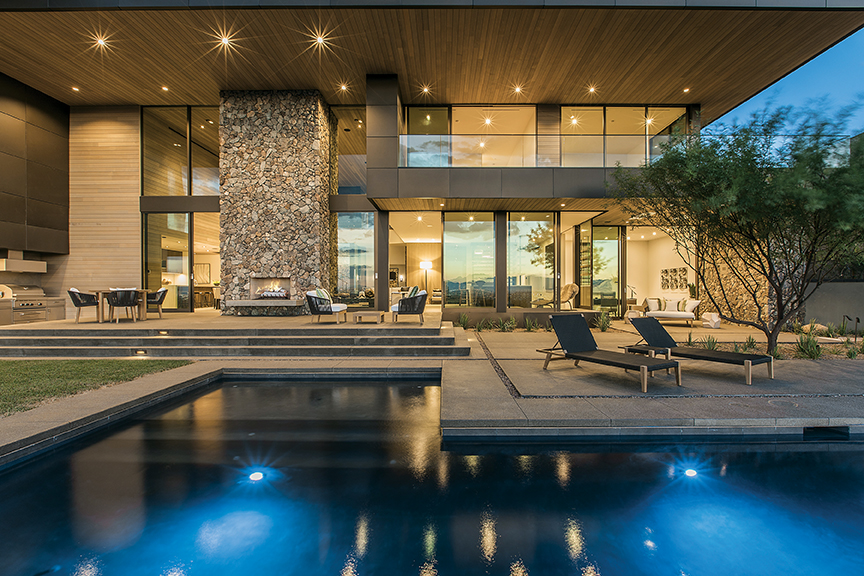
A variety of materials, warm hues and stone are contemporary hallmarks as shown in the Marmol Radziner designed inspiration home at Ascaya in Las Vegas.
Photo courtesy Boulderback 5.
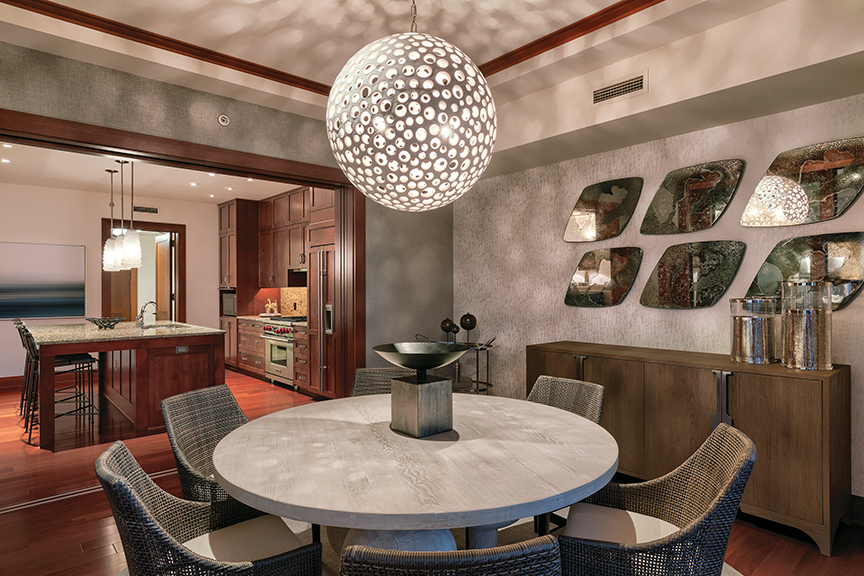
Currently a dining room, this space is equally adaptable as an office, studio or play area. Pocket doors add to this versatility without interrupting the flow.
©David Tonnes dba. PanaViz Photography / Courtesy of Ken Bassman
Open to Innovation
Even in large homes, Visbeen says his firm looks for opportunities for more creative uses and more innovation. “If I had to say anything was the real trend, it would be innovation for us.”
“Creating spaces where the kitchen, living and dining all seamlessly merge together supports a more contemporary style of architecture,” Wright explains, adding, “we are doing it on a grand scale, but also in an intimate way to help support the cadence of a daily routine.”
Kitchens, particularly in upscale homes, capture even more square footage. “People are spending a lot more money in their kitchens,” says
Pamela Harvey, owner of Pamela Harvey Interiors in Washington, D.C.
In lieu of luxury mainstays such as Wolfe or Viking, many opt for even higher-end appliances including La Cornue, AGA and Bertazzoni. Colors are another growing preference for both cabinetry and appliances. And clients now want range hoods to be powder coated to match the cooking appliance. What’s trending for colors in kitchens is dark blue, Harvey adds.
Pantries are back and are more like those from 100 years ago. “Pantries are taking on a life of their own,” says Texter, referring to the need for more storage along with additional functionality in kitchens. Open-concept designs mean the kitchen is always on display, so back kitchens or a second kitchen area tucked out of the way (once a nice-to-have amenity) are now a luxury “must-have.”
They can range from an expanded pantry with additional counter space to corral counter clutter to a fully outfitted butler’s pantry, which at the highest price points might morph into a full-on catering kitchen.
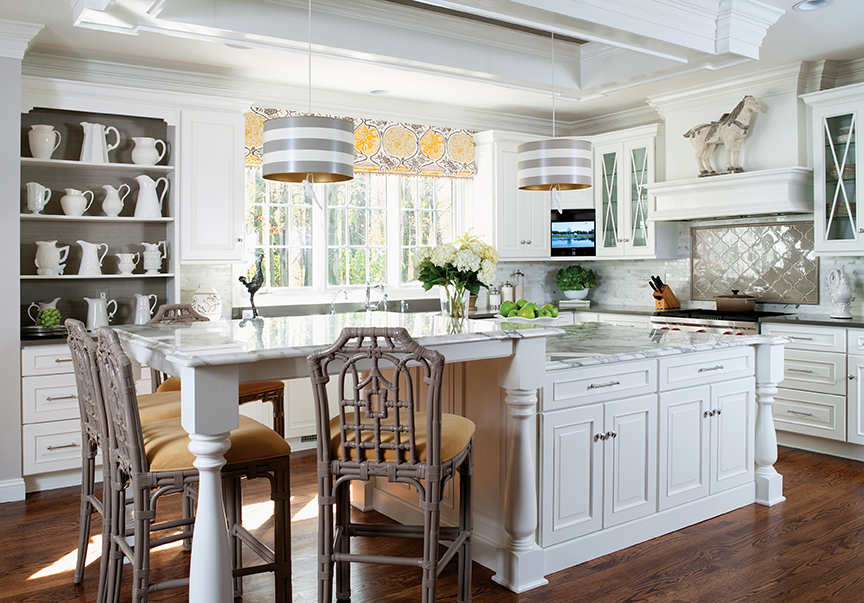
More square footage is devoted to kitchens and pantries.
Photo by Stacy Zarin Goldberg / Courtesy Pam Harvey Interiors
New Connections
One of the most transformative changes in floor plans, the orientation of kitchens and great rooms and the experience of the home overall, comes from the way interiors now relate to the surrounding landscape. “Outdoor living spaces are an enormous part of our business and have been for years, but it has taken an even greater level,” observes Visbeen.
Ten years ago, outdoor living referred to patios, gardens and decks. Today, thresholds are blurred, and the division between inside and outside is almost nonexistent. “It used to be enough to have a sliding glass door or a French door that went to the backyard. And now it’s about how that indoor space expands and takes advantage of the fenestration. Then, there is the desire to have a room outside, and that wall just disappears, and the space doubles in size,” says Texter. “Now we’re practically designing the backyard to go with the home. That space is part of the home, and the design is integral.”
New technology is also a catalyst for this transformation. The cost of large windows and disappearing doors is much lower than before the recession. New products include more sizable expanses of glass, broader doors, doors that pivot, and windows and doors that wrap around corners, greatly expanding options to integrate inside and outside areas, visually and literally. Having sightlines that directly extend to an outside patio or room visually expand smaller rooms.
Metal frames also mean less weight and larger panes of glass, according to Rill. In traditional homes, renovations and additions almost always address the indoor/outdoor synergy. Rill says they use metal framed glass more frequently and, in some rooms, disappearing doors are replacing sliders and French doors. “People are moving toward something that’s a little sleeker, a little cleaner and a little more playfully modern, but still within traditional proportions and shapes.”
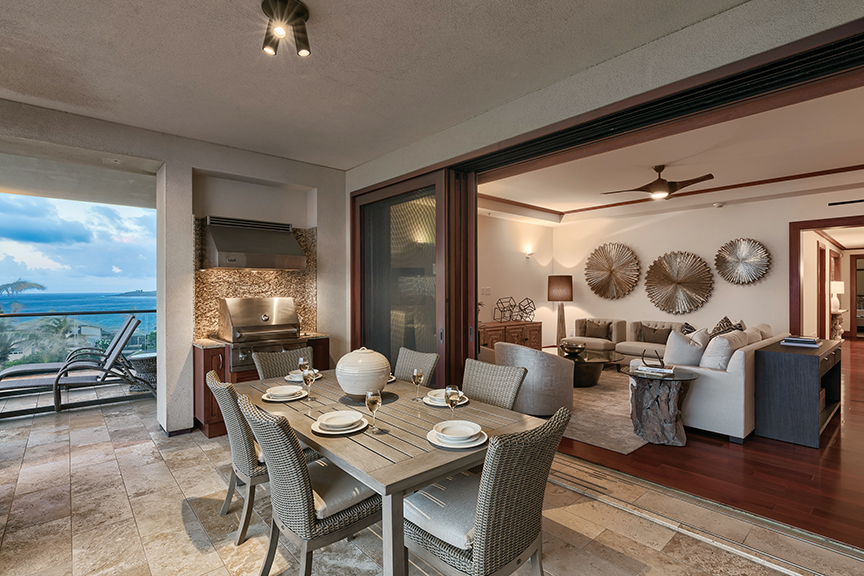
Today, thresholds are blurred, and the division between inside and outside is almost nonexistent.
©David Tonnes dba. PanaViz Photography / Courtesy of Ken Bassman
Authenticity, Not Opulence
A decade ago, luxury homes were often considered a testimony to status, and ostentatious demonstrations of affluence were acceptable. “During that era, it was in vogue that the more money you spend, the better it was. And after the recession, people came away from all of that. That heavy, goopy, layered, gilded aesthetic just evaporated. There was this yearning for authenticity,” explains Cook.
“Because of knowledge and images and travel that people are exposed to, they are more willing to be authentic to what they want instead of what is considered the norm. Also, people are moving away from that and it’s become more about what they want in their home and how they want their home to feel,” says Harvey. “They want their home to reflect who they are, whether they have a designer help them get there or not.”
Are homes getting smaller? Yes and no. Overall home sizes have seesawed since the recession, according to data from the National Association of Home Builders, but designers say how a space functions and is finished trumps size. “People are rightsizing more, so we’re seeing higher-end finishes in smaller square footage and the desire to use rooms more efficiently,” says Visbeen.
Rightsizing might be a trend, but signs that home sizes are beginning to creep up — especially for luxury properties — are prevelant. Since the recession, Gentemann sees the range of home sizes expanding. “Not only are there smaller homes, but larger homes as well.”
What has changed is the way additional square footage is used. “As square footage is going up, the walls are coming down and those spaces are opening up to each other. So those core areas where people come together are most important; I think what’s driving that is the casualness of life today and wanting to be able to come together,” explains Cook.
“People are looking for a graciousness of space, which is different than size,” says Ann Thompson, senior vice president of architecture and design at Related Midwest. “Consumers are very savvy now in a way we didn’t see 10 or 15 years ago. I think people are much more cautious and careful in their decision making. They are really assessing value.”
In the higher end, the more affluent the buyer, the more astute they are. “These are people who are very accomplished in their own field, and often that means they’re great decision makers. They’re researchers; they educate themselves about things in their life that are important to them and certainly their home is one of the most important decisions that they make,” shares Thompson.
Homes Are Resorts, and Resorts Are Homes
Increasingly home is seen as a refuge, a place to regroup and connect with families, which means primary homes are becoming more like resorts. Following resort trends, wellness is growing as a desired attitude, which means exercise spaces, a high level of air and water purification, steam showers and saunas are all desired amenities. “I think the overall trends in hospitality design and high-end residential continue to be largely influenced by travel, social media and the accessibility of high-end design that is reaching the consumer in general. There is a continual elevation of expectations,” shares Wright. On the other hand, second homes are becoming more like primary homes, with larger master closets and the addition of any needed features to equip the homes for year-round living. Offices are also another potential addition, as are larger kitchens.
Also, sustainable and energy-saving features, along with smart home technology, are no longer amenities. Rather, they are expected. Looking ahead, designers have a raft of features they see as most desirable. They include: hidden rooms, gun safe rooms, his and hers master baths, diverse wine storage areas, multiple detached structures, storm preparedness, backup generators, outdoor living on multiple levels of homes, and future elevator shafts. One innovative use in a Palmetto Bluff home, until the elevator is required, is to convert the space into a climbing wall, which keys into Visbeen’s observation that innovation might be the overarching trend.
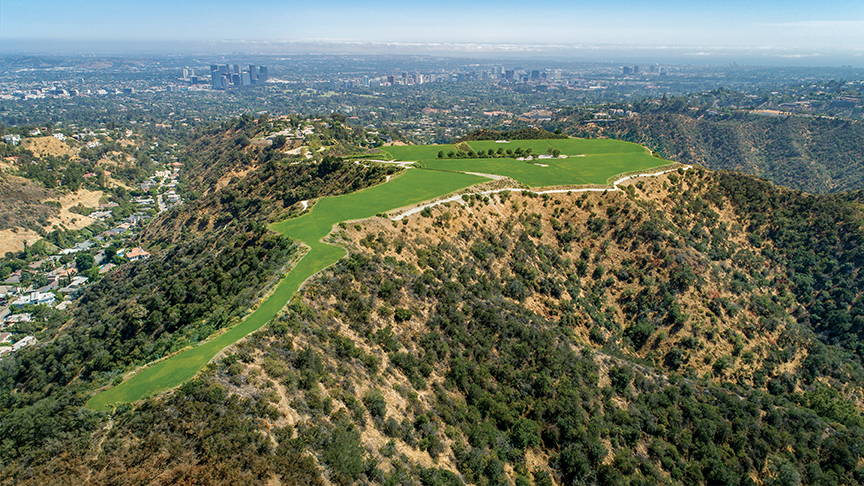
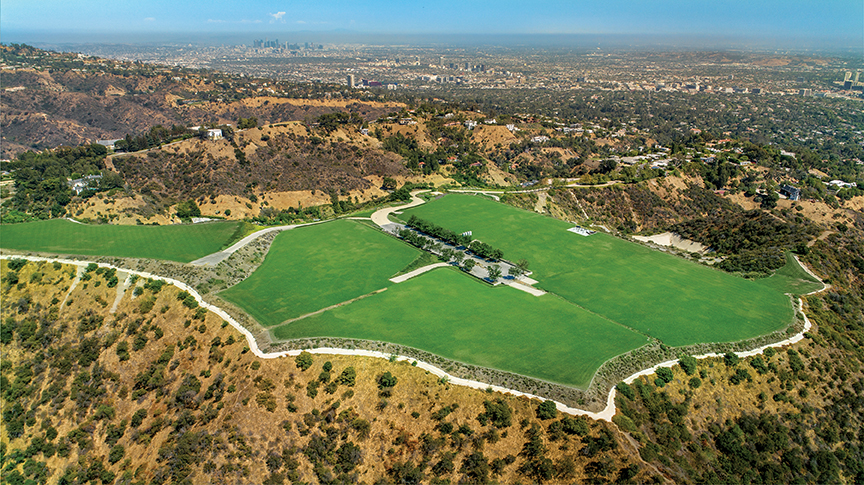
Emerging from the exclusive realm of off-market listings, the recently listed The Mountain site is turning the heads of buyers, sellers and Realtors with its record-setting list price of $1 billion. Minutes from the Beverly Hills Hotel and Rodeo Drive, this 157-acre hilltop location has been transformed into the world’s most exclusive and private residential real estate compound.
The property, currently owned by Secured Capital Partners, was consolidated from 17 multiple parcels into “one large real estate diamond,” according to Ronald Richards, legal counsel and spokesperson for Secured Capital Partners. Aaron Kirman, president of Pacific Union International, Estates Division and the listing agent for The Mountain, affirms that no other property with these possibilities exists any place close to Beverly Hills. “This is the only opportunity to own your own mountain that looks down at all of Los Angeles. Our likely buyer for this property is an individual who wants to build his or her own compound,” says Kirman.
The compound is the size of a small city, with six parcels that are made ready to build and have unobstructed views that range from downtown Los Angeles to Catalina Island and Santa Monica. With the amount of space to fit the entirety of Disneyland, and 57 acres to spare, the buyer will be able to build three buildings up to 500,000 square feet and up to 53 feet high, with the nearest neighbor a half-mile away.
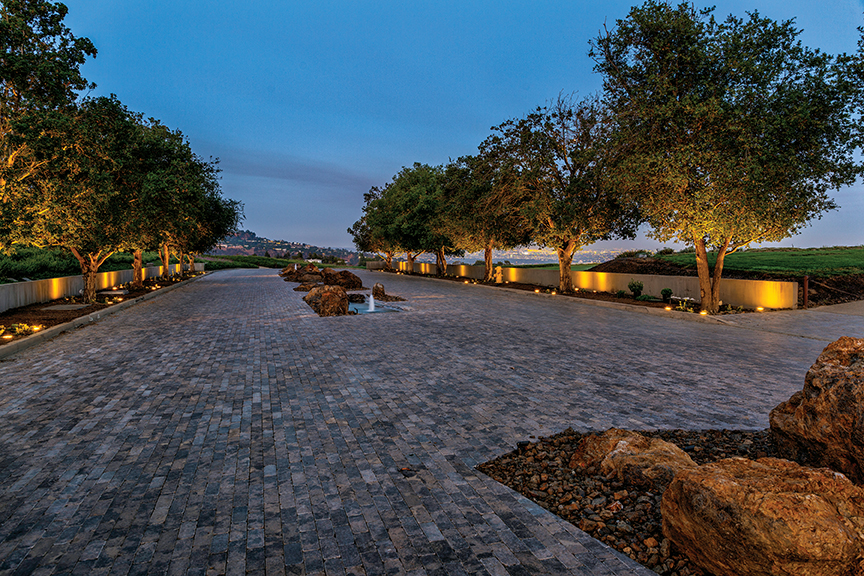
In order to perpetuate exclusivity, invaluable amounts of time and effort have been spent to make this one of the most private properties in the country. More than 500 trees and 5,000 smaller plants have been transplanted to the property, along with a massive 16-foot-tall custom security gate.
Other renovations made to the property were outfitted as preparations for development, but still leave the land open to suggestion. Stone aggregate roads lead to a hand-selected cobblestone drive, as well as a sculpture court accented by a full-length water feature. An in-depth landscape lighting design exists throughout the property, as well as a storm drain system, a booster system for fire hydrants and a backup generator.
“To be able to claim ownership of the largest property at the highest point in all Los Angeles, will make the buyer the most prestigious billionaire overnight,” says Richards.
A stunning penthouse at Quay Tower — the new luxury high rise designed by LA-based Marmol Radziner on the Brooklyn Heights waterfront — just sold for more than $20 million, setting a new record for the most expensive home sale in Brooklyn history.
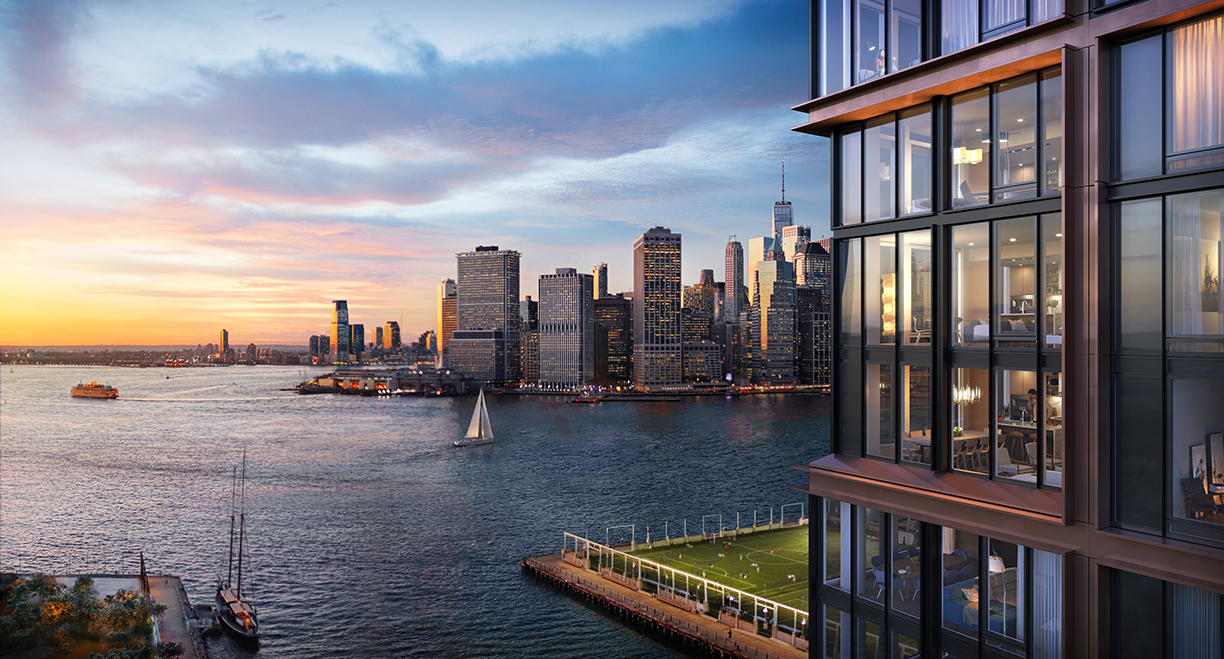
This is the first time Marmol Radziner has brought its California modernist aesthetic to New York City — the firm is best known for renovating iconic mid-century modern homes out west, including the famous Kaufmann House in Palm Springs.
With Quay Tower — and this penthouse in particular — Marmol Radziner creates a similar modernist experience of living in a home surrounded by nature. With tranquil views of the East River and New York Harbor, it’s easy to forget you’re in a 30-story structure in New York City.
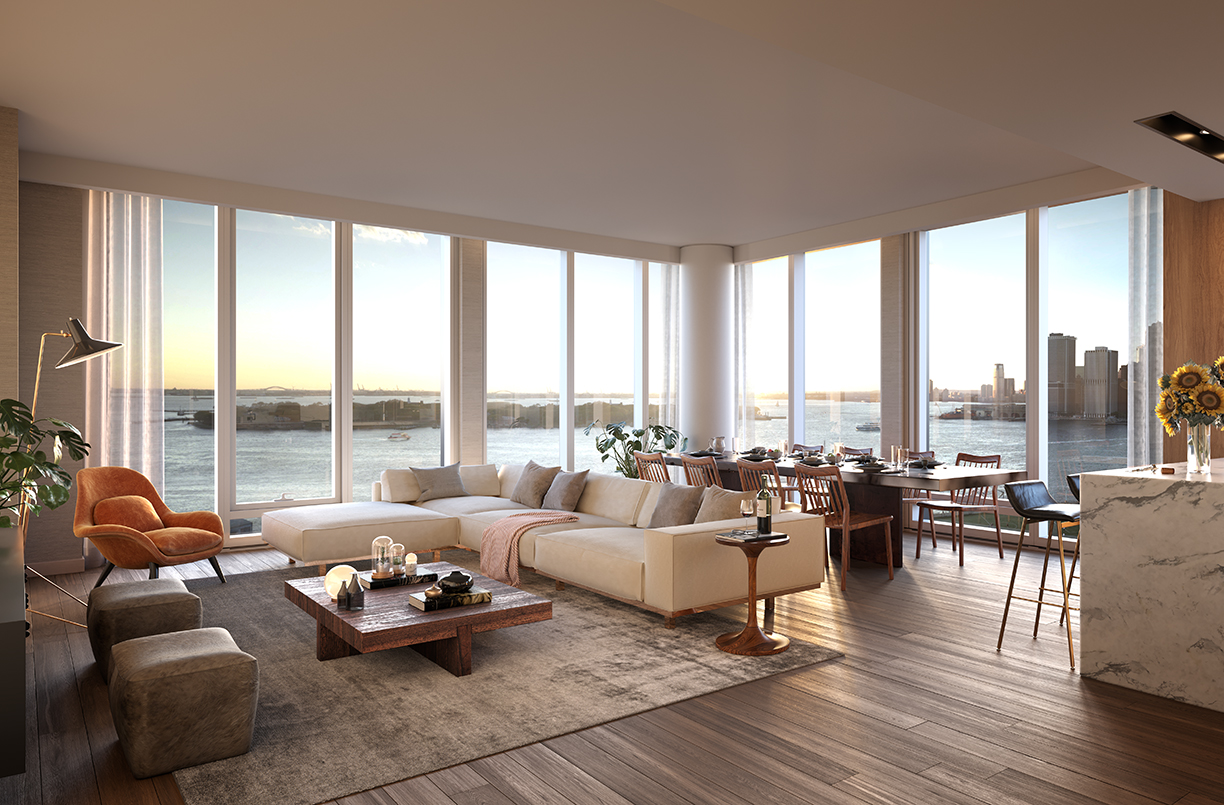
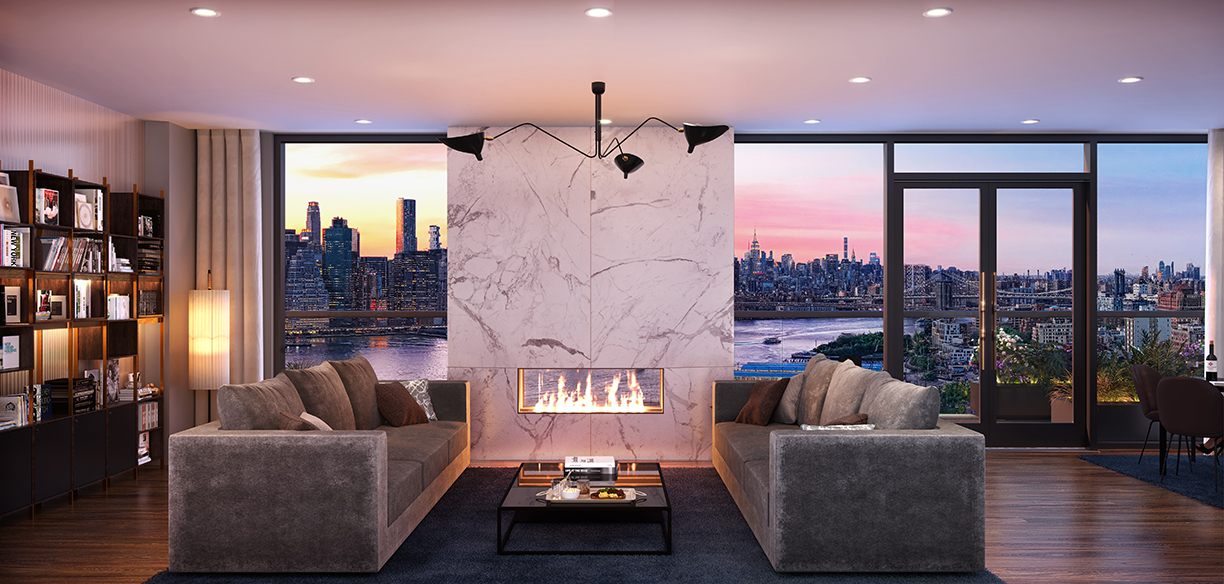
Despite its elegant, modern design built with high-quality and natural materials, the ultra-luxe penthouse is meant to be lived in and loved. In the living room, a fireplace creates an intimate and inviting gathering space with stunning views of Manhattan.
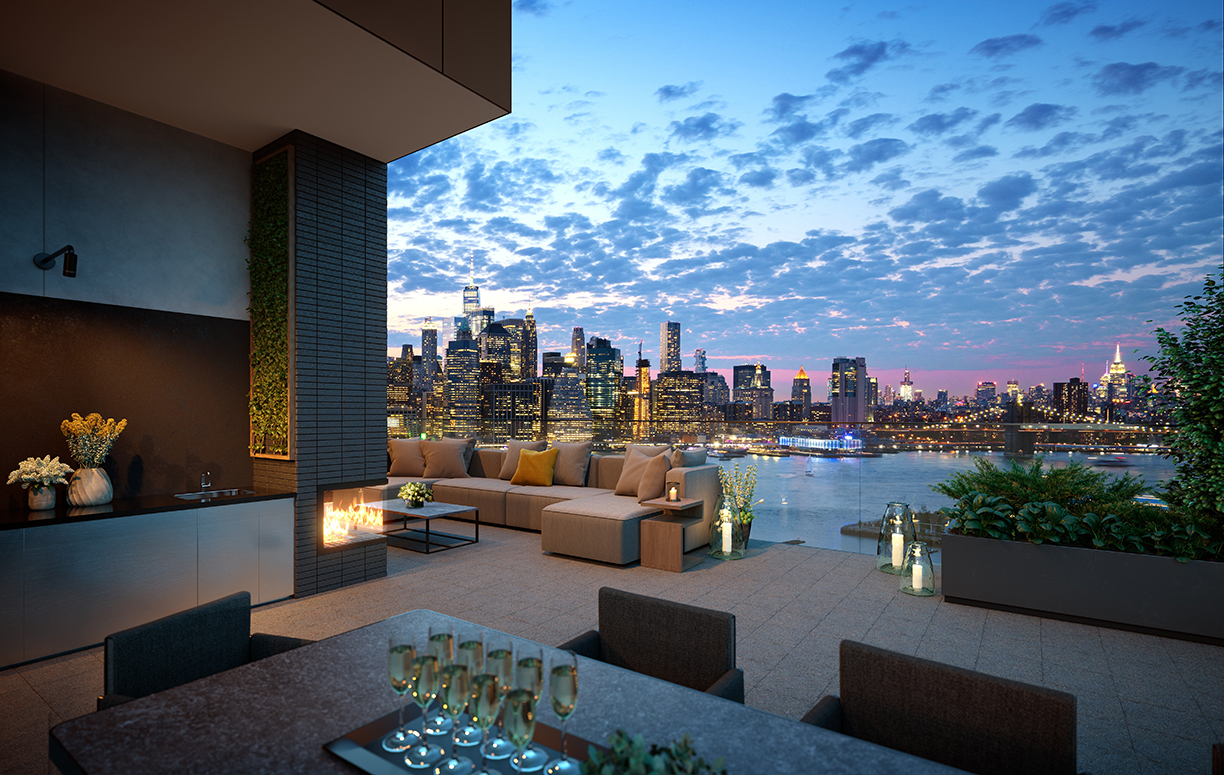
The record-setting home combines two penthouses at the top of the building to create one incredible mansion with five-plus bedrooms and 7,433 square feet of living space, as well as a private 1,179-square-foot terrace.
A balance of intimacy and openness, indoor and outdoor and modernist meets warmth is tough to strike in a high-rise, and that is the real triumph of Marmol Radziner’s vision for Quay Tower.
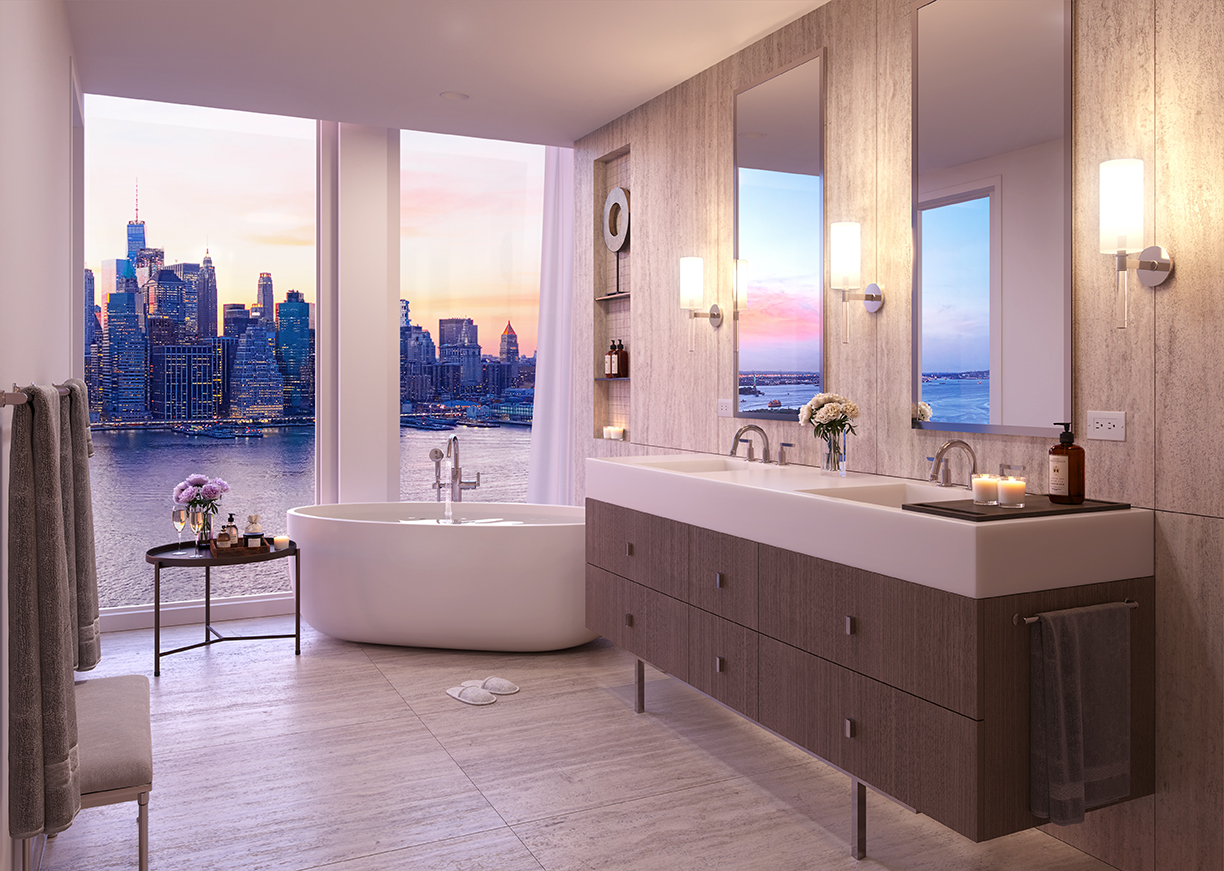
Photos courtesy of Allison Walker.
Ryan Serhant, costar on Bravo’s hit show Million Dollar Listing New York and the star of Sell It Like Serhant, released his new book, “Sell It Like Serhant,” on Tuesday, September 18th, 2018, sharing hilarious and essential tips to sell just about anything.
Serhant, who started humbly as a hand model, entered the real estate business in 2008, in the midst of the economic recession. Though his start was shaky, he today is one of the top realtors in the world, and has mastered the art of selling. Today, Serhant has 1.1 million followers across all social media platforms, is the real estate correspondent for The Daily Mail and has appeared on 20/20, CNN, CNBC, The Today Show, Insider, BloombergTV.



In his book, Serhant shares his journey from a small-town, shy theater kid constantly bullied throughout high school to a successful spokesperson for Chase, Zillow, and StreetEasy. Sections of the book include, Negotiating Like A BOSS, The Seven Stages of Grief Selling, Getting FKD: How to Be a Time Manager, Not a Time Stealer, Pulling the Indecisive Client Forward, and many more. Serhant shares the secrets behind how to close more deals than anyone else, expand your business, and keep clients coming back to you.
This book is the blueprint for becoming a sales machine through Serhant’s useful lessons, lively stories, and examples that illustrate how anyone can employ his principles to increase profits, maximize potential and achieve success. Sell It Like Serhant will give entrepreneurs and employees across industries a head-to-toe business overhaul.
Photos courtesy of BWR Public Relations